The first thing you notice is the chair. The way your hips grip it. The way your lower back presses a quiet complaint against the backrest. Maybe you’ve been here for hours—at a desk, in a car, on a couch that seemed inviting at first and then slowly turned into a trap. Your hips, once meant to stride, climb, squat, dance, and wander across landscapes, have been reduced to angles: a 90-degree fold between torso and thigh. Nothing dramatic, nothing painful enough to stop you in your tracks. Just a gentle, daily shrinking of space.
Then one day, you feel it. The stiffness when you stand up. The small wince when you reach for something on the floor. The way your stride shortens ever so slightly when you walk. Your body has been whispering for a while. Tight hips are often where that whisper begins to turn into a conversation.
The Story Your Hips Have Been Trying to Tell You
If your body were a map, your hips would be the crossroads—where your legs meet your spine, where walking, bending, twisting, and even just standing all intersect. They hold powerful muscles: the hip flexors at the front, glutes at the back, rotators spiraling deep inside. They’re built for movement, yet many of us train them, unintentionally, to barely move at all.
Hours of sitting keeps the hip flexors shortened, the glutes underused, and the deep stabilizing muscles half-asleep. Over time, that can lead to low-back pain, reduced mobility, and a general sense that your body is aging faster than the years suggest. The hips are also a place where, for many, stress and emotion collect quietly—a clenching, bracing, protective kind of tension that doesn’t always show up on scans but lives in how we feel.
Yoga, approached gently and consistently, can be a way back—a slow rewilding of the body’s natural range. Not a punishment, not a performance, but a series of shapes that ask the hips to remember how much space they can actually take up in the world. Below are fourteen yoga poses that invite your hips to soften, open, and move more freely. Think of them not as a checklist, but as a conversation you’ll return to again and again.
1. Child’s Pose: The Soft Landing
You begin close to the ground. Knees wide, big toes touching, you sink your hips back toward your heels. Your chest folds forward, arms stretched long or tucked by your sides. The floor is there, steady and cool beneath your forehead. This is Child’s Pose—a resting place, but also the first gentle tug at your hips.
Your inner thighs begin to lengthen. The hip joints ease into flexion without force. With each exhale, gravity does the work for you. You might feel a mild stretch along the groin or a comfortable pull across the outer hips. You stay here, breathing slowly, and imagine your hip sockets widening like doors being unlatched.
If your hips hover in midair and don’t quite reach your heels, that’s fine. Slip a pillow or folded blanket between calves and thighs, or under your chest. In hip work, comfort isn’t a luxury—it’s a key that tells your nervous system it’s safe to let go.
2. Low Lunge: Stepping Into Space
From all fours, you step one foot forward between your hands. Your knee stacks over your ankle. The back knee lowers to the mat. This is Low Lunge, a simple shape with a surprisingly deep story for your hips.
As you sink your front thigh toward parallel with the floor, the hip flexors of the back leg unfurl. The muscles that have been scrunched from sitting—psoas, rectus femoris, iliacus—get a long, patient invitation to lengthen. You might feel the stretch at the front of the hip, maybe even along the quadriceps.
Your hands can rest on blocks, on your thigh, or melt to the floor. The chest lifts slightly, the tailbone drops gently. You breathe into the front of the hip, imagining the fibers untying themselves, strand by strand. Then you switch sides, noticing if one hip tells a louder story than the other.
3. Lizard Pose: Meeting the Edge (But Not Going Over It)
From your Low Lunge, you heel-toe the front foot a little wider, toward the edge of the mat. Both hands come inside the front foot. This is Lizard Pose—low, earthy, and close to your limits.
If it’s available, you lower your forearms onto blocks or the mat, letting the hips sink deeper toward the floor. The stretch now spreads across the groin, hip flexors, and even into the glutes. The sensation might be intense—never sharp, never electric or pinching, but deep, like a knot being discovered for the first time.
You stay for several breaths, eyes soft, jaw relaxed. You can gently rock forward and back, letting the joint explore tiny new angles. This pose is a reminder: opening the hips isn’t about forcing them wider; it’s about patiently staying present at the edge and letting that edge move on its own.
4. Pigeon Pose: The Quiet Storm
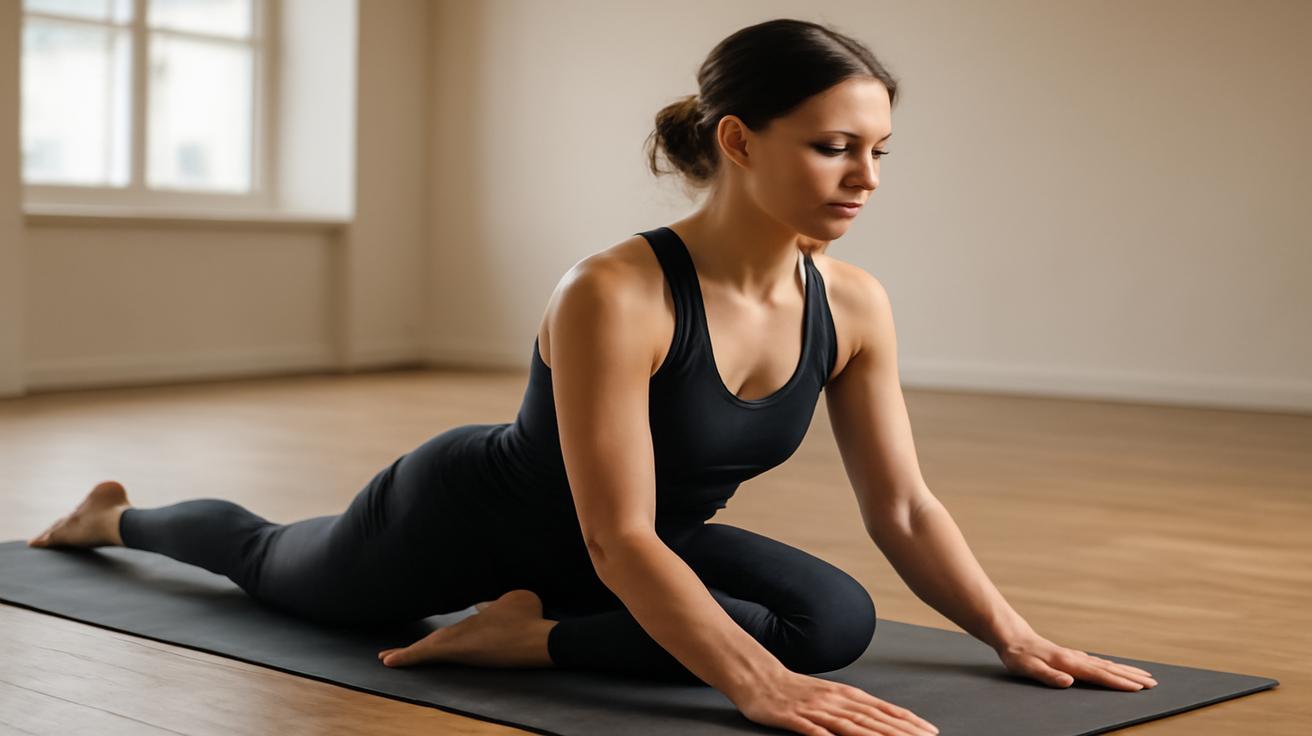
There’s a moment when you first enter Pigeon Pose that can feel like a small storm moving through your hips. From all fours or Downward Dog, you slide one knee toward your wrist, lower the shin diagonally, and extend the opposite leg long behind you. The front hip folds, the back hip extends. Your torso folds forward, or you remain upright if that’s enough.
The outer hip of the bent leg—your glute muscles, your deep rotators—begin to speak loudest here. This is where many people discover just how tightly they’ve been held. Some feel sensation in the side of the hip; others in the glute, or along the outer thigh.
Support is your ally. A folded blanket or cushion under the bent-hip side can make the pose more accessible and less intense. As you breathe into the stretch, imagine sending your exhale straight into where the tension is strongest. Stay for at least a minute per side, or longer, letting the quiet storm pass into a softer, wider sky.
5. Figure Four on Your Back: Gentle but Precise
Sometimes, the hips open best when the spine is supported. Lying on your back, you bend both knees. Ankle of your right leg crosses over the left thigh, just above the knee, forming a loose “figure four.” You thread your hand between your legs and hold the back of your left thigh or front of the shin, gently drawing it toward your chest.
This pose brings the stretch into the outer right hip and glute, similar to Pigeon but with far less pressure on the knees and lower back. Your head stays heavy, shoulders relaxed. You can add a small rock side-to-side, massaging the sacrum on the floor. It’s an antidote to sitting, accessible at the end of a workday or before bed.
The beauty of this shape is how clear it is: you can feel exactly where the tightness lives, and you can dial the intensity up or down by how close you draw the leg. When you switch sides, notice if one hip feels like an old friend and the other like a stranger.
6. Butterfly Pose: Folding Into Yourself
Seated now, you bring the soles of your feet together, knees falling out wide. Your hands wrap around your feet or ankles. As your spine lengthens upward, you take a breath, then exhale and hinge forward from your hips—not rounding, but folding, even just a little.
This is Butterfly Pose, or Bound Angle. The inner thighs and groin ease open, the outer hips surrender to gravity. It doesn’t have to be deep to be effective; sometimes, simply sitting upright with a tall spine is enough to coax the hips awake.
A cushion under your sit bones can change everything—tilting your pelvis slightly forward so the fold feels more spacious. This pose is less about pushing your knees toward the floor and more about allowing the hips to soften over time. You can picture your hip joints like two quiet pools filling with more and more room.
7. Wide-Legged Forward Fold: Expanding the Horizon
Staying seated or standing, you widen your legs apart. If seated, your toes point up; if standing, feet turn slightly inward. In either version, you inhale to lengthen through your spine, then exhale to fold forward, hands reaching toward the floor or a block.
In the seated version, the inner thighs stretch, while the outer hips stabilize and support. In the standing variation, the hamstrings and outer hips wake up along with your hip joints. There’s a sensation of growing longer in all directions: the spine, the legs, the subtle space within the pelvis.
You don’t need to reach the floor. You only need to go where your breath can follow. As you hang or fold, notice how the hips speak differently when they’re wide compared to when they’re narrow. Notice the difference between a rigid stretch and a curious one.
8. Garlands and Deep Squats: Remembering How to Sink
If you watch a child pick something up, you’ll see it: the deep, effortless squat. Feet wide, heels grounded, hips dropped low, spine long. Many adults lose this movement over time, but yoga offers a way to relearn it through Malasana—Garland Pose, or yoga squat.
With feet a bit wider than hips and toes turned slightly out, you bend your knees and lower your hips toward the earth. Your heels may lift—if so, a rolled towel or folded mat under them can provide support. Your elbows press gently into the inner knees, hands at your heart, chest lifted.
The hips, ankles, and lower back are all in conversation here. The groin opens, the pelvic floor engages, the hip joints move through a deep, functional range. Even if you only come halfway down at first, this is one of the most powerful ways to return mobility to your hips and reconnect with a movement humans have done for millennia—resting, cooking, gathering, all from a deep, grounded seat.
9. Reclined Twist: Spiraling Space Into the Hips
Not all hip opening is about stretching in straight lines. Sometimes, the magic happens when you twist. Lying on your back, you draw one knee into your chest and gently guide it across your body, letting it fall toward the floor. Your opposite arm reaches out to the side, gaze soft in the other direction.
This reclined twist unwinds the outer hip, glute, and lower back together. The top hip rolls forward while the chest gently spirals open. The stretch may be subtle or quite noticeable along the side of the hip and waist. Your breath washes up and down the spine, making more space between each vertebra, more room across the pelvis.
Twists are like the punctuation marks in a hip-opening practice—little commas and ellipses that let the body integrate what it’s been exploring.
10. Crescent and Warrior II: Strength as an Opening Tool
It’s tempting to think of opening hips only through passive stretches, but strength can open doors that stretching alone cannot. In Crescent Lunge, you step one foot forward, back heel lifted, front knee bent deeply. Arms reach overhead, ribs soften down, tailbone lengthens.
This engages and lengthens your hip flexors simultaneously. The front hip bears weight and stabilizes. The back hip stretches while the leg works to keep you balanced. Over time, this active work helps the hips move powerfully through their range, instead of just sagging into it.
In Warrior II, the feet ground wide, front knee stacks over the ankle, back leg straight and strong. Hips open to the side, chest broadens. Here, the outer hips and glutes blaze to life as they hold you steady. Strength around the joint gives the hips the stability they need to confidently explore more freedom.
11. Happy Baby and Supine Release: Letting Gravity Do the Work
Near the end of practice, there’s a pose that feels like a quiet homecoming. Lying on your back, you bend your knees toward your chest and grab the outsides of your feet or your shins. Knees open wide, stacking over the hips, soles of the feet aiming toward the ceiling. This is Happy Baby.
Your tailbone gently draws toward the mat as your spine lengthens. The inner hips and groin release; the lower back decompresses. You might rock side-to-side like a boat on a calm lake. There’s something almost childlike in the shape—unselfconscious, open, soft.
From here, you can hug both knees to your chest, maybe circling them or drawing them wide and back together. These last, simple movements are like punctuation at the end of a long story your hips have been telling—small, tender gestures that say: I’m listening. I’m here.
A Simple Hip-Opening Flow You Can Try
You don’t need an hour or a studio to start shifting how your hips feel. Even 15–20 minutes of regular practice can begin to change your patterns. Here’s a gentle sequence pairing some of the poses above:
| Pose | Approx. Time | Focus Area |
|---|---|---|
| Child’s Pose | 1–2 minutes | Gentle hip flexion, inner thighs, breath |
| Low Lunge (each side) | 1 minute per side | Hip flexors, front of hips |
| Lizard Pose (each side) | 1–2 minutes per side | Deep groin, outer hips |
| Pigeon or Figure Four | 1–2 minutes per side | Glutes, outer hips |
| Butterfly Pose | 2–3 minutes | Inner thighs, groin |
| Reclined Twist (each side) | 1–2 minutes per side | Outer hip, lower back |
| Happy Baby | 1–2 minutes | Hips, groin, spine release |
Move slowly between poses. Let your breath guide your pace. Some days, you might linger in one shape longer than the others; some days, your hips will feel like doors that need a little extra time to unstick.
Listening to Your Limits (And Why That Matters)
In the age of dramatic yoga photos and extreme flexibility, it’s easy to mistake openness for contortion. But healthy hips don’t need to slide into the splits or twist into advanced shapes. They need to move well through the range that matters for your life: walking, climbing stairs, squatting to pick something up, turning to look behind you, getting down to the floor and back up again with ease.
As you explore these fourteen poses, the most important skill isn’t reaching farther. It’s listening better. Sharp pain, numbness, or pinching in the knee or groin is a clear no. A strong but breathable stretch is a cautious yes. The more honestly you meet your body where it is, the more it will offer you over time.
Mobility doesn’t arrive as a grand revelation. It comes in small, quiet ways: the moment you notice you can sit cross-legged longer, step over a log on a trail without hesitation, or rise from the floor with a sense of unexpected lightness. Your hips are capable of so much more space than the chair has been offering them. Yoga just reminds them how to take it.
FAQs About Hip-Opening Yoga
How often should I practice these hip-opening poses?
For noticeable improvements, aim for 3–5 sessions per week, even if they’re only 15–20 minutes. Consistency matters more than intensity or duration.
Can hip-opening yoga help with lower back pain?
Yes, tight hips can contribute to lower back discomfort by limiting movement and forcing the spine to compensate. Gentle hip-opening poses, combined with core and glute strength, can reduce strain on the lower back. If you have a back condition, consult a professional before starting.
What if my hips are extremely tight and I can’t go very deep?
That’s completely normal. Use props like cushions, blankets, and blocks to support your body. Stay at a level of stretch where you can breathe calmly. Over time, your range will increase, sometimes in subtle but meaningful ways.
How long should I hold each pose?
For mobility and flexibility, holding 30–60 seconds is a good starting point. For deeper release in supported poses like Butterfly, Pigeon, or Figure Four, you can stay 2–3 minutes if it feels comfortable and sustainable.
Are hip-opening poses safe for everyone?
Most people can practice gentler hip-openers safely, but if you have hip replacements, labral tears, significant arthritis, or knee issues, you should modify poses and get guidance from a knowledgeable teacher or healthcare provider. Never force your body into shapes that cause pain.
Will these poses make me “flexible” quickly?
Progress depends on your current mobility, how often you practice, and your unique anatomy. Some people notice small changes in a few weeks; for others, it’s more gradual. Think of it as a long conversation with your body, not a race.
Do I need to warm up before doing hip-opening yoga?
It’s helpful to warm up with gentle movements like cat-cow, easy lunges, or a few minutes of walking. This increases blood flow and helps your muscles respond more kindly to stretching, especially if you’ve been sitting for a long time.
Can I feel emotional during hip-opening poses?
Yes. Many people experience unexpected emotions during hip work—sadness, frustration, even relief. The hips are a place where tension and stress often collect. If emotions arise, allow them to move through you without judgment, and use your breath as an anchor.