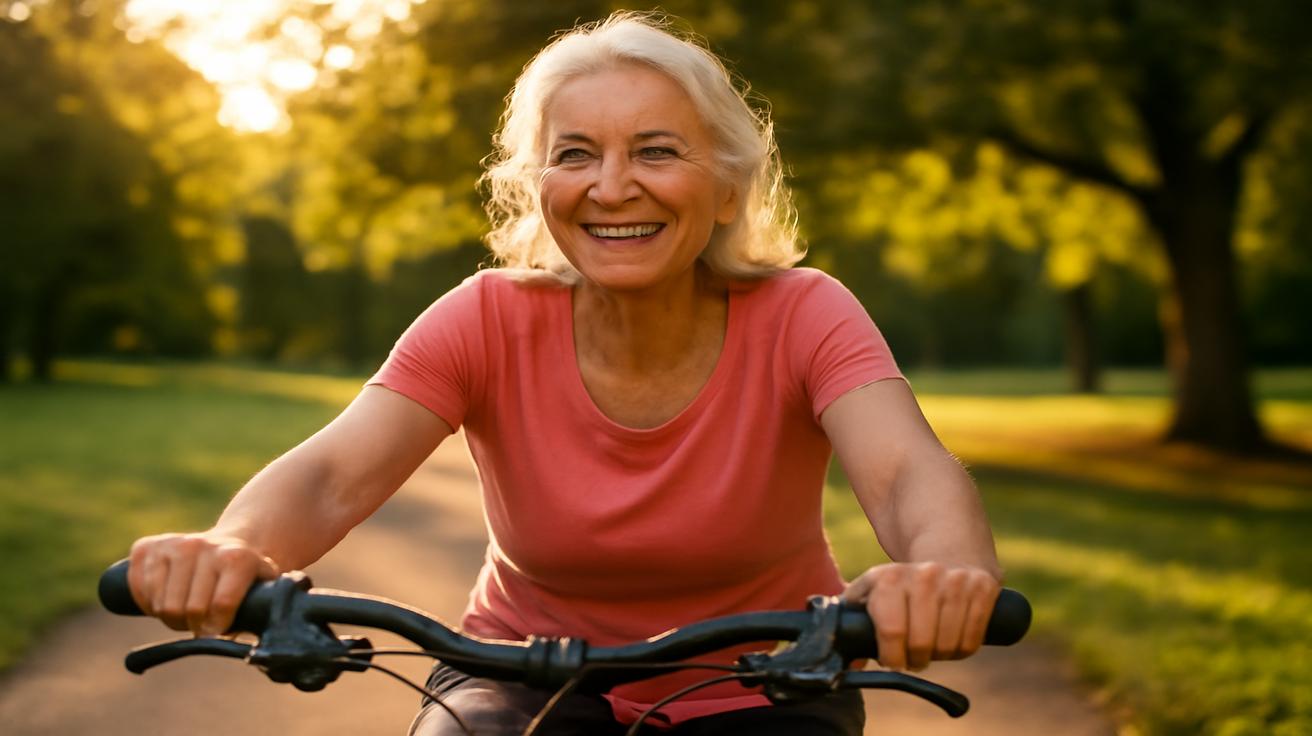
The woman in the red raincoat doesn’t walk so much as she glides. The path is slick from last night’s storm, maple leaves plastered to the pavement like wet confetti, but she moves with the relaxed certainty of someone who knows exactly where her feet are landing. A boy on a scooter zips past her, does a double take, and then glances at his dad. “Wow,” he whispers, not quite as quietly as he thinks. “I hope Nana’s like that when she’s old.” The woman smiles, not because she heard him, but because the air smells like wet earth and woodsmoke and she loves mornings like this.
Still Saying “Yes” to the World
There’s a particular kind of person in their seventies who makes everyone around them think, with a mixture of admiration and curiosity, I want to age like that. They’re not necessarily climbing mountains or running marathons. Often, it’s subtler than that. It’s the way they still say “yes” to the world, as if life hasn’t closed in but simply shifted shape.
At 70 and beyond, no one is grading you on productivity. The to-do lists lose their sharp edges; the race you never signed up for finally winds down. And yet, the people who age in a way that lights a quiet fire in others have something in common: they’re still doing certain things—small, practical, deeply human things—that keep them knitted into the fabric of life.
This isn’t a list of obligations. It’s more like a map. Nine practices that, if you keep them alive at 70, give people a reason to look at you and think, with real sincerity, “I hope I’m like that when I’m older.”
1. Moving Your Body Like It’s a Privilege, Not a Punishment
There’s a particular sound to early-morning movement: the soft thud of sneakers on a trail, the whisper of a swim stroke slicing through still water, the creak and protest of an old gate swung open for the first time that day. The people who age beautifully are still in that soundscape. They may not be fast. They might lean a little more heavily on a walking stick than they admit. But they’re out there, bodies in motion, treating movement not as a chore but as a quiet celebration.
At 70, your relationship with your body changes. It’s less about appearance, more about partnership. The goal isn’t “getting your body back”; it’s staying on good terms with the one that’s carried you this far. That might mean walking every evening until the sky turns pink, joining a gentle yoga class, or following an online tai chi video in the living room where the light falls warm on the rug.
The people who inspire younger generations aren’t the ones bragging about steps or calories. They’re the ones who can get up off the floor without drama, who can carry groceries in from the car, who dance (even if badly) at weddings. Their movement says: I’m still here. I’m still participating.
| Simple Movement | How Often | Why It Matters at 70+ |
|---|---|---|
| Daily walks (10–30 minutes) | Most days | Keeps joints moving, lifts mood, connects you to your surroundings. |
| Light strength exercises | 2–3 times per week | Supports independence: getting up, carrying, climbing stairs. |
| Balance practice (e.g., one-leg stands, tai chi) | A few minutes daily | Reduces fall risk and builds confidence moving through space. |
| Gentle stretching or yoga | Most days | Keeps you limber enough to reach, bend, and play with younger kids. |
No one stands at your 80th birthday party and says, “I admire you for your six-pack.” They say, “I love that you still walk down to the lake every morning,” or “I hope I can still get on the floor with my grandkids like you do.” The admiration is less about capacity and more about your refusal to step out of the current.
2. Staying Curious Enough to Be a Beginner
There’s something disarming about a seventy-year-old who says, “I don’t know how to do that yet… but I’d like to learn.” The word “yet” tacked onto the end of that sentence is its own kind of rebellion. It pushes back against the idea that aging is a slow shrinking of your world down to what you already know.
The people who make others whisper “I hope I’m like that” are the ones who still sign up for things. A pottery class where they’re more clay on the apron than on the wheel. A language app that stutters out phrases in Spanish or Japanese. A local birding walk, binoculars fogging as they learn to tell one brown bird from another by the tilt of its tail.
They’re not afraid to look a little foolish. In fact, there’s a light in their eyes when they get something wrong and laugh. Being a beginner again means the world is not finished with you; there are still corners you haven’t explored.
Curiosity at 70 shows up in small ways too: asking a teenager how their favorite game works and actually listening; trying the unfamiliar dish at a restaurant; reading about something that challenges your assumptions rather than just reinforcing them.
No one wants to be around someone who’s decided, consciously or not, that they’ve seen it all. The people who age in a way that pulls others toward them are the ones who keep saying, “Tell me more.” They’re still students of the world, and that makes being around them feel like stepping into a room with the windows cracked open.
3. Protecting Your Own Spark
There comes a point where you realize that your energy is finite. At 70, the people others admire most have quietly mastered an art that many much younger people still struggle with: they know how to protect their spark.
It shows in the boundaries they keep. They no longer say yes out of guilt or habit. They don’t drag themselves to every event just because they’re invited. Instead, they choose. They choose the dinner where real conversation is likely, the gathering where someone’s story will be told, the volunteering that lights up their sense of purpose rather than draining it.
Protecting your spark also means tending to your inner world. The elders people look up to have often walked through fire: loss, illness, disappointments that rewrote entire chapters of their lives. Yet they arrive in the present with a softness that hasn’t curdled into bitterness.
They have practices—however humble—that keep them grounded. Maybe it’s a quiet cup of tea alone before anyone else wakes. A few minutes of meditation or prayer. A worn-out journal where they write down three things they’re grateful for, even on days when the list starts with “the way the light hit the sink” because everything else feels heavy.
Most of all, they don’t make their pain the centerpiece of every conversation. They’re honest, yes. They’ll tell the truth when you ask. But they don’t lead with their grievances. They lead with presence: “How are you?” “Tell me what you’re working on.” “What’s making you happy lately?”
Younger people notice this. They might not articulate it, but they feel the difference between being with someone who drains the room and someone who, even in their seventies, seems to quietly add something to it.
Choosing Your Emotional Diet
The emotional diet you consume matters as much as the food on your plate. At 70, this might mean turning off news that is crafted to agitate more than to inform. It might mean limiting time with people who only call to complain. It could mean finally seeking therapy or a support group to work through old wounds instead of letting them run the show from the shadows.
That choice—to aim for grounded instead of chronically outraged—doesn’t just change your experience of aging. It changes how others experience you. People look at you and think, “They’ve been through so much and still, look how kind they are.” That combination of truth and gentleness is its own kind of awe.
4. Showing Up for Real Connection
There’s a particular way a seventy-year-old can listen that makes you feel both seen and steadied. It’s a listening that comes from having lived long enough to know that most problems don’t need quick fixes; they need company.
The people we hope to resemble in older age are almost always good at connection. Not performative busyness, not a contact list filled with numbers they never dial—but real, lived connection.
They host simple gatherings. Soup simmering on the stove, a loaf of bread still warm, mismatched chairs pulled in from different rooms. They call friends “just because” instead of only when someone is sick. They know their neighbors’ names and wave at the mail carrier. They send actual handwritten notes sometimes, their cursive looping like river reeds.
At 70, connection doesn’t have to be elaborate. It can be as simple as showing up regularly at a café and chatting with whoever’s behind the counter, or joining a small group at the library, or becoming “that person” at the dog park who always has an extra bag and a genuine compliment about someone’s slightly ridiculous terrier.
The Courage to Let People In
Aging can tempt you toward retreat, especially if you’ve lost people. The effort required to keep relationships alive may feel heavier. But the elders people admire are the ones who keep letting others in, carefully but consistently.
They risk being known. They tell stories that include their mistakes. They laugh at themselves. They ask for help when they need it and let younger people feel useful, which is a gift in itself.
In a culture that often isolates older adults, maintaining connection becomes an act of quiet defiance. When you keep doing it at 70, you’re not just extending your own life in richer directions; you’re offering a model to those coming after you. You’re showing them a possible future where they are still woven into the social fabric instead of sitting at its frayed edges.
5. Continuing to Contribute (Without Needing the Spotlight)
“What are you working on these days?” If your answer at 70 is something—anything—that has a bit of energy and intention behind it, you’re already in rare company.
Contribution at 70 doesn’t need to look like a second career or running a foundation. It can be as small and as vast as tending a garden that neighbors are welcome to pick from. Reading with kids at the local school once a week. Repairing bikes, sewing quilts, recording family stories, mentoring someone who reminds you of yourself at 30.
The key isn’t scale; it’s orientation. You still see yourself as someone who has something to offer. You recognize that your years have given you not just memories, but a kind of composted wisdom that can help things grow in other people’s lives.
The people everyone admires aren’t the ones holding court about all they’ve accomplished; they’re the ones slipping quietly into useful roles without making it about themselves. They show up. They prepare the coffee before the meeting. They notice who’s standing alone at the edge of the room and go stand next to them.
There’s a steadiness in that kind of contribution. It tells younger generations: usefulness doesn’t have an expiration date. You can change forms, yes. You can work less, work differently, rest more. But you never have to opt out of mattering.
6. Keeping Some Mischief Alive
One of the most endearing traits in a seventy-year-old is a small streak of mischief that survived the serious storms of adulthood. Not cruelty, not cynicism—just a willingness to be a little ridiculous now and then.
This might look like learning a silly viral dance with your grandchild and giving it your all in the kitchen until you’re both breathless with laughter. It might be dyeing a streak of your hair blue. Saying yes to the cold lake instead of just sitting on the shore. Singing loudly (and off-key) along with a favorite song in the car with the windows down.
That glimmer of play signals to everyone watching that life hasn’t been reduced to doctor’s appointments and weather complaints. You haven’t surrendered your sense of fun. You still recognize the impulsive, slightly wild version of yourself that existed long before anyone called you “sir” or “ma’am.”
People remember that. They remember the grandparent who let them eat pancakes for dinner. The neighbor in their seventies who organized a spontaneous snowball fight. The older coworker who cracked a perfect, gentle joke right when a tense room needed it.
Mischief at 70 says: “I respect the weight of life, but I’m not crushed by it.” That balance is magnetic.
7. Talking About the Future as If You Still Belong to It
There is something quietly astonishing about a seventy-year-old who talks about the future in the first person: “Next year, I want to…” “In a few years, I’d like to…” “I’m thinking about starting…”
They know, of course, that time is finite. They’ve watched it play out in real, sometimes brutal ways. But they haven’t stepped out of the timeline. They’re still making plans—scalable, flexible plans, but plans nonetheless.
This might mean planning a trip they’ve always wanted to take, even if it’s closer to home than they once imagined. It might mean starting a long, slow project: planting fruit trees they know someone else will harvest from, or writing down family recipes, or scanning and labeling old photos.
They set goals appropriate to this season of life: getting stronger in small ways, decluttering not just to get rid of things but to make space for what matters, finally tackling that creative idea that’s been sitting in the back of their mind for twenty years.
When you talk about your future as if you’re still invited to it, you’re giving everyone younger than you a different script. You’re quietly telling them: it doesn’t have to be over before it’s over. You can keep shaping your days, right up to the edge.
Carrying Grace into the Unknown
Underneath all these things—movement, curiosity, boundaries, connection, contribution, mischief, planning—there’s one more thread that people rarely name outright but always feel: grace.
Grace with your body when it’s different than it used to be. Grace with your mind when it loses a name or a memory. Grace with younger people who are still crashing around trying to figure out who they are. Grace with the past versions of yourself who did the best they could with what they knew then.
When you carry that kind of grace at 70, it shows. It settles on your face, your voice, your gestures. People look at you and feel a little more hopeful about their own aging. They think, not without reason, “If this is what seventy can look like, maybe I don’t have to dread it so much.”
In the end, the nine things you should still be doing at 70 if you want people to say, “I hope I’m like that when I’m older,” aren’t about being impressive. They’re about being engaged:
- Moving your body with respect and delight.
- Staying curious enough to be a beginner.
- Protecting your inner spark with boundaries and care.
- Showing up for real, imperfect, regular connection.
- Continuing to contribute, quietly and usefully.
- Keeping a streak of mischief and play alive.
- Talking about and planning for the future as if you still belong in it.
Do these things in your own way, in your own time, with your own style, and without meaning to, you’ll become that person on the path—the one others watch from a distance and think, with a little smile and a surprising rush of hope, “I hope I’m like that when I’m older.”
Frequently Asked Questions
Is it ever “too late” to start these habits at 70?
No. Most of these are mindsets expressed through small actions. You can begin wherever you are. Start with what feels most doable—maybe a short daily walk or reconnecting with one old friend—and let the rest grow from there.
What if I have health issues that limit my movement?
Movement doesn’t have to be intense to be valuable. Chair exercises, gentle stretches in bed, short walks with frequent rests, or water-based activities can all help. Talk with your healthcare provider or a physical therapist to find safe options tailored to your situation.
How can I build more connection if I feel isolated?
Begin small. Join one group that meets regularly—a book club, community center class, faith group, or volunteer activity. Introduce yourself to neighbors. Call or message someone you haven’t spoken to in a while. Consistency matters more than charisma.
What if I don’t feel “positive” about aging?
You don’t have to force positivity. Start with honesty: acknowledge what’s hard, and then look deliberately for what’s still possible. Often, engaging in even one meaningful activity—like helping someone else or learning something new—can gently shift your perspective over time.
How do I balance rest with staying active and involved?
Think of rest as a partner to engagement, not its enemy. Pay attention to your energy patterns. Schedule movement, social time, and projects when you typically feel best, and protect time for genuine rest and recovery. The goal is a rhythm that leaves you feeling more alive, not depleted.