The first time you hear a washing machine die, it’s strangely personal. The shuddering thump, the grinding whine, the sudden, heavy silence. The laundry room holds its breath. You lift the lid, half-expecting smoke, and find your clothes floating in cold, soapy water like abandoned boats on a gray lake. It’s in that still, soggy moment that you realize just how much of your life depends on this humming metal box in the corner of your home.
Why This Humble Machine Deserves a Little Respect
For most of us, the washing machine is the quiet workhorse that rarely gets a thank-you. It eats the grass stains from your kid’s jeans, the sweat from your gym clothes, the salt from your beach towels. It handles muddy hikes, kitchen disasters, and the occasional forgotten tissue that explodes into a snowstorm over everything you own.
But beneath that calm, familiar chug is a complex mix of moving parts, sensors, belts, bearings, seals, and hoses—each one quietly wearing down a little more with every load. You might not think of it this way, but every spin cycle is a small storm: water rushing in and out, weight shifting and pounding, a drum spinning at wild speeds, and a motor trying to hold the whole world together.
What most people don’t realize is that a washing machine’s “natural” lifespan is much more flexible than it appears. With a bit of simple care—no engineering degree required—you can easily squeeze several more years of service out of it. This isn’t about becoming obsessive; it’s more like tending a garden. A little attention, a little regular care, and the machine that quietly guards your clean clothes will reward you with reliability, fewer repairs, and less money trickling out of your account on emergency fixes.
Step 1: Don’t Overload – Your Machine Can’t Bend the Laws of Physics
Imagine hiking with a backpack that’s just a little too heavy. At first it seems manageable. Then, halfway up the trail, every step feels like a negotiation. Your shoulders ache, your knees complain, and you realize you pushed your luck.
Your washing machine feels the same way when you overload it. That drum, spinning all those sopping wet clothes, is already doing powerful work. Add just “a little more” every time—one more towel, another pair of jeans—and the weight builds beyond what the machine was designed to handle.
Overloading does three things that quietly shorten your washer’s life:
- Strains the motor: The motor has to work harder to spin a too-heavy drum, heating up and wearing down faster.
- Beats up the suspension: The drum’s shock absorbers and springs take a pounding as the weight slams around.
- Throws the balance off: The machine vibrates, walks across the floor, and slowly loosens bolts and components.
You’ll notice the signs. The washer thuds and shakes like it’s trying to launch itself into orbit. It stops mid-cycle and flashes an error. Or it takes ages to spin properly because it keeps trying to rebalance the load.
As a rule of thumb, don’t pack the drum solid. Clothes should have room to move, to tumble and turn in the water. Fill it about three-quarters full for most items. For bulky things like comforters, wash them alone or with just a couple of light pieces. Your machine will sound calmer, and you’ll quietly be adding years to its life every time you choose to go a little lighter.
Step 2: Use the Right Detergent (And Less Than You Think)
Detergent feels like the hero of the story: it’s the part that smells like fresh rain or lavender fields and promises miracles on the label. But in the quiet world inside your washer, too much of this supposedly good thing can become the villain.
Modern machines—especially high-efficiency (HE) models—use far less water than older washers. That’s great for the planet and your utility bill, but it also means extra soap has nowhere to go. It doesn’t rinse away; it clings to the drum, the door seal, the hoses, and the hidden corners you’ll never see. Over time, it turns into a sticky film that traps lint, dirt, and bacteria. Hello, mystery odors.
To keep things running smoothly:
- Use HE detergent for HE machines: It’s designed to make fewer suds and rinse more easily.
- Measure, don’t eyeball: Follow the line on the cap or the scoop. In many cases, you can use even a bit less than recommended, especially for lightly soiled clothes.
- Avoid detergent overload “just in case”: More soap doesn’t equal cleaner clothes; it often equals residue.
Your machine will repay you with fewer musty smells, better rinsing, and less stress on its internal parts. Your clothes will likely feel softer, too, without that invisible leftover film.
Step 3: Clean the Inside – The Hidden Swamp Behind the Fresh Smell
There’s a small irony in a machine built to clean that slowly gets dirtier with every use. Even if your washer looks spotless from the outside, the inside might tell a different story: a faint sour smell when you open the door, grayish residue on the rubber seal, or little flecks of something unpleasant on supposedly fresh laundry.
Inside your machine, warm, damp evenings are the norm. Tiny bits of lint, body oils, detergent, and minerals from hard water cling to the drum and seal. Left alone, they become a buffet for mildew and bacteria. It doesn’t happen overnight—it sneaks up on you, one load at a time.
The fix is simple and strangely satisfying: a regular “deep clean” cycle, even when the washer looks fine.
- Run a maintenance wash once a month: Use the hottest water setting and no clothes.
- Add a cleaner: Use a washer cleaner tablet or a cup of plain white vinegar. For heavy buildup, you can add a bit of baking soda to the drum.
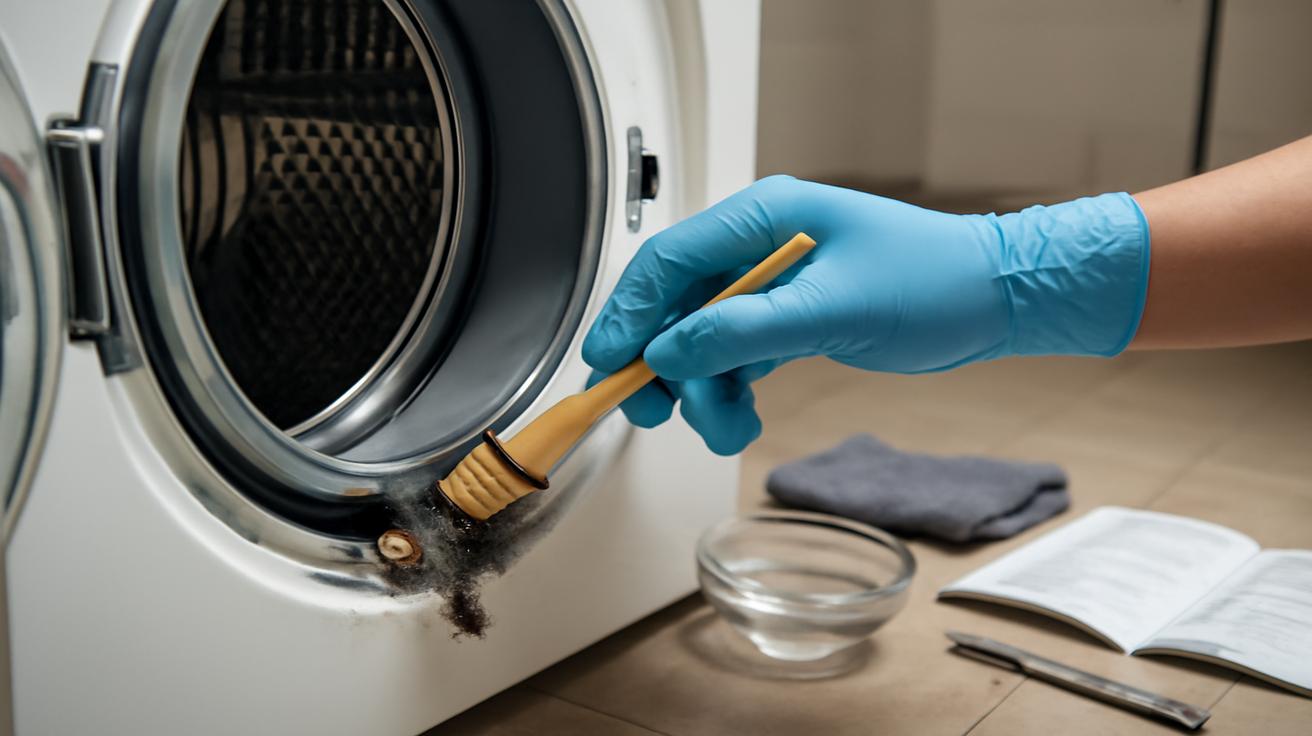
- Wipe the seal: Gently pull back the rubber door gasket and wipe out any gunk or trapped objects—coins, hairpins, pet hair, tiny socks.
This quick ritual does more than freshen things up. It reduces the buildup that can clog small passages, confuse sensors, and slowly make your washer work harder than it needs to. A clean machine is a calmer, longer-lived machine.
Step 4: Let It Breathe – The Simple Habit that Prevents Mold
Picture a forest after a heavy rain. The air holds the smell of wet leaves and earth, cool and clean. Now picture a sealed plastic bag left in a hot car with a damp towel inside. Same water, different ending.
Your washing machine lives on that edge. Every time you close the door or lid right after a load, you trap the moist air inside. In that dark, sealed pocket, mold and mildew feel very much at home. They creep into the folds of the door seal, along the detergent drawer, and into tiny crevices. Eventually, that earthy, sour smell you can’t quite name becomes part of every wash.
The antidote is surprisingly gentle: air.
- Leave the door or lid slightly open after each wash: Just enough to let fresh air flow in and moisture escape.
- Pull out the detergent drawer occasionally: Let it dry, and wipe any damp residue.
- Wipe excess moisture: A quick swipe around the seal with a cloth goes a long way.
This tiny habit can prevent the kind of mold growth that eventually damages rubber seals and sneaks into hoses and inner parts. It costs nothing, takes seconds, and quietly extends the life of components you’ll never see—but definitely smell if things go wrong.
Step 5: Respect the Hoses – The Lifelines You Rarely Notice
If the drum is the heart of your machine, then the hoses are its veins and arteries. They’re not glamorous. They don’t spin or buzz or light up. But if one fails, you don’t just lose a wash cycle—you might end up with a puddle or a full-blown flood on the floor.
Most washers have three main hoses: the hot water line, the cold water line, and the drain hose. They quietly endure constant pressure changes, temperature shifts, and years of flexing every time the machine moves or vibrates.
A little attention here can spare both your washer and your floors:
- Check hoses every few months: Look for bulges, cracks, rust at the connections, or damp spots.
- Replace older rubber hoses: If your machine is more than five years old and still has original hoses, consider upgrading to braided stainless-steel ones.
- Make sure the drain hose is secure: It should be firmly attached and not kinked or crushed behind the machine.
These simple checks protect not only the machine but also the delicate electronics and components inside. Water leaks can slowly corrode parts, confuse sensors, and lead to mysterious breakdowns. Treat the hoses as quietly important, because they are.
| Task | How Often? | Why It Matters |
|---|---|---|
| Avoid overloading the drum | Every wash | Protects motor, drum, and suspension from strain. |
| Measure detergent properly | Every wash | Prevents buildup, odors, and sensor issues. |
| Run a hot maintenance cycle | Monthly | Removes residue and keeps the interior fresh. |
| Leave door/lid open to dry | After each use | Stops mold and mildew from taking hold. |
| Inspect hoses and connections | Every 3–6 months | Prevents leaks and hidden water damage. |
Step 6: Balance and Level – Let Your Washer Find Its Quiet Place
If you’ve ever heard your machine thumping so violently you’ve rushed in to hold it down like a wild animal, you already know how important balance is. That rattling, hopping, walking behavior isn’t just annoying—it’s slowly destroying the very parts that keep the drum stable.
Every spin cycle is a test of equilibrium. When the washer is even slightly unlevel, gravity pulls the drum off-center. Add an uneven load—say, all the heavy towels tangled on one side—and you get the kind of vibrations that shake the whole unit. Over time, that constant stress wears out bearings, shocks, and mounts.
Giving your washer a stable home is one of the kindest things you can do:
- Check if it’s level: Place a small level on top (front-to-back and side-to-side). Adjust the feet until it’s perfectly balanced.
- Tighten the feet: Once it’s level, make sure the locking nuts on the adjustable feet are snug so they don’t shift over time.
- Mind the flooring: If your machine sits on slick tile or an uneven surface, consider a vibration mat to give it traction and cushioning.
- Redistribute loads mid-cycle if needed: If it starts pounding, pause the cycle, open the drum, and spread clothes more evenly.
This small act—finding your washer’s “quiet place”—keeps its internal supports from aging prematurely and cuts down on noise that makes the whole house feel restless.
Step 7: Listen, Watch, and Act Early
Machines have a way of whispering before they shout. A faint rattling sound you’ve never heard before. A new squeak at the start of the spin. Slightly longer cycle times. Tiny pools of water under the machine that dry before you notice most days.
Those little changes are often your washer’s way of asking for help before something serious breaks. The key to a long machine life isn’t just cleaning and balancing—it’s paying attention and responding while problems are still small.
Here’s what to keep an eye and ear on:
- New noises: Grinding, scraping, clunking, or high-pitched squeals often mean something is loose, stuck, or wearing out.
- Slow drains or leftover water: Could point to a clogged filter, blocked pump, or kinked hose.
- Leaks: Even a small, occasional drip can signal a hose, seal, or connection starting to fail.
- Error codes: Don’t ignore them; look up what they mean in your manual and address them early.
You don’t always need a professional at the first sign of trouble. Many fixes are simple: cleaning the drain filter, clearing a coin or button from the pump, tightening a hose clamp. But acting sooner rather than later often means the difference between a ten-minute tweak and a costly, life-shortening repair.
Think of it as a quiet partnership. The machine handles your messes; you keep an eye out for its signals.
FAQs: Extending Your Washing Machine’s Life
How long should a washing machine last if I take care of it?
With decent build quality and regular care, many washing machines can last 10–15 years or more. Light household use, proper loading, cleaning, and quick attention to small issues can easily add several years compared to a neglected machine.
Is running smaller loads better for the machine?
Very small loads all the time aren’t ideal, because they can affect balance and are less efficient in terms of water and energy. The sweet spot is a properly filled drum—clothes able to move freely, but the load still making good use of the cycle. Avoid both overstuffed and consistently tiny loads.
Do I really need special HE detergent?
If you have a high-efficiency washer, yes. HE detergent is formulated to create fewer suds and rinse more cleanly in low water levels. Regular detergent in an HE washer often leads to soap buildup, odors, and sensor problems over time.
How often should I clean the drum and seals?
A monthly hot “maintenance” wash is a good baseline for most households. If you wash a lot of heavily soiled clothes, use cold water most of the time, or notice odors, you may benefit from cleaning every two weeks. Wiping the door seal and leaving the door open after each use helps stretch the time between deep cleans.
Can vibration really damage the machine that much?
Yes. Persistent heavy vibration puts extra stress on the drum bearings, suspension springs, and internal mounts. Over time, this can lead to costly repairs and a shorter overall lifespan. Keeping the washer level and loads balanced greatly reduces that wear.
Is it worth repairing an older washing machine?
It depends on the age, the issue, and the cost of the repair. As a rough rule, if the repair costs more than half the price of a new machine and your washer is already near or past 10 years old, replacement may make more sense. That said, many small issues—blocked filters, hose leaks, minor part replacements—are inexpensive and very worthwhile to fix.
What’s the single most important thing I can do to extend its life?
If you had to pick just one habit, avoid overloading. Keeping the drum load reasonable protects the motor, suspension, bearings, and even the hoses and frame. Pair that with measured detergent and occasional cleaning, and you’ve already given your washing machine a much longer, quieter life.
In the end, extending the life of your washing machine isn’t about perfection. It’s about small, consistent acts of attention: a lighter load, a cracked hose replaced before it bursts, a door left slightly open, a strange noise investigated instead of ignored. Treat this quiet, churning companion with the same respect you’d give any tool you rely on every week, and it will keep turning, rinsing, and spinning its simple, essential magic for years longer than you might expect.