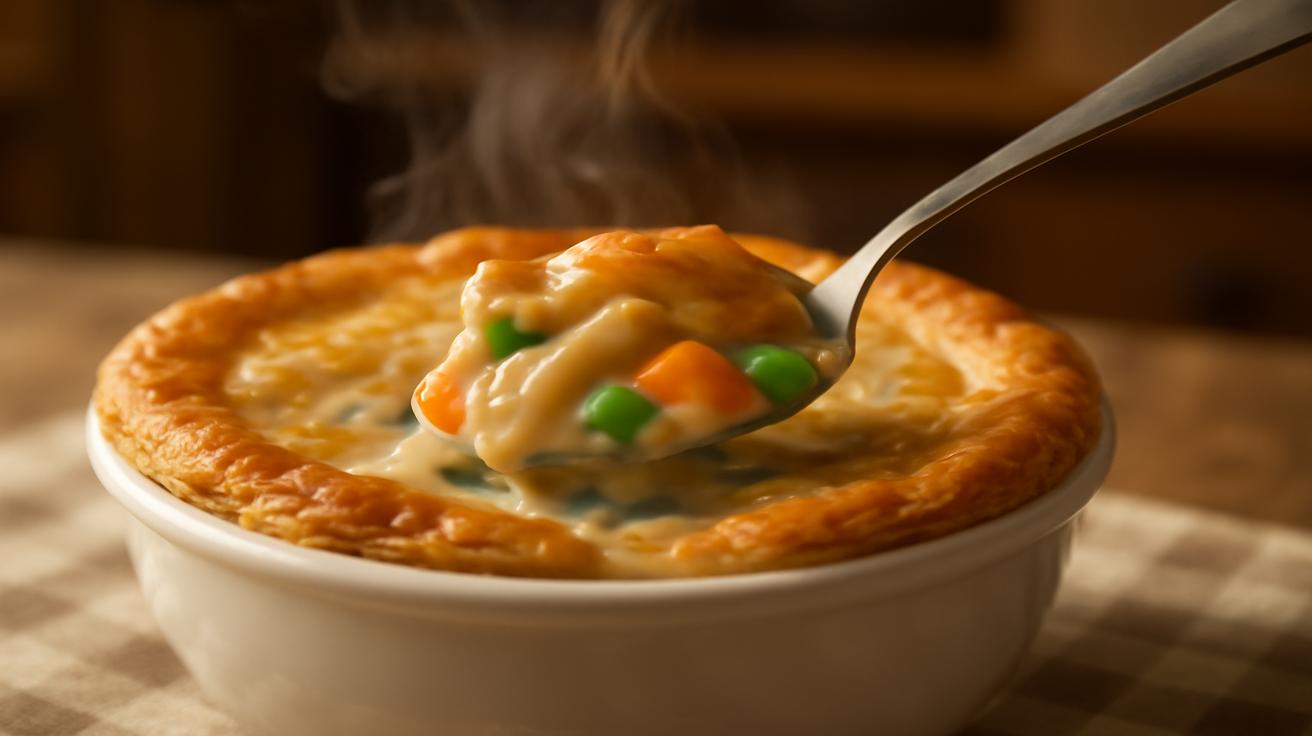
The evening started with a kind of quiet I could feel in my teeth. That bone-deep hush that follows a long, frayed day—the kind where notifications never stop, where your shoulders slowly rise toward your ears and never quite come back down. By the time the sky slid into a flat blue-gray, I realized I’d spent most of the day talking to people and yet felt oddly hollow, like I’d misplaced myself somewhere between emails and errands.
I didn’t want a podcast. I didn’t want a movie. I didn’t even want to vent to a friend. I wanted something slower, something with edges I could hold. My stomach gave a small, honest growl, and the answer arrived with almost disarming clarity: I needed to cook something comforting—the kind of dish that doesn’t just fill you up, but somehow, quietly, rearranges you from the inside out.
The Quiet Pull Toward the Kitchen
There’s a particular kind of tired that cooking actually heals. Not the kind fixed by takeout or a drive-thru bag, but the fatigue that comes from being pulled in too many directions at once. On these days, the kitchen has a gravity of its own. The countertops, the familiar clink of jars, the soft thud of the refrigerator door—it all calls you back to a smaller, more manageable world.
I opened the fridge and just stood there for a moment, letting the cool air hit my face. A half-used carton of cream. A bunch of parsley wilting at the tips. A bag of carrots, still dusty from the market. A wedge of Parmesan, hardening slightly at the edge. In the pantry: rice, lentils, onions, garlic, a dented can of tomatoes, some chicken thighs in the freezer. Nothing fancy, everything ordinary—and yet, there was comfort in that ordinariness. This wasn’t about performing some Instagram-worthy masterpiece. This was about anchoring myself with something simple and honest.
I didn’t have to overthink it. My hands chose for me. They reached for the rice, the onions, the garlic, the carrots, the chicken. Some part of my memory hummed: a one-pot meal, brothy and creamy at the same time, soft around the edges, like the culinary equivalent of a worn-in sweatshirt. The kind of dish you can eat from a deep bowl with a spoon, elbows on the table, shoulders finally lowering.
The Rhythm of Chopping as a Kind of Prayer
The first slice into an onion is always a small act of faith. Once you start, you’re committed—the smell laces itself into your hair and clothes, and suddenly you’re in it. I halved the onion and pressed it flat on the board, knife rocking gently, a slow rain of translucent crescents gathering under my fingers. The rhythm was hypnotic. My brain, buzzing all day with tabs and messages, started to quiet, following the metronome of the knife.
Next came the garlic. Four cloves, because I needed the comfort of too much instead of barely enough. The crack of the knife against each clove felt satisfying, almost ceremonial. Peel, slice, mince. Tiny pieces of heat and fragrance. I scraped everything into a small pile, feeling the sticky warmth of garlic oils cling to my fingertips.
Carrots followed—bright orange coins dropping onto the board like a gentle percussion. Each cut felt like a step back inside my own body. My senses, dulled by hours of screen light and headlines, woke up: the sweet-earth smell of the carrots, the sharp heat of raw onion rising toward my nose, the faint metallic scent of the knife.
I seasoned the chicken with salt and pepper, the grains crunching between my fingers like coarse sand. For a moment, I thought about marinating it, making something elaborate, something slow and impressive. But that wasn’t what tonight asked for. Tonight was about the kitchen as sanctuary, not stage. So I kept it simple. Honest flavors, straightforward steps. Room to breathe.
Heat, Sizzle, and the Sound of Coming Back to Life
The pan took its time heating up, the metal slowly gathering warmth over the flame. I drizzled in oil until it shimmered lightly, a small golden pool, then laid the chicken down. The first sizzle was immediate and fierce—the kind of sound that feels like a spell being cast. It was as if the day was being burned off, bit by bit, in that contact of cold flesh with hot metal.
The kitchen filled with the warm, fatty aroma of browning chicken, a smell that has comfort written into it in invisible ink. I watched the edges turn opaque, then golden, then bronzed, resisting the urge to poke and prod too much. Patience is part of the deal with this kind of cooking. You wait until the meat releases from the pan on its own, until the browned bits—those scrappy, flavorful fragments—start to form on the bottom like constellation clusters.
When I flipped the pieces, the underside was perfectly mottled with crisped brown. This is the part that always feels like a quiet triumph: transforming something pale and raw into something caramelized and alive. I didn’t need applause or a rating or a post about it. It was enough to see it, smell it, be present with it.
Once the chicken was done on both sides, I lifted it out to a plate and turned my attention to the onion and garlic. They hit the hot pan with a soft hiss, immediately soaking up the leftover chicken fat and browned bits. The sizzle softened into a gentle whisper as I stirred, watching the onions go from sharp white to translucent, then to a glossy, blond softness.
The garlic followed, pungent at first, then mellowing into something sweeter as it cooked. There’s a timeline with garlic, a little invisible window between raw bite and bitter ruin. Standing there, stirring, I realized how much of cooking is simply learning to recognize those invisible windows: the moment to add the next ingredient, the moment to lower the heat, the moment when you know something is “just right” without being able to fully explain how.
Broth, Rice, and the Magic of Slow Transformation
I stirred in the rice—short-grain, the kind that goes creamy around the edges if you treat it right. The grains clicked and whispered against the pan as they toasted in the onion-garlic mixture, each one taking on a gloss of fat and flavor. The smell deepened, going from vegetal to something nutty and warm.
Then came my favorite part: the deglaze. I poured in a splash of water and listened as the pan erupted in a sudden, hissing conversation. Steam rose in a fragrant cloud as I scraped at the browned bits, releasing every scrap of concentrated flavor back into the dish. This, too, felt like a tiny metaphor: how you can rescue the stuck, darkened pieces and fold them back into the whole, making it better, richer, more interesting.
I added broth—chicken stock in this case, though it could’ve been vegetable and worked just as well—and the rice settled into it like a crowd exhaling into deep chairs. The carrots went in, then the chicken, nestled back on top with all its juices. A bay leaf for earthiness. A small pinch of dried thyme for comfort. A little salt, a twist of pepper. Nothing complicated. Just layers of familiar things.
As the pot came to a gentle simmer, the kitchen began to smell like the kind of home I’m always trying to move toward: warm, steady, a little bit like Sunday afternoons and rainy mornings and early winter nights. The steam fogged the window above the sink, turning the outside world into a soft, blurry painting.
I lowered the heat, covered the pot, and let time do the rest. The simmering became a low, steady heartbeat. The rice absorbed the broth. The carrots surrendered their firmness. The chicken grew tender, almost collapsing at the touch of a spoon. Every few minutes, I’d lift the lid just to peek, just to stir, just to smell—and each time, the aroma was deeper, more soothing, like waking up in stages from a bad dream.
The Small Rituals of Setting the Table
While the dish slowly finished itself, I turned to another kind of ritual: readying the space where I’d eat. On restless nights in the past, I’ve stood at the counter, fork in hand, scrolling with my free thumb. But tonight called for a real pause, however small. A reset requires intention—even if that intention is as modest as placing a spoon next to a bowl instead of eating straight from the pot.
I pulled out a deep, chipped bowl I’ve had for years—the one with the faint hairline crack running like a soft lightning bolt along the rim. It’s my favorite, precisely because it’s imperfect. It makes everything in it look like it was meant to be there. I set out a spoon, a glass of water, a folded cloth napkin that had seen better ironing days.
The table itself was scattered with the day’s debris: a stray receipt, a pen without a cap, a stack of unopened mail, earbuds curled like a sleeping animal. I cleared just enough space for the bowl and glass and napkin. It didn’t have to be perfect. It only had to be intentional.
By the time I lifted the lid on the pot again, the dish had transformed into exactly what I’d been hoping for without ever fully naming it: a thick, brothy, almost-stew of rice and carrots and chicken, glistening with a slight sheen, the grains swollen and soft but not mushy, the broth creamy from the starch and just a touch of cream I decided to add at the end. Parsley, chopped roughly, rained green over the surface like confetti in slow motion.
It was ordinary. It was beautiful. It smelled like warmth and safety and some vague, inherited memory of kitchens I’ve loved before.
A Dish That Feels Like a Reset
When I finally sat down with that bowl, steam curling upward, the first spoonful was almost startling in its simplicity. The rice was tender, holding just enough bite to feel alive. The broth clung to it in soft, silky waves, carrying the sweetness of carrots, the depth of chicken stock, the perfume of garlic and onion now softened into the background. The chicken was tender enough to fall apart with the side of the spoon.
Nothing about it was surprising. There were no sudden chili spikes or exotic spices. No Instagram-ready finishing touches. Just warmth, salt, fat, and familiarity—basic, ancient comforts. And yet, each bite seemed to gently pull me back into myself, as if all day I’d been scattered and the meal was quietly gathering the pieces.
The first few bites were almost rushed, driven by hunger. But then I slowed down. The world narrowed, in the best way, to the bowl in front of me, the clink of the spoon, the weight of the ceramic in my palm as I lifted it closer. I could feel my breathing deepen, my shoulders drop, my jaw unclench.
About halfway through, I realized that the reset wasn’t just in the eating. It had been in all of it—the chopping, the stirring, the waiting, the serving. The way each step had pulled me away from the endless scroll of the day and anchored me in something grounded and tangible. The dish wasn’t flashy, but it was steady. Predictable. Forgiving. It asked so little and gave so much.
That’s the quiet power of comfort food made slowly, with your own hands. It doesn’t just fill your stomach; it gives your nervous system a script it can trust. It says: Here is something warm. Here is something you made. Here is proof that, despite everything, you can still care for yourself in these small, stubborn ways.
What Actually Went Into the Pot
Later that night, a friend texted, “What did you end up making?” I sent a picture: a bowl of creamy, brothy chicken and rice, speckled with parsley, humble and homey. They asked for the “recipe,” and I laughed because I hadn’t measured a single thing. But if I had to break it down, it would look something like this—more a gentle outline than a strict formula.
| Ingredient | Approximate Amount | Notes |
|---|---|---|
| Chicken thighs | 3–4 pieces | Bone-in or boneless, salted and peppered |
| Onion | 1 medium | Sliced or finely chopped |
| Garlic cloves | 3–4 cloves | Minced generously |
| Carrots | 2–3 medium | Sliced into coins or small cubes |
| Rice (short- or medium-grain) | 1 cup | Rinsed if you like a looser texture |
| Broth or stock | 4–5 cups | Chicken or vegetable, warmed if possible |
| Cream (optional) | 2–4 tbsp | Added at the end for extra coziness |
| Herbs (parsley, thyme, bay leaf) | To taste | Fresh or dried, whatever you have |
| Salt, pepper, oil | As needed | For seasoning and browning |
If you want directions, they’re as simple as the night asked them to be:
Brown the chicken. Soften the onions and garlic in the same pot. Add carrots. Stir in rice until glossy. Pour in broth, add herbs, nestle chicken back in. Simmer gently until the rice is tender and the chicken is soft enough to fall apart. Stir in a bit of cream if you like, taste and adjust salt, shower with parsley. Eat from a deep bowl while the steam still curls into the air.
But beyond the quantities and steps, the thing I remember most isn’t the exact flavor. It’s the feeling of my pulse slowing as the pot simmered. The way the kitchen light pooled around the stove like a small, glowing island in an otherwise dim room. The realization that, for an hour, I hadn’t checked my phone, hadn’t worried about deadlines, hadn’t scrolled or compared or performed. I had simply cooked.
Letting the Ordinary Save You
We talk a lot about grand resets—fresh starts, big life changes, the “new you” unveiled after some dramatic turning point. But more and more, I’m starting to believe in the power of the small reset: the quiet acts that recalibrate us in ways so gentle we almost miss them.
Cooking this dish that night didn’t alter the trajectory of my life. It didn’t solve any large-scale problems or clear my inbox or tame the news cycle. But it did something just as necessary in its own scale: it reminded me that I can still slow down. That my hands know what to do even when my mind is noisy. That I can create something with weight and warmth and flavor out of a random scatter of pantry items and leftover vegetables.
There’s a special kind of relief in remembering that you don’t have to earn comfort. You don’t need a special occasion or a perfect kitchen or an audience. You only need the willingness to stand in front of a cutting board and let the simple motions carry you back to yourself.
When the pot cooled and I tucked the leftovers into containers for the next day, I felt steadier, less fragmented. It was subtle, but unmistakable—a shift from frantic to grounded, from scattered to centered. As if, in the act of stirring and tasting and seasoning, I’d been slowly stirring and seasoning my own inner weather, too.
Sometimes, the most radical thing we can do is make ourselves a bowl of something warm and ordinary, and sit down long enough to taste it. Not because it’s impressive. Not because it’s healthy. Not because anyone else will see it. But because, in that moment, we choose to come home—to our senses, to our hunger, to our own quiet need to be cared for.
That night, the dish was just chicken and rice and vegetables in a pot. But when I ate it, it felt like a reset. And in a world that rarely slows down for us, learning how to give ourselves that reset—one simmering pot at a time—might be one of the most comforting skills we can carry.
Frequently Asked Questions
Can I make this dish vegetarian?
Yes. Skip the chicken and use vegetable broth instead of chicken stock. You can add mushrooms, chickpeas, or white beans for extra protein and texture. The same slow simmering with rice, onions, garlic, and carrots will still give you that soothing, one-pot comfort.
What kind of rice works best for this comforting, brothy dish?
Short- or medium-grain rice works beautifully because it releases more starch, creating a creamier, cozier texture. Arborio, Calrose, or similar varieties are excellent. If you prefer distinct, separate grains, you can use long-grain rice, but the dish will be a bit less creamy.
Can I use leftover cooked chicken instead of raw?
Absolutely. Brown your onions, garlic, and carrots first, toast the rice, add broth, and let everything simmer until the rice is nearly tender. Then stir in shredded cooked chicken toward the end, just long enough to warm through, so it doesn’t dry out.
How do I store and reheat the leftovers?
Let the dish cool to room temperature, then store it in an airtight container in the fridge for up to 3–4 days. When reheating on the stove, add a splash of water or broth to loosen it, stirring over low heat until warmed through. You can also reheat gently in the microwave, pausing to stir once or twice.
How can I adapt this dish to my own “reset” night?
Use what you have and what feels comforting to you. Swap carrots for celery or peas, use barley instead of rice, or add a squeeze of lemon at the end if you like brightness. The real “reset” comes less from strict ingredients and more from the act of slowing down—chopping, stirring, tasting, and letting yourself fully arrive in the moment while the pot quietly works its magic.