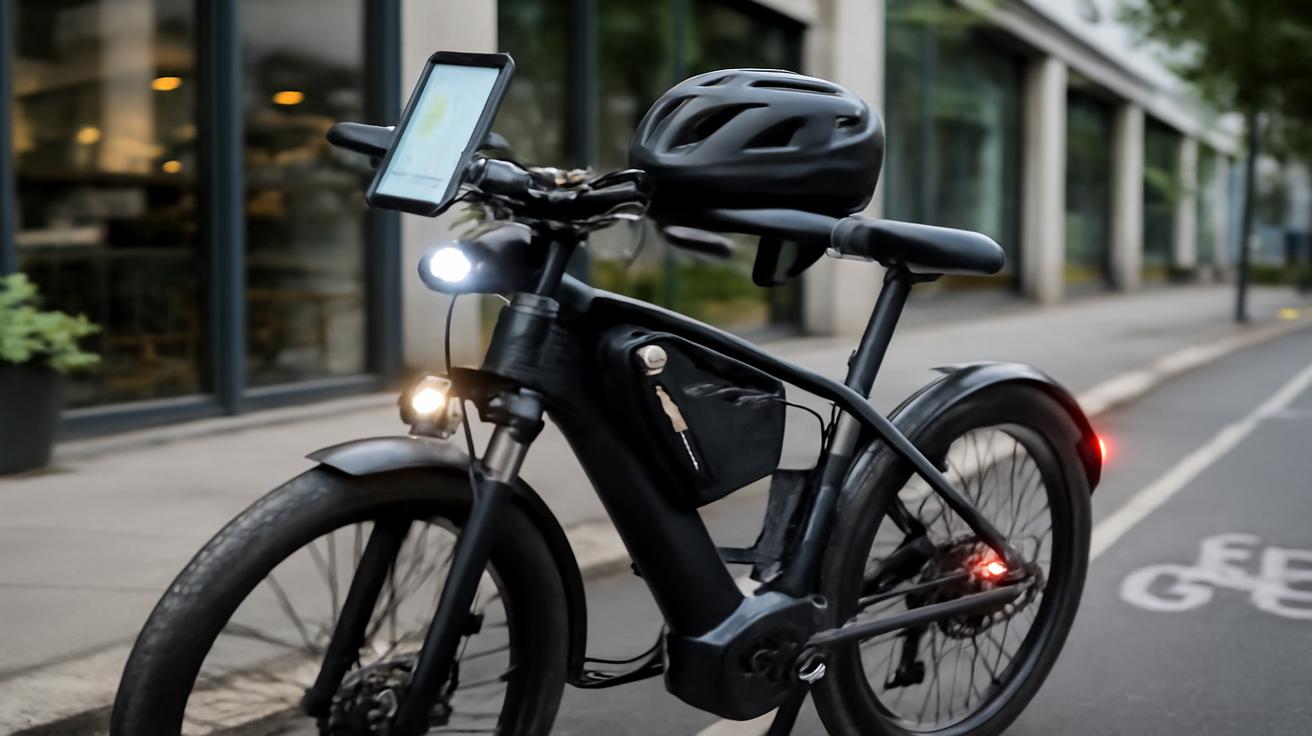
Three summers ago, on a bright, wind-scrubbed afternoon, I wheeled my first electric bike out of the shop and straight into what I was sure would be a new, easier life. The motor hummed like a secret I’d just been allowed to hear. Hills that used to leave me panting suddenly flattened out under my tires. Cars felt slower, the city felt smaller, and the world—at least for the first few weeks—seemed to tilt in my favor. I remember thinking, a little smugly, “This is it. I’m set.” What I didn’t know then was that the bike was just the beginning. The real story, the one that unfolded over months and years of riding through rain and dark and potholes, was about all the things I didn’t buy that day—and absolutely should have.
The Afternoon I Learned a Helmet Is Not “Optional”
The first time I truly understood how vulnerable an e-bike can make you was on a Tuesday in late October. The air smelled like wet leaves and exhaust, and I was gliding down a gentle slope on the way home from work, passing a line of parked cars. I was going maybe 25 km/h, halfway between biking and flying, when a car door snapped open right in front of me.
The next three seconds happened in a kind of smeared slow motion. My front wheel clipped the door; the handlebars jerked sideways; the sound of metal on metal crackled through the street. I remember the hard, helpless swing of gravity and the brief, terrifying clarity of knowing I was going down. My shoulder hit first, then my helmet bounced off the pavement with a sharp, hollow thud that I can still hear if I think about it.
I walked away with bruises, a torn jacket, and a rattled sense of immortality. Later that night, I held my helmet in my lap and looked at the jagged, fractured foam on the inside. It was split in two, like a broken eggshell. A quiet realization settled over me: if I hadn’t worn it, my skull might have been the thing that cracked.
Before that, I’d sometimes been “casual” about helmets—too hot, too close by, just a short ride, what’s the worst that could happen. After that day, my helmet went from accessory to ritual. It lived by the door like a set of keys. I learned to look for certain features: a snug, dial-fit system that didn’t wobble when I shook my head, plenty of vents so I didn’t feel like my brain was braising in summer, and, eventually, a model with integrated lights that made me impossible to ignore at dusk.
With an e-bike, you accelerate faster and travel further, often at speeds that quietly creep above what you’re used to on a regular bike. You’re sharing space with cars, trucks, and buses that don’t always see you. A helmet is the obvious thing everyone tells you to get—but what I wish someone had told me is this: don’t just “have a helmet.” Have a helmet you love enough to actually wear every single ride, even when you’re tired, even when you’re only going “three blocks.”
The Rainstorm That Taught Me About Fenders, Lights, and Layers
My second year with the e-bike was the year I decided to stop treating it as a fair-weather toy and start using it as transportation. That decision collided, almost immediately, with November.
One particular evening stands out. The sky had been flirting with rain all day—low, bruised clouds, the smell of wet asphalt waiting in the air. I’d stayed a little too long at a friend’s place, pretending that if I ignored the weather, it would ignore me back. By the time I finally snapped on my helmet and rolled away, the first drops were already spotting the pavement.
Within minutes, the rain turned from polite to personal. It didn’t fall so much as attack: cold, driving needles that bounced off my cheeks and slid down the back of my collar. My tires threw up a rooster tail of gritty water that arced perfectly—almost artistically—onto my lower back and up my coat. There’s a specific kind of damp misery that comes from realizing your backside is soaked with roadwater, and that there’s nothing you can do about it for the next 25 minutes.
That was the ride when I finally understood the quiet genius of full fenders. They’re not glamorous; no one stands in a bike shop admiring a set of fenders. But they are, without question, the difference between “I got caught in the rain” and “I rode through a carwash made of mud and despair.” After I installed proper, full-coverage fenders, the world changed: puddles became minor amusements instead of small disasters. My shoes still got wet, sure, but my back, legs, and bag stayed mostly dry, and that felt like a small miracle.
Lights, too, went from “nice idea” to “non-negotiable” in a single night. I’d started with a cheap clip-on headlight and a tiny red blinkie on the rear, the kind you might throw on a kid’s scooter. They were fine—until I had to ride home at 6 p.m. in the kind of rain that turns every street into a smear of reflections. Car headlights glared; wet pavement shimmered; my little lights might as well have been candles in a stadium.
I remember coasting through a crosswalk, the white paint slick beneath my tires, and seeing a driver’s face just barely register surprise as I appeared in front of them, ghostlike, at the last moment. We both stopped in time, but I went home shaking. The very next day, I bought a brighter front light, the kind that throws an actual beam of white across the road instead of a vague glow. I upgraded the rear light to something with a strong, pulsing pattern—more lighthouse than birthday candle.
Riding in the rain also taught me the quiet art of layers. I started keeping a light, packable shell in my pannier, the sort that can fend off a sudden downpour without turning me into a walking sauna. I learned that gloves matter; cold, wet fingers fumbling for brake levers are nobody’s idea of safe. None of these things felt like “gear” at first. They felt like small acts of kindness toward my future self.
The Day My Backpack Finally Lost the War
For almost a full year, I fought a private, stubborn battle with cargo. My logic was simple: I already owned a decent backpack. Why complicate things with racks, bags, and baskets? I wasn’t moving house; I was just commuting and running errands. How much stuff could I possibly need to carry?
As it turned out: more than my shoulders appreciated. There was the laptop and charger. The lunch. The water bottle. A change of clothes for the office, sometimes. Groceries on the way home—eggs if I was feeling brave, greens if I’d learned my lesson. Some days my backpack felt like it contained a small anvil made of responsibilities.
The breaking point came on a sticky summer afternoon. It was one of those days when the heat seems to thicken the air into something you have to push through, rather than simply breathe. I set off uphill, motor humming supportively, but my shirt was already starting to cling under the straps cutting across my shoulders. Halfway up the climb, sweat ran down my spine in a slow, unwavering stream. By the time I reached the top, my back was soaked, my neck ached, and I caught my own reflection in a shop window: red-faced, tense, and frankly a bit ridiculous.
That weekend, I installed a rear rack and bought my first pannier bag—a simple, everyday one that hooked neatly onto the rack and snapped off like a tote when I reached my destination. The difference was almost insulting in its obviousness. Where had this been all my life? Suddenly, the weight was no longer on my body; it was part of the bike. The motor, which had always been eager to help, now had something useful to do. I arrived places less sweaty, less sore, and somehow calmer. I could pick up groceries without doing a mental Tetris game in the aisle.
Over time, I experimented. A front basket for quick trips to the market. A second pannier when I knew rain was coming and I wanted to separate my dry clothes from the rest. A little frame bag for tools and a spare tube—just big enough to forget about until I needed it. The e-bike, once just a clever way to get from place to place, started to transform into something else entirely: a quiet, rolling companion that could help carry the weight of my days.
The Tiny Pieces of Gear That Make Every Ride Quieter
If the “big” accessories—helmet, fenders, rack, lights—were like learning the grammar of e-bike life, the little ones were the punctuation. They didn’t define the experience, but they made everything smoother, clearer, and easier to live with.
There was the day my chain slipped and wedged itself in a teeth-grinding angle between cassette and frame, ten kilometers from home. I stood by the road, fingers black with grease, trying to coax it back into place with a stick I found in the grass. That night, I bought a compact multi-tool and a pair of thin, packable gloves that lived permanently in my bag. I tossed in a spare tube, a tiny pump, and tire levers. It felt a bit ceremonial, like packing a first-aid kit. I didn’t expect to use them often—but when I did, I was very glad they were there.
Locks, too, became less of a chore and more of a system. My first lock was…optimistic. Light, easy to carry, and about as reassuring as a piece of colorful string. Then I started hearing more stories: the friend whose bike vanished outside a grocery store in broad daylight, the colleague who watched grainy security footage of someone calmly cutting through her cable lock in under a minute. My e-bike had become part of my life; the idea of losing it felt oddly personal.
Eventually, I settled into a two-lock strategy: a sturdy, U-shaped lock that clamped the frame to something immovable, and a lighter cable or chain that looped through the wheels. I got into the habit of locking it in busy, visible places, treating the choice of parking spot like the choice of a campsite: think ahead, look around, make sure you’ll still want to be here in an hour. It didn’t make the bike theft-proof—nothing truly does—but it made my odds much better, and my mind much calmer.
Then there was the bell: a tiny, high-pitched ring that cut through traffic noise and conversations with a gentle, almost musical note. For months I’d relied on my voice—“On your left!”—to warn pedestrians and other riders. It worked, mostly, but it always felt like an interruption, like I was shouting into someone else’s day. The bell changed that. Its sound seemed to carry a different kind of message: not a demand, but a presence. “I’m here,” it said, clearly and politely. It was a small thing, almost silly in its simplicity. But it softened nearly every interaction I had on shared paths and busy trails.
The Little Comforts I Didn’t Know I Needed
Some accessories didn’t reveal their value in a single dramatic moment. They just quietly made life better, ride by ride, until I couldn’t imagine going without them.
There were the gloves that turned from “winter-only” to near-daily companions, protecting my hands not just from cold but from wind and road vibration. The water bottle cage that meant I could sip without stopping. The small, mirrored lens attached to my handlebar that let me see the shimmer of cars approaching from behind, cueing me to hold my line or take the lane with a little more confidence.
One evening, heading home at twilight, the air held that particular cool, dusty sweetness that comes when the day’s heat is finally dissolving. A light breeze nudged at my jacket. Traffic was thinning. It was the kind of ride where everything feels loosely, improbably right. I remember feeling my gloved hands relaxed on the bars, the pannier gently swaying with the rhythm of the bike, the beam of my headlight painting a clean stripe on the road ahead. My phone, tucked away and silent, was no longer a fragile slab I worried about dropping from a sweaty hand—it lived in a small, waterproof pouch inside the bag, occasionally making a cameo via a simple handlebar mount when I needed navigation.
In that moment, I realized how each little piece of gear had subtly shifted the texture of my rides. I wasn’t bracing for discomfort anymore. I wasn’t constantly improvising around problems—a soaked backpack, numb fingers, a dead light, nowhere to stash an extra layer. The bike didn’t feel like a gamble; it felt like a plan.
The Accessories I Wish I’d Bought from Day One
Looking back over three years and hundreds of rides—through heat and frost, sunshine and sideways rain—there’s a clear pattern in which accessories truly changed everything, and which ones I only appreciated later. If I could go back to that bright, naive afternoon when I first rolled my e-bike out of the shop, I would hand my past self a short, unsentimental list.
| Accessory | Why It Matters | When I Finally “Got It” |
|---|---|---|
| Comfortable, well-ventilated helmet | Protects your head at e-bike speeds; comfortable enough to wear every ride. | After the car-door crash in October. |
| Bright front and rear lights | Let you see and be seen in rain, dusk, and city glare. | Riding home in heavy rain at 6 p.m. in winter. |
| Full fenders | Keep road spray off your back, legs, and bag; turn downpours into mild annoyances. | After one soaked, mud-streaked commute in November. |
| Rear rack and pannier bag | Move the load from your shoulders to the bike; make errands and commuting easier. | The summer day my backpack left me drenched and sore. |
| Strong locks (ideally two) | Protect a valuable e-bike from quick, opportunistic theft. | After hearing too many “my bike was gone in ten minutes” stories. |
| Tool kit, spare tube, small pump | Turn a roadside disaster into a minor delay. | When my chain jammed and I had nothing but a stick and hope. |
| Bell, gloves, and simple mirror | Improve comfort, communication, and awareness in traffic. | Gradually, as daily rides became second nature. |
If you’re standing where I once stood—new e-bike beneath your hands, future unfolding in a hum of quiet power—here’s what I wish someone had whispered in your ear before you rode away: the bike is just the frame of the story. The accessories, humble and unglamorous as some of them seem, are what turn this from an experiment into a way of life. They’re what make the difference between asking, “Will this work today?” and knowing, without drama, that it will.
Because one day, maybe sooner than you think, you’ll find yourself cruising home under a sky smeared with the last light of evening. The road will be damp but your clothes will be dry. Your bag will be heavy but your shoulders free. Your headlight will carve a clear path ahead, your bell will chime once as you pass a couple walking their dog, and your helmet will sit easy and forgotten on your head. The motor will buzz softly, your legs will turn in an easy rhythm, and you’ll realize you’re not thinking about the bike at all. You’re just…riding. And that’s when you’ll know you didn’t just buy a machine—you built yourself a way to move through the world.
FAQ
Do I really need all these accessories right away?
No. Start with the safety essentials—helmet, good lights, and a solid lock. Then add others as you begin to feel the limits of your current setup. Often a single bad ride in the rain or with a heavy backpack will tell you exactly what to buy next.
What’s the single most important accessory for an e-bike?
A helmet you’ll actually wear every time. E-bikes are heavier and faster than regular bikes, and even a minor crash can have serious consequences. Comfort, ventilation, and proper fit are just as important as impact protection.
Are cheap lights and locks good enough?
Usually not for daily e-bike use. A bright, rechargeable light set and a strong lock (or two) are worth the investment, both for your safety and the security of a bike that likely cost you a significant amount of money.
Why are fenders such a big deal?
Because road spray is worse than you think. Fenders don’t just keep your clothes cleaner; they also help protect your drivetrain and reduce the amount of dirty water flung toward your face and back. If you plan to ride in anything but perfect weather, they’re invaluable.
How do I know which cargo solution is right for me?
Think about your most common trips. If you mostly commute with a laptop and lunch, a single pannier might be enough. If you run errands and buy groceries by bike, a rear rack with two panniers or a combination of rear rack and front basket will make life much easier.
Is a repair kit really necessary if I’m mostly in the city?
Yes. Flats and minor mechanical issues can happen anywhere, and being able to fix them yourself can save you from long walks, expensive taxis, or missed appointments. A small multi-tool, spare tube, pump, and tire levers take up very little space but can be priceless when you need them.
What’s the best way to prioritize accessories on a budget?
Think in this order: safety (helmet, lights, lock), then comfort (fenders, gloves, basic rain layer), then practicality (rack, panniers, tools). Start with what will protect you, then add what will make you want to ride more often and more happily.