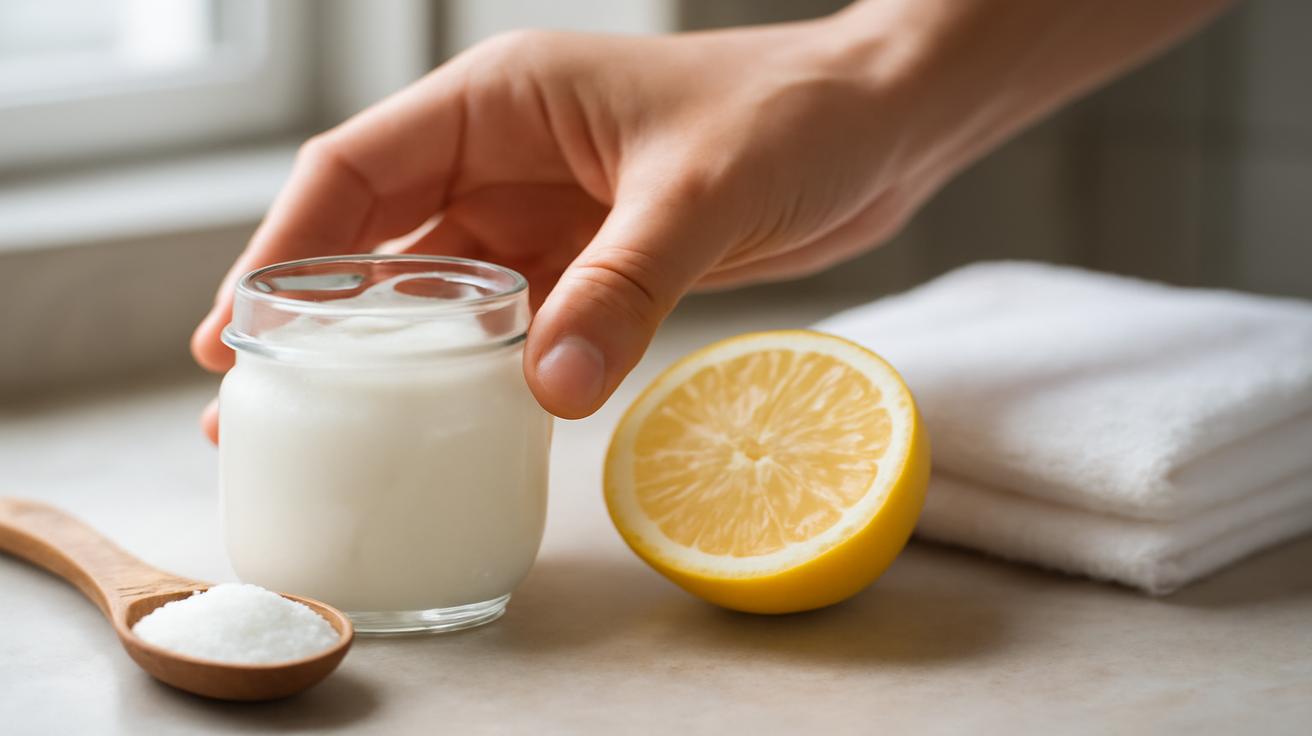
The first morning I pressed a pinch of white powder into my damp underarms, I could almost hear my grandmother laughing. The box lived between a half‑empty bag of flour and a jar of dried chickpeas, the last place anyone expects to find a “beauty product.” No frosted glass bottle. No pastel label. Just a humble cardboard box with a name that sounded more like chemistry class than personal care. Yet here I was, standing in my kitchen in an oversized T‑shirt, heart thumping harder than it reasonably should over something as ordinary as deodorant.
I had turned off the fan so I could really pay attention. The morning air in the kitchen was thick with the smell of brewed coffee and toast. Sunlight streamed in, landing in imperfect squares across the countertop, illuminating dust motes and the tiny cloud of powder I had just released. It smelled like nothing, which was part of the point, I reminded myself. No “Mist of Alpine Meadow.” No “Fresh Summer Rain.” Just silence, scentless and honest, waiting to see what my body would do with it over the course of the day.
As the powder settled on my skin, a strange calm followed. It felt like committing a small act of rebellion. Not the kind that changes the world, but the kind that changes how you move through it. I didn’t know it yet, but that quiet little act in my kitchen was going to become one of those decisions that rewires the way you see your body, your habits, and even the way you walk into a crowded room.
How A Sweaty Bus Ride Broke My Loyalty to Conventional Deodorant
It started on a city bus in late June, the kind that feels like a rolling greenhouse. I was pinned between a stranger in a grey suit and a woman cradling a potted basil plant, as if she’d just rescued it from a rooftop garden. The air smelled like hot metal, exhaust, and a scattered blend of perfumes fighting for dominance.
Somewhere between two stops I caught a whiff of myself. Underneath the floral deodorant I’d been using for years, something sharper was pushing through. Not full‑on body odor, but the uneasy edge of it. I shifted my arms, suddenly hyper‑aware. I’d applied my deodorant twice that morning. I’d spent more than I care to admit on that sleek little tube. It promised 48‑hour protection and a list of adjectives that sounded like a spa menu. Yet here I was, feeling like a walking chemistry experiment gone slightly wrong.
That evening, out of a mix of curiosity and mild frustration, I did what we all do: I opened my laptop. Within minutes I had fallen down the rabbit hole of deodorant facts, myths, ingredient lists, and heated internet forums where people argue passionately about things like aluminum salts and sweat glands. I wasn’t looking for fear. I was looking for understanding. Why did something designed to help me feel clean suddenly make me feel like I was hiding from my own body?
What struck me most wasn’t a single alarming study or scary headline. It was the sheer volume of stuff in something so small. Fragrance blends. Stabilizers. Emulsifiers. Preservatives. Half the ingredients sounded like they’d be more at home under a lab fume hood than in my armpits. The more I read, the more absurd it felt that I, a reasonably simple person with reasonably simple needs, was rolling a tiny science fair project onto one of the more absorbent parts of my body every single day.
That’s how the kitchen ingredient came in—not as a silver bullet, not as a cure‑all, but as a quiet question: what if this could be easier?
The Day I Opened My Pantry Instead of My Bathroom Drawer
The ingredient, of course, was baking soda—sodium bicarbonate, that eternally unimpressed white powder living a quiet life behind the olive oil. I had always known it as the thing that made my banana bread rise and that tiny open box people kept in the back of the fridge to “absorb smells,” like some unassuming kitchen superhero.
I remembered reading somewhere—probably on one of those minimalist blogs I like to scroll through late at night—that some people use baking soda as deodorant. At the time, I’d rolled my eyes. People on the internet will do anything for a story. But now, standing in my kitchen, my fancy deodorant still sulking in the bathroom, the idea didn’t seem so far‑fetched. After all, if this stuff could calm an upset stomach, soothe bug bites, and keep my fridge from smelling like last week’s leftovers, maybe it deserved a shot at my underarms.
I did what any cautious, slightly skeptical person would do: I tested. I wet my fingertip, dabbed it in the powder, and pressed a whisper‑thin layer onto just one armpit. The other side got my usual deodorant. A bizarre little half‑science experiment on my own body. The baking soda side felt oddly smooth, almost slippery before it dried down to nothing. No stickiness. No residue. No smell at all.
It was a workday. I walked to the bus stop with the awareness of someone carrying a secret. The summer air leaned heavy and warm. I could feel the familiar creeping shine of sweat along my hairline, the dampness at the small of my back. Yet under my arms, there was just… neutrality. Not dryness, not wetness. Just normal. The bus came. People pressed in. The city exhaled its usual blend of hot pavement, exhaust, and too‑strong cologne. I raised my arm to hold the overhead bar and, out of pure curiosity, took the smallest, most covert breath toward myself.
Nothing. Not “nothing, but kind of.” Just nothing. The baking soda side smelled like skin. The deodorant side smelled like artificial lavender battling something sour. The contrast was not subtle.
The First Time My Friends Actually Noticed
It wasn’t until a week later that anyone else knew what I’d done. By then, I had fully switched over. A tiny jar of baking soda had migrated permanently from the pantry to a corner of my bathroom shelf, looking adorably out of place amongst the sleek packaging. I’d stopped using my old deodorant altogether. Each morning was the same: shower, pat dry, a little water on my fingers, a pinch of powder, dab and done. No drama. No scent trail following me the way my old products had.
On Friday night, I met two friends, Mira and Josh, at a small bar that always smells like spilled beer, citrus, and nostalgia. The kind of place where the tables wobble and the bartender remembers your face but never your drink. The summer heat followed us inside, wrapping itself around our shoulders and necks. Within half an hour, we were sticking to our seats and laughing too loudly.
At some point, Mira leaned in to hug me from the side. “You always smell so clean,” she said, almost absentmindedly, then paused. “Wait. Did you change your perfume? It’s like… there’s nothing, but in a good way. You smell like… fresh air?”
Josh, overhearing, laughed. “What does ‘nothing in a good way’ even mean?” he asked, but then he sniffed the air near me with exaggerated drama. “Huh. She’s right. You don’t smell like anything. It’s weirdly… nice.”
I burst out laughing. “You want to know my new perfume?” I asked. “My new deodorant lives in my kitchen.”
They stared at me. “No,” said Mira. “Absolutely not. What is it?”
“Baking soda,” I said, bracing for their horror. “Just plain baking soda. From the grocery store.”
There was a moment of silence, and then the kind of laughter that draws glances from nearby tables. But beneath the jokes—“Should we all just start showering with dish soap too?” “Coming next: olive oil hair gel!”—I could see their curiosity glowing. I offered details. I told them how it actually neutralizes odor instead of covering it. How I had gone through a full workday, a yoga class, and a packed train ride without a single self‑conscious sniff.
By the end of the night, after too many shared fries and one spilled drink, both of them had said some version of: “Okay, send me exactly how you’re doing this.” That was the part that surprised me. Not that my little experiment had worked, but that the absence of a smell could be so noticeable to the people who knew me best.
The Simple Little Routine That Replaced a Shelf of Products
People always assume it must be complicated. That if you’re using something as unglamorous as a kitchen ingredient on your body, there must be a long list of steps to make it work. The truth is far more boring—and somehow, that’s what feels luxurious about it.
Here’s what my routine looks like now, on a typical morning when the light is just starting to soften through the curtains and the house still smells faintly of last night’s dinner and sleep:
- I shower as usual, using a mild, unscented soap on my underarms.
- I pat the area dry thoroughly. This part matters more than I expected.
- I wet my fingertips very lightly—just enough to make them tacky, not dripping.
- I dip my fingertips into a small jar of baking soda I keep in the bathroom (separate from the one in my pantry).
- I gently press and smooth the powder into my underarms. No rubbing hard, no scrubbing. Just a thin, even layer.
- I let it sit for a minute while I do something else—brush my hair, water my plant, stare at my coffee like it holds all the answers.
Then I go about my day. And, most of the time, that’s all I need.
It isn’t magic. I still sweat, because that’s what a living body does when it’s warm or nervous or alive. Baking soda isn’t an antiperspirant; it doesn’t block your sweat glands. I feel the dampness under my arms during a long walk or a stressful meeting, but what’s missing is the sharp, sour edge that used to make me clamp my arms to my sides on crowded trains.
On especially hot days, or when I know I’ll be running around a lot, I sometimes reapply once in the late afternoon. A quick freshen‑up in the bathroom at work: a splash of water on my fingertips, a tap into the tiny travel tin I now carry in my bag, dab dab, done. No white streaks on my shirt. No cloying wave of fragrance announcing my return to my desk.
My Personal Experience: What Actually Changed
After about a month, I started to notice changes I hadn’t expected:
- My clothes stopped holding onto that “old deodorant” smell—you know, the one that clings to the armpits of your favorite shirts no matter how often you wash them.
- My skin felt calmer. The occasional itchy patches and tiny bumps I’d just accepted as part of life mostly disappeared.
- I became oddly more relaxed in social situations. Not dramatically, but in that subtle way confidence sneaks in when there’s one less thing to worry about.
For something that cost less than a bar of soap and lived in my kitchen for years unnoticed, the impact felt disproportionate—in the best way.
But Is It Safe? Honest Thoughts and Gentle Warnings
As much as I love this shift, I won’t pretend baking soda is a one‑size‑fits‑all miracle. Bodies are too beautifully complicated for that.
Baking soda is alkaline, while our skin is naturally slightly acidic. For many people (including me), a small amount used gently and not too often works beautifully. For others, it can cause redness, irritation, or a rash, especially with heavy application or on freshly shaved skin.
If you’re thinking about trying it, here’s a simple, realistic way to experiment without terrorizing your armpits:
- Patch test first. Mix a pinch of baking soda with a few drops of water and apply it to a small area of skin on your inner arm. Wait 24 hours and see how your skin behaves.
- Start slowly. Try it one day on, one day off at first. Alternate with a gentle, conventional deodorant or just go bare on low‑stakes days at home.
- Use a light touch. More is not better here. A dusting is enough. If your skin feels gritty or you can see a thick white layer, you’ve used too much.
- Don’t apply right after shaving. Wait a few hours, or shave at night and apply baking soda in the morning.
- Listen carefully to your skin. A little tingling once in a while might be okay; persistent redness, burning, or rash is your body’s way of saying “no, thanks.”
To keep things simple for myself (and because I like tracking things way more than is strictly necessary), I started jotting down what I noticed in a tiny note on my phone. It looked something like this:
| Week | What I Tried | How My Skin Reacted |
|---|---|---|
| 1 | Baking soda every other day, very thin layer | No irritation, mild dampness but no odor |
| 2 | Daily use, one mid‑day reapplication on hot days | Skin fine, clothes noticeably fresher |
| 3 | Tried applying right after shaving | Mild stinging, slight redness—decided to stop doing that |
| 4 | Settled into daily use, skipping on quiet days at home | Skin calm, no noticeable odor even after long days |
If your notes start looking more like “itchy, red, nope,” it’s perfectly fine to acknowledge that your body doesn’t want to be part of this particular experiment. Gentle honesty with your own skin is more important than any internet trend.
What This Tiny Change Quietly Taught Me About My Own Body
Beneath all the practical aspects—the cost savings, the simplicity, the weird joy of telling friends that your deodorant lives next to the cinnamon—there was something quietly profound about this shift for me.
I started paying attention in a way I never had before. Not in a paranoid, hyper‑critical way, but with curiosity. What did my body actually smell like before I showered? After a workout? On a day of doing nothing but reading on the couch? Without the heavy mask of synthetic fragrance, I could finally tell. And what I found was… not the disaster I’d been conditioned to fear.
Most days, I smelled like a person. Faintly salty, sometimes a little warm, sometimes almost sweet after a day in the sun. On truly stressful days or after a lot of rushing around, there was more intensity, more edge—but it felt like information, not failure. My body, talking to me in a language I’d been covering up for years.
The baking soda didn’t erase that language. It softened it. It took the volume down on the parts I didn’t want to broadcast to a whole room, while leaving the rest untouched. It felt less like putting on armor and more like learning to live with myself as I am, with a little gentle support.
And then there was the environmental and emotional piece. Recycling the last plastic deodorant tube from my shelf, noticing the absence of a new one appearing each month, carried a quiet kind of relief. My bathroom became a little less cluttered, my shopping list a little shorter. It sounds small, but in a world that constantly tells us we need more to be acceptable, there was something deeply grounding about needing less.
FAQs About Swapping Deodorant for Baking Soda
Does baking soda really work as a deodorant?
For many people, yes. Baking soda helps neutralize the acids and compounds that cause odor when sweat meets the bacteria on your skin. It doesn’t stop you from sweating, but it often prevents that sweat from becoming noticeably smelly. Some people find it works better than conventional deodorant; others find it less effective. Bodies vary.
Will I still sweat if I use baking soda instead of deodorant?
Yes. Baking soda is not an antiperspirant, so it doesn’t block your sweat glands. You’ll likely still feel some dampness, especially in heat or during exercise, but without the strong odor many people associate with sweat.
Can baking soda irritate my skin?
It can. Some people tolerate it very well; others experience redness, itching, or rash, especially if they apply too much, use it on freshly shaved skin, or have very sensitive skin. That’s why patch testing and using a very light hand are important. If your skin becomes irritated, stop using it and let your skin recover.
How much baking soda should I use?
Less than you probably think. A light dusting on damp fingertips—just enough to create a thin, even layer—is usually enough. If you can see a thick white coating or feel grittiness, you’ve used too much. Too much product doesn’t improve effectiveness and can increase the chance of irritation.
Can I mix baking soda with other ingredients?
Many people do. Common additions include a little cornstarch or arrowroot powder (to absorb moisture) and a few drops of skin‑friendly oils like coconut or jojoba to reduce irritation. If you experiment with blends, start small and test each variation on a small area of skin first.
Is this okay to use every day?
It can be for some people, but not for everyone. Some use baking soda daily with no issues; others do better using it a few times a week and going without or using a different gentle deodorant on off days. Pay attention to how your skin responds over time, not just the first few days.
What if I try it and it doesn’t work for me?
Then you’ve learned something useful about your body, which is still a win. Not every natural solution works for every person. If baking soda causes irritation or doesn’t control odor the way you’d like, it’s okay to go back to products that make you feel comfortable and confident. The goal isn’t to be perfect; it’s to be honest about what truly supports you.
These days, when I reach into my bathroom cabinet in the hazy half‑light of morning, my fingers find that small jar of powder almost automatically. I think of my kitchen. I think of that sweaty bus ride. I think of my friends, leaning in, puzzled by the quietness of my scent. Most of all, I think of how something so small—the choice to use a kitchen ingredient instead of a product in pretty packaging—opened up a gentler, more curious relationship with my own body. And for something that cost less than my last latte, that feels like a pretty generous trade.