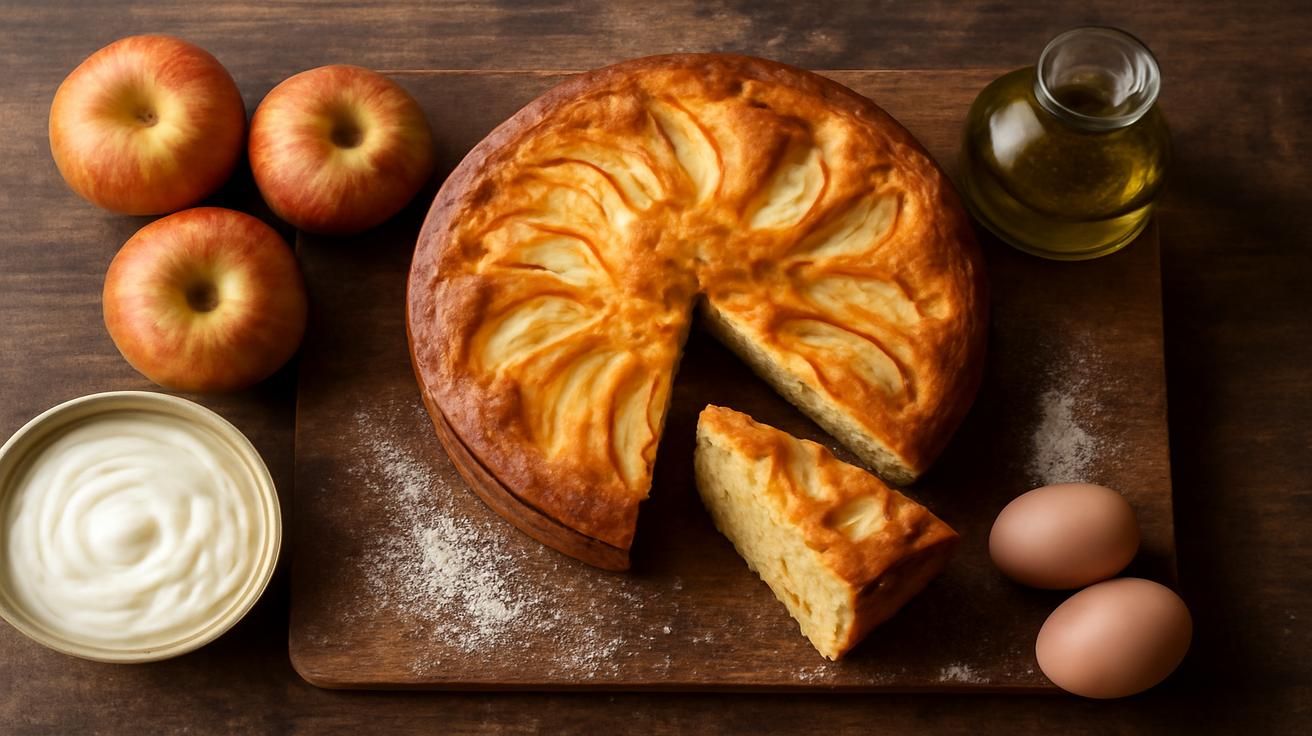
The first time you make a light apple cake with oil and yogurt, it doesn’t feel like baking in the old, serious sense of the word. It feels more like putting together a quiet afternoon: a bowl, a whisk, a few pantry things you already know by heart. No heavy bricks of butter to soften, no electric mixer roaring across the counter. Just the sound of apples hitting the cutting board, the fragrance of cinnamon drifting up as if it has been waiting all week for this moment, and the soft, almost shy, puff of batter that comes together in minutes. It’s the kind of cake that makes you question why dessert ever needed to be complicated at all.
The Kind of Cake You Make on a Tuesday
There’s a certain pressure that hovers around baking, as though every cake should rise to the level of celebration: birthdays, holidays, towering layers, elaborate frostings. But most days are not birthdays. Most days are Tuesday evenings, when the sky turns the color of old linen and you want something gentle, something that asks very little of you and gives you back more than it took.
This light apple cake is exactly that. It’s made with oil instead of butter, yogurt instead of cream or buttermilk, and a modest amount of sugar that lets the apples speak up. It belongs to the category of “whisk cakes” — the kind where you don’t cream butter and sugar together for five patient minutes. You just stir, pour, and slide the pan into the oven.
Oil gives the crumb a quiet suppleness, a softness that lasts for days instead of turning firm and tired by tomorrow’s breakfast. Yogurt adds a gentle tang and a lift, the sort you taste more in the way the cake feels on your tongue than in any overt sourness. Combined with thin slices of apple, it bakes into a dessert that feels like it could just as easily be called breakfast, or a late-night snack, or the thing you eat standing by the window when everyone else has gone to bed.
Why Oil and Yogurt Change Everything
Think of all the cakes you’ve known that start with butter. Butter is marvelous, yes, but it demands planning: time to soften on the counter, a mixer to beat it into fluff, a certain attentiveness to temperature and mood. Oil is more forgiving. It waits in the cupboard, ready at a moment’s notice. You measure, you pour, you’re halfway to batter before you even realize you’ve started baking.
In this cake, oil doesn’t just simplify the process; it gives the crumb a particular tenderness. Because oil is liquid at room temperature, the cake stays soft even the next day, and the one after that, instead of firming up as butter-based cakes often do. When you press your fork into a slice, it yields easily, almost lazily, as though it has no intention of crumbling or putting up a fight.
Yogurt, meanwhile, functions like a quiet architect behind the scenes. It adds moisture, yes, but also structure. The gentle acidity of yogurt reacts with baking powder, giving the cake lift without airiness, a lightness that isn’t fragile. You end up with something that is neither dense nor fluffy, but in that ideal middle ground: a soft, close crumb that cradles the apple slices rather than swallowing them.
And then there’s the taste. The oil brings neutrality, letting the apples and vanilla and cinnamon do the talking. The yogurt adds the faintest tang, the suggestion of something almost creamy without the heaviness of cream. Together, they give you a cake that feels modern and unfussy — the sort of dessert you can make on a whim when you’ve brought home too many apples and realize you’re not in the mood for pie.
The Apples: Slices of Autumn in Every Bite
There’s an intimacy in the way you prepare apples for this cake. You don’t blitz them into oblivion or hide them beneath a thick layer of frosting. You peel them slowly, feeling the weight of each fruit in your palm, the peel curling down in a long red or green ribbon. You core, you slice — not too thin, not too thick, just enough that they’ll soften but still hold a bit of themselves in the oven’s heat.
Any apple that holds up to baking will work: the tart brightness of Granny Smith, the balanced sweetness of Honeycrisp or Braeburn, even whatever mixed bag you have rolling around in your fruit bowl. The cake is forgiving, more interested in the way the apples surrender their juice into the batter than in insisting on a particular variety.
As the cake bakes, something subtle happens. The apples sink and nestle into the batter, each slice suspended in a golden, fragrant cloud. The edges closest to the heat caramelize just slightly, their sugars deepening, their texture softening to the point where your fork slides through them with no resistance at all. You can taste the oven in them — that mingling of warmth and time and patience that you just can’t imitate any other way.
The scent fills the kitchen long before the timer goes off. Apple, cinnamon, vanilla, and the cozy, nearly toasted note of batter turning into cake. It’s the kind of smell that makes people wander in from other rooms and ask, “What are you making?” in that hopeful way, as if you might say it’s for them, specifically, even though you both know it’s for anyone who happens to be nearby when it comes out of the oven.
A Cake for People Who Think They Don’t Have Time
There’s a myth that hovers over homemade desserts: that they belong to people who have long, leisurely afternoons to spare, or who maintain a drawer of special tools and ingredients, or who possess the sort of patience that allows them to frost a cake with the precision of a sculptor. But this apple cake is the quiet rebuttal to all of that.
The steps are almost disarmingly simple. You whisk the wet ingredients together: eggs, sugar, oil, yogurt, and a splash of vanilla that blooms as it hits the bowl. In another bowl, you mix the flour with baking powder, a pinch of salt, and cinnamon. You fold the dry into the wet, watching the batter thicken into something pale and promising. The apples are folded in, their slices disappearing and reappearing as you stir, like fish in a shallow stream.
The beauty is in how little it asks of you. No need to chill, no need to rest, no need to layer or decorate. The oven does the rest, turning your casual gesture into something that looks as if you meant to spoil everyone. You could start this cake at the end of dinner and still have warm slices on the table before the conversation has gently drifted into talk of the coming week.
And when it comes out of the oven — domed and golden, edges just beginning to pull away from the pan — you don’t need to do much. Maybe a light snowfall of powdered sugar if you’re feeling a little theatrical. Maybe nothing at all. The apples, the scent, the crumb: they’re enough. It’s a cake that asks you to reconsider what “effortless” can mean in the kitchen.
Texture, Flavor, and Those Little Tweaks That Make It Yours
One of the quiet pleasures of a simple, oil-and-yogurt apple cake is how easily it adapts to your mood without ever losing itself. You can keep it as bare and honest as you like, or you can nudge it gently in different directions with a spice, a fruit, a handful of something crunchy on top. The base is steady enough to hold these variations, like a well-loved trail that still feels familiar even when the light changes.
Warm spices are the easiest way to shift its personality. Cinnamon is the obvious, comforting choice, but a pinch of nutmeg can deepen its warmth, while cardamom adds a quiet floral lift, the kind of flavor that makes people pause between bites and ask, “What is that?” without being able to quite place it. A hint of lemon zest in the batter brightens everything, cutting through the softness with a clean, fragrant line.
Then there’s texture. If you like a bit of crunch against the cake’s tenderness, scatter a small handful of sliced almonds or chopped hazelnuts across the top before baking. As the cake rises, they sink in just enough to cling to the surface, toasting slightly in the oven’s heat. Every bite becomes a small conversation between soft and crisp, fruit and crumb, sweetness and nuttiness.
And while apples are the star, they don’t mind sharing the stage. A few thin slices of pear tucked among the apples introduce an almost floral sweetness. A handful of raisins or chopped dried apricots can add surprise pockets of chew and flavor. But the cake never demands these additions. Its greatest charm lies in how satisfying it is in its simplest form: oil, yogurt, apples, and the warmth of your oven.
| Component | What It Adds |
|---|---|
| Neutral oil | Lasting moisture, tender crumb, no need to soften butter |
| Yogurt | Light tang, gentle lift, a soft but structured texture |
| Apples | Natural sweetness, juiciness, and pockets of soft fruit |
| Sugar & vanilla | Balanced sweetness and a cozy, familiar aroma |
| Spices | Warm, comforting depth that pairs with the apples |
Serving: From Quiet Afternoons to Shared Evenings
There’s a particular pleasure in serving this cake still a little warm, the steam rising faintly as you cut through the golden surface. The knife moves easily, the crumb giving way without crumbling into chaos. Apple slices reveal themselves in cross-section, like pale moons suspended in a soft, fragrant sky.
On a slow afternoon, you might take a slice as it is, eaten over a napkin or a small plate, crumbs soft against your fingertips. The sweetness is gentle enough that it pairs beautifully with a mug of tea or coffee, something dark and not too sweet to balance the cake’s warmth. It’s the kind of dessert that doesn’t demand silence but seems to create it anyway, a small, edible pause in the day.
In the evening, when you have people around your table, you might dress it up just a little. A spoonful of thick yogurt alongside, maybe, echoing the tang inside the cake. Or a small cloud of whipped cream that melts slowly against the still-warm crumb. If you’re feeling bold, a drizzle of warm honey or a thread of caramel can turn it from “casual dessert” into something that feels restaurant-worthy, without any extra stress in the making.
Leftovers, if you’re lucky enough to have any, become a quiet gift to your future self. A slice in the morning, slightly warmed in the oven or even a dry pan, feels more virtuous than indulgent. The oil keeps it soft; the apples, now fully settled into the crumb, taste even more of themselves. It’s not the kind of cake that goes stale overnight, and that alone makes it feel like a small, domestic luxury.
The Effortless Ritual of Making It Again
What makes this light apple cake truly special is not just that it’s easy the first time. It’s that, after a bake or two, the recipe nearly imprints itself in your hands. You start to remember the rough measures by feel: how the batter should look, how loosely the apples should pile in the bowl, the way the kitchen smells when it’s five minutes from done.
You begin to trust little cues instead of clinging to the timer. The top turning a deep, satisfying gold. The edges pulling away from the pan just enough. The scent moving from straightforward sweetness into something more complex and rounded. When you press the center lightly with a fingertip, it springs back, warm and resilient. That’s when you know.
It becomes a ritual that fits into the seams of life rather than rearranging it. Apples you bought for snacking but never quite reached become dessert instead of waste. Yogurt at the back of the fridge finds a better fate than being forgotten. Oil, sugar, flour — the pantry constants — gain a new identity every time you whisk them together.
And perhaps the most surprising part is how quietly this cake takes up residence in your repertoire. Soon, you find yourself saying, “I’ll just make that apple cake,” as if it were nothing at all. But every time it emerges from the oven, every time someone takes that first bite and pauses — just for a breath, just to enjoy — you’re reminded that effortless doesn’t have to mean ordinary. Sometimes it means you’ve discovered the kind of dessert that meets you exactly where you are: tired, busy, hopeful, hungry for something simple and good.
Frequently Asked Questions
Can I use Greek yogurt instead of regular yogurt?
Yes. Greek yogurt works beautifully in this cake. If it is very thick, you can thin it slightly with a spoonful of milk or water so it mixes smoothly into the batter. The result will be tender and slightly richer.
What type of oil is best for this apple cake?
Use a neutral-tasting oil such as sunflower, canola, light olive oil, or grapeseed oil. Strongly flavored oils can overpower the delicate balance of apples, vanilla, and spices.
Do I need to peel the apples?
You don’t have to, but peeling creates a softer, more uniform texture. If you enjoy a bit of chew and color in the cake, you can leave the peels on, especially if you’re using thin-skinned, organic apples.
Can I make this cake ahead of time?
Absolutely. The oil and yogurt help the cake stay moist for up to two or three days when stored in an airtight container at room temperature. Many people find the flavor even better the next day as the apples settle into the crumb.
Can I reduce the sugar to make it lighter?
Yes, you can usually reduce the sugar by about 20–25% without dramatically affecting the texture, especially if your apples are naturally sweet. Just keep in mind that sugar contributes to moisture and browning, so the cake may be slightly less golden and a touch less tender.
Is it possible to make this cake gluten-free?
You can experiment with a gluten-free all-purpose flour blend designed for baking, using it as a one-to-one swap for regular flour. The texture may be a bit more delicate, but the oil and yogurt will still provide moisture and softness.
How do I know when the cake is fully baked?
Look for a golden top, edges just beginning to pull away from the pan, and a center that springs back lightly when touched. A toothpick inserted into the middle should come out mostly clean, with just a few moist crumbs but no wet batter.