The last time the old pressure cooker screamed, it was a Sunday afternoon and the whole house flinched. Steam hissed out in a sharp white jet, the metal lid rattled, and somewhere in the living room a child announced, with complete certainty, “It’s going to explode.” The smell of lentils, turmeric, and slightly scorched onions filled the air, and in that moment, everyone was reminded of the nervous dance that has long accompanied cooking under pressure: watch the flame, listen for the whistle, hope you tightened the lid enough, and trust that nothing goes suddenly, violently wrong.
The Rise and Rattle of the Old Pressure Cooker
For decades, the pressure cooker was a kind of domestic time machine. It shrank long, slow recipes into weeknight possibilities. Beans that once required overnight soaking and hour-long simmering became soft and creamy in a fraction of the time. Meat surrendered its toughness, grains fluffed up, broths deepened. In many homes, that heavy metal pot was a sign that dinner would be hearty and fast.
But there was always a cost: vigilance. You learned to read the signs the way sailors read the sea. The tiny valve at the top, trembling and spinning. The pitch of the whistle that told you whether the pressure was right, too high, or dangerously off. The line between “just enough water” and “burned at the bottom” was razor-thin. Stories traveled between generations: the lid that flew, the curry splattered across the ceiling, the burn mark left on a forearm that reached in too soon.
Parents taught children a wary respect for that pot. “Don’t touch it.” “Wait for the pressure to go down.” “Stand back when I open the lid.” The pressure cooker was a miracle worker, but also an unpredictable one, demanding attention, skill, and a little bit of courage every time it went on the stove.
Hello to a Quieter Kitchen
Now, in more and more homes, the soundtrack of cooking is quieter. The whistle is fading into memory, replaced by a soft electronic chime. The hulking metal pot still sits in many cupboards, but it is being nudged aside by something sleeker, rounder, and oddly calm: a smart, electric cooker that promises to do everything the old pressure cooker did—only safer, cleaner, and without all that nerve-racking drama.
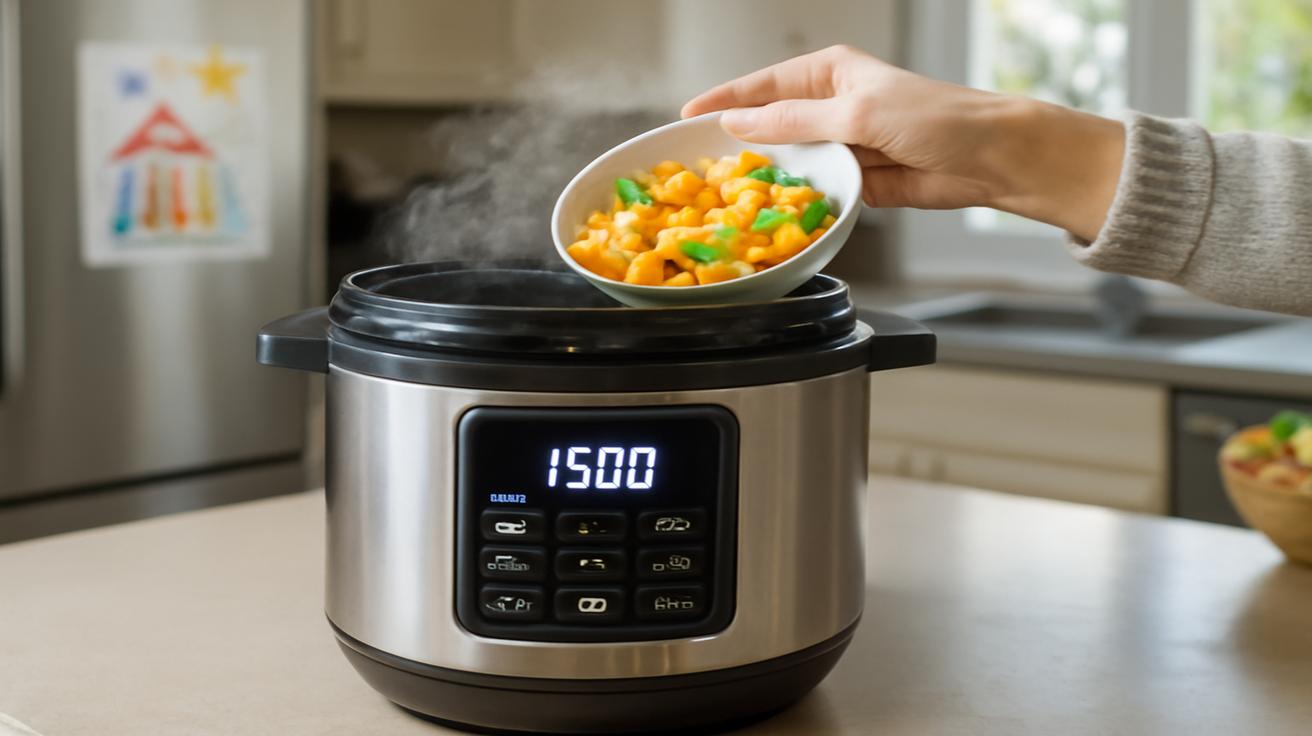
On a recent evening, in a small apartment kitchen, a mother stood in front of one of these new appliances, running her fingers over its smooth digital display. Her teenager hovered nearby, phone in hand, recording a quick video for friends. Instead of checking the flame, they were choosing a program: “beans,” “rice,” “stew,” “yogurt.” Each button lit up with a gentle glow, no shrill whistles, no wobbling valve, just a reassuring countdown on the screen. When they pressed start, there was no sudden rush of noise—only a low, contented hum, like the kitchen had taken a deep, slow breath.
This is the new ritual. Instead of negotiating pressure rings and gaskets, families are trusting a built-in brain: temperature sensors, pressure regulators, algorithms that know when to simmer and when to seal, and when—even more importantly—to stop. The old drama of the pressure cooker is being replaced by something quieter, subtler, and more predictable. And with that shift comes a surprising emotional change: cooking under pressure no longer has to feel like cooking on edge.
The Hidden Fear Behind the Whistle
Ask around in any group of home cooks, and the same story appears in different accents and kitchens. An aunt who refused to use the pressure cooker for years after one exploded in her childhood home. A grandfather who insisted no one else touch it because “only I know how to listen to it.” A friend who still steps back every time she opens the lid, just in case. Admitting fear in the kitchen can be hard, but the pressure cooker made a lot of people quietly nervous.
Some fears were rooted in real incidents. Gaskets that wore out without anyone noticing until the day they didn’t seal properly. Old safety valves that came loose and sprayed scalding liquid. The tiny but powerful force of steam, trapped and concentrated, always one mistake away from turning dinner into a disaster. Even in homes where nothing ever went wrong, the feeling lingered: if I get this wrong, it will be bad.
Smart, sealed appliances don’t just replace the tool; they replace that quiet, background dread. They shut off automatically when they’re done. They release pressure at the right pace. They refuse to start if the lid isn’t locked correctly. There are multiple layers of fail-safes where there used to be a single gasket and a prayer. And perhaps the most obvious difference: parents are far more willing to let teenagers—and even younger kids—use them without hovering like human safety nets.
Instead of being told “stay away from that pot,” children now stand beside it, being shown how to scan for the right program, how to wait until the indicator says it’s safe to open, how to read a clear, friendly interface instead of the mysterious spin of a metal weight. Fear is quietly, steadily being replaced by familiarity.
From Guesswork to Guided Cooking
The most radical thing about these new appliances isn’t just their safety; it’s their confidence. The old pressure cooker was powerful, but needy. It demanded that you get the flame right, time each whistle, and guess whether the food inside had finished cooking or was still, stubbornly, tough. You had to be both cook and mechanic.
The new generation of multicookers and smart pots are more like calm, capable sous-chefs. They come with presets for staples that used to be “advanced-level”: brown rice, chickpeas, bone broth, stews, risottos. You no longer need to know the exact time and pressure settings for each; the machine carries that knowledge for you. It remembers what grandparents learned through trial and error—and it adds its own upgrades.
For families juggling work, school, and everything in between, this shift isn’t just technological—it’s emotional. The mental load of cooking shrinks. You can press “beans” and walk away to help with homework, fold laundry, or take a few minutes to sit outside and breathe. A discreet beep replaces the panicked dash back to the kitchen when the whistle has already been shrieking for too long.
In many homes, there’s now a little choreography: someone rinses the rice, someone adds water, another chooses the setting, and everyone drifts out of the kitchen, trusting that dinner is quietly progressing. The machine doesn’t just cook; it grants permission to not constantly be on guard. The old sense that you had to hover is giving way to a new kind of partnership—where the appliance reliably handles the tedious parts, and the cook focuses on taste, seasoning, and company.
The New “Family Appliance”
What’s surprising is how quickly these smart cookers slip into family life, not as high-tech gadgets, but as something much simpler: the everyday pot. They cook the ordinary meals: the weekday dal, the fluffy rice for stir-fries, the porridge that’s ready before everyone wakes up, the one-pot pasta that saves a late, hungry evening.
They also erase a line that once separated “experienced cook” and “beginner.” A teenager trying to eat healthier can throw in lentils, tomatoes, spices, and water, tap a preset, and end up with a nourishing soup without knowing the finer points of how long lentils take to cook. A busy parent can dump in frozen meat, vegetables, and stock, and trust that a hearty stew will emerge without babysitting a simmering pot for hours.
Over time, the appliance itself starts to carry a quiet history: the week someone tried their first homemade yogurt; the winter of endless batches of broth; the summer when the whole household got hooked on steamed dumplings. The metal shell stays the same, but the stories inside it multiply.
What Families Actually Notice Day to Day
If you ask families why they’re gently retiring their old pressure cookers in favor of these smart versions, their answers are rarely about specs or technical jargon. They talk about how the kitchen feels, how their evenings flow, and how cooking has shifted from something tense to something more forgiving.
They notice the lack of noise. The soft click and hum replacing the shriek of steam. They notice the absence of that burnt smell when the water ran dry or something stuck to the bottom without warning. They notice how easy it is to clean a non-stick inner pot compared with scrubbing a scorched metal base until your shoulders ache.
They notice how routines change. One parent sets oatmeal to cook at dawn; another quickly restarts last night’s leftovers on a gentle warming mode that doesn’t turn them into rubber. Children remember how to operate it without being told. Grandparents discover that their time-honored recipes can live on in a new form, with the same taste but far less worry.
These changes may seem small in isolation, but they add up. Less stress in the kitchen means more patience with the people in it. Meals arrive on time more often. There are fewer arguments about “who forgot to turn off the gas” and more quiet, incidental moments of togetherness: chopping, stirring, tasting, all within arm’s reach of a machine that keeps track of the hard parts.
| Everyday Need | Traditional Pressure Cooker | Smart Automated Cooker |
|---|---|---|
| Safety reassurance | Relies on user caution and experience | Multiple sensors, auto shut-off, lockable lid |
| Noise and stress | Loud whistles, sudden steam bursts | Quiet operation, gentle beeps, controlled steam |
| Recipe control | Manual timing and heat adjustment | Presets for recipes, automatic time/temperature |
| Shareability | Hard to explain “3 whistles on medium flame” | Easy to say “use the soup mode for 20 minutes” |
| Hands-on time | Constant attention and checking | Set-and-forget with alerts when done |
When Tradition Meets Innovation
There’s a quiet worry beneath all this change: what happens to the heritage of cooking when the tools change so dramatically? If a machine now “knows” when the rice is done, does that mean fewer people will learn to listen for the subtle hiss of steam or recognize the moment when a stew crosses from underdone to perfect?
But in many homes, the opposite is starting to happen. Freed from the constant vigilance of managing heat and pressure, families have more room to pay attention to what really matters: taste, texture, story. Grandparents sit at the table and teach why a certain spice goes in at the beginning of the recipe and another at the end. Parents talk about where the dish came from, how it used to be cooked in clay pots over wood fires, long before the first pressure cookers even appeared.
The smart cooker becomes just another chapter in a long history of adaptation. Once, people moved from open flames to stoves, from heavy iron pots to pressure cookers. Each shift felt radical at the time; each one eventually became normal. What stays constant is the deeper ritual: gathering around a meal you have brought into being with your own hands, no matter which tool helped you get there.
In this sense, saying goodbye to the pressure cooker isn’t a rejection of the past; it’s an evolution. The old metal pot can retire with honor, its handle worn smooth from years of use, while a new appliance takes its place on the counter, ready to write the next chapter in the kitchen’s story.
The Quiet Revolution in the Corner of the Counter
When you look around a modern kitchen, not much looks like a revolution. There’s a fruit bowl, maybe a stack of mail, a cutting board drying by the sink. And then, in a corner, a squat, round appliance with a modest digital face and a sealed lid. No drama. No plume of steam. Nothing that screams transformation.
But this quiet machine is changing how families move through their days. Mornings can start with something warm and real instead of something boxed and rushed, because oatmeal or congee practically cooks itself. Lunch leftovers can taste like they were made fresh. Busy evenings don’t have to mean takeout, because a proper stew or curry can come together without hovering over a pot and constantly checking if it’s about to boil over—or blow up.
Children will grow up remembering not the shriek of a pressure cooker, but the soft beep that means “dinner is ready.” They’ll remember that they were allowed to help, to press buttons, to peek in when the pressure released and the lid finally opened, revealing a swirl of fragrant steam and the familiar comfort of a favorite dish.
The kitchen, once a place of strict rules around the pressure cooker—stand back, don’t touch, be careful—is becoming more welcoming. The smart cooker does what the best tools always do: it lowers the barrier to entry. It lets more people, with more levels of skill, take part in the making of meals. And in doing so, it turns cooking from something one person shoulders alone into something families share.
So the old pressure cooker, with its battle scars and stories, can finally rest. It served a generation of hurried cooks who needed speed and intensity. Now, families are asking for something slightly different: safety without anxiety, power without fear, help without drama. A pot that remembers the past but is built for the kind of life where the kitchen must be not a place of tension, but of ease.
The whistle is fading. In its place: quiet, steady hums, gentle beeps, and all the warm, familiar smells of dinner—arriving on time, without a fight, in a kitchen that feels just a little bit kinder.
FAQs
Is a smart cooker really safer than a traditional pressure cooker?
Yes. Smart cookers typically include multiple safety systems: locking lids that won’t open under pressure, automatic pressure and temperature controls, and shut-off mechanisms if something goes wrong. This reduces the risk of accidental burns, open-lid mishaps, and excessive pressure buildup compared with many older stovetop models.
Will food taste different compared to my old pressure cooker?
The core flavors are very similar, because both use pressure to cook quickly and intensify taste. Many people find that smart cookers offer more consistent results, so beans, rice, and stews are less likely to be undercooked or burnt, which can actually improve the overall flavor and texture.
Do I have to learn complicated settings to use a smart cooker?
Not necessarily. Most smart cookers have simple presets—like “rice,” “soup,” or “beans”—that handle time and pressure automatically. You can start with these one-touch programs and only explore manual settings if and when you feel comfortable experimenting.
Can I still cook my family’s traditional recipes in a smart cooker?
Absolutely. Traditional recipes can usually be adapted by using similar liquid ratios and cook times, or by selecting a preset that matches the dish style. Many home cooks keep a small notebook where they jot down adjusted times the first few times they try an old favorite, then reuse those settings once they’re happy with the result.
Is it worth replacing my working pressure cooker with a smart appliance?
That depends on your household’s needs. If you feel anxious using your current pressure cooker, want more hands-off cooking, or would like children or other family members to safely help with meals, a smart cooker can offer significant benefits. If your old cooker feels risky or unpredictable, the peace of mind alone can make an upgrade worthwhile.