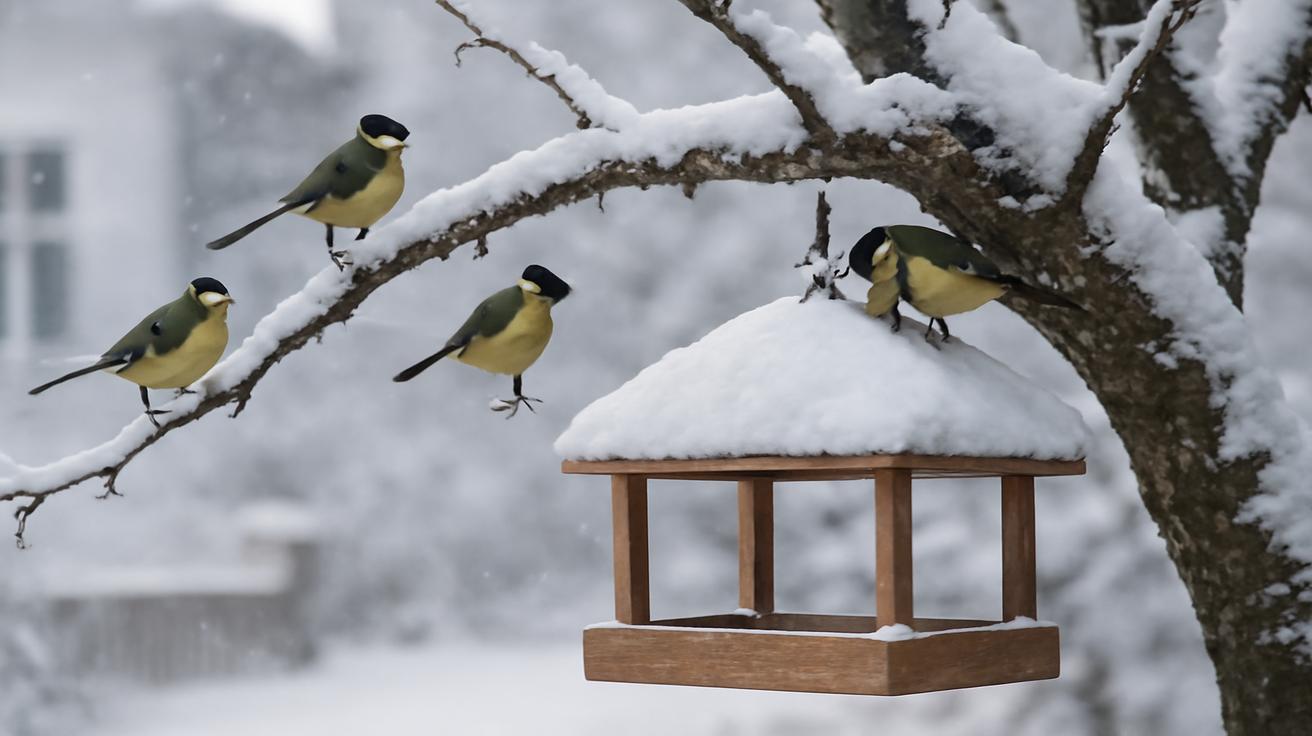
The first time I saw a Norwegian winter garden, I thought something was wrong. No feeders. No jangling strings of fat balls. No squirrel-proof tubes or wooden tables piled with seed. Just snow, dark branches, and the slow, pale light of an Arctic afternoon. In the silence, a single bullfinch hopped along a birch branch, plucking tiny seeds from the catkins, completely indifferent to my confusion.
When “Helping” Birds Becomes a Habit
In many countries, especially across the UK, North America, and parts of Europe, feeding garden birds is practically a national pastime. We hang feeders from every available hook, argue over which seed mix is best, and share photos of robins and chickadees like proud relatives showing off baby pictures.
We tell ourselves we’re helping: winter is harsh, food is scarce, climate change is making everything worse. Our gardens become miniature wildlife stations, and we become station managers—refilling, cleaning (sometimes), watching.
So when visitors from bird-loving countries arrive in Norway for the first time, they often blink at the quiet gardens and ask, “Where are all the feeders?”
The answer is quietly radical—because in much of Norway, people simply don’t feed garden birds the way many of us do. Not in winter as a rule. Not in summer just for fun. And from a conservation and ecological standpoint, they might actually be the ones getting it right.
The Norwegian Way: Let Nature Get On With It
Walk through a Norwegian neighborhood in mid-winter and you’ll notice something subtle: the landscapes are built to be bird habitat even when nobody is watching. There are old birches left standing, seed heads uncut, natural hedges, patches of forest edging up against villages. It isn’t wild in the romantic sense, but it is functional.
Talk to Norwegians about feeding birds and you’ll hear versions of the same idea: birds have survived here for thousands of years without our help. They know how to find food in the hardest winters. Our job is not to give them snacks. Our job is not to make them dependent on us.
It’s not that nobody in Norway feeds birds. Some people do put out seed, especially in colder inland areas. But there’s a cultural caution around it, informed by both tradition and science. Bird-feeding is seen as something that must be done thoughtfully, minimally, and often not at all.
A Climate That Trains Tough Birds
Norway has always been a place where only the hardiest stay for winter. Many birds migrate south. The ones that remain—coal tits, great tits, bullfinches, crossbills, nuthatches, corvids—are adapted to scarcity. They cache food, navigate snow-covered forests, and exploit every natural resource they can find: cones, seeds, berries shriveled on branches, insect eggs hidden under bark.
For generations, Norwegians watched these winter birds survive in landscapes far harsher than most of us will ever experience. The unspoken lesson: nature is not as fragile as we think. It is precise. Interfering “just to be kind” can easily cross a line.
Are We Helping Birds or Just Our Feelings?
In many other countries, feeding birds is wrapped up with our emotions. We feel closer to nature. We feel useful. In a busy, digital world, watching goldfinches squabble at a feeder becomes a small, daily act of connection.
But if we take a Norwegian-style step back and strip away the sentiment, an uncomfortable question appears: is this really about what birds need, or about what we need?
Scientists are increasingly suggesting: a bit of both—but often more of the latter.
The Hidden Costs of Constant Feeding
Research from across Europe and North America has started to paint a more complicated picture of backyard bird-feeding:
- Disease hot spots: Feeders concentrate birds unnaturally, making it easier for diseases like salmonellosis or trichomoniasis to spread. One dirty feeder can sicken or kill dozens of birds.
- Unnatural dominance: Aggressive, adaptable species—like some tits, sparrows, and pigeons—often outcompete shyer or rarer birds at feeders, skewing local populations.
- Behavioral changes: Some birds adjust their natural foraging patterns, relying heavily on human-provided food and losing flexibility when conditions suddenly change.
- Nutrition issues: Cheap seed mixes, white bread, and processed scraps can be the avian equivalent of junk food: filling, but not truly nourishing.
Norwegians, as a rule, are allergic to the idea of making wild animals dependent on humans. It shows in their approach to reindeer, to fish, to predators—and to garden birds. The guiding principle: wildlife should remain wild. Help, if it is needed at all, should support natural systems, not override them.
The Quiet Logic Behind “Doing Less”
When Norwegians shrug at the idea of elaborate winter feeders, it isn’t coldness. It’s a kind of ecological humility: a sense that nature, given half a chance, organizes itself far more intelligently than we can manage with our bags of seed and our good intentions.
Habitats Over Handouts
Ask a Norwegian birder what’s best for garden birds and you’ll hear things like:
- Leave seed heads and berries on plants all winter.
- Keep some old trees, especially those with cavities and peeling bark.
- Plant native shrubs that fruit at different times of year.
- Avoid chemicals in the garden so insects flourish.
The aim is simple: build a garden that functions like habitat, not like a bird cafeteria. Birds remain free to come and go, adapt, migrate, and diversify their diets. They’re not queuing for the morning refill of sunflower hearts.
In other words, Norwegians often give birds what they actually evolved to use: structure, cover, insects, seeds, nesting sites—rather than concentrated piles of easy calories.
What Happens When We Step Back
There’s a quietly radical experiment hidden in the Norwegian approach: what if, instead of doing more for birds, we did less—but did it better?
Not less care. Not less attention. Just fewer direct handouts and more thoughtful habitat-building. It’s an idea that can feel unsettling if we’ve built our sense of “helping nature” around the ritual of filling feeders.
But imagine a winter garden where:
- Stems of coneflowers, thistles, and grasses stand all season, heavy with seeds.
- Berry-laden shrubs like rowan or hawthorn feed thrushes and waxwings well into the cold months.
- A corner of the garden is allowed to go a bit wild—leaf litter, dead wood, and tangled undergrowth sheltering insects and the birds that eat them.
- An old tree, left with its holes and peeling bark, becomes a five-star micro-hotel for woodpeckers, nuthatches, and owls.
You can still watch birds. You can still love them. You’re just shifting from being their canteen to being their urban forester.
A Quick Look: Our Way vs The Norwegian Way
To make this easier to picture, here’s a simplified comparison. It’s not about “right vs wrong” so much as “short-term comfort vs long-term resilience.”
| Approach | Common Elsewhere | Typical Norwegian Perspective |
|---|---|---|
| Winter Feeding | Multiple feeders, regular refills, focus on quantity of birds visiting. | Limited, cautious feeding; many households don’t feed at all and rely on natural food sources. |
| Summer Feeding | Year-round feeding common, especially where it’s become a hobby. | Often considered unnecessary; birds should forage naturally in the abundant season. |
| Garden Design | Neat lawns plus feeders as the “wildlife feature.” | More emphasis on trees, shrubs, and structural habitat; feeders are secondary if used at all. |
| View of Dependence | Less concern about birds relying on humans, especially in cities. | Strong cultural resistance to making wild animals dependent on people. |
| Main Goal | Close encounters, enjoyment, feeling helpful. | Resilient, self-sufficient bird populations in functioning ecosystems. |
So… Should We Stop Feeding Birds Altogether?
This is where nuance matters. The Norwegian approach isn’t a commandment; it’s a reminder that wild birds are not pets, and our gardens are not zoos. It challenges us to think in terms of ecosystems instead of daily rituals.
There are times and places where feeding birds can be genuinely helpful—especially in heavily urbanized areas where natural habitat is almost gone, or during exceptional weather events like prolonged ice storms. But even then, a more Norwegian mindset changes what “help” looks like.
If You Do Feed, Feed Like a Norwegian
You don’t have to abandon your feeders overnight. You can simply make them part of a bigger, more nature-led plan:
- Make habitat the priority. Plant native species, keep some messy corners, leave winter seed heads standing. Think of feeders as a supplement, not the main course.
- Feed seasonally, not constantly. Focus on truly harsh winter spells rather than automatic, year-round feeding.
- Be fanatical about hygiene. Clean feeders and bird tables regularly with hot water, and remove old, wet seed to reduce disease.
- Choose high-quality, appropriate food. No bread, no salted scraps. Focus on species-appropriate seeds, nuts, and fat sources.
- Accept natural limits. If fewer birds come one year, or a species declines locally, ask what’s happening in the landscape—not just what you can put in your feeder.
In essence: feed birds the way Norwegians ski—aware of the environment, respectful of limits, and always with one eye on the bigger landscape.
Letting Go of the Need to Be the Hero
There’s something quietly humbling about the Norwegian attitude. It asks us to admit that birds might not need us as much as we think they do. That survival, adaptation, and even hardship are part of what makes a species strong over the long term.
When we stop trying to rescue birds with a scoop of seed and start trying to restore the systems they depend on—trees, insects, hedges, wetlands—we shift from being rescuers to being collaborators. Less dramatic, perhaps. But far more powerful.
On a still winter morning in Norway, you can stand beneath a rowan tree and watch a flock of waxwings tumble through the branches, gorging on berries the tree has been quietly ripening for months. No human bag of food was involved. No one had to remember to refill anything. The birds and the tree were simply allowed to perform the old agreement they’ve had for millennia: fruit for wings, seeds for travel.
We could do the same in our own gardens, wherever we live. Not by imitating Norway’s climate or its exact species, but by borrowing its instinct: trust nature more than you trust your urge to intervene.
If we do that, one day we might stand in our own winter gardens—less cluttered with plastic feeders, more layered with living structure—and realize something startling. The birds didn’t vanish when we stopped “helping” so much.
They got stronger.
FAQ
Do Norwegians really never feed birds?
Not exactly. Some Norwegians do feed birds, especially in colder inland areas or remote locations. But compared with many other countries, feeding is less common, less intense, and more often viewed with caution. The cultural default is to let birds rely on natural food sources whenever possible.
Is feeding birds harmful?
Feeding birds is not automatically harmful, but it can create problems if done carelessly or excessively. Disease transmission, dependence on human-provided food, skewed species dominance, and poor nutrition are all documented risks. The impact depends on how, what, and how much you feed, and on the quality of surrounding habitat.
Should I stop feeding birds in my garden?
You don’t have to stop entirely, but it’s wise to rethink your approach. Prioritize creating natural habitat—native plants, shrubs, trees, and insect-friendly areas—and treat feeding as a supplementary, seasonal help instead of the main focus. If you notice disease outbreaks or overcrowding at your feeders, cutting back or pausing can be beneficial.
What’s the best way to help birds if not with feeders?
The most powerful help is long-term: plant native trees and shrubs, leave seed heads and leaf litter, avoid pesticides, and protect or restore nearby natural areas. Provide water, safe nesting spots, and shelter from predators. This kind of support strengthens entire ecosystems, not just the birds visiting your garden.
Is the Norwegian approach suitable outside Scandinavia?
The exact details differ by region, but the underlying principles travel well: keep wildlife wild, build habitat rather than dependence, and intervene lightly and thoughtfully. Whether you live in a city apartment or a rural village, you can apply that mindset—fewer handouts, more living structure—and adapt it to your local climate, species, and landscapes.