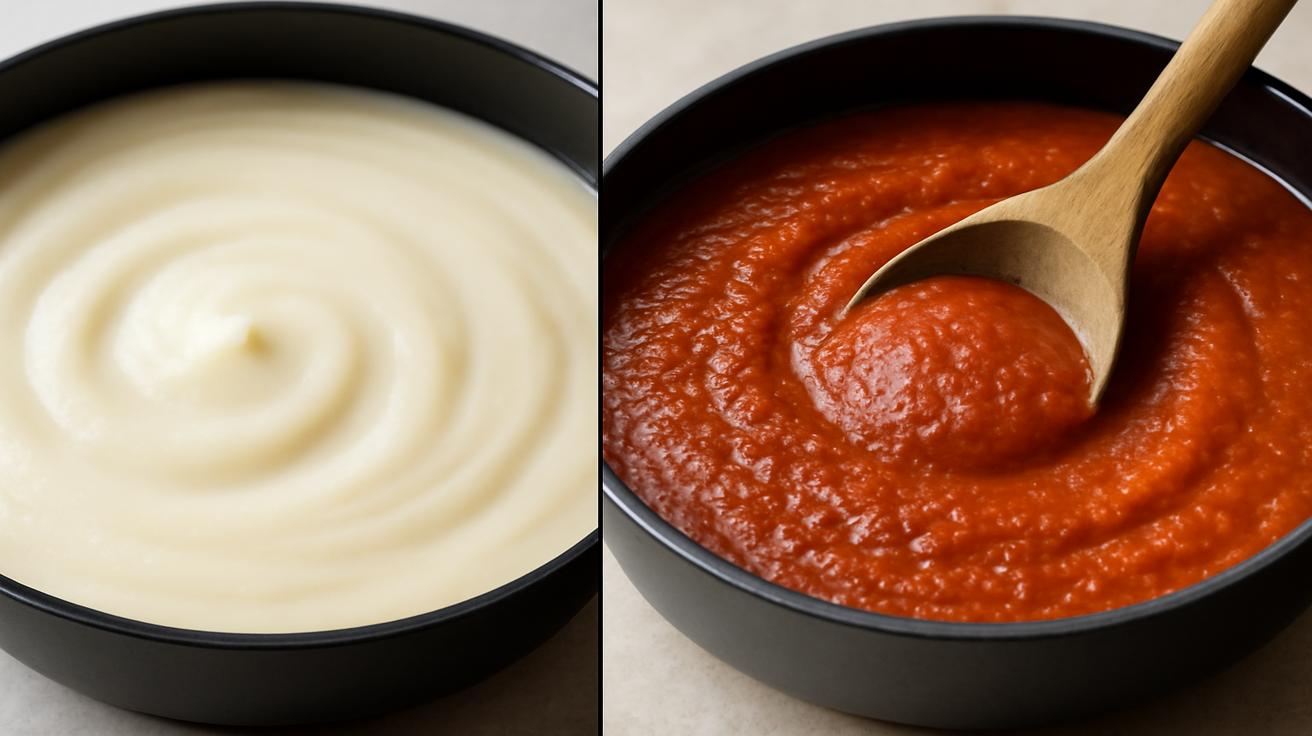
The sauce looked perfect. Silky, glossy, the color deep and inviting. It clung to the spoon in all the right ways, perfumed the whole kitchen, and sent that low, irresistible growl through your stomach that says, this is going to be good. You ladled it carefully over pasta, or chicken, or that one piece of fish you splurged on. You took a bite, expecting the kind of quiet fireworks that only a good sauce can pull off. And then… nothing. It wasn’t bad. It just wasn’t much of anything. A little flat, a little dull, almost like the memory of a sauce rather than the real thing. You looked back at the pan, confused. It looked fine. Where did it go wrong?
The Quiet Little Shortcut That Slips Into Your Kitchen
Most kitchen disasters are obvious. Burnt garlic announces itself in a plume of bitter smoke. Split hollandaise stares back at you like a culinary crime scene. Undercooked chicken is, well, undercooked. But there’s a different kind of mistake that’s far more common, and far sneakier: the silent sabotage of a sauce by one tiny, seemingly harmless shortcut.
It isn’t the wrong herb, or the cheap wine, or even the splash of cream you regret as you wash the pan. It’s water. Plain, ordinary water. Not just using it, but using it at the wrong time, in the wrong way, and for the wrong reason.
You’ve almost certainly done it. The pan starts to look dry, so you “save” things with a quick splash of water. The sauce looks a touch thick, so you thin it with water instead of stock or reserved cooking liquid. The bottom of the pot starts to catch, and you reach for the faucet instead of the ladle. Nothing curdles, nothing separates, nothing scorches. You pat yourself on the back.
Then you taste it later and wonder why the sauce doesn’t match the smell, or the promise, or the effort. The real damage can’t be seen at a glance. It lives in the flavor—muted edges, muddled middle, a finish that just… falls asleep.
The Science of Why Your Sauce Feels “Off”
Imagine a sauce as a crowded city of flavor. Every bubble of simmering heat pulls aromas and compounds closer together, condensing them, concentrating them, layering them. Time and gentle heat give that city structure—streets of sweetness, alleyways of acidity, high-rise towers of savory depth.
When you add water casually, you’re not just pouring in a liquid. You’re pouring in empty space. Space that spreads everything out. What was once dense and complex becomes loose and vague. You haven’t ruined the sauce in an obvious, theatrical way; you’ve quietly dismantled the neighborhood.
Here’s the subtle part: at a glance, your sauce might still look fine. The color remains rich. The texture seems smooth. If you dip a spoon in and let it run off, it might still coat in that familiar, comforting way. But the flavor map underneath—the invisible architecture—is thinner, weaker, washed out.
This is especially true for sauces that rely on reduction and emulsification: pan sauces built from browned bits, long-simmered tomato sauces, silky gravies, beurre blanc, velvety cream sauces. They’re not just liquids with flavor floating around. They’re delicate balances of fat, water, and microscopic droplets of one suspended in the other. Water, added mindlessly, nudges that balance out of alignment without a big dramatic collapse.
The Temptation of the Tap
If this sounds overdramatic, think about the moment it usually happens. You’re at the stove, multitasking. Pasta boiling, onions softening, your phone buzzing on the counter, a notification flashing on the oven. The sauce is reducing faster than you expected. The pan looks dry on the bottom. Maybe the sizzle changes pitch from a confident, gentle hiss to a more frantic crackle. Panic pricks the back of your neck.
The easiest fix is right there: the faucet. A quick splash, and the crisis is over. The sauce is loose again. Nothing’s burning. You breathe out. That splash feels harmless—practical, even. You’re protecting your pan, keeping things moving, staying “in control.” But what you’ve really done is hit a quiet reset button on all the work the sauce was doing to build depth.
And because nothing looks broken, you don’t suspect that the gloss and the perfume now belong to a sauce that’s lost its backbone.
Where Water Sneaks In and Steals Flavor
Not all uses of water are bad, of course. Cooking is, in many ways, the artful manipulation of water and heat. But certain habits invite trouble, especially in sauces that should be focused and intense.
1. Thinning Instead of Finishing
You’ve reduced a pan sauce right to the edge of perfect—rich, dark, clinging. Then doubt creeps in. Is it too thick? You want it to flow a little more. So you add water instead of the wine, stock, or reserved cooking liquid you used earlier. The consistency improves… and the flavor drifts away from you.
A good sauce is supposed to be a little concentrated. It’s a delivery system for flavor. When you thin it, you dilute not only texture but intensity. Add water, and you’ve basically taken a small, meticulously crafted painting and washed it with a pale, transparent glaze.
2. “Saving” a Dry Pan
A pan that’s getting too hot and dry is telling you something: you need to adjust the heat or add something meaningful—fat, wine, stock, or even a ladle of starchy pasta water. But water, straight from the tap, is the most empty answer you can give.
Instead of gently coaxing more flavor from the browned bits and fats, you shock the pan with a cold, flavorless liquid. Yes, it stops the burning. It also stops the building. It’s like calling off construction crews halfway through the project because you don’t like the noise.
3. Stretching a Sauce Too Far
We’ve all been there: more guests than you planned, more pasta than you meant to boil, more chicken cutlets than there is sauce. You look at the pan, then look at the plates, and at some point, you convince yourself you can make it work by “stretching” the sauce with water.
The result is a sauce that looks like it might be enough, but tastes like the ghost of what you meant it to be. You’ve increased volume at the cost of soul. Better a generous spoonful of something intense than a lake of something forgettable.
Better Ways to Save – and Even Transform – Your Sauces
The answer isn’t to banish water entirely. It’s to treat it as what it actually is in sauce-making: a structural tool, not a flavor ingredient. If you remember that every drop should either carry flavor or support it, you start reaching for very different things when your sauce looks in trouble.
| Situation | Common Shortcut | Flavor-Safe Move |
|---|---|---|
| Pan is getting dry and hot | Splash of plain water | Small pour of stock, wine, or broth |
| Sauce is too thick | Thinning with water | Thinning with stock, reserved cooking liquid, or cream |
| Need more volume | Topping up with water | Adding more aromatics, stock, or tomato, then simmering briefly |
| Pasta sauce feels “weak” | Loosening with tap water | Using starchy pasta water to bind and gloss |
Stocks, Broths, and the Power of “Flavored Water”
Stock and broth exist for one simple reason: water alone can’t carry everything. When you simmer bones, vegetables, herbs, or meat in water, you’re filling every inch of that liquid with potential. It becomes a storage system for savoriness, aroma, and depth.
So when your sauce needs loosening, the question isn’t, “How can I add liquid?” It’s, “What kind of liquid will deepen what’s already happening here?” Chicken stock amplifies poultry and cream sauces. Beef stock underlines gravies and pan sauces for red meat. Vegetable broth gently lifts tomato or vegetable-based sauces without shifting them too meaty.
If you don’t have homemade stock, a decent store-bought one used thoughtfully is still miles better than plain water. You’re choosing to add flavor, not just fluid.
The Magic of Pasta Water
There’s one kind of water that’s a quiet hero in the kitchen: the cloudy, starchy liquid that pasta leaves behind. That water isn’t empty. It’s full of starch and salt. When whisked into a fat-based sauce—olive oil, butter, cheese—it can pull everything together into a silky emulsion. It doesn’t just thin; it binds.
That’s why a spoonful of pasta water makes cacio e pepe come alive and turns a simple pan sauce into a glossy cloak for your noodles. Contrast that with tap water, which simply stretches things thinner and thinner, until your garlic, cheese, and pepper are chasing each other around a flavorless pond.
Seeing With Your Tongue Instead of Your Eyes
So much of this comes down to shifting how you evaluate your sauce in the moment. We’re used to looking: Is it too thick? Too dark? Is there enough of it? Those are useful questions, but they’re secondary. The first question is always: How does it taste, right now, on the spoon?
It seems obvious, but in the rush of cooking, tasting can quietly slip down the priority list. You cook by sight and habit instead. The pan looks dry, so you add liquid. The sauce looks glossy, so you assume it’s done. The bubbles look slow and heavy, so you think it’s thick enough. Meanwhile, your tongue—a far better guide—waits, unemployed.
A sauce that looks a little thick but tastes intense and balanced is one you should probably leave alone or adjust very gently. A sauce that looks just right but tastes dull is telling you to reduce more or deepen it with something flavorful: a splash of wine, a spoon of stock, a pinch of salt, a pat of butter to round edges, a squeeze of lemon to wake it up.
Water almost never solves a flavor problem. And yet, we reach for it like a reflex, because visually it seems like the fix. Learning to ignore that reflex—and instead listen to what your mouth is saying—changes everything.
When Water Actually Belongs
None of this means water is the villain of the kitchen. It’s just not the quiet savior we sometimes treat it as. There are plenty of moments when water is exactly right:
- When you’re cooking dried beans slowly and want their flavor to shine without interference.
- When you’re making a very light broth or poaching liquid where subtlety is the point.
- When you’re rehydrating dried mushrooms or chiles, intending to use every drop of their soaking water in the sauce later, precisely because that water is now carrying flavor.
But notice the pattern: even in those cases, the water doesn’t stay “empty” for long. It’s either a blank canvas waiting to be filled, or it’s transformed into something else along the way. The trouble starts when we forget that transformation matters.
The Emotional Part No One Talks About
There’s a quiet heartbreak in a ruined sauce that doesn’t look ruined. You stand there with a beautiful pan of “almost,” wondering why the recipe failed you or what magical ingredient professionals must be using behind the scenes.
The truth is gentler and more empowering: it’s usually not magic. It’s attention. The patience to let reduction happen slowly instead of slamming on the brakes with cold water. The decision to keep a small container of stock in the fridge for weeknight cooking. The habit of dipping in with a spoon every few minutes and letting your tongue make the calls.
Good sauces come from a hundred tiny, respectful choices. Choosing stock over water. Waiting two more minutes to reduce. Holding off on thinning until you’ve tasted. Letting that pan get just brown enough before you deglaze with wine instead of rinsing with water. These aren’t fancy-chef moves; they’re small acts of care available to anyone with a stove and a little bit of curiosity.
And once you feel what a truly concentrated, well-balanced sauce does in your mouth—how it coats not just your food but your memory—you’ll start to notice just how often water has been quietly getting in the way.
Turning Awareness Into a Habit
Next time you cook, try this small experiment: before you reach for water near your sauce, pause for three seconds. Ask yourself one question: “Will this liquid carry flavor, or dilute it?” Then look around. Do you have stock? Wine? Broth? Pasta water? Even a bit more of the tomato you used to start the sauce? Nine times out of ten, there’s a better answer within arm’s reach.
If you truly must add a bit of water—maybe things are on the edge of burning and nothing else is handy—treat it like a temporary rescue, not a permanent fix. Use the smallest splash you can, then rebuild with something flavorful as soon as possible. Think of water as a stretcher, not the hospital.
Over time, that tiny pause, that one question, reshapes your sauces. They become denser without being heavy, richer without being cloying, louder without being salty. Friends ask what you did differently. You’ll probably shrug and say, “I don’t know. I just paid more attention.”
But you’ll know. Somewhere along the way, you stopped letting that innocent-looking shortcut quietly drain the life from your food. The sauces that leave your pan now don’t just look good—they say exactly what you meant them to say, with confidence and clarity.
And when you take that first bite, the fireworks finally match the promise.
FAQ
Is it ever okay to add plain water to a sauce?
Yes, in very small amounts and for specific reasons—like preventing burning when nothing else is available. But it should be used sparingly, and ideally followed by adding something flavorful (stock, wine, pasta water) to rebuild intensity.
What should I use instead of water to thin a sauce?
Use whatever already belongs to the flavor family of the sauce: stock or broth, reserved pasta water, more tomato for tomato sauces, or a little extra cream or milk for cream-based sauces. These liquids thin the sauce while also supporting or enhancing flavor.
Why does my sauce taste bland even though I seasoned it well?
Beyond salt, blandness often comes from over-dilution. Too much water, insufficient reduction, or stretching the sauce for more portions can all thin out flavor. Try reducing the sauce longer and using stock or wine instead of water for adjustments.
How do I fix a sauce I’ve already diluted with too much water?
Simmer it gently to reduce and concentrate the flavors again. Taste and adjust with salt, acid (like lemon juice or vinegar), and possibly a splash of stock or wine. In some cases, you can enrich with butter, cream, or grated cheese, depending on the sauce style.
Is using pasta cooking water really that different from using tap water?
Yes. Pasta water contains starch and salt, which help emulsify sauces and bind them to pasta. It doesn’t just thin the sauce—it improves texture and helps everything cling together. Tap water only dilutes, without adding body or support.