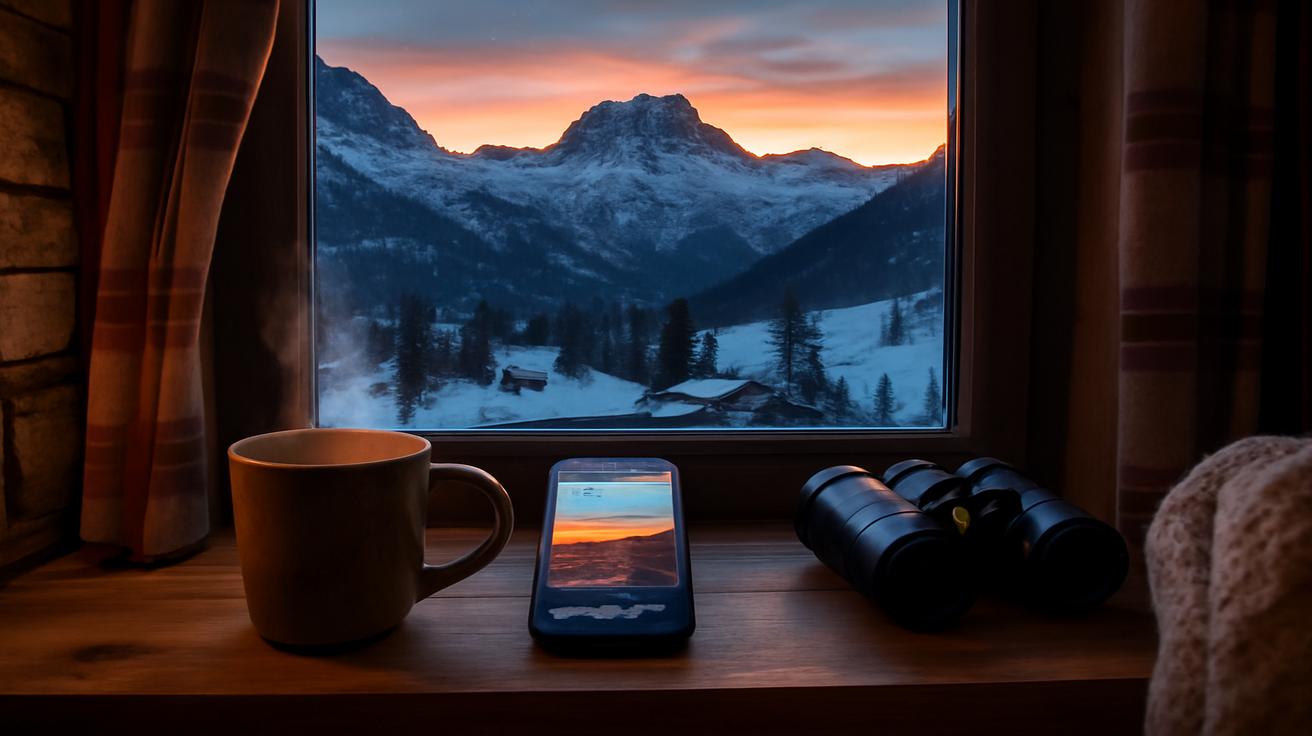
The trip wasn’t supposed to happen. It was a Tuesday in late January, the kind of gray afternoon that sits on your shoulders, when an unread email pinged into the corner of the screen: “Winter Flash Sale – 72 Hours Only.” You weren’t planning to go anywhere. You had deadlines, laundry, a plant that had seen better days. But as that subject line glowed back at you, you felt it—that small, stubborn tug. The desire to be somewhere you could see your breath in the air and feel a different kind of cold on your face. Maybe a mountain town. Maybe a snow-dusted city. Maybe just somewhere that wasn’t your living room.
Fifteen minutes later, you were toggling dates and scrolling through pictures of cabins framed in frosted pines. Forty-five minutes later, you’d nearly convinced yourself that booking a last-minute winter trip was reckless, irresponsible, and exactly what you needed.
The Quiet Magic of Saying “Yes” at the Last Minute
There is a particular thrill in closing your laptop at 4 p.m. on a Friday and knowing that by 9 a.m. the next morning you could be sliding across an icy sidewalk in a city you’ve never visited before, or fumbling with your gloves while a ski lift hums overhead. Winter does something to spontaneity; it sharpens it. The air feels thinner, the sky closer. A last-minute summer trip can be lazy and sprawling. A last-minute winter getaway feels intentional, like you carved a doorway into the season and stepped through it.
That’s the first secret of booking spontaneous winter escapes: you’re not only buying a ticket or reserving a room. You’re purchasing a mood shift, a reset button disguised as a boarding pass. The trick is learning how to get that feeling without torching your bank account—or your sanity—with chaotic, last-second decisions.
Sure, “last-minute travel” used to mean showing up at an airport and asking for the cheapest flight out, but these days the smart, spontaneous traveler plays a more nuanced game. They know when prices dip, how flexible to be, and where to look when the usual travel sites shrug and say, “Everything’s full.”
Know Your Winter Sweet Spots
Spur-of-the-moment winter trips live and die on one word: timing. Not just “this week versus next week,” but the rhythm within the season. Winter isn’t a monolith; it’s a patchwork of peaks and lulls, and those lulls are where your best last-minute deals hide.
The Whisper Days Between the Holidays
The days between early January and mid-February—excluding long weekends and school breaks—are often quieter for many cold-weather destinations. The holiday frenzy has faded, ski crowds haven’t fully peaked everywhere, and people are back at their desks, promising themselves they’ll travel “later this year.” That’s your moment.
Walk down the main street of a small mountain town on a Tuesday in late January and you’ll feel it: snowbanks pushed up against empty café windows, a light dusting of flakes on parked cars, and a bartender polishing glasses with no real rush. Hotels that were wall-to-wall with families around Christmas start to soften their prices. Boutique stays that seemed laughably expensive in December suddenly fall into the “maybe I could swing that” category.
The Art of Not Caring Where You Go (Too Much)
Ask a spontaneous traveler where they’re headed this winter, and they might answer with something like, “Wherever is cheap and cold,” or “Anywhere with snow and a fireplace.” That looseness is the second key. Last-minute winter deals reward people who care more about a feeling than a specific place.
If skiing is the feeling, you might end up at a lesser-known regional ski hill instead of the glossy big-name resort. If you’re craving twinkly lights and hot chocolate, you could land in a smaller European-style town two states over rather than the famous Christmas markets you saw online. When you stop clinging to a single destination, entire constellations of options open up—and with them, better prices.
How to Actually Score Those Last-Minute Winter Deals
Spontaneity sounds romantic, but behind every enviable last-minute winter trip is someone quietly moving sliders on a booking app and running the numbers. It doesn’t have to be complicated, though. Think of it as a game with a few basic rules.
Rule One: Flex Your Dates Like It’s a Superpower
In winter, prices can change dramatically based on the day you leave and the day you come back. A Thursday–Monday getaway might cost twice as much as a Tuesday–Friday trip. Late-night departures, early-morning returns, and midweek flights are often where the deals hide, particularly when you’re booking within a week or two of travel.
Imagine you’re eying a three-night escape to a snowy city—say, a place where you can wander old streets under strings of winter lights, sliding into corner bistros to thaw your hands around a bowl of soup. You plug in Friday–Monday, wince at the total, then nudge your departure to Saturday and your return to Tuesday. The price drops. Nudge again: Wednesday–Saturday. Lower still. Those tiny tweaks are the difference between “I wish” and “I’m going.”
Rule Two: Cast a Wide Net, Then Zoom In
Different tools surface different deals, and in winter, availability can change quickly. Use flight search engines that show entire months of fares at once. Look for fare calendars glowing with low prices like pockets of blue in a sea of red. For accommodation, toggle filters you’d normally ignore: “last-minute deals,” “mobile-only prices,” “tonight’s price.” Then be ready to pounce.
Sometimes the best winter bargains live just outside the obvious. Suppose everyone’s flocking to a famous ski resort. Check the next town over—a slightly sleepier place with a shuttle bus to the slopes and half the room rates. Or look at a business hotel in a financial district that empties out on weekends, leaving you with deeply discounted rooms and a short tram ride to everywhere you want to explore.
| Strategy | When It Works Best | Winter Perk |
|---|---|---|
| Flying midweek (Tue–Thu) | 1–3 weeks before departure | Lower fares, quieter airports |
| Targeting shoulder dates | After holidays, before school breaks | Discounted rooms, fewer crowds |
| Searching nearby airports/towns | When main hubs are pricey or full | Hidden deals, more local flavor |
| Using points or miles last-minute | Within 7 days of travel | Great value when cash prices spike |
| Booking “mystery” or opaque deals | Flexible on exact hotel/flight | Upscale stays for budget prices |
Rule Three: Let Weather Be Your Co-Conspirator
Winter is moody. Storms roll in, ice snarls runways, and a week that was expected to be peak season can suddenly thin out. That unpredictability, while occasionally inconvenient, can work in your favor.
Keep an eye on upcoming weather in regions you’re open to visiting. If a popular ski area is having a frustratingly snowless season, you may find slashed lodging rates as they try to lure visitors anyway—and you might discover that you enjoy the mountain town vibe even without perfect powder. Conversely, if a smaller or less famous region just got buried under fresh snow, it could be scrambling to fill beds, meaning last-minute deals and barely tracked snowshoe paths just for you.
Travel Smarter, Not Just Cheaper
Spontaneity is intoxicating, but winter has teeth. Travel smart, and you’ll remember snowflakes catching the light from a streetlamp. Travel careless, and you’ll remember a long night on an airport bench in a drafty terminal. The goal is to chase adventure with both eyes open.
Build a Buffer into Your Plans
When storms can shuffle flights like playing cards, rigid plans are fragile things. If you’re heading somewhere with a real winter, give yourself cushions—book the earliest flight of the day so you have more rebooking options if something goes sideways. Leave room between connections. Avoid the very last train or final bus of the night when possible.
And for truly time-sensitive plans—like meeting friends for a ski weekend or arriving in time for a festival—consider padding your arrival by a day if the cost isn’t prohibitive. That extra night in a cheap guesthouse across from the station can be the difference between standing in the snow at the base of the lifts with everyone else, and texting them from an airport stuck two cities away.
Pack Like the Weather Can Change Its Mind
In winter, your suitcase is your safety net. A last-minute getaway might mean racing home from work, throwing things into a bag, and bolting for the station—but a tiny bit of prior planning helps. Keep a mental (or physical) “winter go-bag” list: thermal base layers, wool socks, a compact hat, gloves, and a scarf that can double as a blanket on icy buses. Add a small, packable down jacket or insulating layer that squeezes into a corner of your backpack.
Think in layers instead of outfits. A single chunky sweater might look great in photos, but three thinner layers will keep you warmer when you’re standing in line for a gondola or wandering down a riverfront path breathing clouds into the air. Shoes matter, too. That photo-perfect leather boot with a smooth sole may slide across black ice, while a sturdy pair with decent tread means you can actually explore the cobblestone backstreets without thinking about your tailbone.
The Joy of Finding Winter in Unexpected Places
Spontaneous winter travel doesn’t always mean snowstorms and ski passes. Sometimes it looks like one of those odd, in-between places: a coastal town in its quiet season, where the summer boardwalk now echoes under a low, steel sky; or a desert city where the evening cold sneaks in invisible and sharp, and you wrap your scarf snugly as you wander silent streets.
Those places often offer their best prices when the weather isn’t performing for the brochures. Last-minute deals in coastal regions can be generous in winter, but what you get in return is a different kind of beauty: empty dunes under a pale sky, the crash of waves without crowds, hot coffee in nearly empty diners where the staff have time to chat. A spontaneous winter escape doesn’t need postcard snowdrifts to feel like a reset. Sometimes it just needs a shift in pace, a new angle on the season, and the sense that you slipped through a door most people don’t notice.
Let the Place Dictate the Plan
When you book late, you don’t always get the perfect hotel, or the ideal neighborhood. You may end up a few tram stops further out, or in a part of town that never made it to the top of anyone’s “must-see” list. That’s not a flaw; it’s an invitation.
Maybe your last-minute deal lands you in a modest guesthouse at the edge of a winter forest, where the nearest café is a twenty-minute walk down a quiet road lined with bare branches and the sound of your boots crunching on old snow. Or you find yourself in the off-center part of a city, near a local market and a bakery with fogged-up windows and the best hot chocolate you’ve ever tasted. Loosen your grip on the idea of “ideal,” and let the realities of late booking lead you into corners you wouldn’t have thought to explore.
Turning Spontaneity into a Repeatable Habit
The more you say yes to last-minute winter trips, the easier—and smarter—them become. You start to recognize patterns, spots on the map that consistently offer off-peak bargains, airlines that reliably discount midweek flights, types of accommodations that undercut everyone else when the temperature drops.
You might even begin keeping a short, private list: three or four places within a short flight or half-day drive that you’d happily visit again in winter on a whim. A lakeside town that empties out after New Year’s, where hotel owners now recognize your name. A compact city with a winter festival you once stumbled into by accident, now firmly circled in your mental calendar. When a good deal pops up, you no longer hesitate; you know exactly where that ticket could take you and what kind of quiet magic you’ll find there.
Think of it less as “impulse travel” and more as “ready-to-go travel.” Your passport is where it should be. Your winter layers are all in one drawer. You have a rough system for searching flights and lodging quickly. That small bit of structure is what allows the rest of the experience to feel effortless and free.
Let Winter Surprise You
Back at your screen on that gray January Tuesday, cursor hovering over the “Confirm Booking” button, there’s a moment of hesitation. You think of the what-ifs: What if the flight’s delayed? What if it’s colder than you expected? What if you spend more than you planned?
But there’s another what-if, quieter and more powerful: What if this is the weekend you remember in detail years from now? The one where you watched your breath rise into the night air as you crossed a snow-dusted bridge. Where you learned that your favorite kind of quiet is the hush of new snow in an unfamiliar place. Where you realized that winter doesn’t just happen around you—you can step into it, on purpose.
The beauty of last-minute winter travel isn’t about performing some cinematic version of adventure. It’s about slipping out of your usual life for a few days, catching the season at a different angle, and discovering that you’re allowed to chase joy even when the calendar says you should be settled in and staying put.
Maybe the deal you find is a late-night train to a small town with a frozen river and a single inn with a creaky staircase. Maybe it’s a discounted flight to a city where the air smells like roasted chestnuts and woodsmoke. Maybe it’s just a bus ride to a nearby mountain where you can spend the day trudging through snow and come home tired in the best possible way.
Whatever shape it takes, the invitation is the same: say yes a little faster than feels comfortable, travel smarter than you did last year, and let winter surprise you.
Frequently Asked Questions
How far in advance should I book a last-minute winter trip?
Despite the name, “last-minute” often works best 7–21 days before departure. Within that window, airlines and hotels start adjusting prices based on real demand, and you can often spot genuine dips without paying the steepest, true last-second fares.
Are last-minute winter deals always cheaper?
Not always. Peak dates—holidays, long weekends, big events—can stay expensive no matter how close you book. Last-minute deals tend to be best on off-peak days, shoulder periods, and in destinations with extra capacity to fill.
What are the best days to fly for spontaneous winter getaways?
Tuesday, Wednesday, and Saturday often bring better prices and smaller crowds. Early-morning flights also tend to be less disrupted by winter weather than later departures.
How can I avoid getting stranded by winter storms?
Book nonstop flights whenever possible, choose larger hubs with more daily connections, fly early in the day, and keep a flexible mindset. Travel insurance that covers weather disruptions can be worthwhile for winter trips, especially if you’re flying through storm-prone regions.
What should I always pack for a last-minute winter trip?
Layerable clothing (thermal base layers, mid-layer, weatherproof outer layer), warm socks, a hat, gloves, scarf, and shoes with good traction. Add a small power bank, any essential medications, and a compact reusable bag for groceries or extra layers while exploring.
Is it better to book flights or accommodation first for spontaneous trips?
Usually, lock in flights first, because they fluctuate more dramatically and can sell out. As you search, quickly check that your target destination still has reasonably priced lodging for your dates before you commit.
Can I do a spontaneous winter trip on a tight budget?
Yes. Focus on closer destinations reachable by bus or train, travel midweek if you can, look for simple guesthouses or hostels, and build your plans around free or low-cost winter pleasures—walking, watching the weather, exploring neighborhoods, and savoring warm food and drink.