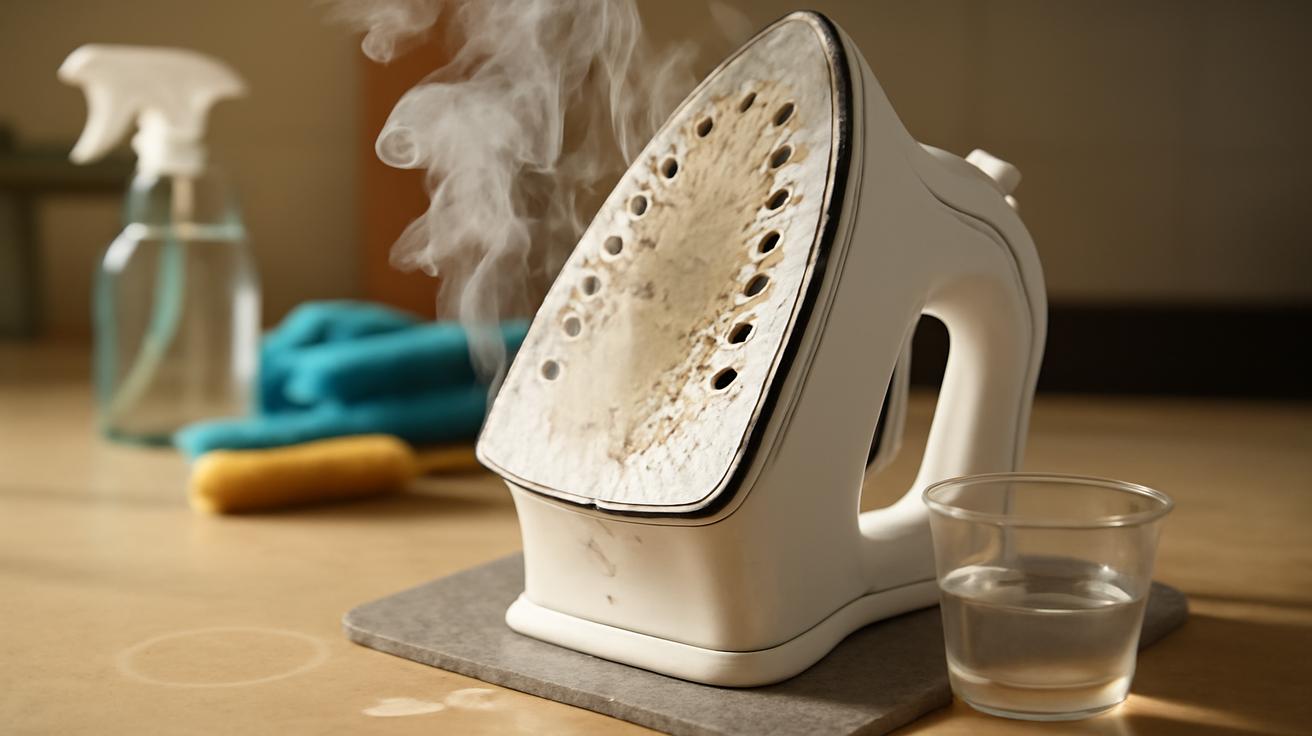
The first hiss was so sharp and sudden that I actually took a step back from my own kitchen counter. A thin, ghostly ribbon of steam curled up from the belly of my iron, carrying with it a smell so sour and metallic it made my eyes sting. Somewhere beneath that cloud, vinegar was waging a tiny war against years of mineral buildup, gunk, and whatever else had quietly collected inside my once-faithful iron. For a moment, I stood there, bottle of vinegar in one hand, dishtowel in the other, convinced I had just ruined the only tool standing between my wrinkled laundry and presentable adulthood.
The Afternoon My Iron Turned Into a Dragon
It started on an ordinary afternoon, the kind where the light falls through the window in slow, sleepy stripes and dust motes float around like they’re on a lunch break. I had a small but urgent mission: iron one clean shirt so I could appear like a functioning human at an evening event. That was it. Just one shirt. No major domestic overhaul. No deep-cleaning. No drama.
But my iron had other plans.
I poured water into the reservoir like I’d done a hundred times before. Clicked the dial to the little dot that matched “cotton.” Waited for that familiar, soft tick that meant it was heating up. As I dragged it across the first sleeve, the iron sputtered like an old car in winter. Then it spat—literally spat—brownish droplets of rusty-looking water right onto the freshly washed fabric.
I froze, the wet, discolored splotches staring back at me accusingly. I tried again on the other sleeve, hoping it was just a fluke. More spitting. Now there was an odd smell too, like scorched minerals and old dust. The once-smooth glide of the soleplate felt scratchy, sticky, like it was snagging invisible threads.
This was not part of the plan.
Instinctively, I unplugged it, set it upright, and just looked at it. We’d been through years of quick presses before interviews, last-minute wrinkle rescues before dates, rushed steaming before weddings and family photos. Was this how it was going to end—mid-sleeve, betrayed by a shower of rusty droplets?
Of course, I did what any rational, modern person would do when faced with a small household crisis: I reached for my phone and began typing frantic variations of “why is my iron spitting brown water” into a search bar.
The Vinegar Gamble
The internet’s answer was deceptively simple: mineral deposits. If you’ve ever used tap water in an iron—especially hard water—tiny bits of calcium and other minerals can slowly bake into crusty residue inside the steam vents and reservoir. After a while, they flake off, mix with water, and come shooting out as those glamorous brown droplets that look like rust.
The proposed solution appeared over and over again: vinegar. Plain white distilled vinegar. The same stuff I used for salad dressing and once accidentally drank straight thanks to a poorly labeled bottle (a mistake I will never repeat).
I was skeptical. Vinegar in a hot iron? What if it corroded the metal? What if it wrecked the inner parts? What if my iron just decided to die in a dramatic explosion of steam and sour fumes, leaving me wearing a permanently wrinkled shirt to my event?
But desperation is a powerful motivator. The clock was ticking. I did not have time to go buy a new iron, break it in, and hope it behaved. I needed this one to shape up, and fast.
So I walked to the pantry, grabbed the bottle of vinegar, and made myself a deal: if the iron exploded, at least the story would be unforgettable.
Mixing the Potion
The method I cobbled together from various bits of advice was simple enough: equal parts white vinegar and water. Nothing fancy. No magic ratio. I poured half a cup of vinegar into a measuring glass, then half a cup of water, watching the liquid swirl and dilute, turning that sharp smell just a touch gentler, though still unmistakably tangy.
I carried the mixture back to the counter like it was some forbidden potion. My iron waited there, unplugged, looking deceptively innocent. I wiped the base with a clean cloth, as if preparing it for surgery, then poured the vinegar solution into the reservoir. The faint slosh sounded promising, like a reluctant start.
When I plugged it in, the iron woke up with a familiar click. I turned the dial to its highest steam setting. If this was going to work, it needed heat—enough heat to turn that mild-smelling mixture into a force strong enough to pry loose stubborn minerals clinging to the machine’s insides.
The Hiss, the Smoke, and the Moment of Panic
The first breath of steam smelled wrong. Not bad exactly, just…strong. The tang of vinegar carried a sharp edge that cut through the warm kitchen air. I hovered my hand above the vents, careful not to get burned, feeling short, uneven puffs of steam that sounded like the iron was trying to clear its throat.
Then came the hiss.
It was long and urgent, a sudden release of pressure that made my shoulders jerk up around my ears. A thin plume of white mist shot out, curling and twisting in the light. I could feel the heat radiating off the soleplate even from a distance, the air between us shimmering slightly the way roads do on a hot summer afternoon.
I pressed the steam button over the sink, as I’d read, and the iron responded with more sputters of vinegar-laced steam. Dark specks flew out—tiny grains of whatever had been clinging to its metal veins for years. Some landed on the stainless steel of the sink, faint and chalky when I wiped them away with my fingertip.
Then it happened: a wisp of smoke.
Not black, not dangerous-looking, but a soft, pale ribbon that slithered up from the vents and drifted toward the ceiling. I pulled back on instinct, my brain flashing every warning label I’d ever skimmed. For a second, I pictured myself standing in the driveway, holding a scorched iron while fire trucks pulled up to the house.
Instead, the iron just sighed—a deep, steady exhale of steam—like it was finally letting go of something it had been holding inside for far too long.
I glanced around the kitchen, imagining what an onlooker might think: person in faded T-shirt, staring intensely at a hissing, smoking iron over the sink, half-empty vinegar bottle on the counter, windows slightly fogged. It felt a bit like performing a ritual, half domestic task, half odd little exorcism.
The Turning Point
I let the iron heat and steam for a solid five to ten minutes, pressing the steam burst button repeatedly over the sink. Each press released another impatient cough of vinegar mist and mineral grit. Slowly, the sputtering evened out. The spits turned to smooth, steady bursts. The smell began to shift from harshly sour to something softer, a diluted echo of its earlier sharpness.
When the reservoir finally ran low, the iron’s complaints grew weaker. The hissing quieted. I unplugged it and set it upright to cool, feeling oddly protective, like I’d just pushed it too hard and now owed it a rest.
After a few minutes, I filled it with clean water—no vinegar this time—and plugged it in again. Another round of steaming over the sink, this time hoping to flush away any lingering traces of acid and loosened debris. The steam that rose was wetter, purer, carrying only the faintest ghost of vinegar.
I grabbed a clean, old cotton pillowcase and spread it across the ironing board like a test field. The iron, now hot and humming gently, hovered above it, tip poised.
Moment of truth.
I pressed the soleplate down and began to glide.
The First Perfect Glide
The difference was immediate. The once-sticky drag had transformed into a smooth, effortless slide, like ice skates on fresh rink ice. The iron moved across the fabric without catching, without leaving any damp streaks or mysterious droplets. When I pressed the steam button, a clean, even cloud released itself with a soft, reassuring hiss, vanishing into the air almost as quickly as it appeared.
I lifted the pillowcase and inspected it under the window light. No brown spots. No chalky flecks. Just one crisply pressed patch of cotton, warm to the touch and faintly scented with that familiar “fresh laundry” smell—no more tang of vinegar.
Something loosened in my chest, a small knot of tension that had been quietly forming since the first spatter of rusty water. I went back to the shirt that had started all of this, rinsed the stained sleeve, patted it dry as best I could, and laid it carefully on the board.
The iron glided over it like it had something to prove.
Wrinkles bowed out of its path, flattening into clean, sharp lines. Every pass left the cotton smoother, calmer, almost luminous under the late-afternoon light. When I finished, I held the shirt up and admired it longer than was strictly necessary for a basic piece of clothing. It looked better than it had in months.
And the iron? It purred along as if the spitting, hissing, smoking episode had never happened. If machines could feel relief, I’d say it looked relieved—lighter somehow, emptied of the grit and resistance that had been clogging its insides.
A Little Household Alchemy
As the kitchen air slowly cleared, I realized I’d just witnessed a tiny bit of everyday alchemy. There’s something quietly magical about taking a tool that’s on the edge of failure and coaxing it back into usefulness with something as humble as vinegar. No special cleaner, no pricey descaler, just a pantry staple with a bite.
But it wasn’t just the iron that felt different afterward. I did too. There’s a particular satisfaction in fixing instead of replacing, in choosing curiosity and a small dose of courage over frustration and a quick online order. Watching the steam rise, hearing that slow shift from angry sputtering to calm hissing, seeing the brown water finally give way to clear—it was like witnessing the mechanical equivalent of a deep, cleansing breath.
It made me wonder how many other quietly suffering appliances lurk in our homes, one good cleaning away from a full second life.
What I Learned From a Hissing Iron
In the days after that vinegar experiment, I found myself paying closer attention to the small, background helpers in my home—the kettle, the coffee maker, the showerhead. All of them deal with water. All of them quietly collect what the water leaves behind. And all of them, I realized, probably needed the same kind of care I’d just given my iron.
The iron, for its part, behaved beautifully. Shirts pressed faster. Linens lost their stubborn creases more easily. Even the sound it made seemed different, softer and more rhythmic, as if the steam had found an easier path through its newly cleared channels.
Yet what stayed with me most wasn’t the upgraded performance, but the memory of that first moment: the hiss, the smoke, the brief spike of fear that I’d done something reckless and irreversible. It reminded me how often we hesitate at the edge of small risks in our homes and in our routines, even when the stakes are low and the potential reward is high.
We live in a time when replacing is often easier than repairing, when “just buy a new one” hovers at the back of every minor inconvenience. But that afternoon at the sink, armed with only vinegar and a bit of nerve, I found something surprisingly grounding about pushing back against that reflex.
It felt good to lean into the experiment, to trust that sometimes, a little smoke and a sharp smell are simply signs that something stuck is finally coming loose.
A Simple Guide, Born From the Chaos
By the end of it all, I realized I’d stumbled into a simple routine worth keeping, one that might spare others from the same brown-spotted, panic-inducing scene. So here’s the distilled version of that chaotic afternoon, for the next time your iron decides it has had enough.
| Step | What To Do | What It Feels/Smells Like |
|---|---|---|
| 1 | Unplug iron, empty old water from reservoir. | Quiet reset; the “before” moment. |
| 2 | Fill with equal parts white vinegar and water. | Sharp, sour scent—like a warning of what’s coming. |
| 3 | Heat on highest steam setting; hold over sink or old towel. | Hissing, sputtering, maybe light smoke; gritty specks appear. |
| 4 | Press steam burst repeatedly for 5–10 minutes. | Smell is intense but fades as steam evens out. |
| 5 | Unplug, cool slightly, empty, then refill with clean water and steam again. | Cleaner, gentler steam; sour note nearly gone. |
| 6 | Test on an old cloth before using on clothes. | Smooth glide; no spots—just warm, pressed fabric. |
Somewhere, tucked between the hiss of steam and the sharp tang of vinegar, there’s a tiny lesson about patience and faith in simple fixes. It’s not glamorous work, standing over a sink holding a sputtering, smoking iron, but it’s strangely satisfying to see, in real time, how something can go from clogged and cranky to smooth and capable again.
Keeping the Magic Going
My iron and I, having survived that slightly dramatic afternoon, made a quiet pact. I’d stop feeding it straight tap water and start giving it the occasional spa day with vinegar long before it reached the point of spitting rusty tears onto my favorite shirts. It would, in turn, do its job without complaint: no more surprise stains, no more metallic smells, no more hesitation across the fabric.
Now, when I fill the reservoir, I think a little more intentionally about what I’m pouring in. I try to use distilled or filtered water when I can. Every few months, I repeat a gentler version of the vinegar clean—less dramatic, less smoky, more like routine maintenance than an emergency rescue.
And every time I glide that hot plate across a stubborn crease, I feel a flicker of gratitude for the moment I almost gave up on this machine, and for the hissing, steaming, slightly chaotic experiment that brought it back to life.
In the end, the story of the day I used vinegar to clean my iron is not really about cleaning at all. It’s about staying with something long enough to let it surprise you. About trusting that a bit of noise and mess and sharp smell might just be the prelude to things working better than they have in years.
Sometimes, the appliances we live with every day only need a chance to exhale—to hiss, to smoke a little, to purge what’s been quietly building up inside. And sometimes, all it takes to offer them that chance is a bottle of vinegar, a steady hand, and a willingness to stand in the kitchen and see what happens next.
Frequently Asked Questions
Is it really safe to put vinegar in my iron?
Using white distilled vinegar diluted with water is generally safe for most steam irons, especially for occasional cleaning. Always check your iron’s manual first—if the manufacturer specifically warns against vinegar, follow that advice. Use a 50/50 mix with water, don’t leave it sitting inside for long periods, and always flush with clean water afterward.
Why did my iron hiss and smoke when I used vinegar?
The hissing is normal—it’s the sound of steam forcing its way through mineral buildup. Light, white smoke or heavy steam can happen when loosened residues burn off or when vinegar vapor mixes with remaining deposits. As long as the smoke is not dark, the plastic isn’t melting, and there’s no burning smell, it’s usually part of the cleaning process.
How often should I clean my iron with vinegar?
If you use your iron regularly and fill it with tap water, cleaning every three to six months can help prevent buildup. If you notice spitting, uneven steam, or stains on fabrics, that’s a sign to clean it sooner. Using distilled water can reduce how often you need to deep-clean.
Can vinegar damage the inside of my iron?
Prolonged exposure to strong acids can be corrosive, but a short cleaning cycle with diluted white vinegar, followed by a thorough rinse with clean water, is usually safe. Avoid using undiluted vinegar or leaving the mixture in the reservoir after the cleaning session is done.
What kind of vinegar should I use?
Use plain white distilled vinegar. It’s clear, inexpensive, and effective at dissolving mineral deposits. Avoid flavored or colored vinegars (like apple cider or balsamic), which can leave residues or stains inside the iron and on fabrics.
Why did brown water come out of my iron in the first place?
Brown or rusty-looking water usually means mineral buildup has mixed with water inside the iron, breaking loose and coming out through the steam vents. Over time, especially with hard tap water, deposits form and eventually discolor the steam. Vinegar helps dissolve and flush those deposits.
What if my iron still spits or stains after cleaning with vinegar?
If, after a full vinegar cycle and a clear-water rinse, your iron still spits or leaves marks, repeat the process once more. If the problem persists, there may be internal damage, corrosion, or another mechanical issue. At that point, it might be safer—and more economical—to replace the iron rather than keep fighting it.