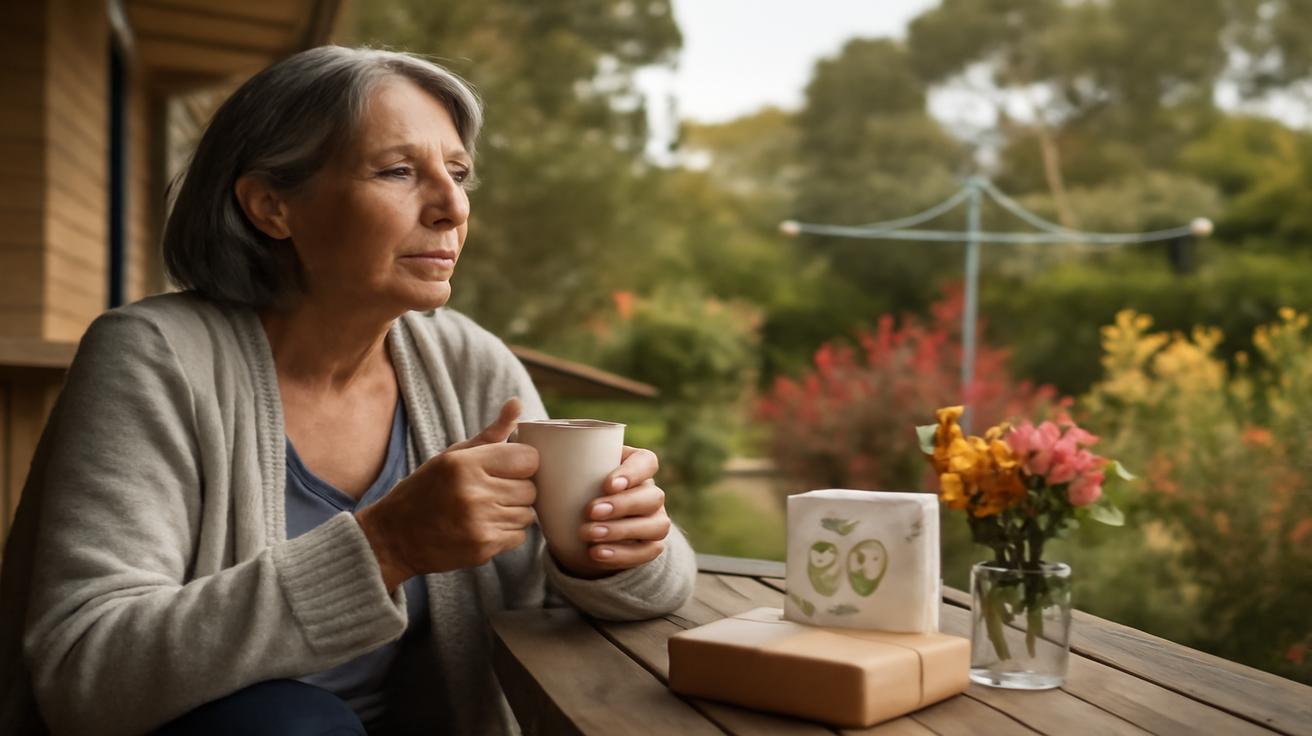
The kookaburras were laughing at me. At least, that’s how it felt that first morning I woke up on the other side of 60. The light was barely softening the gum trees outside my bedroom window, magpies were warming up their warble, and there I was, lying flat on my back, staring at the ceiling fan and thinking, “Why does my shoulder sound like a bag of gravel?”
It wasn’t the getting older that surprised me. I’d watched my parents do it, my older siblings too. The birthdays had ticked past with the usual jokes about “another lap around the sun” and “you’re only as old as you feel.” I was prepared for wrinkles, for reading glasses, for increasingly loud grunts whenever I stood up from the couch.
What I wasn’t prepared for was the quiet, unnerving sense that I’d been living the wrong kind of life for the body I was now in. Nobody told me that turning 60 would feel less like crossing a finish line and more like standing at a fork in the track, one direction leading to a slower, heavier, more restricted life, the other toward something unexpectedly lighter, freer, and, to my shock, more adventurous.
And almost every Aussie in their 60s I’ve spoken to since has said some version of the same thing: “I wish I’d shifted my lifestyle earlier.”
The Early-Morning Realisation: This Body Has a Different Rulebook Now
That morning, I swung my legs off the bed and felt the familiar crackle in my knees. My lower back protested like an old Holden starting up on a frosty Ballarat morning. None of this was new. What was new was the clarity: this wasn’t a minor phase I’d “bounce back” from. This was my body sending a formal memo: Conditions have changed. Please adjust your expectations.
In our 30s and 40s, most of us can get away with treating our bodies like slightly neglected utes — still capable, still basically reliable, with the occasional rattle we ignore. By 60, especially after decades of desk work, driving, quick dinners in front of the telly, and “I’ll start exercising next month,” that ute has done a lot of kilometres. It’s not about doom or decline; it’s about reality.
My mates and I used to swap stories about work dramas, kids’ school issues, and footy scores. As 60 rolled nearer, the conversations shifted quietly, almost embarrassingly, to who’d had a fall, who’d had a scare, who’d suddenly discovered they had blood pressure high enough to power a garden hose.
Yet nobody, not a single doctor or well-meaning friend, had clearly said: “You don’t just need to move more; you need to redesign how you live. Not later. Now.”
Instead, we treat health like an app we can download when we need it. A 12-week challenge. A gym membership. A new diet. We keep layering fixes on top of a life built around sitting, stressing, and squeezing ourselves into everyone else’s priorities.
At 60, that strategy stops working. The body starts very calmly, very firmly, saying no. Not out of spite, but out of physics and biology. And that “no” can be the start of something surprisingly beautiful — if we listen.
The Lifestyle Shift No One Spells Out
Here’s what almost every older Aussie I’ve spoken to wishes they’d understood earlier: turning 60 isn’t mostly about exercise plans or dieting. It’s about rearranging the center of gravity of your life.
Not in a grand, dramatic way — sell the house, buy a van, live on the road (though if that’s your dream, why not). It’s subtler than that. It’s moving from “I’ll fit myself in when everything else is done” to “I build my days around what keeps me alive, clear-headed, and able to enjoy this country I live in.”
We live in a land that practically begs us to move. Coastal walks brushed by salty wind, bush tracks stitched with birdsong, suburban bike paths that wander past creeks and cricket ovals. But so many of us spend decades seeing all of that out the car window on the way to somewhere else “more important.”
At 60, the maths changes. Suddenly, “one day” stops being a vague promise and starts feeling like a limited number of actual days, laid out in front of you like a string of shells on a beach. The question that quietly pops up is: How many of these do I want to trade for sitting in a chair, scrolling, complaining, and wishing?
When I finally started listening to the new rulebook my body was writing, it surprised me how simple the first shifts were. Not easy, but simple. They weren’t about punishment, restriction, or chasing the body of my 30-year-old self. They were about upgrading my everyday environment so it stopped working against me.
Shift 1: Build Movement Into the Bones of Your Day
Not workouts. Not “I’ve got to smash out an hour at the gym.” Just movement, woven into small decisions. Taking the long way around the block with the dog. Standing up from the chair every ad break. Walking to the corner shops instead of driving. Sitting on the floor occasionally so I have to get up again without using my hands (try it — it’s a humbling reality check).
Our joints don’t seize up overnight. They pay the price of thousands of tiny non-movements we didn’t think mattered. At 60, reclaiming those movements is like paying back a debt, tiny bit by tiny bit.
Shift 2: Food as Fuel, Not a Fix
I spent years inhaling whatever was fast and comforting: toast, takeaway, biscuits with my afternoon cuppa, a late-night ice cream because “I’ve had a long day.” It wasn’t that I didn’t know any better. It was that I thought my body was a bottomless pit of forgiveness.
Funny thing about turning 60: your body becomes brutally honest. It doesn’t care about your excuses. It will tell you, clearly and sometimes painfully, exactly what fuels it and what drags it under like a rip.
I didn’t go on a “diet.” I just started asking, every time I ate, one strangely powerful question: Will this give me more energy or take it away? When I answered honestly, things slowly changed: more veg, more colour, less stuff that left me sleepy, heavy, or wired. Not perfect, just kinder.
Shift 3: Sleep Like It Actually Matters
For decades, I treated sleep as optional. Netflix episode after Netflix episode, phone in bed, doom-scrolling between midnight and 1 am, thinking I was “winding down” while my brain was lit up like a pokies machine.
At 60, one bad night of sleep no longer cost me “a bit of tiredness.” It cost me my mood, my patience, my joints, my cravings, my ability to make good decisions. It was like my whole system was operating on frayed wiring.
Once I started treating sleep as the foundation instead of the leftover, things shifted faster than any supplement I’ve ever bought. Earlier nights. Cooler room. Fewer screens. A book instead of a blue-lit scroll-fest. My body, it turned out, had been begging for this for years.
The Quiet Australian Epidemic: Staying Stuck Indoors
We joke that Aussies are an outdoorsy bunch, but somewhere along the line a lot of us became an indoors nation. Air conditioning, streaming services, drive-through everything. Whole weeks can go by where the only sunlight we properly stand in is the five metres between the car and the supermarket door.
At 60, the impact of that hits hard. Bones thinning without enough weight-bearing movement. Vitamin D slipping. Mood dipping. Muscles quietly fading from underuse.
Yet what really startled me was how quickly my body responded once I coaxed it back outside. The first few morning walks, my hips protested. My breath was embarrassingly short. But the sky was huge, kookaburras heckled me from the powerlines, and somewhere between one street corner and the next, I remembered something: my body is not a nuisance; it’s my ticket to experiencing this place fully.
It’s easy to think, “I’m too old to start now.” But I met a woman on a walking track in the Blue Mountains who’d started hiking in her late 60s after her husband died. “I thought I’d left it too late,” she said, leaning on a rock, breathing heavily, eyes bright. “Turns out, the bush doesn’t care how old you are. It just says: keep going.”
Small Tweaks, Big Impact: What People Wish They’d Done at 50
When I asked friends in their 60s and 70s what they wish they’d done earlier, their answers weren’t about grand gestures. They were about tiny, consistent habits that add up over a decade. Here’s how a few of those shifts stack up over time:
| Habit Shift | If You Start at 50 | If You Wait Until 65+ |
|---|---|---|
| 20–30 min daily walk | Better joint mobility, stronger heart, lower fall risk by 60 | More stiffness to undo, progress slower but still worth starting |
| Strength training 2x week (light weights or bodyweight) | More muscle preserved, easier to stay independent later on | Can still build strength, but may need more guidance and recovery time |
| Prioritising 7–8 hours sleep | Better focus, weight regulation, and mood into your 60s | Sleep patterns can be more entrenched, but gentle change still helps |
| Cooking mostly at home | Steadier energy, healthier heart markers, less reliance on takeaways | Takes effort to break habits, but simple meals can shift energy quickly |
| Regular social catch-ups | Stronger friendships and support network by retirement age | Loneliness can be higher, but new communities (clubs, groups) still open |
Every person I spoke to said some variation of: “If I’d known how much harder it would be to start at 60, I’d have begun at 50. But I’m still glad I started.”
Money, Time, and the Myth of “Too Late”
There’s another piece of the 60 puzzle we don’t talk about enough: how our relationship with money and time flips.
For years, most of us trade time for money. Overtime, side gigs, long commutes. We stash superannuation away like we’re stuffing a mattress, hoping it’ll be enough when we’re done. Along the way, we tell ourselves we’ll travel more “later,” we’ll take care of our health “later,” we’ll reconnect with people we miss “later.”
At 60, a strange reversal begins. Money may still matter, sometimes more than ever, but time suddenly feels like the rarer currency. Even if you’re still working, there’s often a dawning awareness: I don’t want to keep postponing a life I actually enjoy.
Nobody told me this either: a lot of Aussies hit 60 and realise they’ve been incredibly responsible with their super, yet less intentional with their minutes and hours.
When I sat down with a notebook and asked myself, “If I treated time like I treat money, what would I stop wasting it on?” the answers were uncomfortably clear: mindless scrolling, conversations that went nowhere, obligations I’d taken on so as not to disappoint other people.
What I also wrote down, tentatively at first, was what I actually wanted to spend more of my time on: swimming in the ocean. Learning to cook food that treated my body better. Walking new trails. Sitting around a table with people who made me laugh so hard my ribs ached. Calling my brother just to chat, not just on birthdays.
It wasn’t about quitting everything and moving to Byron. It was about no longer waiting for a mythical “retirement version” of myself who’d finally get around to fully living.
Designing Days Around What Really Matters
The real lifestyle shift of turning 60 is not dramatic. It’s quietly radical. It’s choosing, most days, to put your deepest values in the front seat instead of leaving them strapped into the booster seat in the back.
For some people, that means dropping to four days of work and using the fifth to volunteer, care for grandkids, or join a walking group. For others, it’s saying no to one more committee or obligation to say yes to a weekly pilates class, a painting group, or a swim at the local pool.
In a country where we’re often taught to downplay our needs — “She’ll be right” — there’s something almost rebellious about a 60-year-old woman saying, “I booked a weekend away for myself, just because I wanted to wake up by the sea.” Or a 62-year-old bloke saying, “I stopped working Saturdays. I’d rather be kayaking on the river.”
These aren’t indulgences. They’re investments in the quality of the years you have left, however many that is. And nearly everyone who makes this kind of shift ends up saying: “I should’ve started living like this sooner.”
The Emotional Weather of Your 60s
No one warned me about the strange emotional weather of this decade either. There are sudden gusts of grief — for the body you used to have, for chances you didn’t take, for people you’ve lost. There are patches of fog, days where you feel oddly invisible to the faster, younger world rushing past.
But there are also clear, startlingly bright days of perspective. Moments where you catch your reflection, lines and all, and think, “I have survived everything it took to get here. That has to count for something.”
What many Aussies wish they’d learnt earlier is that emotional fitness matters as much as physical fitness. Turning 60 invites you to travel lighter — to put down the old grudges, ancient arguments, and stories about who you’re “allowed” to be.
One friend of mine, 63, started seeing a counsellor after a health scare. “I thought it was too late to untangle all this,” she told me over coffee. “But it’s like doing a clean-out of the shed. The earlier you start, the more space you have for the good stuff.”
When we neglect this inner work, our 60s can feel like a shrinking life. When we pay attention to it, clearing out stale guilt and ancient resentments, the decade opens up in a way that’s surprisingly spacious.
The New Kind of Courage We’re Asked For
There’s a myth that courage belongs to the young — gap years, bold moves, buzzy startups. But there’s a quieter, different courage that belongs to people in their 60s and beyond.
It’s the courage to start again, on a smaller but more stubborn scale. To be the oldest beginner in a tai chi class. The slowest in a swimming lane. The least flexible person in yoga. The one asking, “How does this work?” when everyone else seems to know.
No one told me that at 60, courage looks less like jumping out of planes and more like stepping into spaces where you feel awkward and underprepared, but doing it anyway because the alternative is staying home, scrolling, and silently shrinking.
I watched a man in his late 70s once, wobbling his way onto a stand-up paddle board at a Melbourne bay. He fell in three times. Each time, he came up spluttering, laughing so hard his whole body shook. Finally, he stayed up long enough to glide a few metres past the pier, arms steady, face turned towards the sun.
He paddled back in and said to no one in particular, “Wish I’d started this ten years ago.” Then he paused and added, “But I’m bloody glad I didn’t wait another ten.”
This, I think, is the quiet lesson of turning 60: yes, we wish we’d made these lifestyle shifts earlier. We wish we’d moved more, cooked better, slept longer, gone outside, said no more often, loved ourselves a little sooner.
But we’re here now. The birds are still singing. The ocean is still moving in and out. The footpath is still waiting. This body — creaky, weathered, wonderfully still alive — is still game if we are.
FAQs
Is it really worth changing my lifestyle at 60 or older?
Yes. Even small changes — like a daily walk, better sleep, or cooking more at home — can improve energy, mobility, mood, and independence. You may not rewind the clock, but you can absolutely change how you feel living in this stage of life.
What kind of exercise is safest to start with in my 60s?
For most people, gentle, consistent movement is best: walking, swimming, water aerobics, light strength training, tai chi, or yoga designed for older bodies. It’s wise to check in with your GP first, especially if you have existing health conditions.
How do I stay motivated when progress feels slow?
Focus on how you feel, not just on numbers. Better sleep, less stiffness, easier stairs, brighter mood — these are signs it’s working. Start small, track your wins, and consider joining a group or finding a walking buddy for extra accountability.
Do I have to give up my favourite foods completely?
No. Instead of strict rules, think about balance. Add more fresh, colourful foods and lean proteins, and gradually reduce what leaves you sluggish or uncomfortable. Enjoy treats mindfully rather than constantly.
What if I feel too self-conscious to join a class or group?
Almost everyone feels that way at first. Look for beginner-friendly or over-50s classes, and remember that most people are focused on themselves, not on judging you. Starting slowly, with one friendly space, can build confidence quickly.