The first time I smelled it, I thought something in the house was burning. A sharp, sterile tang drifted from the bathroom—like a hospital corridor had somehow fused with a dentist’s tray. I followed it to find my neighbor, sleeves rolled up, leaning over the sink with a chipped mug of fizzing white paste. “Hydrogen peroxide and baking soda,” she said, grinning like she’d just discovered fire. “This stuff cleans everything. You have to try it.” It looked harmless, almost homemade and comforting, the way it foamed and bubbled like a science fair volcano gone minimalist. But the more I started hearing about this duo—on social media, in mom groups, from friends whispering secrets in the detergent aisle—the more a quiet unease began to grow. Because somewhere between “harmless” and “miracle mix,” experts were starting to sound the alarm.
The Potion Under the Kitchen Sink
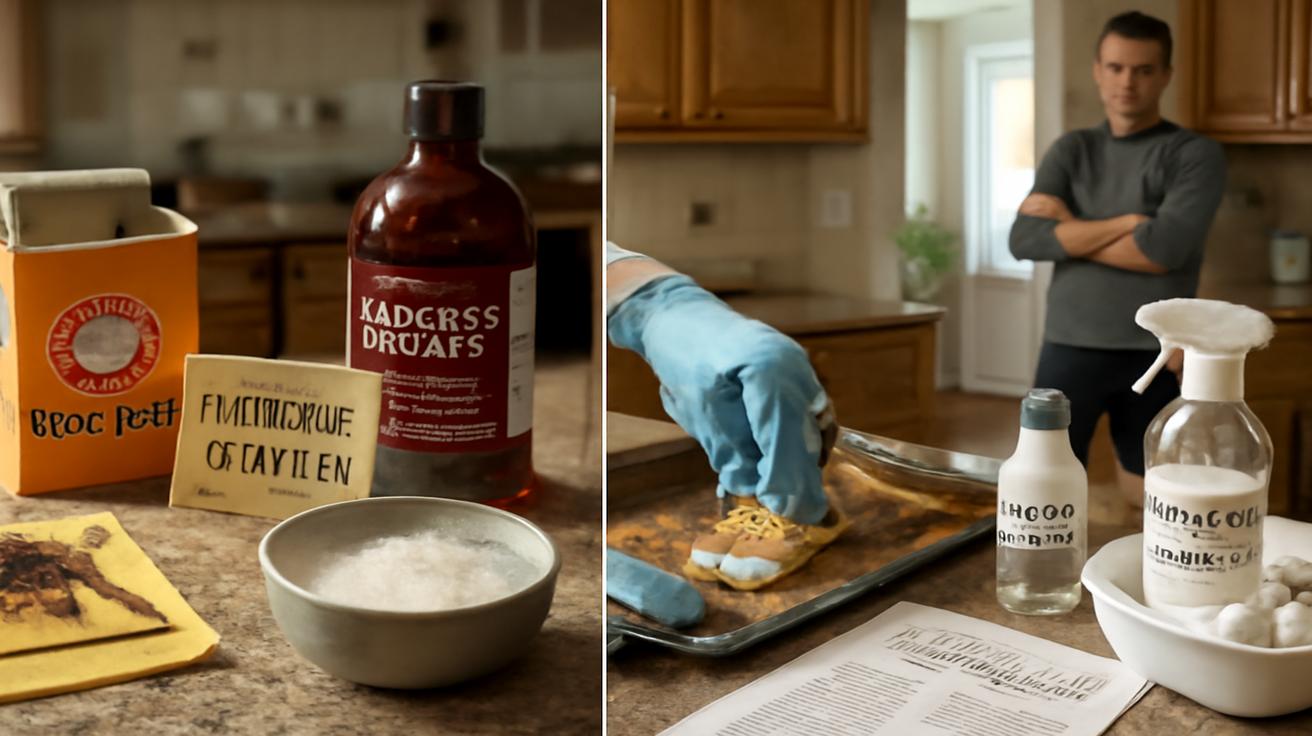
It usually starts the same way: a stained countertop, a yellowing grout line, a stubborn baking sheet that’s seen one too many Sunday roasts. You stand there, rubber gloves in hand, surveying the war zone. Then you remember a post you scrolled by at midnight: Try mixing baking soda and hydrogen peroxide for an all-natural deep clean. So you reach under the sink, pull out the familiar orange box and the brown plastic bottle, and become a chemist for the day.
You sprinkle the baking soda like salt over a winter road. You pour the hydrogen peroxide, just enough to create a thick, grainy paste. It hisses softly, tiny bubbles pinpricking the surface. You smear it over your stains. And almost instantly, your kitchen starts to smell like a cross between clean laundry and a dentist’s office. There’s something deeply satisfying about it—the scrubbing, the foaming, the visible transformation from dull to bright. It feels not just efficient, but almost righteous. No harsh commercial chemicals. No neon-blue liquids. Just two simple, old-fashioned ingredients.
That sense of “old and safe” is part of the charm. We grew up with baking soda boxes tucked in fridges to catch smells, and hydrogen peroxide bottles dabbed on scraped knees, fizzing away the day’s disasters. When they combine, they feel like the domestic version of two old friends teaming up for one last heroic act. Yet as their popularity soars—millions of views on social platforms, countless DIY cleaning reels and “natural beauty hack” videos—a very different story is being whispered in lab rooms and poison control centers.
What’s Actually Happening in That Fizzing Paste?
If you asked a chemist to describe this household ritual, it would sound less like a cozy cleaning tip and more like the beginning of a lab protocol. Baking soda, or sodium bicarbonate, is a mild base. Hydrogen peroxide, H2O2, is a reactive molecule teetering between being water and oxygen. When the two meet, especially in the presence of light, heat, or a catalyst, the peroxide starts to break down into water and oxygen gas. Those tiny bubbles you see? That’s oxygen being liberated in real time.
On surfaces, that’s part of what makes the mix so effective. The oxygen helps lift stains, disrupts some odor-causing compounds, and can even damage the cell walls of certain microbes. The mild abrasiveness of baking soda offers gentle scrubbing power without gouging most surfaces. It’s a one-two punch that feels clever and resourceful: the chemistry of everyday life working in your favor.
But chemistry doesn’t stop working just because it’s happening at home. Concentration, contact time, and context all matter—a lot more than most of us realize when we’re kneeling over the bathtub with a sponge and playlist humming in the background.
When Harmless Meets Hazardous
Ask cleaning experts and toxicologists what worries them, and their answers tend to converge on one uncomfortable truth: what feels safe isn’t always safe in the ways we care about most. The mixture of baking soda and hydrogen peroxide can be perfectly fine for some tasks when used correctly—and a quiet disaster waiting to happen when pushed a little too far.
The Invisible Risks Lurking in a “Simple” Mix
Hydrogen peroxide sold in drugstores is usually around 3%. At that level, brief contact on intact skin isn’t usually a big problem for most people. But when you start using more concentrated versions—sometimes sold online for specialized uses—or when you trap the mixture in closed containers, the risk profile changes fast.
Stored in a sealed jar, a thick paste of baking soda and hydrogen peroxide can slowly release oxygen gas. As the pressure builds, so do the odds of the container bulging, leaking, or in more extreme cases, popping open or cracking. People have reported hearing unexpected bangs from closets or cupboards, only to discover an innocent-looking DIY “miracle cleaner” had been quietly transforming into a pressurized hazard.
Then there’s the skin and respiratory side. Leave that paste on your hands too long, especially if you’re using higher-strength peroxide, and you might watch your skin turn pale, tight, and tender. That’s not a sign of “deep cleaning”—it’s chemical irritation at work. Breathe in the mist from aggressive scrubbing in a poorly ventilated bathroom, and you might feel your throat tighten or your chest grow a little heavy. Most people recover quickly, but those with asthma or sensitive lungs might not be so lucky.
Now add in one more twist—the kind that keeps poison control staff awake at night: the habit of combining this duo with other cleaners. Pour it on top of residual vinegar, bleach-based products, or unknown “all-purpose” sprays, and you may end up with a cocktail of unintended reactions, some of which could release irritating or even dangerous gases. The original mix might be mild, but the chain reactions are not always so tame.
The Great Divide: Households vs. Professionals
Step into an average home and you might hear someone praising this duo as “the only thing that works” on a grimy tub or mildew-stained grout. Step into a professional cleaning lab or a dental office, and you’ll hear something more measured—admiration for the chemistry, yes, but braided tightly with strict rules about when, where, and how to use it.
Why Some Experts Swear by It—and Others Swear at It
Researchers and professionals aren’t dismissing the power of baking soda and hydrogen peroxide. In fact, a wave of recent studies has highlighted just how effective this pairing can be in specific scenarios. Used correctly, it can:
- Help break down some organic stains on fabrics and hard surfaces.
- Reduce certain bacteria and fungi on nonporous surfaces.
- Brighten discolored grout or tile.
- Assist in whitening teeth under professional supervision.
In dental clinics, hydrogen peroxide-based gels—often with ingredients that act similarly to baking soda—have long been used to lift stains from enamel. In laboratories, carefully measured combinations clean specialized equipment. The science behind the glowing results is very real.
But here’s where the conflict starts: the controlled, measured, well-ventilated, and supervised environments of labs and clinics look nothing like the average bathroom on a busy Tuesday night. In a professional setting:
- Concentrations are precisely known and documented.
- Exposure times are limited and monitored.
- Safety gear and ventilation plans are built in.
- Mixtures are discarded instead of stored casually “for later.”
At home, the story gets messier: people eyeball measurements, mix it with other “natural” ingredients, scrub with bare hands, and keep leftovers in repurposed food containers. So while some experts argue that the duo is a powerful, low-toxicity alternative to harsher industrial cleaners, others worry that accessibility plus overconfidence is a volatile combination all its own.
The result is a standoff of sorts: households embracing a sense of control and simplicity through DIY chemistry, and professionals urging respect for the same chemistry before it bites back.
From Grout to Cutting Boards: Uses That Inspire—and Concern
Scroll long enough through cleaning and lifestyle feeds and you’ll find the baking soda–hydrogen peroxide mixture being touted as a fix for nearly everything. Some suggestions make sense; others hover on the edge of reckless.
Popular Uses People Swear By
Here are some of the most common ways people are using this mixture at home—and how professionals quietly feel about each one:
| Use | Why People Love It | Expert Caution |
|---|---|---|
| Whitening grout and tile | Visibly lifts grime and brightens lines in minutes. | Can irritate skin and lungs; rinse thoroughly and ventilate. |
| Cleaning baking sheets and pans | Cuts through baked-on grease and browning. | Safe on most metals, but prolonged use may dull finishes. |
| Brightening laundry | Helps lift some stains and reduce odors. | May weaken some fabrics over time; patch-test and avoid overuse. |
| Disinfecting cutting boards | Feels safer than bleach; reduces surface microbes. | Not a guaranteed sterilant; still follow food safety guidelines. |
| DIY tooth whitening | Quick visible brightening in some cases. | Risk of enamel damage and gum irritation; best done only with professional guidance. |
It’s this same table of uses that fuels so much of the tension. Every result that feels miraculous to one person looks, to a cautious expert, like a coin toss: will this be the helpful side of chemistry—or the harmful one?
The Research That Changed the Conversation
Newer studies have only intensified the debate. Instead of shutting down the hype, many recent findings have actually backed it up—at least partially. Under certain conditions, research shows that baking soda and hydrogen peroxide together can outperform either ingredient alone, especially when tackling biological grime and some types of discoloration.
Praised in Papers, Problematic in Practice
Scientists testing this duo in controlled environments have reported:
- Enhanced removal of organic stains from certain surfaces.
- Improved disruption of bacterial biofilms when compared to single agents.
- Promising applications in dental care, surface disinfection, and even some medical device cleaning.
These are the findings that headline-chasers love. “Powerful duo.” “Natural disinfectant.” “Better together.” Each phrase trickles down into blog posts, comment sections, and finally, onto your kitchen counter in the form of an improvised paste.
But buried in the same studies are caveats that rarely make it into social feeds: precise concentrations, limited contact times, specific material types, and an insistence on professional oversight. In a lab, “leave on for 10 minutes” means exactly 10 minutes under measured conditions. At home, it means however long it takes to answer a text, switch the laundry, and forget what time you started.
The research isn’t wrong. The science truly is impressive. But without the boundaries that shaped those glowing results, the gap between “promising” and “practical” starts to widen. And in that gap, a lot of bad habits can quietly take root.
Finding a Safer Middle Ground at Home
If this all sounds like a call to banish the brown bottle and orange box from your cleaning routine, it isn’t. The story of baking soda and hydrogen peroxide isn’t a simple villain-or-hero tale. It’s more like a buddy movie where the charm and the chaos come from the same source: underestimating what they can really do.
How to Use This Duo Without Losing Sleep
There’s a way to keep the sparkle without the anxiety. It starts with a small shift in mindset—from “this is harmless” to “this is powerful, so I’ll treat it with respect.” For most households, that looks like this:
- Stick to low-strength peroxide. Use the standard 3% solution unless a professional specifically advises otherwise.
- Mix small, fresh batches. Make only what you need for the task at hand and discard the rest. Don’t store the mixture in sealed containers.
- Keep it away from kids and pets. A fizzing cup on the floor looks a lot like a drink—or a toy.
- Wear gloves for extended scrubbing. Especially if you have sensitive skin or are working on large areas.
- Ventilate your space. Open a window, run a fan, and avoid hovering too close over the reaction for long periods.
- Never mix it with other cleaners. Especially avoid pairing with products containing bleach, ammonia, or strong acids.
- Be skeptical with beauty hacks. Don’t use this mixture on your skin, hair, or teeth without professional guidance.
Used this way, that fizzing, gently abrasive paste can still earn its place under your sink. It can still save a stained mug, rescue a dull baking sheet, and breathe new life into grout lines dulled by time and footsteps.
And maybe that’s the real heart of the divide. Households want something that works and feels understandable, within reach. Experts want something that works and stays within the safe lines drawn by hard-earned experience. Between those two desires lies a narrow but navigable path.
So the next time you unscrew that familiar brown cap and tip a measure of liquid into your waiting bowl of white powder, pause for a heartbeat. Feel the cool draft from the open window, the slight sting of the scent in your nose, the fizzing whisper as bubbles form. You are not just “doing a little cleaning.” You’re handling real chemistry—messy, powerful, and, like most things in a home, only as safe as the respect you give it.
FAQ
Is it always dangerous to mix baking soda and hydrogen peroxide at home?
No. When used in small amounts, with low-strength (3%) hydrogen peroxide, good ventilation, and proper precautions, the mixture can be reasonably safe for certain cleaning tasks. The danger comes from overuse, high concentrations, poor ventilation, long skin contact, or mixing with other cleaners.
Can I use this mixture to whiten my teeth?
Many people do, but dentists are cautious. Overuse or high concentrations can irritate gums and wear down enamel over time. If you’re considering it for tooth whitening, it’s much safer to talk to a dental professional first and use products or methods they recommend.
Is it safe to store leftover paste in a jar?
It’s not recommended. As hydrogen peroxide breaks down, it releases oxygen gas, which can build pressure in sealed containers. Make only as much as you need for a single use and discard any leftover mixture.
Can I mix baking soda and hydrogen peroxide with vinegar or bleach for extra power?
No. Combining different cleaners can trigger unintended chemical reactions. Mixing with bleach or strong acids like vinegar may release irritating or hazardous gases. Use one product at a time, and rinse surfaces thoroughly before switching to another cleaner.
What surfaces are generally safe for this mixture?
It’s often safe on many tiles, ceramics, some metals, and certain plastics, but it can dull delicate finishes, soft metals, or treated surfaces over time. Always test a small, hidden spot first, and avoid using it on antique items, sensitive natural stones, or specialty coatings without checking manufacturer guidance.
Is it really better than commercial cleaners?
It depends on the job. For some stains and mild disinfecting, this duo can work impressively well. Commercial cleaners, however, are formulated, tested, and labeled for specific uses and safety profiles. The best choice is often the one that matches your task, your surfaces, and your comfort level with handling active ingredients.
What should I do if I get the mixture on my skin or in my eyes?
For skin contact, rinse thoroughly with plenty of water and mild soap; seek medical advice if irritation persists. For eye exposure, rinse immediately with clean water for at least 15 minutes and seek medical help promptly. If swallowed, contact a poison control center or medical professional right away.