The first time I walked up to Hadrian’s Wall, the wind was so strong it felt like a hand on my chest, warning me back. The stones rose out of the grass in a long, grey line, slick with rain, lichen-cloaked, ancient and stubborn. A kestrel hovered above the crags. Somewhere beyond the horizon, tour buses were unloading visitors ready to pose for photos and say they’d “done” the Wall. But standing there, with the sky bruised and low, what I felt wasn’t triumph or imperial grandeur. It was exhaustion. The Wall looked less like a monument to power and more like a scar.
The Cracks in a Glorious Story
For generations, we’ve been sold a simple story about Hadrian’s Wall. You probably know the script: stalwart Roman legionaries standing guard at the very edge of the civilized world; order, discipline, gleaming armor; an iron line holding back barbarian chaos. Schoolbooks, documentaries, and tourist boards polished this image until it shone like new-minted bronze. The Wall was framed as a symbol of heroism, organization, and imperial brilliance.
But history, like weather over the Northumberland fells, refuses to stay clear for long. Over the last few years, archaeologists and bioarchaeologists—those patient detectives of bones, soil, and microscopic remains—have been quietly rewriting the story. The new picture is startling: those heroic legionaries, those so-called elite soldiers of Rome, were often sick, crawling with intestinal worms, living in filth that would make a modern campsite inspector blanch. Their bodies, it turns out, were battlegrounds long before any raider ever set eyes on the Wall.
We haven’t just misunderstood the hardships they faced; we’ve been clinging to a false history that airbrushed their misery, their vulnerability, and yes, their humanity. The Wall, far from being a clean white line of marble-like authority, was something far grubbier, more fragile, and more alive.
What the Latrines Whisper: Science in the Soil
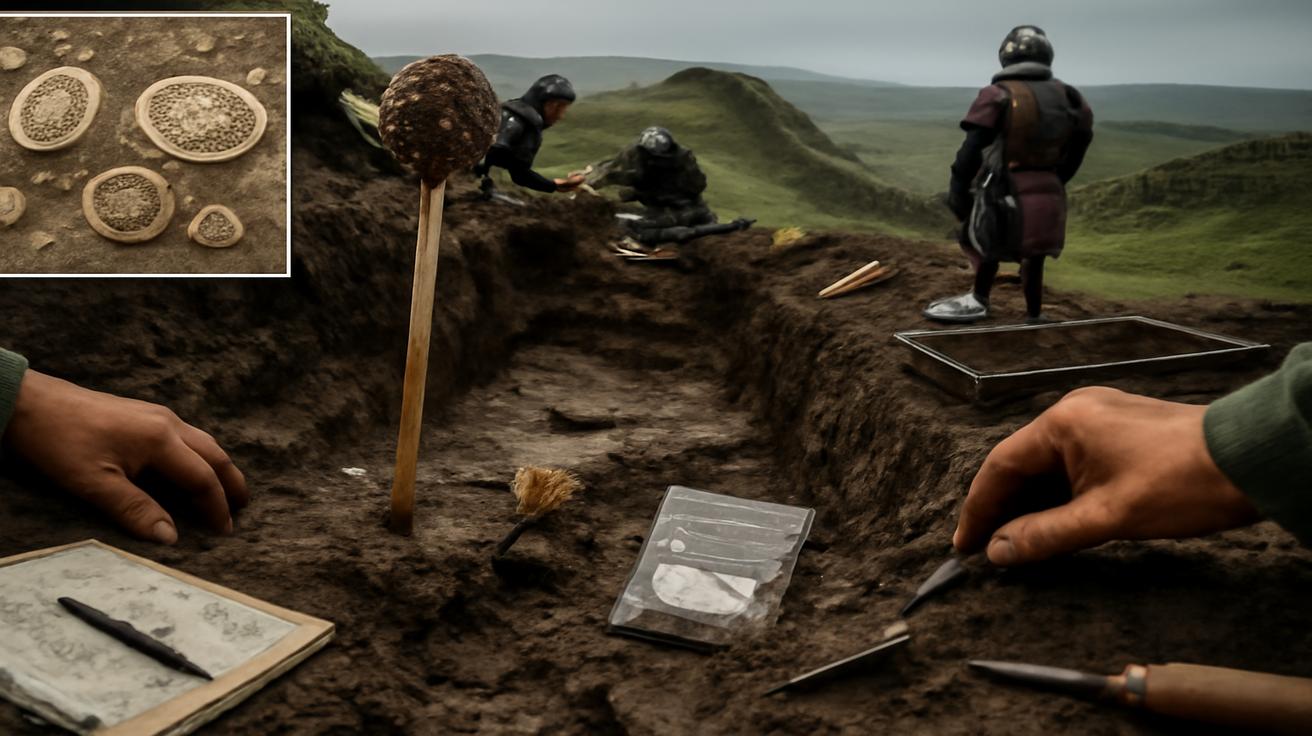
To uncover this hidden story, you don’t start with swords or armor; you start with toilets. Or, more precisely, with what’s left of them. Across the forts and milecastles of Hadrian’s Wall—places like Vindolanda and Housesteads—ancient latrines and rubbish pits have yielded a kind of archive that never lies: parasite eggs, trapped for centuries in layers of compacted soil and waterlogged waste.
Under a microscope, these tiny ovals and spheres become a roll call of invisible enemies: whipworm, roundworm, tapeworm, liver flukes. Each type tells a different story about hygiene, food, water, and the intimate, daily lives of people who lived and labored here. When experts first began finding these eggs in serious numbers, it was a jolt. The Wall, that proud frontier of an advanced empire, looked suddenly less advanced.
Legionaries weren’t just occasionally infected—they were heavily infested. The concentration of parasite eggs in the soil suggests that intestinal worms were common, perhaps nearly universal. Imagine a life of marching, drilling, and guard duty, but layered over with constant abdominal pain, anemia, nausea, and fatigue. The men on this frontier weren’t just fighting enemies out there beyond the Wall; they were also fighting, endlessly, quietly, within.
And the story doesn’t stop with latrines. Excavations of drains, ditches, and cesspits show signs of human and animal waste mixing freely. In some places, the same water sources seem to have been used for drinking, washing, and dumping refuse. Warm, damp conditions inside bathhouses and barracks created a perfect incubator for bacteria and parasites alike. In the gaps between those tidy stone foundations, the romantic vision of Rome’s northern army begins to come apart.
| Evidence from the Wall | What It Reveals |
|---|---|
| Parasite eggs in latrine soils | Widespread intestinal infections among soldiers and camp followers |
| Remains of unwashed vegetables and animal offal | Contaminated food sources and poor kitchen hygiene |
| Waterlogged drains and mixed waste | Cross-contamination between drinking, washing, and waste disposal |
| Bones showing signs of stress and malnutrition | Long-term strain on bodies already weakened by disease |
The Hero in the Latrine
The irony, of course, is that some of the finest detective work about Hadrian’s Wall comes from the least glamorous places. At Vindolanda, wooden writing tablets and leather shoes survived in the same damp conditions that preserved microscopic parasite remains. The same soil that recorded invitations to birthday parties and lists of supplies also captured the worms that gnawed at the guts of those letter-writers.
When you read a letter from a centurion complaining about missing socks or extra grain, and then learn that his latrine soil is packed with parasite eggs, you start to see him not as a marble statue of discipline, but as a tired human being. Picture him shifting his weight in the cold rain, belly uncomfortable, armor chafing, eyes scanning the empty horizon for enemies that may never come. That’s a different kind of frontier: one where heroism looks less like a clean-cut Hollywood soldier and more like sheer, stubborn endurance.
False Cleanliness: How We Sanitized the Past
So how did we end up with such a scrubbed, heroic version of life on Hadrian’s Wall in the first place? Part of the answer lies in the way archaeology developed. Early excavations, especially in the 19th and early 20th centuries, were often obsessed with big structures and grand finds—fort walls, altars, inscriptions, glittering artifacts that could fill museum cases and tell a confident story about Rome’s greatness.
The messier evidence was literally shoveled aside. Latrines were noted, but their contents weren’t carefully sifted. Drains were cleared, but not systematically sampled. Horse dung, kitchen scraps, human waste—all the material of real, embodied life—was treated as background noise. Out of this selective attention grew a selective narrative: the Wall as a marvel of engineering, of imperial planning, of military efficiency.
Then there was the Victorian imagination to contend with. For empire-builders in Britain, Rome’s northern frontier became a convenient mirror. Here was a story of a “civilized” power bringing order to rough lands, a frontier that could be held with discipline and courage. It was comforting to think that the Romans had stood, proudly and effectively, where British soldiers now stood in other corners of the world. There was little room in that story for dysentery and roundworm.
But the false cleanliness goes deeper than toilets. It stretches into our idea of what heroism itself looks like. We like our heroes upright and unsullied. We imagine legionaries as sculpted figures, not limping, itching, or hunched with cramps. We frame their lives in terms of battles and campaigns, not in terms of chronic illness, bad water, or the slow drag of fatigue. Sanitizing their bodies allowed us to sanitize the empire that commanded them.
The Politics of a Parasite
When you admit the parasites, you have to admit vulnerability. And vulnerability makes empire look less inevitable, less invincible. It reminds us that the Roman world was not a flawless machine humming at the edge of the map, but a patchwork of messy, fallible communities trying to survive.
The new science of ancient parasites—paleoparasitology, in the careful terminology—does more than gross us out with images of worms in Roman guts. It shifts the power balance in the story. Suddenly, raiders from the north aren’t the only threat. The biggest enemies might be invisible, breeding in the very systems—bathhouses, latrines, food supply chains—that Rome prided itself on.
That has modern echoes. We know, all too well, how invisible organisms can shape the fate of societies. When we look back at Hadrian’s Wall with this in mind, it becomes less a sharp boundary between “Roman” and “barbarian” and more a line along which humans of all stripes struggled with the same tiny foes, the same frail bodies, the same cold winds and contaminated streams.
Everyday Misery on the Edge of the World
Stand, for a moment, not as a tourist on a sunny afternoon with a camera in your pocket, but as one of the legionaries who lived here. It’s late autumn. The sky bruises early into a long, smoky twilight. Your breath hangs in front of you. The Wall’s stones are slick. Inside the fort, the smell of smoke and damp wool clings to everything. You’ve eaten your ration—coarse bread, some grain porridge, maybe a scrap of salted meat—and your belly feels heavy, unsettled. The pit outside the barracks where waste is dumped is too close to the kitchen by any modern standard. Flies don’t care about imperial regulations.
You share sleeping quarters with dozens of other men. Their bodies create a fug of sweat and breath; lice and fleas move freely from cloak to cloak. Some of you cough all winter. Some never stop scratching. Once a week, if you’re lucky, you strip in the bathhouse, basking in the steam before scraping grime from your skin with a curved strigil. The water, reused and only occasionally refreshed, looks less inviting the more closely you peer into it. Any small relief is a trade-off, another chance for creatures too tiny to see to slip into your system.
By torchlight, the world shrinks to a ring of yellow around the Wall. Beyond, the moorland melts into darkness, broken only by the suggestion of distant fires. You’ve been told the people on the other side are wild, savage, uncivilized. You imagine them moving easily through the hills, closer to their families, their own languages, their own gods. You, meanwhile, are posted here for twenty years if you survive that long, your pay docked for equipment, your body used as a living piece of masonry in the empire’s grand design.
This is not the clean heroism of textbooks. It’s damp boots that never quite dry. It’s stomach cramps in the middle of the night watch. It’s the quiet calculation as you descend into the latrine pit: is today the day the rope breaks, or the day you slip, or the day your insides finally decide they’ve had enough?
Women, Children, and the Rest of the Story
The false history of Hadrian’s Wall has another blind spot: it often forgets the non-soldiers who lived in and around the forts. Excavations show bustling civilian settlements—vici—clustered near the walls and gates: taverns, workshops, houses, shrines. Here lived merchants, families of soldiers, traders from other provinces, local Britons who found opportunities—or necessity—under Rome’s shadow.
The parasites didn’t respect social boundaries. Children playing in muddy lanes, women drawing water, cooks chopping vegetables on worn wooden boards: all of them would have faced the same invisible risks. In some ways, they were more exposed; without the structure of legionary discipline, their access to cleaner water or better food could be even more limited. Bones from graves near the Wall sometimes show signs of childhood stress, anemia, stunted growth—echoes of small bodies struggling against malnutrition and disease.
When we talk about “legionaries riddled with parasites,” we’re really, if we’re honest, talking about communities riddled with them. The Wall wasn’t just a line of soldiers; it was a living strip of empire, throbbing with trade, gossip, childbirth, arguments, brewing, prayer—and sickness. To restore that messy world is not to dishonor their memory. It’s to finally see them clearly.
Heroism Reconsidered
If the old, polished story of Hadrian’s Wall is false—or at least dangerously incomplete—what replaces it? Not a simple reversal, where everything Roman becomes bad and everything “barbarian” becomes good. The new story is more complicated, more ambiguous, and, in its own way, more powerful.
Perhaps real heroism on this frontier wasn’t found in dramatic last stands on the battlements, but in the quiet continuity of daily tasks performed under constant strain. A soldier who drags himself to his post despite chronic intestinal pain, who stands in freezing rain to light a signal fire, who pulls a fellow recruit out of an overflowing latrine ditch—he’s living a courage that doesn’t fit onto postcards.
Maybe the real marvel of Hadrian’s Wall isn’t that it was built at all, but that people kept living along it year after year, generation after generation, in conditions that would have driven many of us to despair. They put up with aching joints, grinding boredom, sudden raids, imperial bureaucracy, and a whole menagerie of microscopic tormentors, and still they carved little altars, mended boots, wrote letters home, fell in love, grieved their dead.
Why This Matters Now
You might wonder why any of this matters beyond adjusting a few museum captions. It matters because the stories we tell about the past shape the stories we tell about ourselves. A version of history that erases discomfort, disease, and vulnerability doesn’t only lie about dead Romans; it encourages us to lie about our own fragility.
If we cling to fantasies of spotless heroism and perfectly controlled frontiers, we leave less room to talk honestly about what it means to live in a body that fails, in systems that break, in landscapes that don’t care about our boundaries. Seeing Hadrian’s Wall as a place of parasites and pain isn’t an act of disrespect. It’s an act of solidarity across time.
When we acknowledge that these famed legionaries were, in fact, sick, itchy, anxious, occasionally miserable human beings, we allow them a dignity that marble statues can never give: the dignity of being real. And we allow ourselves to admit that our own struggles—physical, mental, environmental—don’t disqualify us from resilience or courage. They define the terrain on which those qualities actually mean something.
Walking the Wall with New Eyes
The next time you visit Hadrian’s Wall—if you do—try this. As you climb the path and the stones loom into view, let the heroic posters and glossy leaflets fade for a moment. Listen instead to smaller sounds: the squelch of your boots in the mud, the whisper of wind over the grass, the caw of a distant crow. Feel the chill that seeps through your coat and imagine facing it in thin wool and worn leather, with a gutful of worms and a schedule that doesn’t care how you slept last night.
Run your hand along the top of the Wall and think of all the hands that did the same: some calloused and strong, some trembling with fever, some belonging to men barely out of their teens. Think of the ones who spent more time on the latrine seat than on the drill field, who still, somehow, got up when the horn sounded. Picture the women boiling laundry in smoke-filled sheds, the children chasing dogs through muddy courtyards, all of them inhabiting a world where the smallest creatures often had the biggest say.
This isn’t about tearing down Hadrian’s Wall as a symbol; it’s about letting it be what it always was: not a clean white line, but a living edge. A place where power met resistance, where order met chaos, but also where human resilience met the unglamorous realities of biology, weather, and time. The heroism here, if we’re willing to see it, lies not in spotless glory, but in the grit of people who kept going anyway.
We were sold a false history—but the truth, with all its worms and waste pits and weary bodies, is deeper, stranger, and ultimately more moving. The Wall was never just about keeping others out. It was a place where the empire’s own illusions came up against the limits of flesh and stone. In that collision, a different kind of story emerges, one that belongs not just to emperors and generals, but to everyone who has ever tried to hold their ground against forces, seen and unseen, that were bigger than they were.
Frequently Asked Questions
Were Roman soldiers on Hadrian’s Wall really riddled with parasites?
Yes. Analyses of soil from latrines, drains, and refuse pits along Hadrian’s Wall have revealed large numbers of parasite eggs, including whipworm, roundworm, and tapeworm. The concentration and variety strongly suggest that intestinal infections were common among soldiers and civilians living on the frontier.
Does this mean Roman hygiene was poor?
By the standards of their time, Romans had advanced hygiene systems—latrines, drains, and bathhouses. However, these facilities often mixed clean and dirty water, and waste disposal was far from perfect. In crowded forts and settlements, this created ideal conditions for parasites and diseases to spread, especially where water and food sources were contaminated.
Does the new evidence change how we see Roman heroism?
It complicates it. Instead of imagining perfectly healthy, invincible legionaries, we now see soldiers who endured their duties despite chronic illness, discomfort, and exhaustion. Their heroism becomes more human and relatable—less about spotless glory, more about persistence in harsh, unromantic conditions.
Were only soldiers affected by these parasites?
No. Civilian settlements near the Wall housed families, traders, and local people. They shared the same water sources, streets, and, often, the same hygiene challenges. Children and adults alike would have faced similar risks from contaminated food, water, and close living quarters.
Why was history about Hadrian’s Wall “sanitized” for so long?
Early archaeology focused on impressive structures and artifacts, not microscopic evidence. Victorian and later narratives also used Rome as a model of order and civilization, especially in imperial Britain, favoring clean, heroic images of the frontier. The messier realities of disease and discomfort were largely ignored or downplayed.
Does this new understanding diminish the importance of Hadrian’s Wall?
If anything, it enriches it. Recognizing the hardships, illnesses, and vulnerabilities of those who lived along the Wall makes their experiences more vivid and meaningful. The Wall becomes not just a military monument, but a complex human landscape shaped by environment, biology, and endurance.
Can visitors see evidence of this today?
While parasite eggs themselves require microscopes, museums and sites along Hadrian’s Wall now increasingly interpret daily life in more realistic terms. Ruins of latrines, bathhouses, barracks, and civilian buildings, combined with modern explanations, help visitors imagine the full sensory and bodily reality of life on Rome’s northern frontier.