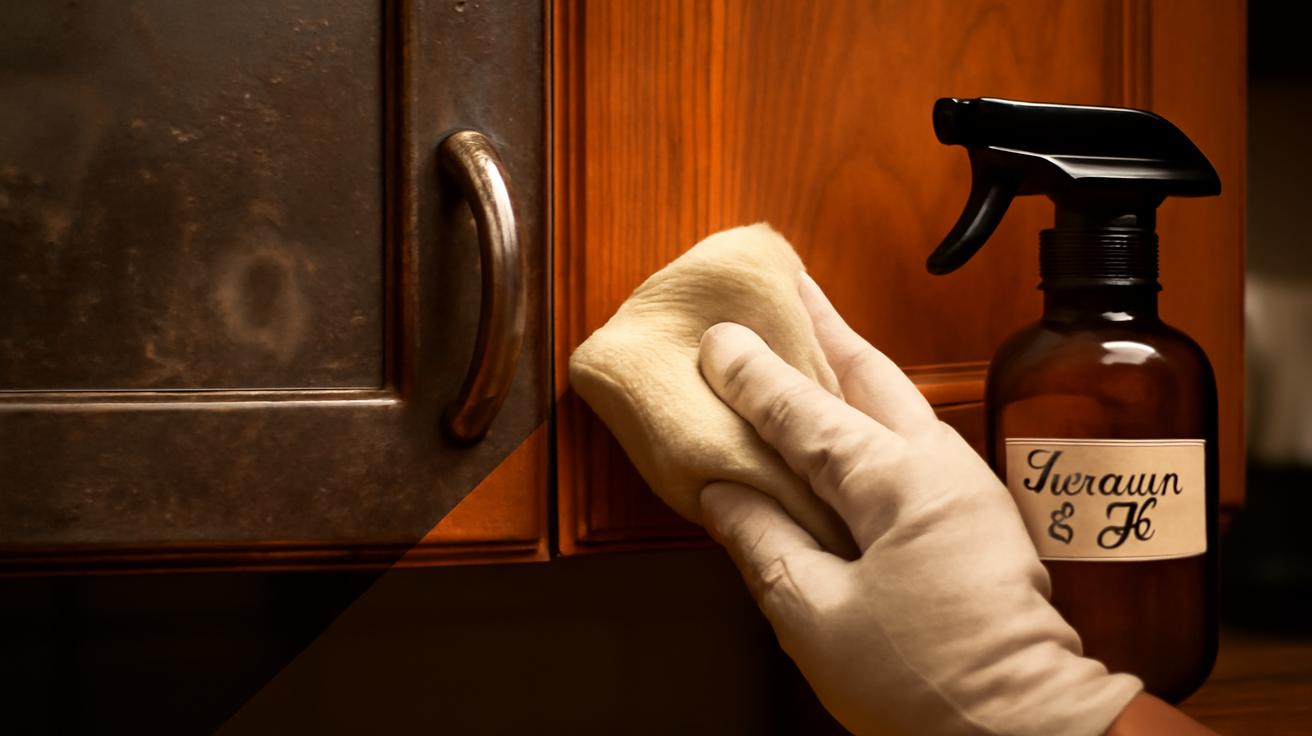
The first time I saw it happen, I actually laughed out loud. There I was, elbow-deep in years of kitchen grime, convinced I’d need a weekend, three products, and possibly a spiritual breakthrough to get my cabinets clean again. The wood around the handles was darkened to a sticky patina, like old syrup. Dust clung to grease, forming that familiar, slightly revolting fuzz that only a busy kitchen can produce. I’d already tried hot water and soap, a “grease-cutting” spray, and even a magic sponge that was supposed to save the day. The cabinets still looked… tired. Worn. A little defeated.
Then I remembered something my grandmother used to keep under her sink in a squat, dependable bottle: plain white vinegar. Not a fancy cleaner, not a trendy spray, not a neon-colored miracle from a commercial. Just the forgotten liquid we splash into salad dressings and ignore the rest of the week.
On a whim, I grabbed it. A little vinegar, a little warm water, a few drops of dish soap. I dipped a soft cloth into the mixture, pressed it to the corner of one greasy cabinet door, and wiped.
The transformation was so instant it felt like a magic trick. The dull haze melted away. That tacky, slightly sticky feeling disappeared under my fingertips. The wood beneath emerged lighter, smoother, and—most surprisingly—still warm and satiny, not stripped or dried out. It didn’t smell like chemicals, just faintly clean, with a hint of tang that vanished as it dried. My cabinets looked almost…new.
The Forgotten Bottle Under the Sink
Most of us own it. Most of us ignore it. White vinegar is that modest, overlooked bottle that waits by the dish soap, quietly powerful, a little unimpressive-looking. It doesn’t come in a sleek spray bottle, doesn’t promise “Deep Degreasing Technology!” in aggressive fonts. And yet, in kitchens around the world, it may be the most underestimated cleaning ally we have.
Think about the surfaces that work the hardest in your home: the cabinets right by the stove, the ones you reach for with hands that just touched olive oil, garlic, butter, tomato sauce. Day by day, tiny fingerprints of cooking life build into a film. It’s not a sudden mess; it’s a slow, creeping one. Like rings in a tree trunk, the layers tell the story of every dinner you made in a hurry, every late-night snack, every pot you grabbed while the onions sizzled just a little too fast.
Over time, that film becomes something else entirely: stubborn. Your cabinets start to feel a bit sticky even after you wipe them. Dust clings to the grease; splatters from forgotten sauces dry into tiny constellations across the doors. At some point, the shine you loved when they were new is just…gone.
That’s when the shopping urge hits. Maybe you’ve been there: staring at a row of specialized cabinet cleaners, furniture polishes, citrus-scented sprays that promise to dissolve years of grime in seconds. Some of them work, some of them don’t, and many leave a slightly artificial gloss that looks good for a day, then traps dirt all over again.
Vinegar, on the other hand, does something quieter and more honest: it breaks down the grime, then gets out of the way.
The Science Hiding in a Humble Liquid
Vinegar is essentially acetic acid in water—a gentle, food-safe acid that’s just strong enough to loosen the bonds between grease and surface. It doesn’t bully the wood or laminate. It doesn’t smother it in silicone or oil-based shine. Instead, it dissolves what doesn’t belong there—oils, fingerprints, residue from cooking—and leaves the surface ready to breathe again.
But pure vinegar on its own can be a little assertive—too strong for some finishes, too pungent for some noses. The real magic happens when you invite a couple of quiet companions to the party: warm water and a drop or two of dish soap. Suddenly, you’ve created a cleaner that glides over the surface, slips beneath the grease, and releases it without a fight.
This is the kind of chemistry that feels like alchemy when you’re standing in front of your cabinets with a rag in hand. No synthetic fragrances, no unpronounceable ingredients—just the simple, old-world practicality that our grandparents knew and most of us forgot in the rush of modern convenience.
Your Cabinets, Before and After
Picture your cabinets as they are right now. Maybe they’re maple, honey-colored and warm, with faint handprints around the lower doors from small, curious fingers. Maybe they’re a deep espresso brown, showing every smudge of oil in the afternoon light. Or maybe they’re painted—a calm white or gray that once felt fresh and airy, now dulled by cooking life.
Now imagine leaning in close and running your fingertips along the surface. Do they glide, or do they drag just a bit? Does the surface catch the light with a gentle, even sheen, or does it look cloudy, streaked, or mottled with tiny splatters and patches?
This is where the forgotten kitchen liquid steps into its quiet spotlight.
You mix it in a bowl or spray bottle: about one part white vinegar to two parts warm water. Add a couple of drops of mild dish soap—just enough to help the water and grease divorce amicably. Stir or shake gently. That’s it. No elaborate ratios, no special tools.
Then, you begin.
Working one door at a time, you dip a soft cloth or sponge into the solution, wring it out so it’s damp but not dripping, and press it against the wood. There’s something grounding about this pace—slow, deliberate, almost meditative. The warm solution softens the grease; the vinegar loosens it; the soap sweeps it away.
And every time you rinse your cloth in warm water and wring it out, you’re not just cleaning your cabinets—you’re clearing the quiet backlog of days and dinners from your space. The act is simple, but the effect feels strangely emotional: a subtle reset, a way of saying, “This kitchen is still mine. It’s still beautiful. It still deserves care.”
A Simple Ritual That Changes the Room
Something happens as you move from door to door. The room changes, almost imperceptibly at first. That faint, stale smell of old cooking oil lifts. The surfaces around you start catching the light differently. The cabinet above the stove, once a little embarrassing, now reflects a soft glow instead of absorbing it into dullness.
You start to notice details you’d forgotten—the delicate grain in the wood, the curve of the handle against the door, the way the cabinet corners frame the stove like a picture. You’re not just cleaning; you’re reacquainting yourself with the architecture of your daily life.
And beneath your hands, the surfaces respond. They lose that gummy drag and become smooth again. Not glossy in a fake, plasticized way, but naturally clean, open to touch. You gently dry each door with a clean towel, buffing lightly as if you’re polishing a cherished piece of furniture. Because, in a way, you are.
How to Use Vinegar Without Harming Your Cabinets
While vinegar is simple, using it thoughtfully matters—especially if your cabinets are made of real wood or painted with a delicate finish. This isn’t a brute-force cleaner. It’s more like a soft-spoken expert that works best when you give it the right conditions.
| Cabinet Type | Vinegar Use | Best Approach |
|---|---|---|
| Painted wood | Safe when diluted | Use mild mix, don’t oversaturate, dry immediately. |
| Sealed / varnished wood | Generally safe | Test a hidden spot first, then clean in sections. |
| Laminate or thermofoil | Very safe | Ideal for degreasing; avoid scrubbing with abrasives. |
| Unfinished / raw wood | Not recommended | Use dry or lightly damp cloth only; avoid vinegars and soaps. |
The Gentle, Step-by-Step Method
Here’s a simple way to make the most out of that unassuming bottle:
- Mix your solution. Combine 1 cup of warm water with 1/2 cup of white vinegar in a bowl or spray bottle. Add 2–3 drops of mild dish soap. Swirl gently.
- Test a hidden spot. Choose an inside corner or the back of a door. Wipe, then dry. If the finish looks unchanged—no fading, no tackiness—you’re good to go.
- Work from the top down. Start with upper cabinets so any drips (there shouldn’t be many) don’t land on already-cleaned surfaces.
- Clean in small sections. Wipe a door or drawer front with your damp cloth, paying attention to edges, handles, and grooves where grease hides.
- Rinse your cloth often. Keep a bowl of warm water nearby. When the cloth looks dirty, rinse, wring, and return to your vinegar mix.
- Dry and buff. Use a soft, dry towel to remove any remaining moisture and softly buff the surface. This is where the subtle shine really appears.
By the time you reach the last cabinet, the first one is already dry, waiting, transformed. The vinegar smell? Mostly gone, replaced by something you haven’t experienced in a while: the clean, faintly woody scent of your cabinets themselves.
When Vinegar Isn’t Quite Enough
Some kitchens carry stories that vinegar alone can’t erase. Maybe the cabinets lived through years of heavy frying, or they hug a stove that sees daily stir-fries and sizzling bacon. If your fingertip comes away with a visible layer of sticky film even after a first cleaning, there’s a way to invite a little backup without turning to harsh chemicals.
For truly stubborn grime, you can lightly partner vinegar with another kitchen staple: baking soda. Think of it as a gentle scrub rather than a scouring assault. You never want to sand your cabinets; you want to coax the dirt away.
On those trouble spots—often around handles, edges, and above the stove—sprinkle a pinch of baking soda on your damp cloth and dip it quickly into your vinegar solution. It will fizz softly, like a whispered reaction. That fizz helps lift grease without deep scratching. Use small, circular motions, patient and light, like polishing a ring.
Then, wipe the area again with a fresh cloth dipped only in the vinegar-water solution to clear away any residue. Finally, dry gently. The worst of the buildup, that thick, dull barrier between you and your cabinets, will yield.
And here’s a small secret: once you’ve done the initial deep clean, each future cleaning is easier. A diluted vinegar wipe every week or two keeps that heavy buildup from ever returning. Instead of wrestling with layers of sticky dust, you’ll be gliding over surfaces that stay close to their original glow.
Rediscovering the Joy of a Well-Kept Kitchen
There’s a quiet pride that comes with clean cabinets—it’s not like a new appliance you can show off, or a trendy backsplash you picked from a catalog. It’s subtler, almost intimate. Guests might not even notice exactly what changed, only that your kitchen feels calm, bright, somehow more welcoming.
You will notice, though. You’ll notice when the evening sun hits the doors and reflects softly instead of being swallowed by dullness. You’ll notice when your hand closes around a smooth, clean handle and doesn’t stick for even a second. You’ll notice when you stand in the room after dinner, lights low, and sense that everything is in its place, cared for.
Vinegar isn’t glamorous. It won’t come with a marketing campaign or a designer bottle. But in the quiet work of making a house feel tended, it shines in its own way. It returns your cabinets to themselves—no heavy perfumes, no residue, just the surface you once loved, freshly revealed.
Why This Forgotten Liquid Matters Now More Than Ever
We live in a time of endless options. Shelves groan under the weight of specialty cleaners for every imaginable surface. Our feeds flood with hacks and sprays and wipes promising to save us time, effort, sanity. It’s easy to forget that much of what we need is already here, in simpler forms, with fewer ingredients and smaller price tags.
White vinegar isn’t just a cleaner; it’s a reminder. A reminder that caring for a home doesn’t have to mean buying into every new product. That effective doesn’t always equal complicated. That there is quiet wisdom in low-tech solutions—especially the ones that have stayed with us across generations, passed down not by commercials but by habit, by memory, by stories of “this is what we used, and it worked.”
When you reach for that bottle and turn it into a tool, you’re joining a long, unbroken line of people who tended their kitchens with what they had. People who wiped flour from wooden tables, scrubbed pots by hand, and polished doors not to impress anyone, but because it felt right to live among clean, cared-for things.
And at the end of it all, when you step back and look at your cabinets—smooth again, clean again, shining softly like they remember how—you might feel something quieter than satisfaction. You might feel gratitude for the small, humble things that still work. For the forgotten kitchen liquid that never really forgot you, even when you pushed it to the back of the shelf.
FAQs
Can I use vinegar on all types of kitchen cabinets?
No. Vinegar is generally safe on painted, sealed, varnished, and laminate cabinets when diluted, but it’s not recommended for unfinished or raw wood. Always test in a hidden area first.
Will vinegar damage the finish on my cabinets?
When properly diluted (about 1 part vinegar to 2 parts water) and not left soaking on the surface, vinegar is usually safe for most modern finishes. Avoid saturating the wood and always dry thoroughly after cleaning.
How often should I clean my cabinets with vinegar?
For maintenance, a light cleaning every 1–2 weeks on high-use areas (around handles and near the stove) is plenty. A more thorough wipe-down once a month keeps buildup from returning.
What about the strong vinegar smell?
The smell is temporary. It fades quickly as the solution dries, and airing the kitchen or opening a window helps. You can add a few drops of lemon juice or a bit of citrus peel to the solution if you prefer a softer scent.
Can I mix vinegar with other cleaners for extra power?
You can safely mix vinegar with mild dish soap and water. Do not mix vinegar with bleach or cleaners containing bleach, as this can create harmful fumes. When in doubt, keep your mix simple.
Is apple cider vinegar okay to use instead of white vinegar?
White distilled vinegar is best for cleaning because it’s clear and doesn’t leave color behind. Apple cider vinegar can sometimes leave a faint tint or scent, so it’s not ideal for cabinets.
Do I need to rinse after using vinegar on my cabinets?
If you’re using a diluted solution and wiping with a damp cloth, a separate rinse isn’t always necessary. However, following with a clean, slightly damp cloth and then drying with a towel gives the best, streak-free finish.