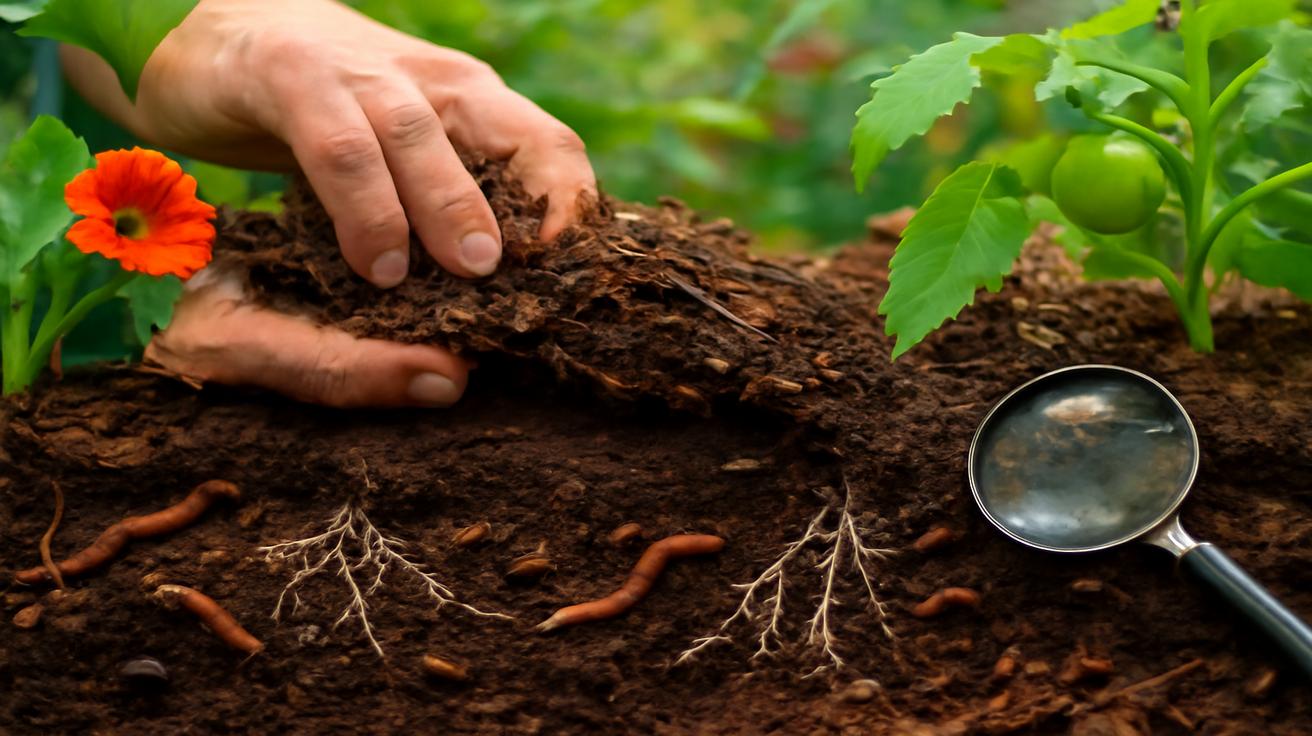
The first time Lena sank her hands into her new garden, the soil felt dead. Not just dry, not just tired—dead. It broke apart like old chalk, pale and stubborn, sending up a fine, lifeless dust. The backyard of her small rental house had spent years under weed cloth and gravel, scorched in summer, compacted by feet and lawn chairs. She had come with the dreamy idea of tomatoes and zinnias, of herbs brushing her ankles and bees humming at dusk. But the ground had other plans. Kneeling there, staring at the powder between her fingers, she had a thought that many beginning gardeners have but rarely admit out loud: Maybe nothing wants to live here.
The Moment You Realize the Soil Is Alive
That first spring, Lena tried what she thought gardeners were supposed to do. She bought big bags of fertilizer from a home-improvement store, bright packaging promising “instant results.” She sprinkled, watered, and waited. The tomatoes grew fast, too fast—lush foliage that snapped at the slightest wind, their roots shallow and brittle. By mid-July, the leaves were streaked and yellow, the fruit misshapen, the plants exhausted.
Then came the ants. Lines of them, mapping routes around the raised beds, and with them, aphids clustering like soft green dust on the undersides of leaves. The soil, once powder, turned into a fragile crust that cracked under her fingertips. Whenever it rained, the water beaded and rushed away instead of soaking in. The whole garden felt like a stage set: painted green, but hollow behind the scenes.
On a sticky afternoon, a neighbor named Miguel wandered over, drawn by the sight of her wrestling with a watering can and a wilted cucumber vine. He watched quietly for a moment before asking, “Mind if I look at your soil?”
Lena laughed, a little embarrassed, but nodded. He crouched down and gently scraped away the top layer with a trowel, as if opening a book. A faint chemical smell rose up that she hadn’t noticed before. He pointed at the bare, pale surface.
“Nothing’s covering this,” he said softly. “It’s like skin without any protection. Sun, wind, rain—they’re beating it up. And the stuff you’re putting on it?” He tapped the fertilizer bag. “It feeds plants, sure. But it can starve the soil life if that’s all it ever gets.”
She frowned. “Soil… life?”
He smiled. “You’re gardening on top of a city you can’t see. Or at least, you could be.”
The Invisible City Beneath Your Feet
The next weekend, Lena found herself at the local library, hunched over books and scribbling notes as if cramming for an exam. She read about the “soil food web,” a phrase that sounded almost whimsical until she understood what it meant: the tangled, throbbing, microscopic metropolis that exists in healthy ground.
In even a single teaspoon of good garden soil, there can be more living organisms than there are people on Earth—bacteria, fungi, protozoa, nematodes, arthropods, and more. They eat, they excrete, they tunnel, they trade nutrients with plant roots. Fungi weave threads around soil particles, binding them into soft, crumbly aggregates that let water seep in and air move. Earthworms drag leaves down from the surface, shredding them into rich castings. Predatory mites hunt through the tiny jungle, keeping some species in check and allowing others to flourish.
Plants don’t stand above this network like royalty. They are part of it. Their roots leak sugars into the soil—sweet bribes that attract and feed helpful microbes. In return, fungi extend the plants’ reach, bringing back minerals and water from distant pockets of the earth. It’s not a quiet place down there; it’s constant negotiation, exchange, and transformation.
Sitting at her kitchen table later that night, Lena pushed her seed packets aside and reached for a clean sheet of paper. “If soil is alive,” she wrote at the top, “then maybe my job is to protect that life, not just force plants to grow.”
Practices That Turn Dirt Back into Soil
That fall, she laid down her tools with a kind of ceremony. She stopped digging deep. No more double-digging to “loosen” the ground—Miguel had told her how repeated tilling shreds fungal networks and collapses soil structure over time. Instead, she layered things.
Cardboard first, to smother the stubborn grass that crept in from under the fence. Then a thick quilt of leaves she raked from the front yard and begged from neighbors who were about to stuff theirs into plastic bags. Over that, half-finished compost, straw, and small twigs. The garden transformed from exposed, raw dirt into something that looked almost forest-like, dappled and mulched, soft underfoot.
The neighbors grumbled at first. “It looks messy,” one said apologetically. But within a few weeks, black beetles scuttled under the straw. Spiders spun between stems. A blackbird visited each morning, flicking shredded leaves aside with its beak in search of breakfast.
She made a small table on a notepad and taped it to the inside of her shed door—a reminder of why she was doing all this.
| Soil-Life Friendly Practice | What It Does for the Soil | Benefit You Notice in the Garden |
|---|---|---|
| Mulching with leaves, straw, wood chips | Keeps soil moist and cool, feeds fungi and insects, prevents erosion | Less watering, fewer weeds, softer, darker soil over time |
| Minimizing digging and tilling | Preserves fungal networks and soil structure, protects micro-habitats | Healthier roots, better drainage, fewer nutrient problems |
| Growing diverse plants and cover crops | Feeds a wider range of microbes, keeps living roots in the soil | Improved resilience, fewer pests, steadier growth |
| Avoiding harsh synthetic chemicals | Prevents sudden crashes in microbial populations | More stable fertility, more beneficial insects and pollinators |
Winter storms came, hammering the neighborhood with rain. On nearby bare plots, water pooled and then rushed away in muddy streams. But in Lena’s garden, the mulched beds drank quietly, the leaves and straw slowing each drop, inviting it down into the hidden corridors that were forming below.
Beyond Bigger Harvests: How Soil Care Changes the Gardener
By the following spring, the first obvious benefit showed up where she expected it—on the plants themselves. Seedlings she had always considered “fussy” stood sturdier. Their leaves were thicker, the green deeper. When wind storms rolled through, her pea vines bent but didn’t snap. The soil, once chalky, now crumbled into dark clods that smelled faintly sweet, like mushrooms and rain.
But the more surprising benefits were quieter and more intimate.
First, there was the way her habits shifted. Instead of charging out with a checklist—weed, fertilize, spray—she lingered. She knelt and peeled back mulch to see what was happening underneath. She watched as pill bugs, ants, and thin white fungal threads all shared the same space. Her eyes adjusted to smaller and smaller movements. A tiny beetle wasn’t a “pest” anymore; it was a citizen. An earthworm, once a childhood novelty, became a barometer of her own success.
Then came the realization that pest outbreaks, once an annual drama, had settled into a background murmur. A few aphids appeared, yes, but so did ladybug larvae, their alligator-like bodies prowling the stems. Slugs chewed on a leaf here and there, but thrushes patrolled the beds at dawn, cracking shells with sharp beaks. The garden felt like a negotiation, not a battle.
And beyond that—there was her own nervous system. Mornings that once began with scrolling news on her phone grew into a new ritual. She stepped outside, coffee cooling in her hand, and pressed her palm gently into the mulch. How wet are you today? she’d ask the soil, silently. The garden answered not with words, but with a sensation: springy, cool, alive. On hard days, that was enough.
Water, Carbon, and the Quiet Work of Roots
One especially dry summer, when city alerts warned of low reservoirs and neighbors muttered about water bills, Lena realized another advantage of protecting soil life: her garden didn’t need nearly as much watering. Once a day became every third day. Some beds even lasted a week between soakings, especially those buried under a thick blanket of wood chips and home-made compost.
What she couldn’t see, but had come to trust, was the patient work happening below. Fungi and roots create microscopic sponges in healthy soil. These spaces hold water the way a forest floor does—reluctant to let it go all at once, reluctant to surrender it to the sun.
Alongside the water went carbon. She’d read that plants pull carbon dioxide from the air and send a large share of it underground as root exudates—tiny offerings that feed the microbes. Those microbes, in turn, build complex carbon compounds that can remain in the soil for years, sometimes decades. Her little city garden was not going to solve the climate crisis. But it wasn’t just a consumer either. Slowly, invisibly, it was tucking bits of carbon away, strand by strand, crumb by crumb.
Thinking about this changed the way she looked at every handful of compost, every fallen leaf. Waste became feedstock. A pile of pruned branches wasn’t clutter; it was future soil, future storage, a future sponge against the next brutal heatwave.
Soil Life and the Neighborhood Web
As her garden shifted, so did the conversations over the fence. The same neighbor who once called her beds “messy” now leaned in to see how deeply the mulch went. A pair of children from down the block asked if they could hunt for worms. Miguel arrived with a small tray of seedlings and a grin.
“You’re building real structure here,” he said, pressing his fingers into the mulch. “See how cool it stays, even in this heat?”
They formed an informal swap network: a bag of leaves for a bowl of cherry tomatoes, a bundle of mint for a bucket of coffee grounds. A retired teacher two doors down confessed that her roses had always struggled with black spot and powdery mildew, no matter how much she sprayed. She started mulching instead, stopped digging quite so deeply, and by the next year, she swore the disease had backed off. “Maybe the roses just needed a better neighborhood down there,” she joked.
Birds came too. Goldfinches started visiting in late summer, bouncing on the dried stalks of sunflowers Lena left standing. Sparrows scratched through the leaf litter. Even the soil itself became a kind of community member. Protecting it encouraged people to stand still long enough to notice. Standing still led to noticing bees, bats at twilight, and the soft rustling of lizards in the mulch.
What began as an attempt to grow better vegetables had transformed into a subtle form of neighborhood resilience. Gardens that protected soil life absorbed stormwater better, shed less mud into the street drains, and provided cooler pockets of shade and humidity on scorching afternoons. Friends gathered there, half for the tomatoes, half just to breathe.
Redefining a “Successful” Garden
By her third year, Lena realized that the usual yardstick for gardening success—how big the pumpkins got, how flawless the lettuce looked—no longer fit. Some seasons, her harvest was abundant. In others, a late frost or an unexpected heat spike stole half the crop. But each year, when she plunged a trowel into the ground, the soil grew darker, richer, more fragrant.
At a neighborhood potluck, someone complimented her on the flavor of her carrots. “What fertilizer do you use?” they asked. She smiled and answered, “I feed the soil, and the soil feeds the carrots.” It sounded glib, but it was the truth.
She still had problems sometimes. A mysterious wilt swept through her cucumbers one year. A new pest chewed on her bean leaves the next. But instead of reaching first for a spray bottle, she reached for her notebook. Am I covering the soil well enough? she’d write. Do I have enough plant diversity? Are there living roots here year-round?
Soil care had given her a different kind of confidence. Not the “I can control everything” kind, but a quieter trust: if she kept protecting the invisible life below, the garden could ride out surprises better than she could plan for them. She had shifted, in her own small way, from being the commander of her garden to something more like a steward or even a host.
Standing there in late autumn, the air cool and smoky, she pushed aside a slab of mulch at the edge of a bed. A teeming world shifted in the dim light: white fungal strands, glistening worms, darting beetles. She felt a wave of something like gratitude, and also responsibility. This was bigger than a bumper crop.
Becoming a Guardian of the Underground
Gardeners who protect soil life often come out the other side talking about more than bigger harvests. They talk about quieter things: patience, attentiveness, a sense of relationship. They speak about resilience—in their gardens, yes, but also in themselves. It’s harder to rush when you’re regularly kneeling to watch an ant navigate a stray blade of straw.
They notice other benefits, too. The air in mulched, living-soil gardens holds a different kind of coolness under summer sun. The birds seem to linger longer. The same practices that build soil—covering it, feeding it, refusing to bombard it with harsh chemicals—create shelter and food for countless small creatures above ground as well as below. In a time when so many landscapes are scraped, sprayed, and sealed, a living garden becomes a small but radical act of hospitality.
You don’t need acres to do this. A balcony container filled with compost and topped with shredded leaves can harbor a whole world of microbes. A small townhouse yard can become a miniature flood-control system, soaking up water that would otherwise rush into the street. Even a few pots on a windowsill, planted with diverse herbs and never stripped bare, can feed soil life as their fine roots weave and die and weave again.
The shift begins with a simple re-framing: soil is not just a medium. It is not just something that holds your plants upright and accepts your fertilizer. It is a living community. When you protect it—with mulch, with gentle handling, with living roots and organic matter—you’re doing more than gardening. You’re tending an underground forest, a microbial commons, a quiet engine that supports life far beyond your fence line.
Some evenings now, as the last light drains from the sky, Lena stands barefoot in her garden. The mulch is cool between her toes. Crickets sing from the tangle of flowers she never quite got around to “cleaning up.” Somewhere beneath her, unseen, a billion lives are turning dead leaves into food, into structure, into future soil. She looks up at the sky, then down at the dark, breathing earth, and feels—unexpectedly—at home in both directions.
To become a gardener who protects soil life is to step into a different kind of story. It’s less about mastery and more about partnership. Less about forcing growth and more about creating the conditions where life, in all its small, astonishing forms, can do what it has always done best: adapt, endure, and quietly thrive.
Frequently Asked Questions
Why is soil life so important for my garden?
Soil organisms break down organic matter, release nutrients in plant-available forms, improve soil structure, and help roots access water and minerals. When soil life is thriving, plants tend to be healthier, more resilient to stress, and less dependent on constant fertilizing and watering.
How can I start protecting soil life in an existing garden?
Begin by covering bare soil with organic mulch (leaves, straw, wood chips), reduce deep digging or tilling, add compost regularly, and avoid harsh synthetic chemicals when possible. Even small changes—like leaving roots in the ground after harvest—can quickly improve soil habitat.
Do I have to stop using all fertilizers and sprays?
Not necessarily. Many gardeners transition gradually. Organic and slow-release fertilizers are generally gentler on soil life. When dealing with pests, start with the least disruptive methods: hand-picking, barriers, and encouraging natural predators. Reserve stronger treatments for last-resort situations.
Can I protect soil life in containers and raised beds?
Yes. Use high-quality compost, avoid over-tilling or dumping out and replacing all the soil every year, mulch the surface, and keep a variety of plants growing through the seasons. Over time, containers and raised beds can develop rich, living soil communities too.
How long does it take to see results from soil-friendly practices?
Some changes happen within weeks—better moisture retention, more earthworms, easier digging. Deeper transformations, like improved structure and steadily increasing fertility, may take one to three seasons. The key is consistency: each year you protect soil life, the benefits tend to compound.