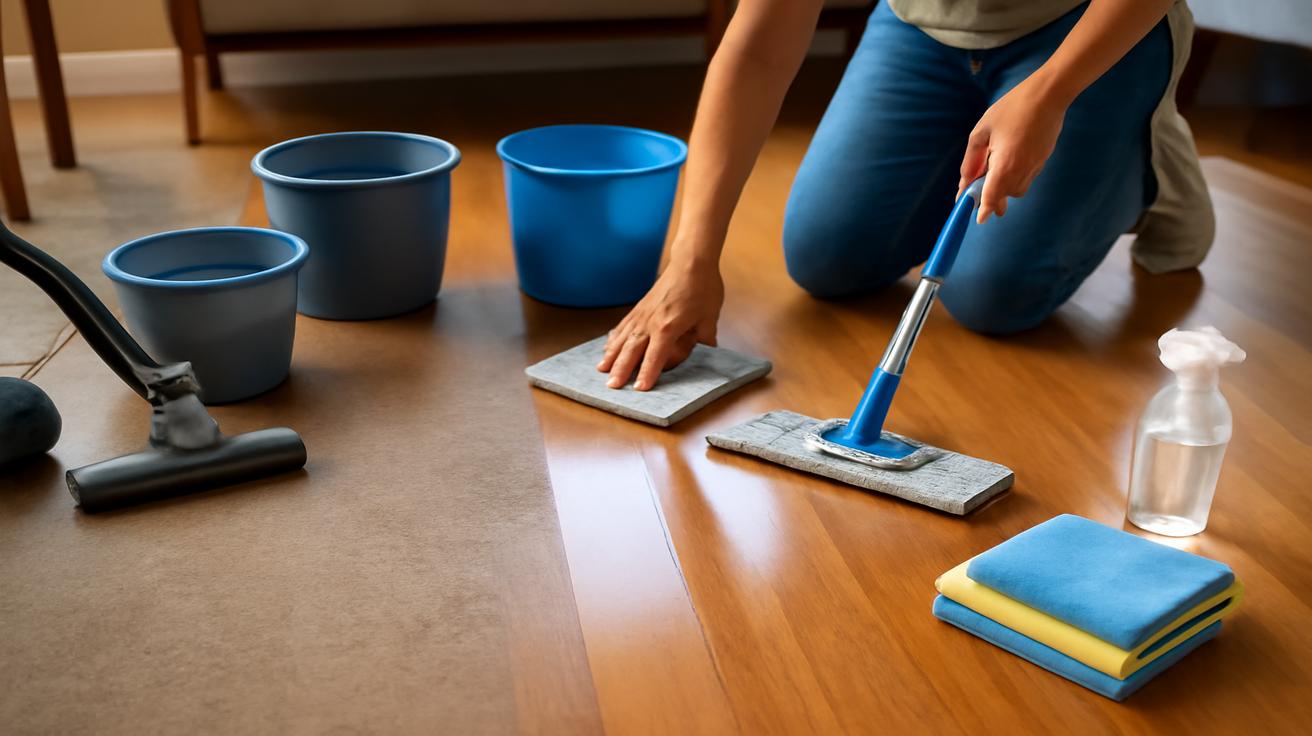
The dust always came back on Thursdays. At least, that’s when Mara noticed it. By Wednesday night, the apartment looked almost smug—floors gleaming, corners obedient, everything smelling faintly of citrus cleaner. By Thursday afternoon, the sunlight knifed through her living room window and exposed a familiar betrayal: a soft gray film along the baseboards, a ghostly halo beneath the couch, a scatter of grit under bare feet. She wasn’t dirty. She wasn’t lazy. She was losing a weekly battle to something that seemed to appear out of thin air.
Maybe you know that feeling—the quiet frustration of doing “all the right things” only to have your floors look tired again the very next day. You sweep, you mop, you spritz, you scrub. Still, the dust returns, like it has a key to your front door and absolutely no respect for your schedule.
Here’s the thing no one tells you: most of us clean our floors in a way that simply relocates dust instead of removing it. We stir it up, we chase it from corner to corner, we drag it around on damp mops that are already dirty. It looks better for a moment—until everything settles again.
If you’ve ever wished your floors could stay genuinely clean for more than a few hours, the solution isn’t more elbow grease or stronger chemicals. It’s a quiet little shift in how you think about dust, how it moves, and what it sticks to. Once you see that, floor cleaning stops being a weekly punishment and starts feeling… oddly satisfying.
Dust Isn’t Just Dirt: Why Your Floor Gets Dirty Again So Fast
Put your bare hand flat on what you think is a “clean” floor. Slide your fingertips slowly across the surface. That faint drag you feel? That’s not just dirt—it’s a thin cocktail of tiny particles your home makes and collects all day long.
Dust isn’t one thing. It’s skin cells, hair, textile fibers, pet dander, fragments of soil from shoes, soot from cooking, microplastics from packaging, even pollen that floated in on last week’s breeze. Some particles are heavy and fall straight to the floor. Others are so light they hang in the air for hours, nudged around by every step, every fan blade, every open door.
Now picture what happens when you grab a dry broom and attack the floor with enthusiasm. The bristles do collect some debris—but they also flick a cloud of lighter dust into the air. It looks satisfying to gather that visible line of crumbs and grit, but much of the finest dust doesn’t end up in your bin. It just rises, drifts, and waits to settle again… often by the next morning.
Or imagine mopping right over that faint powder without removing it first. The dirt mixes with your cleaning solution and water. The mop spreads this grayish film into every micro-scratch and groove in your floor, and as the water evaporates, it leaves behind a stubborn residue that bonds with new dust even more eagerly. Clean for a day; tacky a day later.
The right way to clean floors so dust doesn’t return immediately is less about scrubbing harder and more about working with dust’s behavior: keeping it low, capturing it before it can drift, and not leaving behind a sticky surface that invites it back.
The Quiet Foundation: How to Set Up a Home That Stays Cleaner
The story of your floors doesn’t actually start at the floor. It starts at your doorway, your habits, and the air swirling invisibly about your rooms. If you want floors that stay cleaner longer, think like a host who’s trying to manage the guest list at the door.
Make the Entrance a Dust Filter
Visualize a soft barrier at your threshold. Not a guard dog, not a plastic shoe cover dispenser—just a really excellent mat and a simple routine. A thick, washable doormat outside your door, paired with a textured mat just inside, can trap astonishing amounts of grit and soil that would otherwise grind directly into your floors.
Pair that with a “mostly shoes-off” culture, and you’ll feel the difference under your feet. Shoes carry microscopic gravel, pesticides, oils, and plain old dirt. Taking them off close to the door doesn’t have to be a militant rule; it can feel like slipping into the softer rhythm of home.
Tidy First, Then Clean
Dust loves clutter. Piles, stacks, drifts—anything that complicates air flow and gives tiny particles places to land. Before you even think of picking up a vacuum or mop, do a quick, almost meditative walkthrough: pick up laundry, move shoes, slide chairs, tuck bags away.
This isn’t about having a picture-perfect space. It’s about giving yourself clear runways so your tools can reach what your eyes can’t. A decluttered floor is simply easier to actually clean, not just spot-treat.
Control the Air, Not Just the Surfaces
Dust is an air problem before it’s a floor problem. If you can hear your HVAC system breathing, it’s already moving dust around. Regularly cleaning or replacing filters, using a decent-quality vacuum with a HEPA filter, and occasionally airing out the space on a dry, low-pollen day all make a surprising difference.
Think of this as lowering the “dust pressure” in your home. The less that’s swirling in the air, the less lands back on your floor after you’ve just cleaned it.
The Order of Operations: Cleaning Floors So Dust Doesn’t Just Move Around
The sequence in which you clean is like choreography. Do it in the wrong order and you’ll feel like you’re chasing your own tail. Do it in the right order and you’ll start noticing your floors staying calmer, longer.
Step 1: Work from Top to Bottom
If you dust bookshelves, counters, or ceiling fans after you’ve cleaned the floors, you’re basically raining a fresh layer of dust right back down. Start high and move low: shelves, sills, tables, and finally the floor. This way, anything that falls during dusting gets tackled in the floor clean.
Step 2: Capture, Don’t Scatter
Instead of a dry broom, reach for tools that pull dust toward them and lock it in:
- A vacuum with a hard-floor attachment and strong suction
- A microfiber dust mop or pad that’s slightly damp (not wet)
Move slowly, like you’re sweeping a field for clues. Fast, aggressive strokes send dust back into the air. Slow passes, with overlapping lines, encourage the particles to cling to the fibers or flow into the vacuum.
In corners, under furniture, along baseboards—those quiet little borders where dust lines gather—use the crevice tool on your vacuum or fold a microfiber cloth over your fingers and gently drag it along the edge. You’re trying to end the dust party where it always congregates, not just herd it to the middle of the room.
Step 3: Then, and Only Then, Mop
Once the loose dust and grit are gone, you’re mopping the actual floor—not the dirt. This single change drastically affects how long your floors feel and look clean. Without that underlying film, the cleaning solution can do its work and evaporate cleanly instead of forming a dull, sticky layer.
The Art of Mopping: Less Water, More Intention
Most people imagine mopping as a splashy, dramatic scene: slosh the bucket, soak the mop, wring it half-heartedly, and drag wet stripes across the room. It smells like “cleaner,” so it must be working, right? The problem is, too much water and too much product leave a residue that calls dust back like a magnet.
Choose the Right Weapon for Your Floor
Your floor’s material tells you exactly how it wants to be treated, if you listen:
- Hardwood: It fears standing water. Use a damp (not wet) microfiber mop with a wood-safe cleaner. The surface should dry within a minute or two.
- Laminate: Similar to hardwood—too much water can seep into seams and cause swelling.
- Tile and Stone: They’re braver with water, but grout lines can trap residue. A slightly stronger solution is okay, but avoid anything that leaves a waxy feel.
- Vinyl or LVT: Gentle cleansers and minimal moisture still win; harsh chemicals can dull the finish.
Less Soap Than You Think
There’s a strange, persistent belief that more product equals more clean. In reality, it often equals more film. Follow the dilution on the label, and if in doubt, err on the weaker side. Strong scents don’t mean cleaner floors—they just mean more perfume.
Imagine the floor as skin. You wouldn’t leave a thick, soapy layer on your arm and then complain when it felt tight and sticky. Your floor feels something similar; a rinseless solution that dries clean is like a well-formulated lotion instead of a heavy mask.
Fresh, Not Forever, Mop Heads
There’s one simple habit that can change everything: swapping or washing your mop pad more often than feels reasonable. If the pad looks gray, it’s already redepositing. Keep a small stack of clean microfiber pads and switch them out as soon as they start to look tired.
Think of it as not using yesterday’s washcloth to take off today’s makeup. You’re not just spreading history around.
What Actually Keeps Dust Away Longer: Small Habits, Big Payoff
The secret to having floors that still look clean the day after—sometimes even two or three days after—isn’t an epic weekend cleaning marathon. It’s a rhythm of small, almost gentle interventions that prevent dust from building up enough to be visible.
Micro-Cleans Instead of Mega-Cleans
Instead of waiting until your floors look bad and then launching a full operation, try short, regular sweeps of attention:
- A quick vacuum in high-traffic areas every other day
- A fast pass with a dry (or barely damp) microfiber mop in the kitchen after dinner
- A once-a-week slower, intentional session for the whole space
When you catch dust before it becomes a layer, it doesn’t have a chance to become that visible haze that makes the whole room look tired.
Focus on the “Dust Highways”
Not all square footage is created equal. Some areas carry the story of your days more intensely:
- Paths from the front door to the kitchen or living room
- The stretch between the sofa and the coffee table
- Beside the bed, where you step in and out every morning and night
- Under the dining table, where crumbs, fibers, and shoe dust gather
If you only have five minutes, give them to these zones. Keeping the highways clean visually calms the whole room and cuts down on how much dust travels to quieter corners.
Let Your Tools Do the Work
A well-designed vacuum, a truly absorbent microfiber mop, and a couple of soft, washable cloths: that’s the whole orchestra. When your tools are good and well-maintained—filters cleared, pads washed without fabric softener, attachments not clogged—you spend less time fighting and more time simply guiding.
The goal is to make floor cleaning feel more like a quick ritual than a project: quiet, repeatable, oddly grounding.
Putting It All Together: A Simple Routine That Actually Works
Picture a single, ordinary cleaning session, done with this gentler, smarter approach—designed not just for the moment, but for tomorrow’s sunlight, too.
- Open the space a bit. Pick up shoes, toys, bags. Slide chairs out so you can reach underneath easily.
- Dust high to low. Shelves, window sills, tabletops. Let anything that falls have its moment on the floor—this is its last stop.
- Vacuum or dust mop thoroughly. Move slowly, overlap passes, pay attention to edges and under furniture. This is where you capture, not chase.
- Spot-check sticky or grimy areas. A spill by the stove, a scuff near the door—hit those with a damp cloth first so you’re not smearing them everywhere.
- Mop lightly and intentionally. Use a well-wrung microfiber pad and the right cleaner. Work your way out of the room, changing pads when they start to look dull and gray.
- Let it dry undisturbed. No socks sliding contests yet. Give the surface a few quiet minutes to set itself.
The magic doesn’t happen the moment you finish. It reveals itself the next morning, when light hits your floor and there’s nothing to betray you. Then again the next day, when your feet find a surface that still feels smooth, not gritty.
Sample Weekly Rhythm for Floors That Stay Clean
| Day | Action | Focus Area |
|---|---|---|
| Monday | Quick vacuum or dust mop | Entryway, kitchen, main walkway |
| Wednesday | Spot mop spills and sticky spots | Kitchen, dining area |
| Friday | Full vacuum + light mop | All hard floors |
| Weekend | Edge work & under furniture | Corners, under beds and sofas |
You can bend this to your life, of course. The point isn’t the exact days—it’s the rhythm: frequent light touch, occasional deep attention.
Living with Floors That Don’t Constantly Betray You
There’s something quietly luxurious about walking through your home a full day or two after cleaning and realizing your floors still feel calm underfoot. No telltale grit under your heels. No pale smudge tracing the baseboards. Just a smoothness that lets your attention wander to other, better things.
The right way to clean floors so dust doesn’t come back the next day isn’t a secret product or a trending hack. It’s more like learning a new conversation with your home: understanding where the dust comes from, how it travels, where it likes to gather, and how to gently intercept it before it claims the stage again.
You start at the door, inviting in less. You move from high to low, letting gravity help instead of sabotage. You choose tools that capture, not scatter. You use just enough water and cleaner, not more. You tend your floors in small, kind intervals instead of waiting for them to shout.
One day, sunlight pours across your floor, the same way it always has. Only this time, it doesn’t reveal sabotage—just a soft, unremarkable, and lovely kind of clean. The dust will always exist; your home is alive, and so are you. But now, at least, it no longer wins the very next day.
Frequently Asked Questions
Why do my floors feel dusty again the day after I clean them?
Most of the time, it’s because dust was stirred into the air rather than captured. Using dry brooms, cleaning surfaces after the floors, or mopping over dusty floors lets particles resettle within hours. Cleaning from top to bottom, vacuuming or dust-mopping slowly, and then mopping lightly helps prevent that quick rebound.
Is vacuuming better than sweeping for hard floors?
Yes, in most cases. A vacuum with a hard-floor attachment and good filtration pulls dust in and traps it, instead of pushing it into the air. If you prefer not to vacuum, a high-quality microfiber dust mop that lightly clings to dust is better than a traditional broom.
How often should I mop if I want dust to stay away?
You usually don’t need to mop daily. A good rhythm is: vacuum or dust mop high-traffic areas every 1–2 days, then do a full vacuum and mop once a week. In between, spot-clean spills or sticky areas so grime doesn’t attract more dust.
Why do my floors feel sticky after I mop?
That sticky feeling usually comes from too much cleaning solution or dirty mop water. The residue that’s left behind grabs dust quickly. Use less product, change your mop water when it looks cloudy, and swap mop pads often during the job.
Do I really need to clean baseboards and corners?
Yes, but not obsessively. Dust tends to collect along edges and in corners, and from there it’s easily disturbed and spread across the room. A quick pass with a vacuum crevice tool or a damp microfiber cloth along baseboards once every week or two keeps that buildup under control and helps your floors stay cleaner overall.