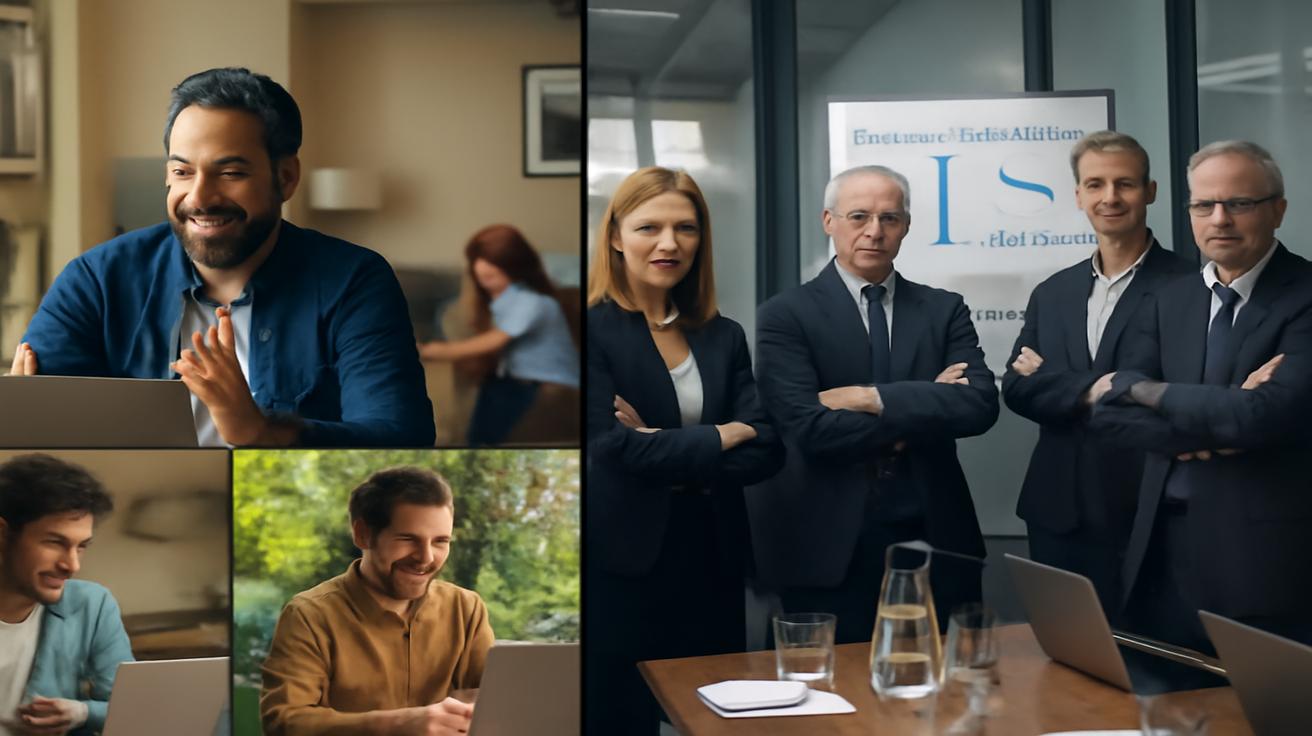
The kettle clicks off with that soft, satisfied sigh. Steam curls in the late-morning light, the dog sighs at your feet, and your laptop blinks awake on the kitchen table. Your “commute” is the eleven steps from bedroom to coffee mug. Outside, a delivery truck grumbles past. Inside, everything is quiet enough that you can actually hear yourself think. Somewhere, in a glass-walled office, a manager is looking at an almost-empty floor plan and wondering where everyone went—and why nobody seems eager to come back.
The Quiet Revolution in Sweatpants
If this scene feels familiar, you’re not alone—and you’re not imagining that it feels better than rushing through traffic to sit under fluorescent lights. After four solid years of research, surveys, time-use diaries, and the digital breadcrumbs we scatter across Zoom, Slack, and calendar apps, a striking consensus has formed across economists, psychologists, and workplace scientists: working from home, when done right, makes most people happier.
Not just a tiny bump in satisfaction. We’re talking fewer sick days, better sleep, more time with kids or partners or plants, lower stress hormones, and yes, a quieter brain. A large internal study at a global tech company saw self-reported “overall life satisfaction” scores jump by the same margin you get from a 10% pay rise when people were allowed to work remotely at least three days a week. Other peer‑reviewed research has shown that on average, full-time remote workers reclaim 60 to 90 minutes a day otherwise lost to commuting—time that tends to go into movement, cooking proper meals, and simply… being human.
But for many managers, this new reality lands like a stone in the gut. They see empty desks and half-lit floors as wasted investment. They worry about culture “erosion,” collaboration “friction,” and whispers of “quiet quitting.” Some will say it out loud: “If I can’t see you, how do I know you’re working?” For a long time, that question passed as leadership. Today, it sounds more like an admission: “If I can’t see you, I don’t know how to measure your work.”
The Science of the Home Office
Strip away the debates about “laziness” and “hustle culture,” and the science of why home-based work often feels so good is surprisingly earthy and sensory. It starts with the body. In office life, you wake to an alarm that slices through your sleep cycle, scramble to make yourself presentable, wedge into a bus or onto a motorway, and then sit, stiff-backed, under recycled air. Your time is ruled by clock, by badge-swipe, by calendar invite.
At home, your day often begins softer. The smell of coffee instead of the harsh tang of elevator metal. Bare feet on warm floorboards instead of thin carpet that’s seen better years. Maybe you start work at 8:30 instead of 7:30 because you aren’t fighting traffic. Your heart rate rises on a short lunchtime walk around your block instead of during an aggressive lane merge. These are small differences, but biology loves the small things repeated thousands of times.
Over the last four years, wearable devices have quietly recorded what office surveys always struggled to capture: people working from home often show lower daytime heart-rate variability (a proxy for chronic stress), and more stable sleep patterns. When Stanford economists matched time‑use surveys with commute data, they discovered a striking pattern: saving an hour a day of travel doesn’t mean people loaf. It mostly reappears as household chores, caregiving, exercise, or an earlier bedtime. Time that used to be spent staring at a red tail‑light is now spent stirring a pot of soup, stretching on the living‑room floor, or taking a slow walk with a toddler who wants to inspect every ant on the pavement.
Psychologists describe this as an increase in “autonomy” and “relatedness”: two pillars of human well‑being. Autonomy: the ability to shape the texture of your own day. Relatedness: more contact with people and spaces that actually matter to you. Home is not just a location—it is a sensory landscape that whispers, you belong here.
There’s also the simple physics of concentration. A typical open‑plan office has a background noise level hovering around 60–65 decibels: the constant hiss of conversation, phones, printers, footsteps. That’s the acoustic equivalent of a busy restaurant. At home, even with kids or roommates, many people can find pockets of deliberate quiet—or at least noise they’ve chosen. Our brains cling to this difference. Over long stretches of time, fewer interruptions and less “cognitive switching” mean less burnout and more work done in the same—or fewer—hours.
Why Managers Feel Like They’re Losing Control
So if working from home is such a boon for workers’ nervous systems and family lives, what exactly is it doing to managers’?
In some ways, the pandemic ripped the curtain off an uncomfortable truth about traditional management: a stunning amount of it was based on proximity, theater, and habit. Performance was often judged not by outcomes, but by presence. Who stayed “late.” Who seemed “busy.” Who swiveled their chair toward the boss at just the right moment in a meeting. Visibility doubled as value.
When everyone went home in 2020, this whole ecosystem evaporated almost overnight. The rituals of control—walking the floor, casual check‑ins at the coffee machine, reading the mood across a conference table—suddenly vanished. Many teams kept humming along regardless, and in some sectors, productivity ticked upward. But for managers whose entire toolkit depended on the office as a stage, it felt like the lights had gone out.
There is also a raw financial story here. Office leases, maintenance contracts, parking lots, lobby redesigns—these are sunk costs. If your company has poured millions into a downtown tower with a barista bar and a moss wall, you want people to see it. You want the board to see them seeing it. Empty chairs feel like accusations.
And then there’s culture, that shape‑shifting word managers invoke like a spell. “We’re losing our culture if people are at home,” they say, picturing Friday drinks, birthday cakes by the reception desk, brainstorms with sticky notes and squeaky markers. There is a kernel of truth: serendipity is easier when everyone shares the same air. But for years, many offices also relied on unspoken pressures that don’t show up in glossy culture decks—who laughs at whose jokes, whose ideas get airtime, who feels safe enough to speak up at all. When you scatter people across living rooms and kitchen corners, some of those old hierarchies loosen.
For employees who were never fully welcomed by “office culture”—people with disabilities, caregivers, introverts, people from underrepresented backgrounds—home can feel less like exile and more like relief. Managers used to a certain kind of face‑to‑face dominance now find themselves sharing screens with cats, toddlers, and bookshelves. In the flattening rectangle of a video call, influence shifts subtly toward whoever is clearest and most prepared, not whoever takes up the most physical space in the room.
The Numbers Behind the Feelings
All this emotion and politics would be easier to ignore if the numbers told a different story. They don’t. Across industry after industry, employee surveys since 2020 have produced a drumbeat of similar findings: people who can work from home at least part of the week are less likely to quit, more likely to recommend their employer to a friend, and generally report higher life satisfaction.
Here’s a simplified snapshot of what many large-scale studies now show about the impact of flexible or remote work:
| Factor | Office-Only | Hybrid / Remote |
|---|---|---|
| Average daily commute time | 60–90 minutes | 10–20 minutes |
| Self‑reported life satisfaction | Baseline | Equivalent to 8–12% pay raise |
| Likelihood of job change in 12 months | High | Significantly lower |
| Burnout risk | Elevated | Moderate to low (with good boundaries) |
| Manager trust required | Low (presence-based) | High (outcome-based) |
All of this lines up with what many people feel in their bones: the ability to design your own workday within reasonable guardrails doesn’t just make you more efficient; it makes life feel less like a conveyor belt and more like… a life.
Life Between Emails: How Home Changes the Hours
To really understand why remote work feels different, you have to zoom down into an ordinary Tuesday, the kind nobody ever posts about on social media.
Imagine you’ve just wrapped a tense project meeting. In the office, you might step into a hallway, scroll your phone, maybe grab another coffee you don’t really want just to cool down. At home, you close the laptop and stand in your own kitchen. Your hands automatically reach for dishes in the sink. Warm water. Ceramic against ceramic. Your breathing slows as you move through something simple and physical. Outside, wind fusses in a tree. In the middle of the workday, you remember that you have a body.
Later, instead of wolfing down a sandwich between back‑to‑back meetings, you sauté some vegetables and leftover rice, the hiss and pop grounding you in the present moment. You eat at your own table, or on the back step, light on your face. The entire lunch ritual takes twenty minutes, the same as a cafeteria dash, but somehow feels like a small act of resistance against the idea that workers should be endlessly available and slightly hungry.
At three o’clock, when your focus dips, you might throw in a load of laundry or lie on a yoga mat of dubious cleanliness and stretch while listening to a podcast. Maybe you walk to meet a child at the school gate, the jangle of their backpack pulling you abruptly out of quarterly metrics and into the ordinary miracle of their running feet.
These interwoven pockets of domestic life and paid work can be messy, yes. But they also weave meaning back into the workday. Your labor no longer floats on a sterile island of office hours; it touches the rest of your life in dozens of small, sensory ways—smells, textures, voices, weather. The edges between “my job” and “my life” soften just enough that you feel less like a visitor in your own days.
Managers who idealize sharp boundaries often see this as dilution: work getting contaminated by “distractions.” For many workers, it feels more like integration: the long‑promised “work‑life balance” finally becoming more than a slogan on a recruitment page.
Performance Without the Performance
There is a paradox at the heart of this shift. When people are treated like adults—trusted to choose where and how they work best—many end up giving more, not less. Not in hours necessarily, but in quality of attention. They’re less drained by the performative aspects of office life: the small talk they don’t want, the politics they can’t avoid, the sense that at any moment, someone might peer over their shoulder.
Deep work, the kind that actually moves projects forward, thrives in stretches of uninterrupted concentration. At home, that might mean a door that closes or noise‑canceling headphones at a kitchen table. It might mean starting early before the rest of the household wakes, or working later after a shared dinner. This flexibility is awkward for managers who prefer everyone’s effort to unfold inside neat, visible time boxes. But the research is blunt: outcome‑based management beats time‑based surveillance when it comes to creativity and problem‑solving.
That doesn’t mean remote work is utopia. Working from home can blur boundaries so thoroughly that people forget how to stop. The same laptop that makes you free of the office can also stalk you into bed. Loneliness is real, especially for younger or new employees who haven’t yet built strong connections. But these are design problems, not arguments for a full return to the cubicle.
Good remote teams invest in better rituals: weekly check‑ins that are genuinely human, not just status updates; explicit norms about response times; shared documents that reduce the chaos of email; scheduled in‑person gatherings that actually matter instead of mandatory Tuesdays “because leadership said so.” They swap surveillance software for clear goals and honest feedback. They reward results, not hours spent looking busy on chat apps.
For managers, this can feel like learning a new language late in life. The old instincts—“If I’m anxious, I call a meeting”—clash with the evidence that too many meetings drain morale and fragment attention. The path forward is less about “getting people back into the office” and more about teaching leaders to manage work instead of bodies in chairs.
What the Next Four Years Might Look Like
Futures aren’t forecast in crystal balls; they’re written in millions of daily decisions. People moving houses because they no longer need to live near a central business district. Parents choosing employers based on school‑run flexibility rather than salary alone. Graduates quietly ranking companies by how seriously they take remote work. Talented people saying “no thanks” to roles that demand five full days under strip lighting for no clear reason.
The likely destination isn’t a world where everyone is always at home, nor a snap‑back to 2019’s five‑day office week. It’s a messy middle, where the rhythm of the week changes by role, by project, by season of life. Some will gather in person a few days a month for deep collaboration. Others—engineers, writers, analysts—might pop in once a quarter. Some small teams will choose to be entirely co‑located because they like it that way. The difference is choice, backed by data instead of nostalgia.
Managers who cling to old models will find their power slowly hollowed out, no matter how many all‑hands emails they send about “our return‑to‑office journey.” The ones who adapt—who treat their teams not as resources to be monitored but as humans balancing many truths at once—are likely to retain the best people. They will learn to ask: What kind of work are we doing? What does it truly need—quiet concentration, lively debate, or just Wi‑Fi and trust?
Meanwhile, somewhere between the last keystroke of the day and the soft thud of a book closing, another worker who once dreaded the Sunday‑night ache in their chest realizes it’s… softer now. Monday still comes, as relentless as tide. But the shape of it has changed: less running for trains, more walking through their own front door at lunchtime. Less overhead glare, more afternoon glow through familiar curtains. Less time proving they are working, more time actually doing the work.
The data is loud. The days are quieter. And in the long argument between how humans thrive and how managers prefer to manage, the home office has become an unexpected battleground—one where the dogs, the kids, the houseplants, and the tired commuters might just be winning.
Frequently Asked Questions
Does working from home always make people happier?
No. Most studies show an average increase in happiness and life satisfaction, but not for everyone. People who are very extroverted, live in cramped or chaotic spaces, or rely heavily on in‑person mentoring sometimes prefer the office. The key is flexibility and choice, not forcing one model on everyone.
Are remote workers actually more productive?
In many knowledge‑work roles, yes—or at least equally productive. Research often shows small gains in output or quality, especially when people have control over their schedules. There are exceptions in roles that depend on specialized equipment or constant in‑person coordination.
Why do some managers resist remote work if the data is positive?
Because it challenges familiar ways of leading. Remote work reduces reliance on visual oversight and office presence, and increases the need for clear goals, trust, and outcome‑based evaluation. It also highlights sunk costs in office space and old‑style culture. That can feel threatening.
Can remote work lead to burnout?
It can, especially when boundaries are weak. Without a commute or clear “office door,” people often work longer and check messages late at night. Burnout risk is lowest when teams set explicit rules about availability, encourage time off, and normalize logging off at a reasonable hour.
What’s the most realistic future: full remote or everyone back in the office?
Most evidence points to hybrid models as the long‑term norm. Some work will remain fully remote; some will stay office‑based. But for many roles, a mix—coming together for specific collaboration and spending focus time elsewhere—balances human needs, business goals, and the realities of modern life.