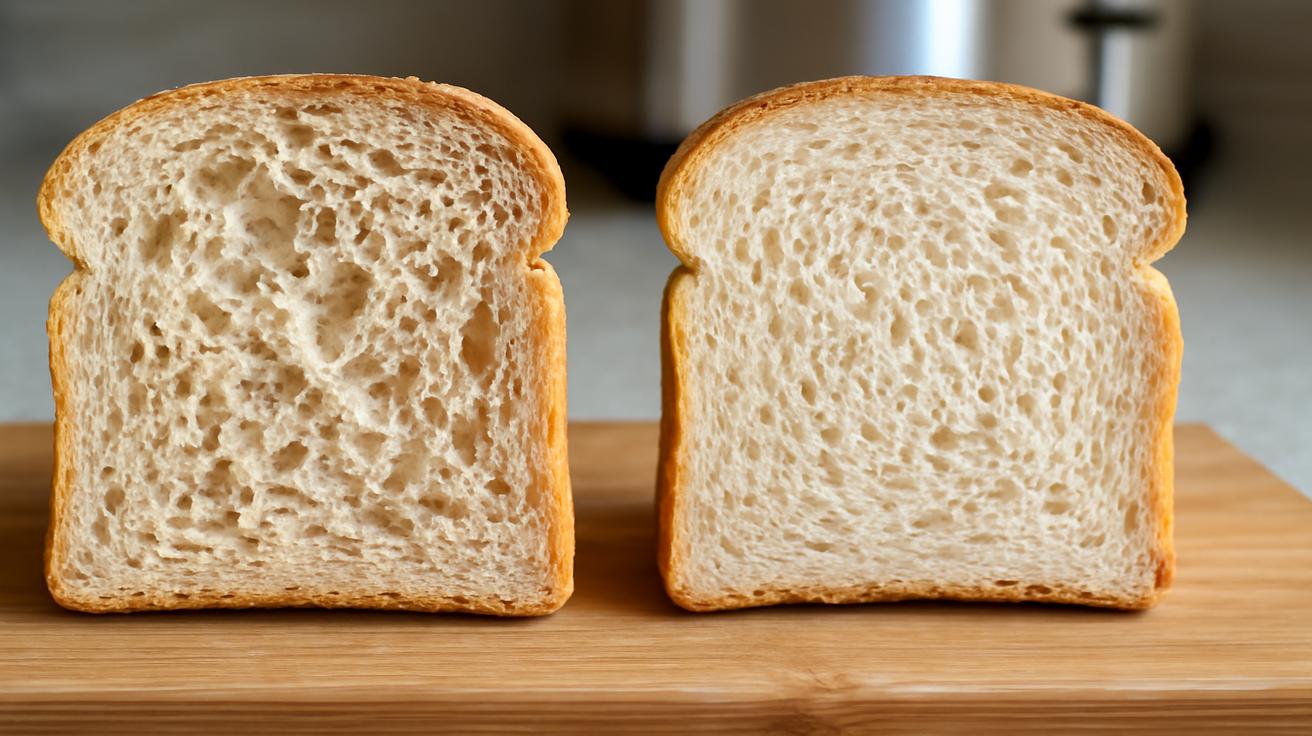
The first time I froze a loaf of truly good bread—a crackly, hand-scored sourdough I’d carried home like treasure—I felt oddly satisfied as I slipped it into the freezer. It seemed so simple, so adult. No waste. No stale, forgotten heel fossilizing on the counter. I imagined future-me, effortlessly pulling out a few slices at a time, toasting them into golden perfection, maybe with soft butter sinking into those wild sourdough craters. I was, I decided, the kind of person who knew how to “handle” bread.
The Morning the Bread Turned on Me
A week later, I opened the freezer with the casual confidence of someone who believes time is no match for their organizational skills. My frozen loaf waited there, frosted and innocent. I chipped off a few slices with a bread knife, popped them into the toaster, and waited for that familiar smell—the one that makes you feel, even on a weekday morning, like life is generous.
The smell did come. Slightly muted, but warm and promising. The slices browned, edges darkening, steam just beginning to rise as I pulled them out. I spread a little butter and pressed my fingers into the surface, expecting crackle and give.
Instead, I got…rubber. Chewy, tough, and somehow damp and dry at the same time. The crust, once crisp and blistered, felt like damp cardboard. The interior lost its bounce, replaced by a weirdly tight, squeaky texture, the way bread feels after it’s been microwaved too long. The butter sat on top, unsure whether it wanted to sink in or just slide right off.
I stared down at my ruined toast and felt a tiny sting of betrayal. This was good bread. Expensive, carefully made, alive with fermentation when I’d bought it. Now it tasted like something from the back of a gas station shelf. I’d done the “responsible” thing. I’d frozen it. I’d tried to preserve it. And somewhere between freezer and toaster, I had killed it.
It took me a long time—and many ruined slices—to realize the truth: the problem wasn’t freezing bread. It was what I was doing the moment it left the freezer.
The Mistake Almost Everyone Makes
There is one simple, nearly invisible moment where so many of us ruin frozen bread. We think we’re being gentle, thoughtful even. We think, “I’ll just let it thaw first.”
That’s the mistake.
We pull the loaf or the slices from the freezer and leave them on the counter, or we slide them into the fridge, proud of ourselves for thinking ahead. We let them slowly come back to room temperature, imagining we’re doing the bread a favor, easing it gently into the day.
But bread is not a person waking up from a long nap. It’s more like a delicate structure of cooked starch and water, and that structure changes dramatically as ice melts back into liquid. When frozen bread thaws slowly, moisture that was once locked neatly between starch granules rushes out. It has to go somewhere. And where it goes is into all the places you don’t want it: soaking the crust, pooling inside the crumb, collapsing the airy texture, leaving the whole slice spongy on the outside and oddly dry on the inside.
The result? Exactly what I got that morning: bread that tastes tired before it even hits the toaster. No amount of toasting fully restores what’s lost once slow thawing has done its quiet damage.
The Freezer Isn’t the Villain
Freezing, when done right, is not the enemy. In fact, it’s one of the kindest things you can do for a good loaf. It pauses staling in its tracks. Instead of letting your bread gradually turn hard and dull on the counter, freezing locks it into a sort of suspended animation.
But bread is shockingly sensitive to what happens next. The thaw—the way you bring it back—is not a casual step. It is the step. Do it wrong, and the best loaf in town tastes like the discount bin. Do it right, and you get something astonishingly close to fresh-baked: crackling crust, steamy crumb, a fragrance that makes you hover over the cutting board impatiently.
What’s Really Happening Inside Your Bread
Picture a loaf of bread as a jungle of tiny tunnels and chambers. When it’s fresh, the crumb (that soft interior) is full of microscopic starch structures that hold moisture in just the right way. Over time, on the counter, those structures begin to crystallize and push water out—this is staling, and it happens even if the bread isn’t dry yet. It’s a slow rearranging of molecules that makes yesterday’s bread feel somehow defeated.
Freezing interrupts that. When you freeze bread quickly—especially if it’s sliced—tiny ice crystals form inside. They capture water in place and slow the staling process almost to a halt. The trick is to keep those crystals small and evenly distributed. That’s why well-wrapped bread freezes so much better than bread tossed naked into the freezer to collect frost and smells.
The problem appears when you thaw that frozen bread slowly. Those small ice crystals melt and begin to migrate. Moisture starts to seep, soak, and redistribute unevenly. The crust absorbs it like a sponge, then turns tough as it dries again. The crumb, once bouncy, loses structure as the starch network weakens. By the time you toast it, you’re working with bread that’s already compromised. You can brown it, you can crisp the edges, but you can’t fully revive what’s been lost.
On the other hand, when frozen bread goes straight into heat—a toaster, an oven, even a hot pan—something wonderful happens. The ice crystals melt quickly, turning to steam. That steam expands inside the bread, rehydrating the crumb from within while the surface dries and crisps. The crust can regain its shatter. The interior softens and warms. Your kitchen smells, once again, like a bakery.
The Secret: Heat First, Thaw Later (Inside the Oven or Toaster)
The gentle-sounding, logical-seeming step of “thawing on the counter first” is the move that ruins so much promising bread. If you remember only one thing, let it be this:
Frozen bread should go from rock-hard to hot as fast as possible.
No in-between. No resting period on the cutting board. No overnight defrost in the fridge. The thaw should happen inside the heat, not before it.
That means:
- Frozen slices go directly into the toaster.
- Frozen halves or whole loaves go directly into a hot oven.
- No unwrapped lingering on the counter.
Speed is kindness when it comes to frozen bread.
How to Freeze Bread So It Lives to Tell the Tale
If the thaw is the moment of truth, the freeze is the quiet setup—the part that makes everything else possible. Done properly, freezing turns your kitchen into a sort of time machine. Days or weeks later, you can stand in morning light, coffee in hand, and re-live the first slicing of that beautiful loaf almost exactly as it was.
The Gold-Standard Freezing Method
Here’s a simple way to freeze bread that respects all the work that went into making it—whether by you, a local baker, or some industrious yeast cells that did their slow magic overnight.
- Decide how you’ll want to eat it later.
Sandwiches? Toast? Thick hunks for soup? Your future self will thank you for thinking in slices, not just in loaves. - Slice first, if you can.
Slicing before freezing keeps options open. You can grab exactly what you need: two slices for breakfast, four for grilled cheese, a few more to throw under the broiler with olive oil and garlic. - Wrap like it matters—because it does.
Use plastic wrap or reusable wraps pressed close to the surface, then a freezer bag on top. Press out as much air as you can. Air is what causes freezer burn and that stale, icy taste. - Label the date.
Bread does last in the freezer, but it’s not immortal. After about a month, even well-wrapped bread starts to lose some personality. Within two weeks is ideal. - Freeze in portions.
Maybe half a loaf for garlic bread, the rest in slices. Maybe a few rolls per bag. Future-you has moods; give them options.
Done this way, the freezer becomes less like a graveyard of forgotten crusts and more like a curated archive of future meals.
Quick Reference: Freezing & Reheating Methods
| Bread Form | How to Freeze | Best Way to Reheat |
|---|---|---|
| Individual slices | Freeze flat in a single layer, then store in a freezer bag. | Straight from freezer to toaster on medium; toast twice if needed. |
| Half or whole loaf | Wrap tightly, then place in a second layer (bag or wrap). | From freezer to 160–180°C (325–350°F) oven for 15–30 minutes. |
| Buns / rolls | Freeze in a single layer, then bag once firm. | From freezer to oven at 180°C (350°F) for 8–12 minutes. |
| Crusty artisan loaves | Wrap whole or in large chunks; avoid sliced surfaces drying out. | From freezer to hot oven; finish last 3–5 minutes directly on rack for extra crust. |
The Ritual of Bringing Bread Back to Life
There is something quietly ceremonial about reviving frozen bread the right way. It shifts the experience from “using up leftovers” to “reawakening something worth savoring.”
Imagine this: a rainy evening, the kind that asks for soup on the stove and windows slightly fogged. You reach into the freezer and feel the solid weight of a half loaf you’d forgotten you had. It’s cold against your fingers, edges still sharp from the knife that sliced it days or weeks ago.
You don’t thaw it. You don’t set it aside to “rest.” You heat the oven while the frozen loaf sits on a cutting board like a small, frosted stone. The oven door opens—the whoosh of heat, that dry, eager warmth—and the loaf goes in just as it is. You place it directly on the rack, or maybe on a preheated tray if you want a little extra bottom crisp.
As it bakes, the kitchen changes. First there’s nothing, then the faintest whisper of bread, then a bloom of aroma so familiar it feels like memory: toasted wheat, a hint of sourness, a trace of sweetness. The crust, once frosty and stiff, begins to blister again. Inside, the ice turns to steam, stretching the crumb, plumping it gently from within.
When you take it out, the loaf crackles as it cools—a sound bakers call “singing.” You press a thumb into the crust. It gives, then rebounds. You slice, and steam escapes in small, fragrant curls. This is bread that has not merely survived the freezer. It has walked out of it nearly unchanged.
All because you skipped one step: thawing.
What If You Don’t Have a Toaster or Oven?
Not every kitchen is blessed with a full lineup of appliances. Maybe you’re in a tiny apartment, a dorm, a camper van with only a pan and a stubborn stovetop flame. Frozen bread can still thrive there—if you respect the same rule: thaw inside the heat.
- Stovetop pan method: Place frozen slices in a dry pan over medium-low heat. Cover with a lid to trap steam and warm the crumb. Flip once or twice until the bread is hot through, then remove the lid and let it crisp slightly.
- Sandwich press or grill pan: Put frozen bread straight onto the hot surface. Press lightly. The combination of direct heat and gentle pressure warms quickly without the sad, soggy thawing stage.
It takes a touch more attention, but the principle is the same. Fast thaw inside heat. No counter naps.
When the Bread Is Already a Little Old
Sometimes the loaf you’re freezing isn’t at its peak anymore. Maybe you bought it two days ago and never quite got around to slicing it. Maybe it’s already on the edge of stale. Is there any point in freezing it then?
Yes—but with expectations adjusted. Freezing can pause further decline, but it can’t rewind. An already-tired loaf won’t emerge from the freezer full of youthful bounce. Still, with enough heat and the right treatment, even older bread can come back with a bit of charm.
Think of slightly stale frozen bread as future toast, future garlic bread, future croutons. It may not be a candidate for delicate sandwiches, but it can absolutely star in a pan of olive-oil-toast topped with tomatoes and salt, or in buttery cubes tossed with herbs and baked into golden croutons. The freezer is not just preservation—it’s a way to redirect a loaf’s destiny.
And even then, the rule holds: don’t thaw slowly. Go from frozen to flame.
The Quiet Joy of Respecting Bread
There’s a subtle kind of satisfaction in learning how not to ruin bread. It’s not glamorous knowledge. No one’s going to hand you a certificate for mastering “correct freezer-to-toaster transitions.” But it changes your days in small, domestic ways that add up: better breakfasts, fewer disappointments, more moments when food feels like something you’re in partnership with, instead of something that keeps slipping just out of reach of perfect.
It also feels, somehow, like an act of respect—for the wheat that grew in a field, the hands that shaped the dough, the slow bubbling of yeast. Bread is ancient and humble and somehow deeply human. Freezing it isn’t a betrayal. Doing it without thought, then blaming the freezer when your toast turns rubbery—that’s where the betrayal happens.
So the next time you stand in front of the freezer, reaching for a frosty loaf, remember the tiny, quiet decision that changes everything. Don’t let it sit. Don’t let it sweat and sag on the counter. Go straight from ice to heat, from hard to hot, from still to singing.
Your bread remembers what it once was. All you have to do is give it the right way back.
Frequently Asked Questions
Can I freeze bread that’s still warm from the oven?
It’s better to let freshly baked bread cool completely before freezing. If you freeze it while it’s still warm, trapped steam can form larger ice crystals, which affect texture and can lead to soggy spots when reheated.
How long can bread stay in the freezer before it loses quality?
For best flavor and texture, aim to use frozen bread within 2–4 weeks. It will still be safe to eat beyond that, but it may start to taste flat, dry, or pick up freezer odors, even if wrapped well.
Is it okay to refreeze bread after it’s been thawed?
If you’ve fully thawed the bread at room temperature, refreezing will usually make the texture worse—drier, tougher, and more crumbly. However, if it was only briefly out of the freezer and still mostly frozen, refreezing is less damaging. In general, try to only thaw what you plan to eat.
What’s the best way to freeze store-bought sliced bread?
For supermarket sliced bread, you can usually freeze it right in its original bag, squeezing out excess air and maybe adding a second freezer bag over it. Pull out slices straight from the freezer and toast them; no need to thaw first.
Why does my frozen bread sometimes taste like the freezer?
That off “freezer” taste usually comes from poor wrapping or too much air exposure. Double-wrap your bread (plastic or reusable wrap plus a freezer bag), keep it away from strong-smelling foods, and don’t leave it frozen for months on end. Airtight protection and shorter storage are key to keeping flavors clean.