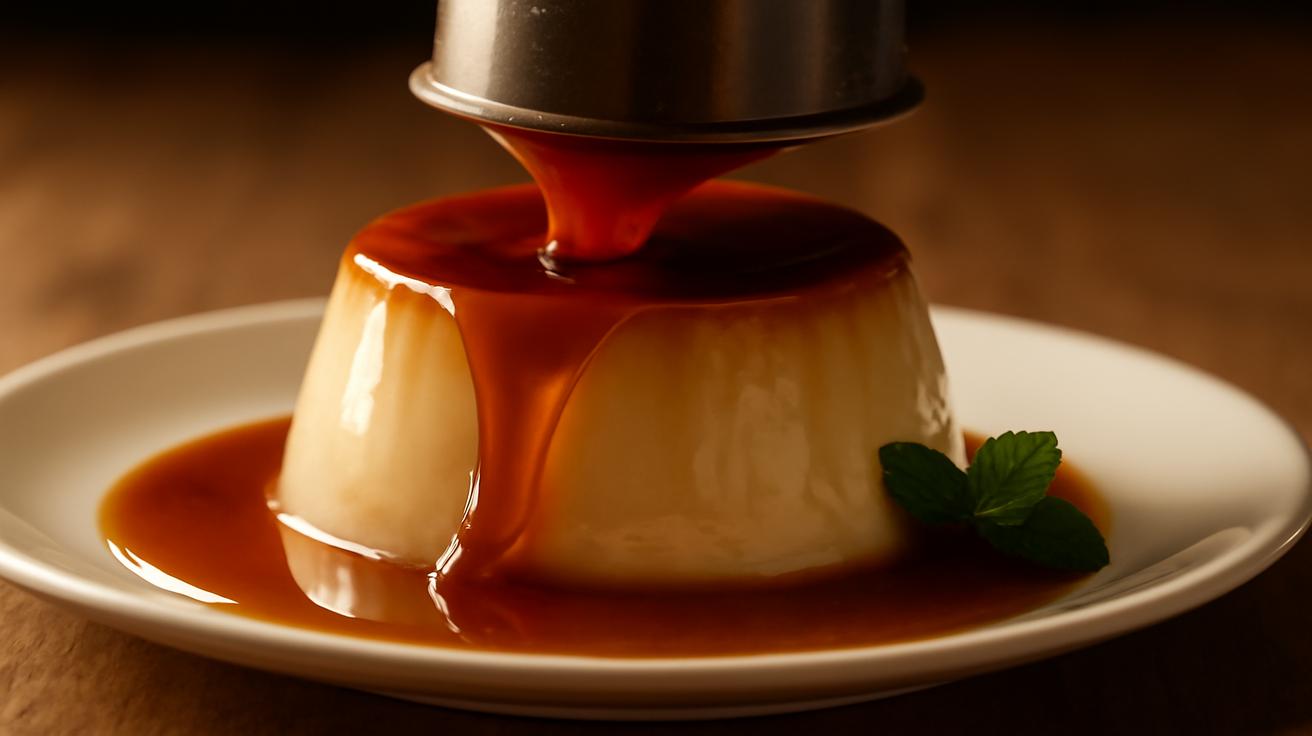
The first time you make crème caramel at home, the kitchen changes. The air thickens with butter‑soft sweetness, the sugar on the stove whispers and hisses, and time slows to the rhythm of a simmering pot. There is a moment—somewhere between doubt and delight—when you tilt the ramekin, feel that slight, wobbling tremor under your fingertips, and realize you’ve done it. You have turned eggs, milk, sugar, and heat into something that feels far greater than the sum of its parts. Homemade crème caramel isn’t just dessert; it’s a quiet little ceremony of patience, precision, and scent.
The memory baked into a spoonful
Crème caramel has a way of carrying memories the way some fabrics catch light. Maybe you remember it from a small restaurant where the lights were low and the spoons clinked softly on porcelain. Maybe it was a grandparent’s slow, careful kitchen, with a heavy saucepan and a recipe card speckled with sugar. Wherever you first met it, you probably remember the contrast: that thin, glassy layer of bittersweet caramel on top, and beneath it, a trembling, silent custard that somehow dissolves into nothing on your tongue.
And yet, for a dessert built from such humble ingredients, crème caramel has an oddly intimidating reputation. People whisper about scrambled custard, grainy textures, rubbery eggs, burnt caramel, custard that refuses to set, and—perhaps most famously—the terror of the flip. That moment of truth when you invert the ramekin and pray that gravity, and your own restraint with the oven, have been kind.
The truth is far kinder than the myth: the distance between a disappointing crème caramel and a perfect one comes down to a few quiet, almost invisible decisions. Temperature. Timing. Gentle heat. The way you stir (or don’t). The courage to let sugar darken further than feels comfortable. There is, in fact, a foolproof trick that sits at the center of all of this: controlling the heat with a water bath—and understanding what your custard is telling you long before it goes into the oven.
The quiet science behind that silky wobble
If you strip away the romance of crème caramel, what you’re left with is a small, calm miracle of chemistry. Eggs bring proteins, milk and cream bring fat and water, sugar brings sweetness and structure. When you heat them gently, the egg proteins unwind and link together, forming a delicate network that traps moisture. Too cool and loose, and the custard won’t set. Too hot or too fast, and the proteins bunch up aggressively, squeezing out liquid, turning that dreamlike wobble into a rubbery frown.
This is where most home cooks go wrong: the oven runs a little hotter than it says, the water bath isn’t hot enough or deep enough, or the custard is heated too brutally on the stove before it ever sees the ramekin. The result is a custard that tastes like eggs first and dessert second—a sure sign that the heat got away from you.
The foolproof trick, the one that reliably delivers that just-set, velvety texture, is as simple as it is easy to underestimate: you must buffer the custard from harsh, direct heat. That means two things:
- Cooking low and slow in a proper water bath (bain-marie) in the oven.
- Gently pre-warming your custard base without boiling or scrambling the eggs.
Think of the water bath as an insistent friend who refuses to let things get out of hand. Water, even in an oven, won’t jump beyond its simmering temperature, so your custard is cradled in a stable, forgiving environment. It cooks fully, but never violently. The trick is to pour hot (not boiling) water into the pan, and to aim for a low oven temperature so that the water simmers at most, never roars.
The caramel: walking the edge of bitter and sweet
Before the custard ever enters the scene, there is caramel. On a quiet evening, the sound of sugar turning into caramel is almost meditative: the soft patter of crystals in the pan, the slow hiss as they begin to melt, the occasional pop of a stubborn grain giving way to heat. The scent creeps up from pale sweetness to something deeper, darker, almost smoky. This is the soul of crème caramel: that clean, shiny amber layer that dissolves into a warm, bittersweet sauce when you invert the dessert.
Many recipes soften the edges of caramelization, stopping at a timid golden color out of fear of burning. But authentic crème caramel lives on that narrow ledge just before “too far.” It should smell like toasted sugar, orange peel, and almost-burnt toffee. The color should be a rich, clear amber—deep but not muddy or opaque. That bitterness is not an accident; it is what keeps the dessert from being cloying, giving each spoonful a quiet sophistication.
The key is to trust your senses more than the clock. Watch for the sugar to darken around the edges, then swirl gently to even out the color. Do not stir with a spoon—it can cause crystallization. And when it reaches that point where you think, “Maybe just a few seconds more,” take it off the heat. Those few seconds are where many caramels cross the line into acrid.
Once it’s ready, you move quickly but calmly, pouring the molten amber into your waiting ramekins, tilting each one as if you’re coating a tiny sun. The smell will be rich and a little wild, the pan hot in your hand, the sugar gleaming like stained glass. Let it sit. The caramel will harden into a glassy disc at the bottom—but later, in the oven, and again as the custard rests, it will soften, liquefy, and transform into that cool, flowing sauce that pools so beautifully on the plate.
The foolproof trick: listen to the custard, not the recipe
The real magic of the “foolproof trick” isn’t a secret ingredient; it’s a way of paying attention. Recipes can give you temperatures and times, but custard speaks in texture and movement. To master crème caramel, you learn to listen with your eyes and fingertips.
First, there is the stovetop stage. When you warm the milk (and cream, if you’re using it) with sugar and maybe a drift of vanilla, your goal is to dissolve, not boil. The milk should be hot enough that a wisp of steam rises and small bubbles flirt with the edges of the pan, but never reach a simmer. When you whisk this hot milk into your beaten eggs, you are walking a gentle line: warm enough to coax the mixture toward thickening, but not so hot that the eggs seize into curds.
Tempering is your silent ally here. A small trickle of hot milk into the eggs, whisking constantly, gradually raises their temperature. Once they’ve adjusted, you can add the rest more freely. Strain the final mixture through a sieve: a small act that catches any stubborn threads of egg and ensures a final custard as smooth as a quiet lake at dawn.
Then comes the water bath—the physical form of patience. Set your filled ramekins into a deep baking dish, slide it into the oven, and only then pour in hot water, enough to come halfway or even two-thirds up the sides of the ramekins. The water should be hot but not boiling; boiling water can jumpstart the egg proteins too abruptly. Cover the pan loosely with foil to keep the heat gentle and even.
And now, ignore the recipe’s cooking time the way you would ignore a clock on vacation. Begin checking early, and look for this: when you tap the side of a ramekin, the crème should wobble as a whole, like set jelly, with a slight tremor in the center. It should not slosh, but it also must not be firm. The center will continue to set as it cools. Pull it from the oven when you feel a moment of doubt—when you wonder if it’s maybe a minute too soon. That’s the trick. Custard forgives being a little shy of fully set; it does not forgive overcooking.
Getting the texture and flavour just right: a practical glance
Sometimes the difference between “almost there” and “perfect” lives in the details. This simple comparison can guide your choices:
| Element | For Perfect Texture | For Authentic Flavour |
|---|---|---|
| Milk & Cream | Use whole milk; add a little cream for extra silkiness. | Avoid ultra-processed flavours; keep dairy simple and fresh. |
| Eggs | Use more yolks than whites for a softer, richer set. | Let eggs come to room temperature for a smoother mix. |
| Caramel | Avoid stirring; swirl gently to prevent crystals. | Take caramel to a deep amber for a subtle bitterness. |
| Oven & Water Bath | Bake low (around 140–150°C), water halfway up ramekins. | Slow cooking preserves delicate dairy and egg flavours. |
| Resting Time | Chill at least 6 hours, preferably overnight. | Flavours meld, caramel gently perfumes the custard. |
The flavour of restraint
Authentic crème caramel is a dessert of restraint. It doesn’t shout. It doesn’t need a procession of elaborate toppings or a forest of decorations. Its flavour lives in the quiet harmony between eggs, milk, sugar, and the ghost of vanilla. When you make it at home, you have the luxury of choosing quality over quantity—fresh eggs with sunset-orange yolks, whole milk that still tastes faintly of grass and sunshine, a real vanilla pod if you can find it.
The temptation with simple desserts is often to add more: more spices, more extracts, more complexity. But crème caramel rewards those who know when to stop. A single vanilla bean, split and scraped into the warm milk, offers a fragrance that lingers like a memory—soft, floral, a little earthy. A strip of lemon or orange zest slipped in briefly and then removed can brighten the mix without ever announcing itself. Most of the flavour, though, should taste of dairy transformed: a clean, sweet richness that feels almost weightless.
There is another kind of restraint too: sweetness. Store-bought versions, eager to please, often drown the custard in sugar. At home, you can find that narrower path where the sweetness lifts the dessert instead of burying it. The caramel, with its hints of bitterness, balances the custard underneath, so you can actually use slightly less sugar in the base than you might expect. When the spoon breaks through the top and you drag custard and caramel together in one bite, you want contrast, not uniform sweetness.
Authentic flavour is less about chasing a particular restaurant memory and more about allowing the ingredients to speak clearly. When you bring the spoon to your mouth and close your eyes, you should taste warmth, quiet depth, and the faint echo of that caramel pan on the stove. You should be able to imagine, if only for a moment, the path from farm to kitchen to table.
The moment of truth: unmoulding without fear
The most theatrical moment of crème caramel doesn’t happen in the oven or on the stove; it happens at the table. There is a hush that falls as you set down the chilled ramekin, slide the blade of a thin knife around the inside edge, and place a cool plate on top. One steady hand beneath, one hand on the plate, a quick, confident flip, and then—stillness.
This is where every earlier choice proves itself. If you’ve overbaked the custard, it may cling stubbornly to the edges or crack as it falls. If your caramel burned, the first scent will carry a harsh edge. But when you’ve given the custard time and tenderness, and your caramel stopped just shy of bitter, the reward is a small, quiet miracle: a soft “plop,” a gentle sigh of released suction, and suddenly the custard stands there, glistening, crowned with a glossy amber veil.
The caramel, now fully liquefied, runs lazily down the sides, pooling at the base in a dark halo. The custard itself trembles when you nudge the plate—barely, shyly, as if aware that its beauty lies in that hint of uncertainty. The knife slides through it as though through thick cream. On the tongue it is cool first, then warm with flavour, a slow bloom of egg-rich silk and caramel’s bittersweet glow.
This is the proof that the foolproof trick worked, that your faith in low heat, in water baths, in early removal from the oven, was not misplaced. But beyond the technique, there’s another reward: the sense that you’ve taken part in an old, shared ritual. Generations have made this dessert in countless kitchens, listening for the same simmer, watching for the same wobble, flipping with the same private thrill of risk.
A dessert that teaches patience
In a world that celebrates immediacy, crème caramel is stubbornly, beautifully slow. Nothing about it is instant. Sugar has to melt, darken, find its edge. Milk has to warm just enough, then cool just enough. Custard has to set in the oven, and then, maybe hardest of all, rest in the fridge long after it looks ready. The full personality of crème caramel doesn’t emerge until it’s had time to think in the cold: the texture evens out, the bubbles (if any) relax, the caramel seeps into the outer layer of the custard, lending it a faint golden tint and a perfume that no shortcut can reproduce.
You could rush it, of course. Unmould it after only a couple of hours, serve it while it’s still on the edge of warm. It will still be good. But if you wait until the next day—if you give it a full night to become itself—you will taste the difference. The top layer, that interface where custard and caramel have spent hours in quiet conversation, will be the best bite of all: slightly denser, deeply scented, like the last page of a book you don’t want to end.
Crème caramel, in that sense, is more than a recipe. It’s a small lesson in how gentle attention and time can transform simple things. It asks you to trust your senses over strict instructions, to hover by the stove and learn the scent of sugar at each stage, to kneel by the oven light and gaze at the barely trembling surface of custard and think, “Not yet. Almost.”
And when you finally slide a spoon into that glossy, amber-topped curve and taste the culmination of your patience, the kitchen falls away for a heartbeat. There is only sweetness, softness, and that quiet note of caramelized bitterness that keeps it all in perfect, delicate balance. Homemade crème caramel doesn’t shout for attention—it earns it, slowly, one careful choice at a time.
Frequently Asked Questions
Why did my crème caramel turn out rubbery?
Rubbery texture usually means the custard was overcooked or cooked at too high a temperature. Next time, lower the oven heat, ensure the water bath surrounds the ramekins at least halfway up, and remove them when the center still has a slight wobble. Remember, the custard continues to set as it cools.
How dark should I take the caramel?
A deep amber color is ideal—darker than honey but not so dark that it smells burnt. The scent should be toasty and slightly bitter, not acrid. Since caramel continues to cook for a few moments off the heat, remove it just before it reaches the color you think is perfect.
Can I make crème caramel a day in advance?
Yes, and it’s often better that way. Making it a day ahead gives the custard time to fully set and allows the caramel to soften and infuse the dessert with more flavour. Chill it well, covered, and unmould just before serving.
Why is my custard full of bubbles?
Bubbles generally come from whisking too vigorously or baking at too high a temperature. Whisk gently to avoid foaming, strain the custard before pouring, and be sure the water bath never boils. Covering the pan loosely with foil can help keep the heat gentle and even.
Do I have to use cream, or is milk enough?
Whole milk alone can make a lovely, lighter crème caramel with a delicate texture. Adding some cream will make it richer and silkier. If you prefer authenticity in its simplest form, high-quality whole milk with good eggs and proper technique is more important than cream.