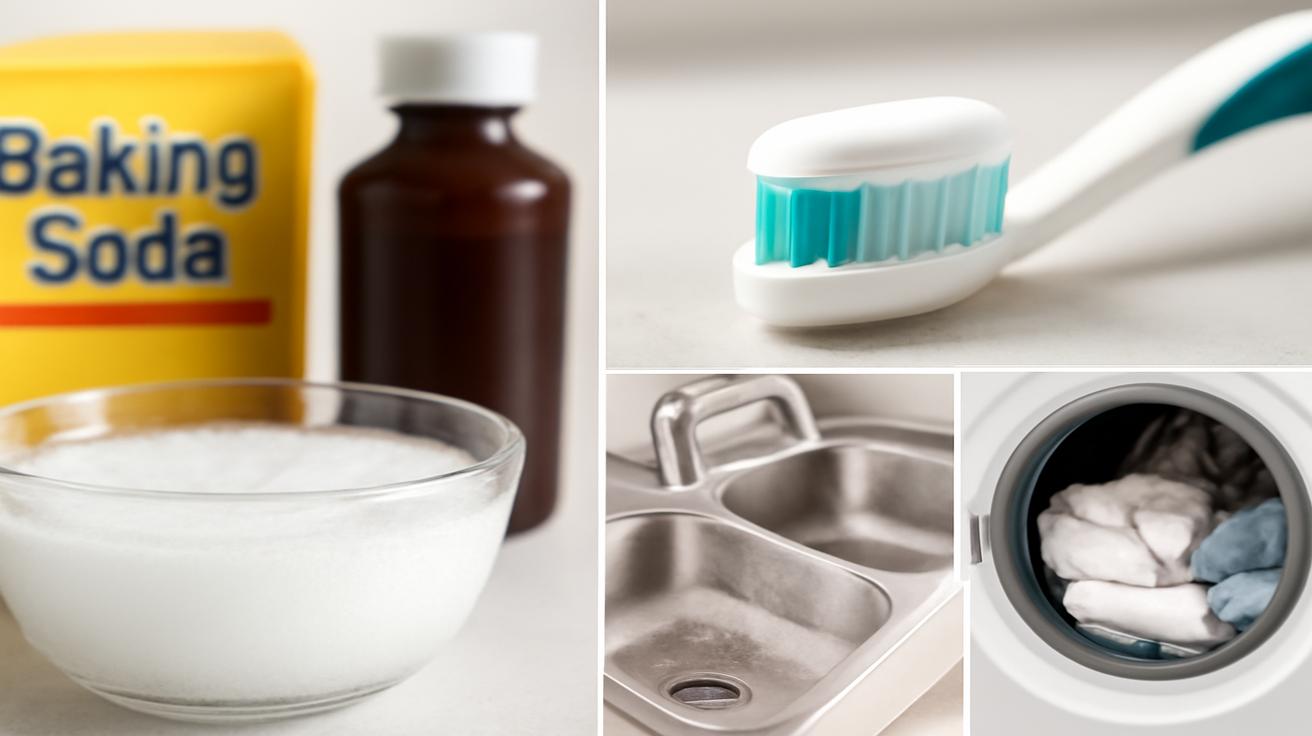
The first time I watched baking soda and hydrogen peroxide meet in a single bowl, it felt like a tiny, quiet kind of magic. No dramatic fizzing, no volcanic eruption like the school science fair projects—just a subtle, creamy transformation as the powder folded into the clear liquid, becoming something new. The light in the kitchen window caught the mixture as it turned from watery to paste, and the faint, sterile tang of peroxide curled into the soft, mineral scent of soda. It didn’t look like much. But this simple mixture—two humble bottles you can find in almost any home—is quietly reshaping how people clean, care for their teeth, tend their gardens, and even support the planet. Experts, it turns out, are paying close attention to this ordinary little duo.
The Simple Science Behind a “Wonder Paste”
If you ask a chemist about baking soda and hydrogen peroxide, you won’t get an answer full of mystery; you’ll get one about elegant simplicity. Sodium bicarbonate—baking soda—is a mild alkali, a gentle abrasive, and a natural deodorizer. Hydrogen peroxide, H2O2, is a weak oxidizer that breaks down into water and oxygen. Together, they behave like a well-rehearsed team: one scrubs, the other lifts and breaks apart stubborn molecules.
On a microscopic level, peroxide releases reactive oxygen species—tiny, energetic fragments that can disrupt stains, odors, and even the structure of some microbes. Baking soda, with its faint grit and alkaline pH, loosens grime and helps neutralize acids. When you combine them, the mixture can form a thick, clingy paste or a gently bubbling solution. It’s that balance—abrasion without scratching, oxidation without harsh fumes—that has cleaning experts, dentists, and eco-conscious homeowners talking.
Many professionals now quietly recommend the duo as a safer alternative to strong chemical cleaners and some heavily fragranced products. Studies support its usefulness for disinfection, stain removal, and mild whitening. And because hydrogen peroxide simply breaks down into water and oxygen, and baking soda into harmless salts, they leave far less behind than many synthetic cleaners. The more you explore their uses, the more it feels like having a multi-tool in a world of single-purpose gadgets.
The Bathroom Alchemy: Teeth, Tiles, and Tiny Transformations
Step into the bathroom and the mixture suddenly feels intimately personal. The mirror is speckled, the grout has dulled to a sad gray, the toothbrush holder carries an unspoken film of “don’t look too closely.” This is where baking soda and peroxide have become quiet heroes in many households—and where dental experts, in particular, have taken notice.
A Gentle, Science-Backed Smile Booster
Ask a dental hygienist about baking soda and hydrogen peroxide, and you’re likely to see a nod of recognition. Many whitening toothpastes already rely on these ingredients: baking soda to polish and neutralize acids, and peroxide to break apart organic stains. When used in moderation, a paste made from the two can help lift discoloration from coffee, tea, and wine, while softening the biofilm that leads to plaque.
Some people mix a tiny amount of 3% hydrogen peroxide with baking soda into a wet, spreadable paste and gently brush for a short time before rinsing thoroughly. Dental research supports peroxide’s ability to reduce certain bacteria associated with gum disease, while baking soda has been shown to help reduce plaque and brighten teeth. But experts are careful here: too much abrasion, too often, can wear enamel. The rule they repeat is simple—use sparingly, brush gently, and always ask your dentist before making it a habit.
Grout, Caulk, and the Hidden Corners
Move your gaze from the mirror down to the tiles. In those narrow grout lines along the shower floor, where soap scum and mildew settle in, the combo really earns its reputation. A thick paste, pressed into grout with an old toothbrush, can cling long enough for the peroxide to do its oxidizing, brightening work while the baking soda scrubs away surface film. There’s something unexpectedly satisfying about watching a dingy grout line slowly return to a lighter, cleaner shade with a bit of elbow grease—no eye-stinging fumes, no harsh chlorine scent.
Along the tub’s caulk line, where mold shadows often appear, a more liquid mixture of baking soda and peroxide can help loosen stains. While serious mold problems need more intensive remediation, small, cosmetic spots often respond surprisingly well. You dab, wait, scrub, and rinse—and the room smells like almost nothing, just a faint hint of clean rather than the sharp tang of synthetic fragrance.
Kitchen Stories: Where Stains, Smells, and Safety Collide
In the kitchen, where cooking, creativity, and chaos intersect, the duo becomes a kind of quiet guardian. Here, experts—from food safety specialists to household cleaning researchers—like the way hydrogen peroxide and baking soda manage a tricky balance: powerful enough to fight grease and bacteria, but gentle enough to avoid leaving behind worrisome residues.
Pans, Cutting Boards, and the Battle Against “Baked-On”
Picture a baking sheet after roasting vegetables, or a pan after searing salmon: a map of dark, crusted patches that hot water alone shrugs off. Sprinkle baking soda, drizzle hydrogen peroxide, and in a few moments a pale, foamy layer begins to form. It’s quiet, but working. The peroxide helps loosen carbonized bits; the soda adds friction and softens acidic residues. Scrub with a sponge, rinse, and the metal shines more readily than you’d expect, often without the need for industrial-strength degreasers.
Food scientists point out that hydrogen peroxide, in low concentrations, has been studied as a surface sanitizer for cutting boards and kitchen tools. Used correctly—applied, allowed a short contact time, and rinsed thoroughly—it can reduce microbial load without leaving a chemical film. Paired with baking soda, it tackles lingering onion and garlic odors on wood and plastic boards, cleaving odor molecules while the soda absorbs and neutralizes.
The Fridge, the Sink, and the Smell You Can’t Name
Open a refrigerator that’s overdue for a clean-out, and you’re greeted with a collage of smells: last week’s leftovers, a forgotten lemon, a jar whose label you no longer dare to read. Here, the duo works both on sight and scent. A mild solution of hydrogen peroxide can be used to wipe shelves and drawers, while a baking-soda-heavy paste tackles sticky corners and mystery spills. As everything is rinsed and dried, you’re left not with perfume, but with almost nothing—just the quiet absence of odor.
Down in the sink, especially around the drain, a similar story unfolds. Sprinkle baking soda, slowly pour peroxide, and a soft bubbling rises like a muted underwater storm. The chemical action helps loosen biofilms, those slimy colonies that cling to damp surfaces and carry much of the sink’s funk. Follow up with hot water, and the whole area feels reset, like taking a deep breath of cool air after a long day in a crowded room.
In the Laundry Room: Brightening Without the Bite
Walk into a laundry room and you often find a kind of chemical library: bright bottles promising whitening, softening, scenting, sanitizing. Yet more and more people are looking for simpler, less aggressive ways to care for their clothes, their skin, and their wastewater. That’s where baking soda and hydrogen peroxide slip in, almost modestly, but with surprising power.
From Dingy Whites to Soft, Neutral Fabrics
Hydrogen peroxide is, essentially, a non-chlorine bleach. At typical household strengths, it can help break down stains and brighten fabrics without the harsh smell and fiber damage sometimes linked to chlorine bleach. When added to a wash cycle, it works quietly on organic stains—sweat, wine, grass—helping them loosen their hold on fabric threads.
Baking soda, on the other hand, does subtle but important work in the wash water: buffering pH, softening water minerals, and helping detergents do their job better. Many laundry experts point out that adding a modest scoop of baking soda can help reduce odor in gym clothes and towels, especially when combined with a stain-loosening agent like peroxide for pre-treatment.
Pre-treating a stain with a paste of baking soda and hydrogen peroxide can feel almost like a small ritual. A splash of red wine on a favorite shirt; a child’s grass-smeared knees; the quiet panic of “this might never come out.” Dab the paste on, wait, and later watch the stain fade or disappear. Not every mark is a miracle, but enough are that the mix has earned a near-legendary status in home-laundry lore.
Outdoors and in the Garden: A Gentler Ally
Step outside—onto a weathered patio, into a small garden bed, along a mossy path—and the same duo that cleans your sink begins to reveal another side. Here, under open sky, it’s not just about shining surfaces, but about balance: treating mildew, lifting algae, and keeping tools clean without drenching the soil in heavy chemicals.
Patios, Pots, and the Green Film of Time
On old stone or concrete, a fine green film often grows, particularly in damp, shady corners: algae, lichens, or the soft beginnings of moss. A brushing of baking soda followed by a spray of diluted hydrogen peroxide, left to sit and then scrubbed, can help fade those growths without the choking fumes of some commercial outdoor cleaners. Gardeners appreciate that hydrogen peroxide breaks down quickly into water and oxygen, minimizing long-term residues in the soil.
Potted plants tell their own stories. Sometimes, mineral deposits crust the edges of clay pots; other times, a faint mold gathers on the rim of a neglected container. Cleaning empty pots with a mild peroxide solution and a sprinkle of baking soda helps extend their life and reduce disease transmission between plantings. It’s a gentle reset between seasons—one that respects the micro-ecosystems living in and around your garden.
A Tool for Seeds and Soil (Used with Care)
Some horticultural experts use diluted hydrogen peroxide to sanitize tools, seed trays, and even to pre-soak certain seeds, as its mild oxidizing action can reduce fungal spores and bacteria. Combining this with baking soda for scrubbing pruners or trowels helps remove sap, soil, and rust film. The goal isn’t sterility, but cleanliness that reduces disease while acknowledging that soil life—the invisible web of microbes and fungi—is both fragile and essential.
In all these outdoor uses, the same rule applies: respect concentration, rinse where needed, and remember that more is not always better. Nature tends to respond best to moderation, and the baking soda–peroxide duo, when used thoughtfully, fits that rhythm.
Health, Safety, and the Quiet Power of “Enough”
With so many uses and so much praise, it’s tempting to crown the combination of baking soda and hydrogen peroxide as a cure-all. Experts, however, continually return to one word: moderation. The very properties that make this duo potent—abrasion and oxidation—also carry risk when pushed too far.
Dentists caution against daily, aggressive brushing with baking soda pastes; enamel once lost does not grow back. Dermatologists warn against using strong peroxide solutions on skin, especially repeatedly; irritation and burns are real possibilities. Cleaning professionals remind us that certain surfaces—delicate stones, finished metals, colored fabrics—can react poorly if the mixture is used too concentrated or left on too long.
The safety tips they offer are straightforward, and worth holding close:
- Use low-strength hydrogen peroxide (typically 3% for household use) unless otherwise directed by a professional.
- Test on an inconspicuous area before applying to large or delicate surfaces.
- Wear gloves when working for extended periods or on multiple surfaces.
- Keep mixtures small and fresh—peroxide breaks down over time.
- Never mix hydrogen peroxide with vinegar or bleach in the same container; dangerous gases and reactions can occur.
Perhaps the deepest lesson of this humble pairing is that we don’t need an exploding arsenal of brightly colored bottles to keep our spaces clean and cared for. Two quiet, inexpensive ingredients, combined thoughtfully, can meet a surprising range of needs—in our homes, on our patios, in our laundry, and around our teeth—while treading more lightly on the world around us.
Common Household Uses at a Glance
Here is a simple overview of how people commonly use the baking soda and hydrogen peroxide combo in everyday life. Always remember to test surfaces and consult professionals for medical or dental use.
| Use | How the Duo Helps | Basic Approach |
|---|---|---|
| Teeth (surface whitening) | Mild abrasion + stain oxidation | Occasional gentle brushing with a thin paste; rinse fully; ask your dentist first. |
| Bathroom grout | Lifts soap scum, lightens discoloration | Apply thick paste, let sit, scrub with brush, rinse well. |
| Kitchen pans & sheets | Softens baked-on grease and stains | Sprinkle soda, add peroxide, wait, then scrub and rinse. |
| Laundry pre-treatment | Targets organic stains, reduces odor | Dab paste onto stains before washing; test on colors first. |
| Fridge & sink cleaning | Deodorizes, reduces microbes, loosens grime | Use mild solution or paste, wipe or scrub, then rinse. |
| Outdoor surfaces & pots | Helps fade algae, mold spots, and mineral film | Apply, scrub with brush, and rinse thoroughly. |
Frequently Asked Questions
Is it safe to brush my teeth with baking soda and hydrogen peroxide every day?
Most dental professionals advise against daily use. While both ingredients are found in some toothpastes, frequent brushing with a homemade paste can be too abrasive and may irritate gums or wear enamel over time. Occasional, gentle use may be acceptable for some people, but you should always consult your dentist before making it part of your routine.
Can I mix baking soda and hydrogen peroxide in advance and store the mixture?
It’s best to mix only what you need in the moment. Hydrogen peroxide gradually breaks down into water and oxygen, especially when exposed to light, heat, or contaminants. Pre-mixed pastes can lose effectiveness and may separate or dry out. Keeping them in a sealed, opaque container helps somewhat, but freshness is key for maximum potency.
Are there surfaces I should avoid cleaning with this combination?
Yes. Delicate or porous materials—like natural stone (marble, some granites), certain unsealed woods, and some dyed fabrics—can be damaged or discolored. Polished metals and specialty finishes may also react poorly. Always test a small, hidden patch first; if you notice dulling, color change, or roughness, stop and use a cleaner recommended for that specific material.
Is hydrogen peroxide environmentally friendly compared to other cleaners?
At typical household concentrations, hydrogen peroxide is considered relatively eco-friendly because it breaks down into water and oxygen, leaving minimal residue. Baking soda is also low-impact and non-toxic in normal use. However, any cleaner can be harmful in excess or if disposed of irresponsibly. Using only what you need and avoiding unnecessary additives still matters.
Can I combine hydrogen peroxide and baking soda with other common cleaners?
You should be very cautious. Never mix hydrogen peroxide with bleach or strong acids (including vinegar) in the same container, as dangerous gases and reactions can occur. If you want to use different cleaners on the same area, apply them separately with thorough rinsing in between. When in doubt, stick to one cleaner at a time and follow the label directions.
What strength of hydrogen peroxide should I use at home?
For most household purposes—cleaning surfaces, light stain treatment, and general disinfecting—3% hydrogen peroxide (the typical brown-bottle variety) is recommended. Higher concentrations can be corrosive, cause burns, and are usually reserved for industrial or specialized uses. Always dilute stronger solutions according to trusted guidelines, or avoid them altogether in a home setting.
Why do experts recommend this duo more often now?
A growing body of research and professional experience points to the mixture’s effectiveness, versatility, and relatively low environmental impact. As people seek simpler ingredient lists and move away from heavily scented, harsh chemical cleaners, experts see baking soda and hydrogen peroxide as a practical middle ground: powerful enough for many tasks, but gentler on both the home and the planet when used wisely.