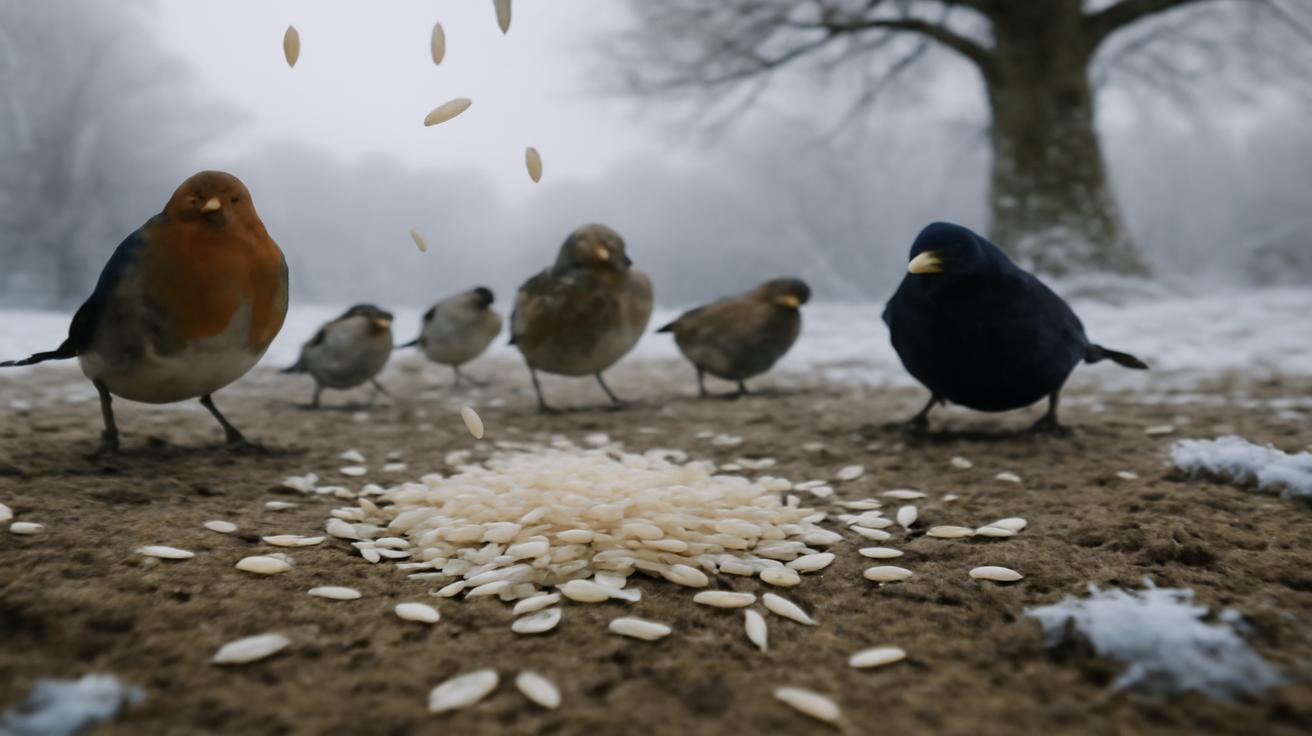
The first robin arrived just after dawn, a small russet shadow hopping across the white-crusted lawn. You might have missed him if you hadn’t been standing at the window, cup of tea warming your hands, watching your breath cloud the glass. The garden looked frozen in place—birdbath a shallow saucer of ice, shrubs stiff with frost, grass blades locked in a brittle glitter. But the robin, bright-chested and determined, was busy. He was searching, probing, tilting his head as though listening for something buried just beneath the surface of the cold, unyielding ground.
After a few moments, he gave up and flitted to the fence, feathers puffed against the biting air. Everything about him said the same thing: food is hard to find today.
It’s on these sharp, breath-stealing mornings—when mud hardens into stone and every puddle is sealed with ice—that the RSPCA has stepped forward with a simple, almost disarming recommendation. Not a fancy feeder, not a specialist mix, not some obscure product you’d need to hunt down online. Instead, they’re strongly advising that we turn to something very close to home.
A staple sitting quietly in almost every kitchen cupboard.
The Humble Kitchen Staple That Becomes a Lifeline
Of all the things that could suddenly become a lifeline for robins and other garden birds, you might not expect this one. Yet the RSPCA has been crystal clear: in the midst of a cold snap, scattering a small handful of everyday porridge oats on the ground can make a real difference for your feathered neighbours.
Not the fancy sachets with added sugar or syrup, not instant pots with flavourings, and definitely not anything laden with salt or sweeteners. Just plain, dry, uncooked oats—the sort you’d tip into a saucepan with milk or water on an ordinary winter morning.
For ground-feeding birds like robins, blackbirds, thrushes, dunnocks and even the occasional wren, those pale, oval flakes are more than just a snack. On hard-frost days when worms retreat deep below the frozen surface, and insects hide away in bark and leaf litter, a scatter of oats is the difference between a long, punishing search and an easy, energy-rich meal.
You can almost imagine the moment from a bird’s-eye view. A robin dives down from the fence, lands lightly on the frosted patio, and there they are—tiny, pale moons dotted across the ground, easy to see, easy to pick up, gentle on a beak that usually probes through soft soil. In a landscape suddenly turned to stone, you’ve created a little oasis of possibility.
The Winter Garden, Seen Through a Robin’s Eyes
Winter is beautiful from inside a warm house. Frost casts its silver spell, ice paints the pond with glass, and bare branches throw perfect, ink-black lines against the sky. But for wild birds, especially tiny ones who weigh less than a letter in the post, winter is a daily test of survival.
A robin’s day begins with a hard calculation: how much energy do I have, and how much can I find before nightfall steals the warmth again? They need frequent, reliable meals—high in energy, easy to access, and safe to eat quickly before predators or the cold catch up with them. Insects, worms, grubs, and other invertebrates usually provide that steady stream of calories. But when the soil clamps shut with frost and snow masks everything, it’s like padlocking the pantry.
Robins are clever and adaptable. They’ll hop under shrubs in search of hidden insects, brave the open lawn for the faint hint of movement, or stay close to humans, knowing that where we disturb soil and leaf litter, food often follows. But even their resourcefulness has limits when a cold snap stretches beyond a day or two. Each night, they lose a significant portion of their body weight just to keep warm. Each morning, they must replace that loss before the next night sets in.
This is where those scattered oats become more than a quaint gesture. They are quick-release fuel—starch and calories in a form that’s easy to find in the open, especially when you’re careful to spread them in the spots where birds already feel safe: by hedges, at the edge of shrubs, beneath the quiet cover of a tree.
Stand by the window again, this time with the knowledge of what’s at stake, and the vision sharpens. You don’t just see a garden dusted with frost. You see a tightrope of tiny lives, balancing on the thin line between enough and not quite enough.
The Right Way to Share Your Oats
If you’re picturing yourself now, oat carton in hand at the back door, there are a few key details that turn a kind impulse into genuinely helpful action. Birds are small, their bodies delicate, and their systems finely tuned. The difference between helpful and harmful can hide in something as innocuous as a pinch of salt.
Plain and Simple: What’s Safe to Scatter
To follow the spirit of the RSPCA’s recommendation, choose oats that are:
- Plain and unflavoured – no sugar, no syrup, no honey, no fruit pieces.
- Unsalted – salt is dangerous for birds, stressing their kidneys and potentially becoming toxic.
- Dry and uncooked – raw flakes are perfect; cooked oats can turn sticky, clump together and cause problems around beaks and feathers.
- Standard porridge or rolled oats – jumbo oats are fine; instant plain oats are usually fine too, as long as they contain nothing but oats.
Sprinkle a small handful at a time. Spread them out rather than leaving them in a pile, ideally in two or three locations around your garden so birds aren’t crowded into a single spot. That gives shy species room to approach and reduces the risk of squabbles.
Where—and How Often—to Offer Oats
Different species have different habits, and the way you place food can make your garden feel more welcoming. Here’s a simple guide you can follow during the cold snap:
| Bird Type | How They Feed | Best Way to Scatter Oats |
|---|---|---|
| Robins, Dunnocks, Wrens | Ground feeders, like cover nearby | Lightly scatter under shrubs, near hedges or low plants |
| Blackbirds, Thrushes | Ground feeders, happy in open lawns | Sprinkle across open patches of grass or patio |
| Tits, Finches, Sparrows | More confident at tables/feeders | Mix a few oats with seeds on a bird table or flat tray |
Offer fresh oats once in the morning and, if you can, again in the late afternoon. During a cold snap, timing matters; birds need to refuel before the long night and again at first light after burning through their reserves.
Why Oats Work So Well in a Cold Snap
Walk outside on a frosty morning and listen. The world is quieter, dampened by cold and stillness, but not silent. A robin’s thin song slips through the bare branches. A blackbird gives its soft, tutting alarm call from the hedge. The cold magnifies every sound and heightens every need.
In that sharpened world, energy is everything. Winter doesn’t just bring a chill; it brings an enormous metabolic demand. Small birds must keep their core temperature steady despite heat bleeding relentlessly into the icy air. The thinner and smaller the bird, the faster that heat is lost, and the more urgent the need for fuel.
Oats are essentially small packets of accessible energy. They provide carbohydrates that birds can convert quickly into the warmth they need to keep muscles working and hearts beating at rapid winter paces. While they don’t replace the varied nutrients found in insects, earthworms and berries, they act as an emergency boost—especially important when the ground freezes and natural food disappears almost overnight.
There’s also a practical advantage: oats are visible. Unlike tiny seeds that can melt into the visual noise of a garden or vanish under a light dusting of snow, oat flakes sit clearly against grass, soil or patio slabs. Ground-feeding birds spot them quickly and can collect them efficiently, spending less time exposed in the open and more time safely tucked away, digesting in sheltered corners.
Think of oats as a small but dependable safety net. They’re not the entire diet, nor should they be, but in these pinched, cold days they slide neatly into the gap left by frozen ground and buried insects. They help birds bridge the hardest hours—the long, sub-zero nights and the brittle mornings that follow.
Designing a Winter-Safe Garden for Robins and Friends
Scatter your oats thoughtfully, and you’ll soon see familiar garden birds adjusting their routes to include your patch. A robin will begin landing in the same frosted spot each morning, head tilting with that bright, bead-like eye. A blackbird will test the lawn, then stride confidently over when he realises the food hasn’t vanished overnight. Once you start helping, it’s almost impossible not to ask: what else can I do?
You don’t need acres of land or a perfect, manicured space. In fact, winter-friendly gardens are often slightly messy, a little wild at the edges, leaning into natural shelter and quiet corners. Here are gentle ways to turn your outdoor space—no matter how small—into a refuge:
- Leave some leaf litter under hedges or shrubs. It shelters insects and invertebrates, which in turn become food for birds on milder days.
- Offer water by breaking the ice on birdbaths or putting out a shallow dish. Birds need to drink even in freezing weather.
- Provide cover with dense shrubs, climbers, or even a stack of pruned branches. Birds feel safer feeding near places they can dive into if danger appears.
- Add variety to food when possible: seed mixes, suet or fat balls (without plastic netting), grated cheese, and chopped fruit all help different species.
Oats then become one piece in a simple, generous puzzle: food for energy, water for hydration, shelter for safety. Together, they turn your garden into a small sanctuary stitched into the wider patchwork of urban and rural spaces where birds are trying to survive the same winter storm.
The Quiet Joy of Becoming Part of Their Story
There is a particular satisfaction to feeding birds in winter that goes beyond the gentle glow of doing something kind. It pulls you, almost without you realising, into the daily rhythm of the lives unfolding just beyond your window.
You begin to notice patterns. The robin who arrives first thing, always alone, fiercely protective of his favourite corner. The pair of blackbirds—one bolder, one cautious—who seem to conduct a slow dance across the lawn. The dunnock that slips in along the edges, moving so discreetly you might have missed it before altogether.
Soon you find yourself watching the sky and the forecast with fresh eyes. A heavy frost predicted? You remind yourself to check the oats. A sharp north wind arriving overnight? You think of the little weights on the branches, huddled against the cold, and make plans to be generous with food in the morning.
In doing so, you become part of a larger, quieter effort. Across the country, in villages and towns and cities, people are stepping out onto cold patios and balconies, scattering small handfuls of oats along with seeds, nuts and crumbs. It’s a loose, uncoordinated network of care bound together by a shared awareness: that in this weather, our choices have weight, even when they’re as small as a palmful of oats.
Your robin doesn’t know about the RSPCA’s recommendation or the science of winter starvation. He only knows that when the ground turned to glass and the worms vanished, something else appeared instead—light, pale flecks scattered thoughtfully where he likes to search. To him, the world has simply become, for this week at least, more forgiving than it might have been.
And as you stand there at the window, mug cooling in your hand, watching him pick his way across the frost to each oat you placed, you feel a quiet, grounding truth: small actions, repeated often and done with care, can ripple out in ways we might never fully see. A robin survives the winter. A blackbird sings in your garden come spring. A clutch of nestlings hatches in the hedge because their parents had the strength to get through the hardest nights.
All because, on a cold morning, you opened a cupboard, reached for that ordinary carton, and chose to scatter a little kindness on the ground.
Frequently Asked Questions
Can I give birds any type of oats?
No. Only plain, unsalted, unflavoured oats are suitable. Avoid instant sachets with added sugar, salt, flavourings, or fruit. Check the ingredients—ideally, the only item listed should be oats.
Are cooked porridge oats safe for birds?
It’s best to avoid cooked oats. When wet, they can become sticky, clump together and harden, which may cause problems if they dry on beaks or feathers. Dry, uncooked oats are safer and easier for birds to handle.
How often should I scatter oats in my garden?
During a cold snap, scattering a small handful once in the morning and again in late afternoon is ideal. Adjust the amount based on how quickly the birds eat it; avoid leaving large amounts sitting uneaten.
Will oats attract unwanted animals like rats?
Any food left out can potentially attract other wildlife. Reduce this risk by scattering only small amounts that birds will finish quickly, and placing food out at set times rather than leaving it out overnight.
Can I rely on oats as the only food for garden birds?
No. Oats are helpful as an extra energy source during harsh weather, but birds need a varied diet. If you can, also offer seed mixes, suet or fat products, chopped fruit, and clean water.
Is it okay to put oats in hanging bird feeders?
You can mix a few oats into seed on a flat tray or bird table, but they’re especially useful for ground-feeding birds like robins and blackbirds. Scattering oats directly on the ground or patio works very well.
What other simple foods from my kitchen are safe for birds in winter?
In moderation, you can offer grated mild cheese, chopped unsalted nuts, small pieces of apple or pear, and dry wholemeal breadcrumbs. Always avoid salty, sugary, heavily processed or mouldy foods.