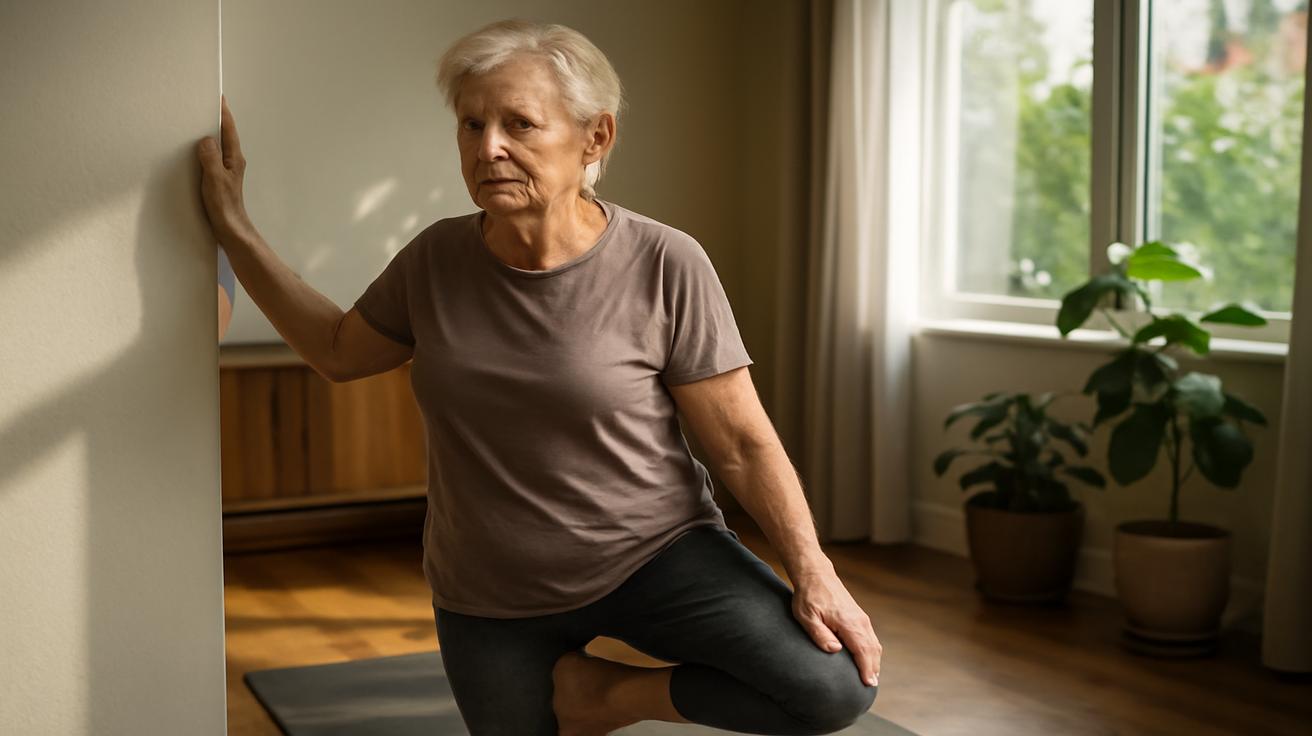
You notice it first in the little things. The way your neighbor, who’s always been spry, pauses at the curb before stepping down. The way your aunt, who never missed a morning walk, now steadies herself on the couch arm before sitting. The way your own body hesitates at the top of the stairs, running an invisible calculation: “Is this worth it?”
We talk a lot about daily walks and hitting the gym twice a week, as if movement were a single number you can check off a list. But somewhere after 70, something shifts. It’s not just about how long you move; it’s about how well you can move through the ordinary, messy, gravity-bound tasks of your actual life. And the pattern that matters most isn’t another step-count challenge or treadmill session. It’s something more elemental, closer to the ground—literally.
The Quiet Superpower: Getting Down and Getting Back Up
There’s a deceptively simple movement that geriatric doctors, physiotherapists, and longevity researchers pay close attention to: your ability to get down to the floor and back up again, without using your hands—or with as little help as possible.
Don’t dismiss it as a party trick. This movement pattern—often called “floor-to-stand” or “sit-to-rise”—is like a real-world report card on your strength, balance, coordination, and resilience. It’s not about how athletic you are. It’s about whether your body can still orchestrate all the little pieces that go into staying independent, steady, and confident in the face of gravity.
Imagine this: you’re 78, you drop a pen under the table or a remote slides off the couch. Maybe one day, you slip—not badly, but enough to end up kneeling on the floor. In that instant, nothing matters more than this question: “Can I get myself back up?” Without calling someone, without a panic, without waiting on the carpet until help arrives.
This single movement is a crossroads. Those who practice it, preserve it, and protect it often keep a wider world. Those who avoid it, fear it, or lose it find their world slowly compressed into higher and higher surfaces—beds, chairs, rails, handles—until suddenly the floor becomes a dangerous place instead of a familiar one.
Why Floor-to-Stand Beats Another Lap Around the Block
Daily walks are wonderful. So are gentle bike rides and water aerobics and a standing date with the recumbent bike at the gym. But there’s a problem: many of these activities happen in straight lines, predictable planes, and controlled settings. Life does not.
Think about the last time you actually moved like a human who lives in a three-dimensional world. You reached, twisted, knelt, leaned, rolled onto your side to plug in a charger, crouched to pick up a grandchild’s toy. All of those movements—and especially the transition between sitting, kneeling, and standing—are what the floor-to-stand pattern trains.
When you practice getting down to the floor and back up, you’re not just “exercising.” You’re tuning a whole orchestra of systems:
- Leg strength to push you up against gravity.
- Hip and ankle mobility so your joints can bend and rotate comfortably.
- Core stability to hold you steady as weight shifts and angles change.
- Balance and coordination so you can move without wobbling or falling.
- Confidence—a deeply physical kind—that tells your nervous system, “We’ve done this before; we know what to do.”
Researchers have even developed something called the “sit-to-rise test,” where you’re asked to sit on the floor and then rise to standing using as few supports as possible—hands, knees, or elbows. People who score higher, using fewer supports, tend to have lower rates of disability and better odds of living longer, healthier lives.
This isn’t magic. It’s mechanics. The ability to move through this pattern means your whole body, from feet to fingertips, still communicates well under load. And that may be more important than another slow-mile loop around the neighborhood.
The Sensation of the Ground: How It Feels to Reclaim This Movement
If you haven’t been on the floor in years, the first time is not graceful. It might feel like visiting a childhood home where the doorways have all shrunk and the furniture is unfamiliar. Your knees complain. Your hips protest. Your brain whispers, “We don’t belong down here anymore.”
But stay for a moment.
The carpet feels rougher than you remember. The floor is cool under your palms. You can smell faint traces of dust or detergent or the faint wax of polished wood. The world looks different from down here; tables loom, light comes in sideways, shadows cut across objects you thought you knew.
Now, imagine doing this intentionally, a few times a week. Not as an accident, but as practice. You lower yourself slowly, maybe with a hand on a chair for support. You pause on one knee. You feel your weight shifting. You notice which leg feels stronger, which side feels stiffer. You sit, maybe cross-legged or with legs out in front. You breathe.
Then, you reverse it.
Foot planted. Hands lightly on your thigh. A small lean forward, chest over toes. A gentle press through your leg, your hips rising, your spine lengthening, your body unfolding like a slow-motion sunrise. You’re standing again.
In that simple sequence, you’ve rehearsed a vital survival skill. You’ve also sent a message to your joints, muscles, and nervous system: “We still do this. We are still a body that can manage the floor.”
The Hidden Stories Inside a Floor-to-Stand
Each attempt is like a scan of your aging body, revealing quiet truths:
- If your knee wobbles, it’s telling you your hip needs more strength.
- If you push heavily on your hands, it’s telling you your legs and core could use more work.
- If turning onto your side feels awkward, your spine or ribs may be stiff from too many hours in chairs.
- If you feel scared on the way down, your brain may be less confident in your balance than it used to be.
Instead of ignoring these details, this movement invites you to listen. In less than a minute, you get a snapshot of your functional age—how well you can navigate the ground-level realities of living in a human body.
Building the Pattern: Gentle Progression for Real Bodies
You don’t go from “I haven’t sat on the floor in ten years” to “springing up like a teenager” overnight. Nor should you try. This is not about heroics. It’s about small, repeatable wins that stitch strength back into your days.
Here’s a gentle progression you can imagine weaving into your week. Use a sturdy chair, couch, or even the side of your bed for support as you explore.
Step 1: Master the Sit-to-Stand
This is your foundation. From a normal chair:
- Scoot to the front edge of the seat.
- Place your feet flat, a little behind your knees, hip-width apart.
- Lean your chest slightly forward—nose over toes.
- Press through your heels and stand up, using your hands on the chair or your thighs if needed.
- Slowly sit back down, with control, rather than dropping.
Do this 5–10 times a couple of times per day. Feel how your legs and hips work together. This is the “halfway point” between chair and floor.
Step 2: Introduce the Low Lunge or Kneel
From standing, hold onto a counter or chair:
- Step one foot back and gently lower that knee toward a soft surface—like a thick mat or folded towel.
- Pause in a kneeling position, one knee down, one foot in front.
- Use the front leg to push yourself back up, with help from your hands if needed.
This teaches your brain and body to trust a lower position without fully committing to the floor. It’s rehearsal, not performance.
Step 3: Descend to the Floor with a Plan
Pick a calm day when you’re not rushed. Have a sturdy chair, bed, or couch nearby for support. On a soft rug or mat:
- Start from standing, holding the chair with one hand.
- Lower to a kneeling position, one knee then the other.
- Place a hand on the floor, then slowly shift one hip to the side and sit.
- Adjust until you find a comfortable position—cross-legged, legs straight, or one leg bent.
Take your time. The way down is as important as the way up. Notice your breathing. If your heart races, rest and simply sit. Getting comfortable on the floor again is part of the practice.
Step 4: Practice the Rise
From the floor, try this sequence:
- Roll onto one side.
- Use your hands to push your upper body up until you’re in a side-sitting position.
- Bring one foot flat on the floor in front of you, like a half-kneel.
- Place your hands on your front thigh or the chair for support.
- Lean slightly forward and push through your front leg to rise.
At first, you may use both hands, a lot of pressure, maybe even a bit of grunting. That’s fine. Over weeks and months, you might find you need fewer supports. One hand instead of two. A lighter touch on the chair. One smooth motion instead of three choppy ones.
A Simple Weekly Rhythm for Lasting Independence
This movement pattern doesn’t need to become a new religion. It just needs to be threaded gently and consistently into your life, the way you might water a plant or open a window each morning.
Here’s an example of how you could structure it across a week, alongside your usual walks or classes:
| Day | Suggested Focus |
|---|---|
| Monday | Sit-to-stand practice (2 sets of 8–10) + 1–2 gentle floor descents with strong support. |
| Tuesday | Walk or light activity + 2–3 kneeling/half-lunge transitions. |
| Wednesday | Floor-to-stand practice: 2–3 full attempts, using a chair as needed. |
| Thursday | Rest from floor work or repeat Monday’s easier version. |
| Friday | Combine: sit-to-stand, kneeling, and 1–2 floor-to-stand sequences. |
| Weekend | Choose one day for a single, calm practice session; one day fully off. |
This isn’t a prescription so much as a gentle template. The key is repetition—teaching your body that the floor isn’t an emergency, it’s familiar territory.
Beyond Muscles: The Emotional Weight of Staying Ground-Capable
There’s a quiet dignity in being able to handle yourself on the ground. It changes how you feel in your own skin.
People who work on this movement pattern often report unexpected benefits:
- Less fear of falling, because they know they can get back up.
- More willingness to play with grandchildren or pets on the carpet.
- A sense of youthfulness, not because they look younger, but because their body still speaks the language of the floor.
- Improved posture, as the hips, spine, and core wake up from years of chair-bound routines.
There’s also something deeply human and humbling about coming close to the earth again. We begin life down there—crawling, rolling, scooting. As we age, we slowly withdraw from the ground, inch by inch. Beds get higher. Chairs get plusher. Shoes get thicker. The space between us and the floor becomes psychological as much as physical.
Revisiting that space with intention, patience, and respect is like reclaiming a lost dialect of your body’s native tongue. It’s not childish. It’s wise.
A Conversation with Your Future Self
Picture yourself ten or fifteen years from now. How old will you be? What kind of life do you want to be living? You may not care about marathons or mountains or personal bests. But chances are, you care about simple freedoms:
- Getting out of bed without help.
- Picking something off the floor without panic.
- Recovering from a small stumble without turning it into a crisis.
- Sitting on a picnic blanket, then standing up when it’s time to go.
That future body is influenced by what you do now, especially after 70. The floor-to-stand pattern is like a promise you make to that future self: “I’ll try to keep us capable. I’ll practice the hard things while they are still possible, so they stay possible longer.”
This is what healthspan really means. Not just the number of years you’re alive, but the number of years you can greet the day without needing an extra pair of hands just to move through your own home.
Safety, Adaptation, and Knowing Your Edges
Of course, not every body at 70, 80, or 90 is the same. Some have replaced joints, brittle bones, or conditions that make certain movements risky. The goal is not to force a textbook-perfect floor rise, but to work within what’s possible—gently expanding your range, rather than testing your limits recklessly.
Some guardrails to respect:
- Talk with your healthcare provider before starting if you have severe osteoporosis, recent surgery, major balance problems, or heart issues.
- Set up a safe environment: soft surface, sturdy furniture to hold onto, no loose rugs or clutter.
- Never rush. This is not a timed event. Slow movements are safer and build more control.
- Stop if you feel sharp pain, dizziness, or sudden weakness. Discomfort from effort is different from alarm signals.
- Use as much support as you need. Hands, cushions, a helper—over time, you may need less, but starting with more is wise.
Adaptation is not failure; it’s skill. Even if you never reach a hands-free floor rise, the very act of training toward it—carefully, consistently—can improve strength, stability, and confidence in profound ways.
Bringing It All Together: Movement as Daily Story, Not Weekly Chore
After 70, health isn’t written in the ink of isolated workouts or fitness gadgets. It’s written in the flowing handwriting of the everyday: how you get out of chairs, how you navigate stairs, how you manage curbs, how you interact with the ground you live on.
The floor-to-stand movement pattern is like a keystone in that story. Strengthening it is about owning the full arc of your body’s relationship with gravity—from high shelves to low drawers, from bed to chair to floor and back.
You can still take your walks. Still go to your gym classes, stretch in the mornings, garden in the afternoons. But if you add this one practice—this humble, ground-level dance of getting down and getting up—you give yourself something rarer than another cardio session. You give yourself continuity.
The continuity of being able to live in your home on your own terms. The continuity of bending to greet a child at their level. The continuity of knowing that if, someday, the floor calls you unexpectedly, you’ll know how to answer—and how to rise again.
Frequently Asked Questions
Is it safe to practice getting up from the floor if I’m over 70?
It can be safe if you approach it slowly, use plenty of support, and have no medical conditions that make it risky (such as severe osteoporosis, recent joint replacement, or major balance issues). Always clear it with your healthcare provider first, set up a safe practice space, and stop if you feel sharp pain, dizziness, or sudden weakness.
What if I can’t get to the floor at all right now?
Start higher. Practice sit-to-stand from a chair, then progress to slightly lower chairs or firm cushions. Work on kneeling or half-lunges using a counter for support. Even without reaching the floor, these patterns build the strength and mobility you’d need to go lower later.
How often should I practice the floor-to-stand movement?
For most people, 2–4 times per week is enough, with just a few careful attempts each session. Quality matters more than quantity. On other days, you can focus on walking, light strength work, or balance exercises.
Does this replace my regular exercise routine?
No. Think of it as a crucial addition, not a replacement. Walking, resistance work, flexibility, and balance training all have their place. Floor-to-stand practice ties many of those qualities together in a single, functional movement that reflects real-life challenges.
How will I know if I’m improving?
You might notice you need fewer hands or less pressure on the furniture to get up. The movement may feel smoother, with less hesitation. You may find it easier to get off low couches, pick items up from the floor, or recover from small stumbles. A helpful sign of progress is simply feeling more confident about being near the ground.
What if I have knee or hip replacements?
Many people with joint replacements can still benefit from modified versions of these movements, but you must respect your surgeon’s and therapist’s guidelines. Avoid extreme ranges your provider has cautioned against, use extra padding, and rely on support as needed. When in doubt, work with a physical therapist who specializes in older adults.
Isn’t walking enough to maintain my independence?
Walking is excellent for your heart, mood, and basic mobility, but it mostly trains you in a straight line on a single level. Independence in later life also depends heavily on your ability to transition between levels—down to chairs, beds, and the floor, and back up again. Floor-to-stand practice directly trains that capacity in a way walking alone does not.