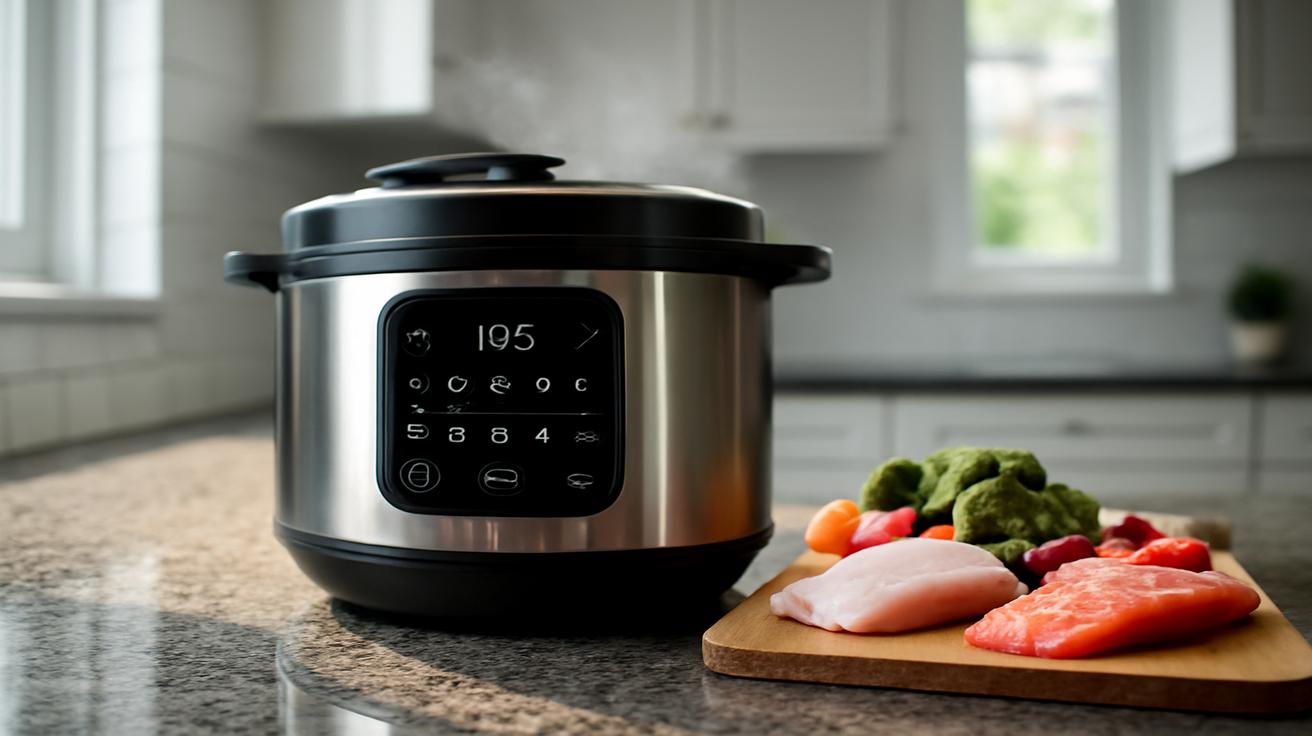
The first thing you notice is the sound—or rather, the lack of it. No harsh fan whirring like a tiny jet engine, no metallic clatter of a basket slamming home. Just a low, confident hum and the slow bloom of warmth curling through the kitchen. On the counter sits a sleek, compact machine that looks less like a gadget and more like the brain of your kitchen. You punch in a setting, tap “Start,” and a pale, golden light washes over the food inside. Within minutes, the house begins to smell like a Sunday afternoon: roasted garlic, caramelized edges, something gently sizzling. Somewhere, your old air fryer sulks in a cupboard, sensing it’s been replaced.
The Day the Air Fryer Lost Its Crown
The air fryer, for a while, felt like the last word in kitchen revelation. Crisp fries with a fraction of the oil. Chicken wings without the grease-splattered backsplash. Frozen snacks in under ten minutes. It was the darling of quick dinners and “better-for-you” indulgence. But like the single-function gadgets that came before it—the bread maker, the waffle iron, the smoothie-only blender—it had one fatal flaw: it could really only do one thing well.
That limitation is exactly why a new kind of countertop companion has started quietly taking over. Imagine the convenience and speed of an air fryer, but with the thoughtful versatility of a professional kitchen. One unit, nine cooking methods. A device that can bake your bread, steam your salmon, slow-cook your stew, and yes, still give you those shatteringly crisp potatoes—without demanding its own cabinet just to justify its existence.
It’s not just a “better air fryer.” It’s a small reinvention of how home cooking feels. Less clutter. More control. A single tool that lets you move from breakfast to midnight snack without swapping baskets, bowls, and pans like a short-order cook on overtime.
More Than Hot Air: 9 Ways This Gadget Actually Cooks
What makes this new generation of multicooker so disarming is its calm confidence. It doesn’t shout about “guilt-free fries” or rely on glossy photos of breaded everything. Instead, it quietly offers you options. You open the menu and see nine different cooking methods, each one a door to a different style of meal. It feels a little like discovering rooms in your own house you didn’t know you had.
1. Air Frying: The Familiar Gateway
Let’s start with what you already know. Air frying is still here, of course. Hot air circulates around your food in a small, efficient chamber. The potatoes blister, the chicken skin bubbles into bronze glass, the tofu cubes get that elusive crisp shell with a soft center. But this time, you have more control. Temperature in smaller increments, pre-set programs you can tweak, even gentle reminders to shake or flip midway through.
You toss in a handful of chickpeas with olive oil and smoked paprika. In twelve minutes, they come out singing—tiny, crunchy, dangerously snackable. That used to be the whole story. But now, air frying is just chapter one.
2. Baking: A Tiny, Patient Oven
On a rainy afternoon, you decide to bake. Instead of firing up the giant oven—heating the whole kitchen just to warm a small tray—you slide a pan into this compact device. It’s already preheated by the time you’ve scraped the last streak of batter from the bowl.
The heat is precise, almost gentle. Banana bread rises in an even curve, without the scorched top and gooey middle you sometimes get in a rushed oven. Single-serve brownies, a mini focaccia, a batch of granola clustered with almonds and coconut—the machine handles them with the steady focus of a much larger appliance. For small households, or people who bake in tiny, impulsive bursts, it’s a quiet revolution.
3. Roasting: Caramelized Edges, Tender Centers
Roasting is where this gadget starts to feel like it’s bending time. You scatter chopped root vegetables—carrots, parsnips, red onions—over a tray, drizzle with oil, and add salt, thyme, and a clove of crushed garlic. The unit’s fan and heating elements create a cocoon of dry, circulating heat. Within minutes, steam escapes in small puffs, and the vegetables begin to blush and char at the corners.
Chicken thighs roast alongside wedges of lemon; the skin turns blistered and lacquered, the meat stays juicy. Brussels sprouts crisp into little caramelized cups. Cauliflower florets transform into nutty, burnished bite-sized pieces. The aroma that spills from the vent feels like the memory of dinners your grandparents made, but on a Tuesday night, after work, in half the time.
4. Steaming and Slow Cooking: The Quiet Arts
Where it surprises you most is in its gentleness. Switch to the steaming mode, and the whole personality of the machine changes. Instead of the snappy, dry blast of an air fryer, you get a soft, cloudlike environment that wraps food in moisture. Bright green asparagus, still tender-crisp. Salmon that flakes at the touch, infused with lemon slices and dill. Dumplings that puff and glisten.
On slow-cook mode, the day stretches out in front of you. You sear some onions and garlic first, using the sauté setting, then layer in beans, tomatoes, spices, and broth. You close the lid and walk away. Hour by hour, the ingredients collapse into one another, lending their flavors, thickening, softening. When you lift the lid in the evening, a cloud of fragrant steam carries cumin, tomato, and warmth into every corner of your home.
5. Grilling, Broiling, and More: The Finishing Touches
Then there are the modes that feel almost luxurious in a countertop machine: grilling and broiling. On grill mode, strips of zucchini, peppers, and halloumi pick up light char marks, the faint bitterness of fire without an outdoor grill in sight. On broil, cheese melts into a mottled, bubbly crust over a dish of pasta; the sauce sighs and thickens beneath.
Sometimes you use these not as standalone methods but as finales. A stew that’s been slow-cooking all day gets a last-minute blast of heat to crisp the potatoes on top. A tray of baked tomatoes finishes under the broiler, skins cracking, juices thickened into a sticky, almost jammy intensity. With nine functions in rotation—air fry, bake, roast, steam, slow-cook, sauté, grill, broil, reheat—this single machine becomes less “gadget” and more “kitchen partner.”
The Kitchen Feels Bigger, Even If It’s Not
The irony is that adding this one device often means removing three or four others. Suddenly, the bulky slow cooker you only used in winter feels redundant. The toaster oven’s uneven performance becomes hard to ignore. The rice cooker, the steamer basket, even the beloved but single-minded air fryer—all of them start to feel like specialists in a world that now rewards versatility.
On a practical level, countertops clear. Cabinets breathe a little easier. But the space you gain isn’t just physical. It’s mental. Cooking decisions become simpler when so many techniques live under one lid. You stop thinking in terms of appliances—“I guess I’ll use the oven” or “Is this an air fryer meal?”—and start thinking in terms of the food itself.
What does this need? Gentle heat or fierce? Dry or humid? An all-day simmer or a blistering finish? You open the same door for all of it, turn a simple dial, and let the machine adapt to the meal, not the other way around.
| Cooking Method | Best For | Texture & Result |
|---|---|---|
| Air Fry | Fries, wings, tofu, snacks | Crispy outside, tender inside with minimal oil |
| Bake | Cakes, breads, cookies, granola | Even rise, controlled browning, small-batch friendly |
| Roast | Vegetables, chicken, sheet-pan meals | Caramelized edges, deep flavor development |
| Steam | Fish, dumplings, greens, rice | Moist, delicate, nutrient-preserving |
| Slow Cook | Stews, beans, braises, pulled meats | Fall-apart tenderness, layered flavors |
| Sauté | Onions, aromatics, quick stir-fries | Quick browning and flavor base building |
| Grill | Veggies, halloumi, cutlets | Charred stripes, smoky notes without outdoor grill |
| Broil | Cheese toppings, gratins, finishing dishes | Bubbly, browned tops, crisp finish |
| Reheat | Leftovers, bread, pizza slices | Revived texture, not soggy or rubbery |
A Week in the Life with a 9-in-1 Kitchen Companion
Living with this kind of machine changes the rhythm of your days in small but satisfying ways. Not grand gestures—no twelve-course tasting menus magically appearing on a Tuesday. Just quiet conveniences that stack up until, one evening, you realize you haven’t felt dread at the question “What’s for dinner?” in a while.
Monday: The Gentle Start
Monday morning, you wake up a little late. Instead of skipping breakfast, you crack two eggs into a small dish, sprinkle with salt, tomatoes, and a crumble of cheese, and tap the bake function. While you shower, the machine turns them into soft, custardy baked eggs. When you lift the lid, steam sighs out and the surface quivers slightly, just set. You tear a piece of bread, warmed and revived on reheat mode, and dip straight in.
Wednesday: One-Pan Relief
By midweek, your energy is frayed. You chop whatever vegetables are lingering in the crisper—broccoli, bell peppers, a lone sweet potato. They tumble into the tray with a handful of chickpeas; you coat everything in oil, smoked paprika, and cumin. The roast mode takes over. Halfway through, you nudge the tray, savoring the hiss and the rush of scent—sweet, spicy, earthy. A drizzle of yogurt and lemon on top, and dinner tastes like it took much more trouble than it did.
Friday: A Mini Feast
On Friday night, you decide you deserve something special. A small piece of salmon goes into the steaming basket, laid gently on lemon rounds. While it steams to perfect tenderness, you toss thinly sliced potatoes with a bit of oil and salt into the air-fry basket. Fifteen minutes later, you have crisp-edged potatoes and silken fish. You finish with a quick broil over the potatoes to deepen their color. It’s the sort of meal that would have once meant juggling stovetop pans and oven trays. Tonight, it was one machine and a few easy switches.
Goodbye, Single-Task Gadgets
There’s a certain romance in old tools: the cast-iron pan glossy from decades of use, the pasta roller inherited from someone who believed in flour and patience. But not every relic deserves to stay. Many of us have cupboards that feel like graveyards for novelty purchases—appliances we swore we’d use every week that now sit in permanent exile.
The air fryer often teeters on that edge. It’s great at what it does, but once the novelty wears off, you might find yourself reaching for it only when you specifically crave wings or fries. Meanwhile, it takes up the space of an entire basket of fresh produce.
A 9-in-1 multicooker doesn’t erase nostalgia, but it does ask a fair question: if you can get crisp, golden fries from the same machine that slow-cooks tomorrow’s soup, steams your dumplings, and roasts your vegetables, why hold on to something that can only do one piece of that puzzle? Saying goodbye to the air fryer isn’t an act of betrayal. It’s an act of editing. Of choosing tools that earn their footprint, day after day.
A New Way of Thinking About “Healthy” and “Easy”
Underneath all the clever engineering and timers and presets, what this new gadget really gives you is permission. Permission to cook more often because it’s less of a big deal. Permission to eat more whole foods because turning a pile of raw vegetables into something craveable no longer feels like a project.
Need a fast lunch? Toss cauliflower florets with a little oil, salt, and curry powder, roast until they’re browned, and pile them into a bowl with leftover rice, quickly steamed greens, and a fried egg cooked on sauté. Craving comfort food that won’t knock you out for the rest of the day? Build a stew in the morning on slow cook, then finish with a broiled cheesy top. Late-night snack? Air fry carrot sticks or chickpeas until they crunch instead of reaching for a bag of chips.
“Healthy” stops being a rigid category and becomes, instead, a small series of easy choices: a bit less oil here, a bit more vegetable there, a texture that delights instead of merely fills. The machine doesn’t do the thinking for you—but it makes following through on good intentions remarkably simple.
Living with the Hum, Not the Hype
It’s easy to be cynical about kitchen trends. Every year, there’s a new promise of salvation: the pan that never sticks, the pot that replaces all others, the miracle machine that “cooks for you.” The air fryer had its bright, emphatic moment in that spotlight. Now, as its role starts to feel more modest, something subtler is taking its place.
This 9-method multicooker doesn’t scream in capital letters. It hums. It preheats quietly. It lets you sear onions directly in the same pot that will hold your soup. It turns last night’s limp pizza into something crisp and fragrant instead of rubbery. It waits on the counter and, more often than not, earns its keep.
One evening, you might find yourself reaching automatically for the old air fryer, then stopping mid-motion. The new gadget is already warm, already part of your muscle memory. You open it, slide in a tray of vegetables, tap roast, and walk away. Somewhere in the cupboard, another appliance settles a little deeper into retirement.
The kitchen doesn’t look futuristic. It just looks calmer. Fewer cords, fewer decisions, more meals that taste like they took more care than they did. The days of the single-purpose gadget are quietly fading. In their place stands one unassuming machine, gently reshaping the way you cook, one hum, one hiss, one golden, crispy, tender bite at a time.
FAQ
Is this type of multicooker really better than a regular air fryer?
“Better” depends on how you cook. If you only ever want to crisp frozen snacks, a basic air fryer may be enough. But if you like roasting, baking, steaming, slow cooking, and reheating with good texture, a 9-in-1 offers much more versatility in the same (or less) counter space.
Can it get food as crispy as a dedicated air fryer?
Yes, if the design includes strong airflow and high-temperature air fry or convection modes. In many models, the crisping performance is on par with, or better than, a standard air fryer—especially because you can fine-tune temperature and time.
Does it replace my oven completely?
Not entirely. For large roasts, big batches of cookies, or holiday meals, a full-size oven is still useful. But for everyday cooking—small sheet-pan dinners, side dishes, quick bakes—this kind of gadget often becomes the default.
Is it complicated to use with so many functions?
Most are designed with presets and clear buttons. You can start by using just one or two modes and gradually explore more. After a week or two, switching between air fry, roast, bake, or steam usually feels intuitive.
What about cleaning and maintenance?
Removable baskets, trays, and pots are typically nonstick or stainless and often dishwasher-safe. The key is to wipe out any grease or crumbs after cooking and occasionally clean the heating area and seals according to the manual.
Will it actually save me time?
For many meals, yes. It preheats faster than a full oven, cooks small portions more efficiently, and lets you sauté, slow-cook, and finish under a broil in the same vessel, cutting down on both cooking and cleanup time.
Is it worth saying goodbye to my air fryer?
If your air fryer still earns its space and you use it constantly, you can keep it. But if it spends more time tucked away than on the counter, a 9-in-1 gadget can give you those same crispy results plus eight more ways to cook—making your kitchen feel simpler, not more crowded.