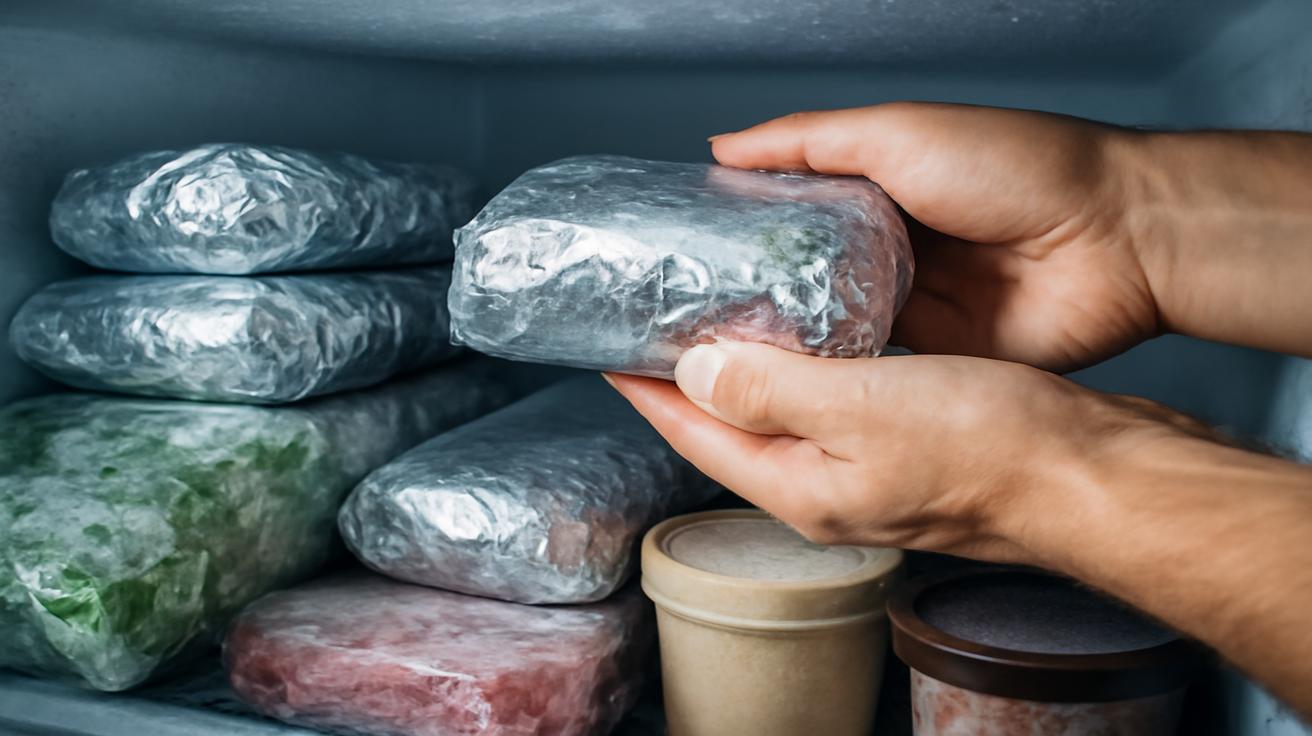
The first time I saw it, I blinked twice, shut the freezer door, then opened it again just to be sure. There, between the ice tray and a bag of frozen peas, sat a neatly wrapped brick of leftovers, glinting in that unmistakable silver. Not in a plastic container. Not in a freezer bag. Just aluminium foil—tight, shiny, and unapologetically simple. It looked oddly elegant, like a tiny, frosty gift.
“You freeze things… in foil?” I asked my friend, half-skeptical, half-intrigued.
“All the time,” she shrugged, pulling a tray of foil-wrapped banana bread from the freezer. “It’s faster, it’s smarter, and nothing gets freezer burn. You’re still using plastic, aren’t you?” She raised an eyebrow. The accusation hung in the cold air between us.
That moment, standing barefoot in a kitchen with a humming freezer and a faint smell of last night’s baked lasagna, was the beginning of a quiet little revelation: more and more people are skipping the bulky containers and zippy bags, and instead lining, wrapping, and tucking their food straight into the freezer with aluminium foil—and once you understand why, it’s hard to go back.
The Quiet Revolution in the Freezer
There’s a small, soft revolution happening in kitchens everywhere. It doesn’t clang like a new cast-iron skillet or shine like a fancy blender. It’s subtle—a roll of aluminium foil, perched near the stove, getting used for far more than baking fish or covering casseroles.
Open the freezers of home cooks, busy parents, city-dwelling couples, even solo students with tiny fridges—and you’ll see the pattern: rows of tightly-wrapped parcels, silver packets, and neatly lined trays. Less plastic, fewer bulky containers, more foil.
Part of it is convenience. Life is full. People want tricks that just work—no fiddling with lids that don’t match, no wrangling stiff plastic after every meal. But there’s also something deeply tactile and satisfying about foil. It molds to your food like fabric. It whispers as you fold it over, smooth it down, press it into corners. It feels purposeful. Final.
And in the freezer, it performs almost like a quiet little superhero: blocking harsh cold air, hugging food tightly so moisture doesn’t escape, shaping itself to whatever you’re freezing so there’s no empty space where frost can creep in. When you pull out a foil-wrapped slice of cake or half a loaf of bread a month later and it tastes exactly the way you remember, you realize this isn’t just a quirky habit. It’s a genuinely clever method.
Why Aluminium Foil Works So Well in the Freezer
At first glance, aluminium foil seems too thin to matter. It’s light, almost fragile in your hands. But in the freezer, thin turns out to be an advantage—especially when combined with how tightly foil can wrap around food.
The Magic of a True Air-Tight Hug
Freezer burn isn’t just a cosmetic flaw—it’s the slow dehydration of your food. Those icy, whitish patches on meat or the chalky edges of frozen bread? That’s moisture escaping, bite by bite, into the dry freezer air. Plastic containers and bags can help, but they almost always leave air pockets somewhere.
Foil, when used properly, gives food something plastic often can’t: a close, tailored seal. You can press out the air with your fingers, smoothing the metal into every curve and edge. That tight contact is powerful. It keeps moisture in and cold air out, like a wool coat pulled snug around your shoulders on a winter walk.
Add to that foil’s natural ability to reflect light and temperature changes, and you have a shield that keeps food more stable. No sudden exposure, no stray cold blasts drying out the surface. Just slow, steady freezing.
Stackable, Shape-Shifting, Space-Saving
Freezer real estate is precious territory. Every shelf and drawer is a tiny battlefield of half-used bags, mystery containers, and that one ice pack you never move but always curse.
Foil changes the geometry of your freezer. Instead of rigid boxes that demand their exact space, foil parcels adapt. You can flatten leftovers into slim, stackable packets. Wrap chicken breasts into a compact stack. Fold a loaf of sliced bread into a tight rectangular brick that fits exactly where you want it.
It’s almost like origami with frozen food. Each parcel is uniquely shaped to use just enough space—no more. You can slide packets between items, build tidy towers of silver, and suddenly your freezer stops feeling like a chaotic cave and more like a neatly arranged archive of future meals.
The Simple, Hands-On Ritual
There’s another, less obvious reason people fall in love with foil: the ritual. There’s something grounding about tearing a sheet, feeling the clean resistance, then folding and pressing it around still-warm food before it chills.
We live surrounded by plastic that snaps, zips, and clicks shut with a mechanical finality. Foil, by contrast, is quiet and analog. You listen to the gentle crackle as you form it. You feel its shape respond to your touch. It forces you to be present for a moment with the very food you’re saving for later.
In a world that’s always rushing ahead, that little pause at the counter—hands smoothing metal over tomorrow’s lunch or next month’s comfort meal—starts to feel like a tiny act of care.
What You Can—and Surprisingly Can’t—Freeze in Foil
Not everything belongs inside aluminium foil in the freezer, but the list of what works is longer than you might think. The trick is knowing when foil is enough on its own, and when it needs a partner.
Champions of the Foil-Wrap Method
These are the foods that absolutely thrive when wrapped in foil before freezing:
- Bread and baked goods: loaves, slices, rolls, muffins, banana bread, brownies, cookies. Foil keeps them tender, preventing that dry, crumbly freezer taste.
- Cooked meats: roasts, grilled chicken pieces, leftover turkey, meatloaf slices. Wrap them tightly and label, and they reheat beautifully.
- Pizzas and flatbreads: leftover slices or homemade bases. Foil keeps toppings in place and crusts from drying out.
- Lasagna and casseroles: cover the whole dish first with foil, freeze flat, then portion and rewrap individual pieces.
- Firm vegetables and roasted veg: roasted carrots, potatoes, squash—especially when already cooked.
In many cases, if something is already cooked and reasonably solid, foil alone is not just enough—it’s ideal.
Foods That Need a Little Extra Protection
Some foods ask for a bit more than just a single layer of foil. For these, a “double layer” approach works well: wrap tightly in foil, then slip the parcel into a reusable container or freezer-safe bag:
- Raw meat or fish: foil keeps shape and shields from air, but an extra outer layer helps avoid odor transfer and leaks.
- Very moist foods: stews, soups, and saucy dishes do better in a container, though foil can be used to line the container or cover the top before sealing.
- Cheeses: many hard cheeses freeze decently when wrapped in foil and then bagged.
As a general rule, if it’s liquid or very squishy, give it structure with a container first and use foil as your inner shield or top layer.
A Quick-Glance Freezer Foil Guide
| Food | Foil Only? | Best Approach |
|---|---|---|
| Bread, rolls, cakes | Yes | Wrap tightly in 1–2 layers of foil |
| Cooked meat slices | Yes | Wrap portions separately for easy thawing |
| Raw meat or fish | Better with extra layer | Foil wrap + bag or container |
| Soups and stews | No | Container + optional foil over surface |
| Pizza, lasagna, casseroles | Yes | Foil over dish or wrapped slices |
How to Use Aluminium Foil in the Freezer Like a Pro
The trick isn’t just using foil—it’s using it thoughtfully. A few simple habits turn a roll of foil into a freezer tool you’ll swear by.
Step 1: Cool Food Before You Wrap
It’s tempting to wrap hot leftovers straight from the stove, but that steamy breath you see rising off dinner? That’s moisture. Trap it in foil while it’s still hot, and you create the perfect environment for ice crystals.
Let foods cool to room temperature before wrapping. The surface dries just enough to avoid frost, while the inside stays tender once frozen and reheated. It also helps your freezer maintain its temperature, so everything else in there stays happier, too.
Step 2: Tear Generously, Then Wrap Tightly
Use enough foil to fully cover the food with a bit to spare. Set your food in the center, then:
- Fold the nearest edge of foil over the food.
- Fold the opposite side, overlapping by at least a couple of centimeters.
- Press gently but firmly around the food to expel air.
- Fold and crimp the ends like a wrapped present.
You want smooth, slightly compressed contact—no gaps, no air pockets, no loose corners flapping like flags in the freezer wind.
Step 3: Double Wrap If It’s a Long Stay
If you know something will be in the freezer for more than a few weeks—holiday baking stashed for months, big-batch cooking, or seasonal fruit breads—give them a second line of defense.
That might mean:
- A second layer of foil wrapped in the opposite direction.
- Slipping the foil parcel into a reusable silicone or freezer bag.
- Storing multiple foil packets inside a larger container.
That extra layer beats back subtle air leaks and keeps flavors where they belong.
Step 4: Label Like Your Future Self Depends on It (Because It Does)
In the moment, it’s obvious what’s inside that shiny rectangle. Two weeks later? Every foil parcel looks suspiciously identical. Was this roasted chicken or banana bread? Is that spicy chili or mild tomato sauce?
Use a permanent marker to write directly on the foil: what it is, and the date. If you’ve double-wrapped, slip a small paper label inside the outer layer as a backup. Future you, standing shivering at the freezer door in search of a quick dinner, will be grateful.
Beyond Convenience: The Feel-Good Side of Freezing with Foil
For many people switching to aluminium foil in the freezer, the draw isn’t just tidiness and better-tasting leftovers. There’s a subtle moral satisfaction to it, too.
Less Plastic, More Reuse
While aluminium production itself isn’t impact-free, foil has a secret strength: it’s often reusable in the microcosm of your own kitchen. If you’ve wrapped something clean and dry—say a loaf of bread or a cake—you can often smooth that same sheet, fold it again, and give it a second life around another item.
Compared with plastic wrap that clings, tears, and then goes straight into the bin, foil feels more durable, more forgiving. Many people find they simply use fewer disposable plastic products when foil becomes their freezer go-to.
A More Mindful Relationship with Leftovers
Something interesting happens when you start wrapping food in foil instead of tossing it into whichever plastic container is at hand: you think more intentionally about portions.
Instead of a single big tub of mysterious leftovers, you might choose to wrap individual slices of lasagna, two slices of cake, a single serving of roasted vegetables. Suddenly, your freezer isn’t full of intimidating, bulky “sometime later” meals—it’s full of ready-made, grab-and-go portions tailored to real moments: a solo lunch, a busy weeknight, a quiet midnight snack.
This doesn’t just reduce waste. It also makes your freezer feel like a curated gallery of future comfort rather than a guilty storage graveyard.
The Pleasure of Unwrapping
And then there’s the reveal. The moment you pull a cool, weighty packet of foil from the freezer, set it on the counter, and slowly unfold those crisp edges. There’s a small, cinematic pleasure in it.
The metal loosens with that soft crackle, edging back to show a slice of lemon cake, a hunk of rosemary bread, a neatly wrapped piece of salmon you’d forgotten. It almost feels like unwrapping a gift from your past self. A small kindness, tucked away in silver, waiting for the right time.
FAQs About Aluminium Foil in the Freezer
Is it safe to put aluminium foil in the freezer?
Yes. Freezer temperatures do not cause aluminium foil to break down in a way that makes food unsafe. Foil is commonly used by home cooks and in commercial kitchens to protect food in cold storage.
Can I put foil-wrapped food straight into the oven from the freezer?
Often, yes—especially for baked goods, casseroles, or roasted meats. Aluminium foil is oven-safe. Just ensure the food is meant to be baked or reheated from frozen, and always follow safe cooking times and temperatures.
Does foil prevent freezer burn better than plastic?
When wrapped very tightly, foil can offer superior protection because it molds directly to the surface of the food, minimizing air exposure. Combining foil with a secondary layer (like a bag or container) offers the best long-term defense.
Can I reuse aluminium foil for freezing?
You can, as long as it’s clean, not torn, and hasn’t been in contact with raw meat or anything that could contaminate other foods. Many people reuse foil from baked goods or bread wrapping several times.
What thickness of aluminium foil is best for the freezer?
Heavy-duty foil works best for freezing, as it’s more resistant to tearing and punctures. Regular foil can be used, but consider double-wrapping for longer storage or for items with sharper edges.
Are there foods I should never freeze in foil?
Very acidic foods—like some tomato sauces or citrus-heavy dishes—are better stored in glass or food-safe plastic containers, as acids can react slightly with aluminium over time. Liquids and soups are impractical in foil alone and should go in containers.
How long can foil-wrapped food stay in the freezer?
It depends on the food. As a general guide, baked goods and cooked meats in well-wrapped foil often keep their quality for 2–3 months. For longer storage, use a second outer layer such as a bag or container, and always check smell and texture when thawing.
Some kitchen tricks arrive like fads and vanish just as quickly. But aluminium foil in the freezer isn’t one of them. It’s quiet, practical, deeply tactile—and once you’ve pulled a perfectly preserved slice of bread or lasagna from a foil-wrapped cocoon months later, tasting exactly as you remember, it starts to feel less like a trick and more like a small, reliable bit of kitchen wisdom worth passing on.