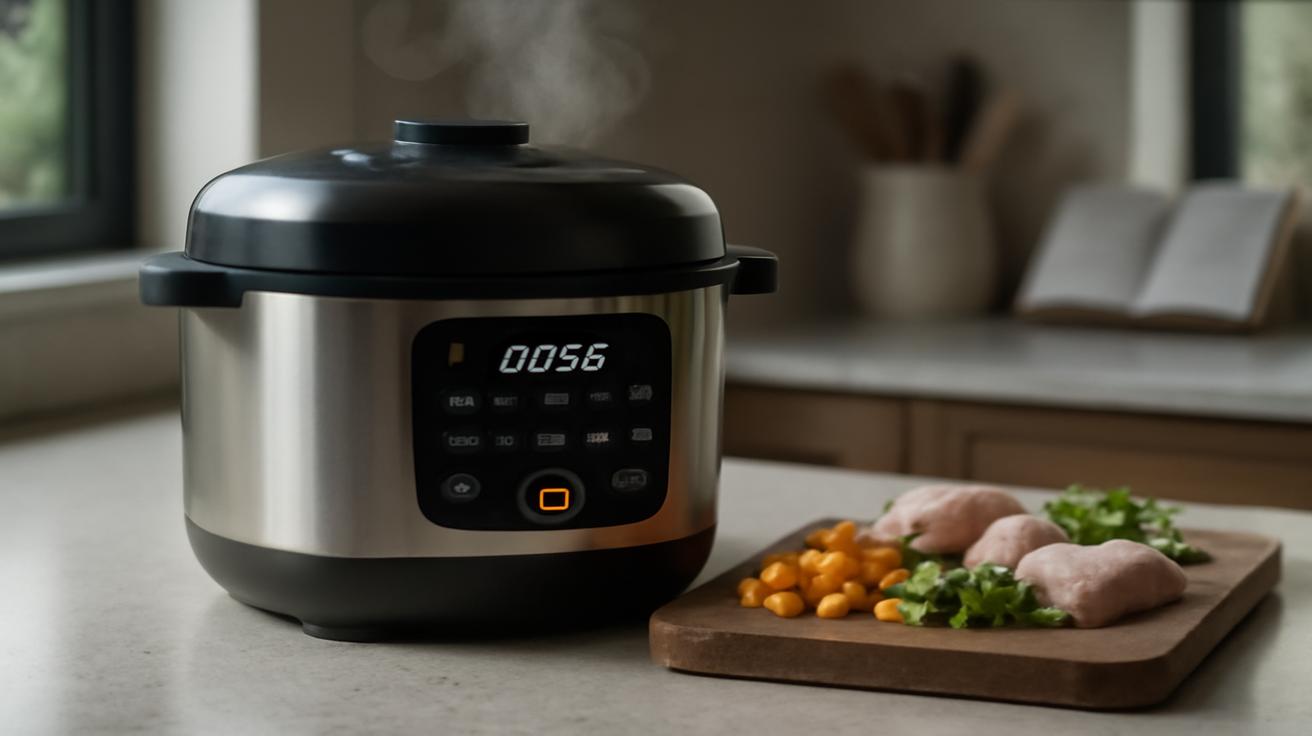
The first time I heard it hiss, I thought something was wrong. A low, steady sigh, like a kettle just about to murmur into a whistle, filled my quiet kitchen. Steam shivered up in a thin, ghostly ribbon. The light over the counter caught it, turning it into a bright veil swirling above a sleek, unfamiliar machine. I stood there in bare feet, coffee cooling in my hand, watching as carrots, onions, and a handful of lentils tumbled inside a glass pot, bathed in a swirl of hot air and mist. No pan on the stove. No pot in the oven. No air fryer basket clattering. Just this one, quiet device doing all of it at once—as if the kitchen had finally exhaled with relief.
The Day the Air Fryer Lost Its Throne
You probably remember the air fryer moment. That year when half your social feed was “crispy without oil!” and “you won’t believe what I made in my air fryer.” French fries. Cauliflower wings. Salmon. Half of us bought one; the other half got one as a gift from an optimistic relative who assumed we’d suddenly become people who roast chickpeas at 10 p.m.
For a while, the air fryer was the hero of the small kitchen. A countertop box promising golden edges and guiltless crunch. It sat there, squat and humming, turning our frozen snacks into something vaguely more virtuous. We cleared space for it, shuffled the toaster aside, even retired grandma’s old slow cooker. But after the first burst of enthusiasm and crispy everything, reality slipped in.
The baskets were too small for a crowd. The noise was a little harsh for a sleepy morning. Entire meals still demanded a dance across multiple appliances: a pan for the sauce, a pot for the grains, a kettle for hot water, the oven for something you couldn’t cram in the tiny drawer of hot air. The air fryer, mighty as it was, could only do one thing well: blow very hot air very quickly at food.
Fast forward to this morning, with that gentle hiss. On the counter sits something that looks less like a gadget and more like a soft-spoken replacement for half your kitchen: a new all-in-one device, designed not as another “trend,” but as a quiet revolution. Instead of asking, “What can I fry?” it asks something bigger, more curious: “What do you want to cook today—start to finish?”
Nine Ways to Cook, One Place to Stand
This new generation of all-in-one cooker doesn’t shout its features from a neon sticker on the box. It doesn’t need to. It just waits, patient, with a single dial and a few thoughtful icons. Spin the wheel and your cooking universe unfolds: sauté, sear, pressure cook, slow cook, steam, bake, roast, sous-vide, and yes—air fry—are all quietly nested inside.
Picture a rainy Tuesday night. You’re tired. Your brain is spinning, and the last thing you want is the chaos of five burners and an oven door swinging open and shut. You set a cutting board next to your all-in-one. A trickle of olive oil, a soft onion, the first whisper of garlic hitting the hot base on sauté mode. There’s the soft crackle, the sharp floral scent of fresh thyme, the simple pleasure of stirring with one spoon instead of juggling pans. You tap a button; it shifts to pressure cook. Broth goes in, a handful of dry pasta, a pinch of salt. The lid closes with a gentle click, not the slam of a pressure monster from your grandmother’s era. Fifteen minutes later, steam lifts, the kitchen fills with a rich, comforting aroma, and you’re ladling a complete, silky pasta soup into a bowl. One pot. One machine. No parade of dirty dishes.
That’s the first difference you actually feel: not just what it can do, but what it lets you stop doing. No more mental gymnastics of “Okay, I’ll start this in the pan, then move it to the oven, then maybe I can crisp the top in the air fryer if I don’t forget about it.” Those fragments of effort—grab the pan, preheat the oven, wash yet another pot—quietly disappear.
The Nine Methods, in Real Life
The list of cooking modes sounds impressive on paper, but it’s in the small, daily moments that they become real:
- Sauté: You can actually brown onions and toast spices in the same pot where your soup or curry will simmer. No extra skillet, no stovetop splatter zone.
- Sear: A steak hits the hot surface, and suddenly your kitchen smells like a neighborhood bistro. Deep, caramelized crust, juices locked in—then you shift to another mode if you want it finished low and slow.
- Pressure cook: Tough cuts of meat soften into fork-tender comfort in under an hour. Beans from dry to dreamy without soaking overnight. Broths that taste like they simmered all day… except they didn’t.
- Slow cook: Morning you becomes an ally of evening you. Toss in ingredients before work, turn the dial, and return to a house smelling like Sunday at your grandmother’s.
- Steam: Suddenly vegetables don’t have to be an afterthought. Broccoli holds its emerald color and quiet snap, fish stays tender and perfumed with lemon and herbs.
- Bake: Banana bread, brownies, or a small batch of muffins rise inside a compact chamber that doesn’t turn your whole apartment into a sauna.
- Roast: Think roasted root vegetables with edges like copper, or a chicken whose skin crackles when you press it with the back of your spoon.
- Sous-vide: When you’re in the mood for precision, salmon that flakes in creamy layers, or eggs that feel like silk, are just a water bath and a zip bag away.
- Air fry: The old favorite, still here—but now just one voice in a much larger chorus.
This isn’t about cramming features into plastic. It’s about one steady presence in the kitchen that shifts shapes without demanding your full attention, leaving you free to taste, to wander, to talk, to live.
Goodbye Gadget Clutter, Hello Single Quiet Corner
Open your cabinet in your mind for a second. See the tangle? The rice cooker you loved for three weeks. The slow cooker whose lid is somewhere near the back. That first air fryer, big and loud and slightly greasy from the time you tried homemade doughnuts. A waffle maker you swear you’ll use “more, soon.” All of it crowding shelves, cords twisted like vines.
Now imagine one machine in the corner of your counter: solid, not huge, no brittle plastic gloss. The surface feels almost like ceramic under your fingertips, the lid glides open instead of jerking. Inside, stainless steel, not mystery coatings. Buttons are clear, not a jumbled tiny-panel nightmare.
It’s not that you suddenly become a minimalist. It’s that this one thing quietly replaces so many one-trick devices that you can actually see your counter again. The visual noise fades. The act of starting dinner becomes less of a logistical operation and more of a gentle ritual: cutting, seasoning, stirring, pressing one button, then breathing.
Here’s how the trade-off looks when you put it side by side.
| Feature | Traditional Air Fryer | All‑in‑One Cooker |
|---|---|---|
| Main function | High‑heat air frying | Nine cooking methods in one |
| Meals it can complete alone | Snacks and single components | Full meals (protein, grains, sauces, stews) |
| Counter space | Often used alongside other gadgets | Replaces several appliances |
| Learning curve | Simple but limited options | More options, still one interface |
| Texture range | Mostly crisp and dry | Crisp, tender, brothy, silky, slow‑braised |
| Energy use | Efficient for small batches | Efficient for full meals and longer cooks |
On the surface, it’s about convenience. Underneath, though, it’s about something subtler: permission to cook in a way that reflects how you actually live now—less space, less time, more craving for food that tastes like care, not compromise.
Cooking Becomes Listening Instead of Battling
In the age of the air fryer, much of cooking became a transaction: I give you frozen fries; you give me crispness in 12 minutes. Useful, yes. But flat. It rarely asked you to listen—really listen—to the sounds of sizzling or the gentle plunk of a simmer. Most of what happened was hidden in a drawer, sealed off behind hot plastic, announced by a beep.
This new all-in-one feels different in practice. When you switch to sauté, there’s a low hum and the soft, familiar music of vegetables hitting heat. When you steam, there’s a visible mist, a gentle fogging of the lid. When you roast, you can see the caramelization progress, colors deepening from pale to amber to gold. There’s more conversation with your food again.
Imagine this: a Saturday afternoon, windows cracked, the smell of rosemary drifting out into the hallway. You’ve tucked a small chicken inside, brushed with lemon and oil, salt crystals clinging to its skin. First you sear it, hearing the sizzle bloom under the lid. Then, with a quick change of mode, you let it roast, heat circulating evenly. You don’t hover anxiously by the oven door, opening and closing it to check. A small window shows the skin tightening, bubbling, crisping. When it’s done, you lift it out and there is that small, sacred moment: the crackle of knife through blistered skin, the wisp of steam across your wrist, the first bite that’s both juicy and shattering.
We like to say technology steals us from our senses. But the right kind of kitchen technology can nudge us back toward them. It takes away the juggling, the timing nightmares, but not the parts that make cooking feel like a grounded, full-body act.
From “What’s Fast?” to “What’s Possible Today?”
Once, the question with an air fryer was mostly: “What can I crisp quickly?” Fries. Frozen nuggets. A lonely fillet of fish. Useful, but narrow. With nine methods in one machine, the question shifts: “What’s the experience I’m craving?” Maybe it’s a brothy, warming stew on a cold night, or a bright, gently steamed fish on a hot evening when the air feels too heavy for anything roasted. Maybe it’s slow-cooked oats that greet you in the morning, or a loaf of rustic bread whose crust sings when you tap it.
That shift matters. Suddenly, weekday cooking isn’t just an emergency response to hunger. It becomes a quiet creative choice, even if you only have 25 minutes.
- Twenty minutes before a meeting? Sauté onions, dump in canned tomatoes and beans, pressure cook for ten, and you have a rich, spoon-coating chili.
- Hot summer evening? Switch to steam: asparagus spears, a handful of peas, a piece of salmon. Dinner that tastes like a garden and the sea, not your oven’s exhaust.
- Lazy Sunday? Slow-cook a pot of spiced lentils in the background while you read. Change nothing except the comforting awareness that something good is quietly becoming amazing behind you.
It’s not just “faster” or “easier,” though it is often both. It’s more aligned with the way mood, weather, and hunger actually flicker and change. One machine, nine answers, and you don’t need to go hunting for the right pan or gadget to follow that impulse.
One Pot, Fewer Dishes, More Life Between Meals
No story about a new kitchen device is complete without talking about the least glamorous part: cleanup. The air fryer promised convenience but often delivered a slightly greasy basket with wire grates that seemed personally offended by the idea of getting clean. More than one person has looked at a sticky air fryer drawer and simply decided not to make that nice thing again.
With this new all-in-one, the after-dinner scene shifts. The main pot lifts out in one smooth motion. It’s a single gleaming piece, maybe with a faint golden ring where your onions once sizzled. Most models are dishwasher-safe; some wash so easily by hand that you almost don’t mind. The lid wipes down; a tray or rack might need a quick rinse. That’s it. One central piece instead of a stack of pans, sheets, and baskets that feels like an accusation in your sink.
This isn’t just about saving time. It’s about the invisible emotional cost of cooking. When cleanup shrinks, the dread shrinks. You’re more likely to cook something real, something from scratch, something with vegetables and spices and actual flavor, when the aftermath doesn’t loom so large.
And in that tiny gap—in the time you don’t spend scrubbing and juggling and hauling pots—you get something back: a chapter of a book, a longer conversation at the table, ten extra minutes with your feet up, listening to rain against the window while your machine quietly keeps dinner warm.
Goodbye to the Air Fryer, Hello to a Different Kind of Home Cooking
Saying goodbye to the air fryer isn’t really about rejecting crisp food. It’s about acknowledging a bigger truth: our kitchens don’t need more noise, more plastic boxes, more single-purpose tricks. They need fewer, better tools that understand the full arc of a meal—from the first chopped onion to the last warm plate on the table.
This all-in-one cooker doesn’t ask you to become a chef. It doesn’t demand complex techniques. It simply offers range. It says: you can eat like someone who has time, even when you don’t. You can eat food that tastes braised, roasted, steamed, or softly simmered—not just blasted with hot air.
Stand in that quiet kitchen with me for a moment. The machine has finished its cycle. It’s not shouting; a gentle chime has already faded. You open the lid, and a warm cloud escapes, carrying garlic, tomato, and basil, or ginger and star anise, or cinnamon and apples—whatever tonight’s choice happened to be. Plates clink softly. Someone asks, “What did you make in there?” You smile, because the real answer is “A lot, with a lot less effort than you think.”
The air fryer had its moment, and it taught us to expect more from our countertop machines. Now, as we let it go—or at least tuck it deeper into the cupboard—we make room for something wiser and quieter. Not just another gadget, but a new center of gravity for the home kitchen. One that doesn’t just fry, but listens, adapts, and finally makes cooking feel less like a battle and more like a conversation with heat, time, and hunger itself.
Frequently Asked Questions
Is an all-in-one cooker really worth it if I already have an air fryer?
Yes, if you want to cook full meals with less clutter and fewer dishes. An all-in-one can still air fry, but it also lets you sauté, pressure cook, steam, slow cook, bake, roast, and more—all in the same pot. That flexibility often means you’ll actually use it daily, not just for snacks.
Will it replace my oven and stovetop?
Not completely, especially if you bake large batches or cook for many people. But for everyday meals, small loaves of bread, casseroles, stews, grains, and weeknight proteins, it can take over most of the workload and keep your main oven off more often.
Is it complicated to learn all nine cooking methods?
Surprisingly, no. Most all-in-one devices use one control panel and a few intuitive buttons. You can start with familiar modes like sauté and slow cook, then gradually explore pressure cooking, steaming, or sous-vide as you grow comfortable.
Can I still get crispy food like in a traditional air fryer?
Yes. The air-fry or crisp mode in these devices uses similar high-speed hot air technology. Because the pot is often better designed and more versatile, you can even brown or par-cook food first, then crisp it, giving better flavor than many stand-alone air fryers.
What about cleaning and maintenance?
Most all-in-one cookers are designed for easy cleanup: a removable inner pot, a lid that wipes down, and accessories that either go in the dishwasher or rinse clean quickly. You’ll spend far less time scrubbing separate pans, trays, and fryer baskets.
Is it safe to leave it cooking while I’m in another room?
Used correctly and according to the manufacturer’s instructions, modern all-in-one cookers have multiple safety features: automatic pressure release, temperature control, and shutoff timers. It’s generally safe to let it run while you work in another room, just as you would with a slow cooker.
Who is this kind of device best for?
Anyone with a small kitchen, busy schedule, or desire to simplify their cooking routine. Apartment dwellers, parents, students, and home cooks who want more variety without more equipment often find it becomes the most-used tool in their kitchen.