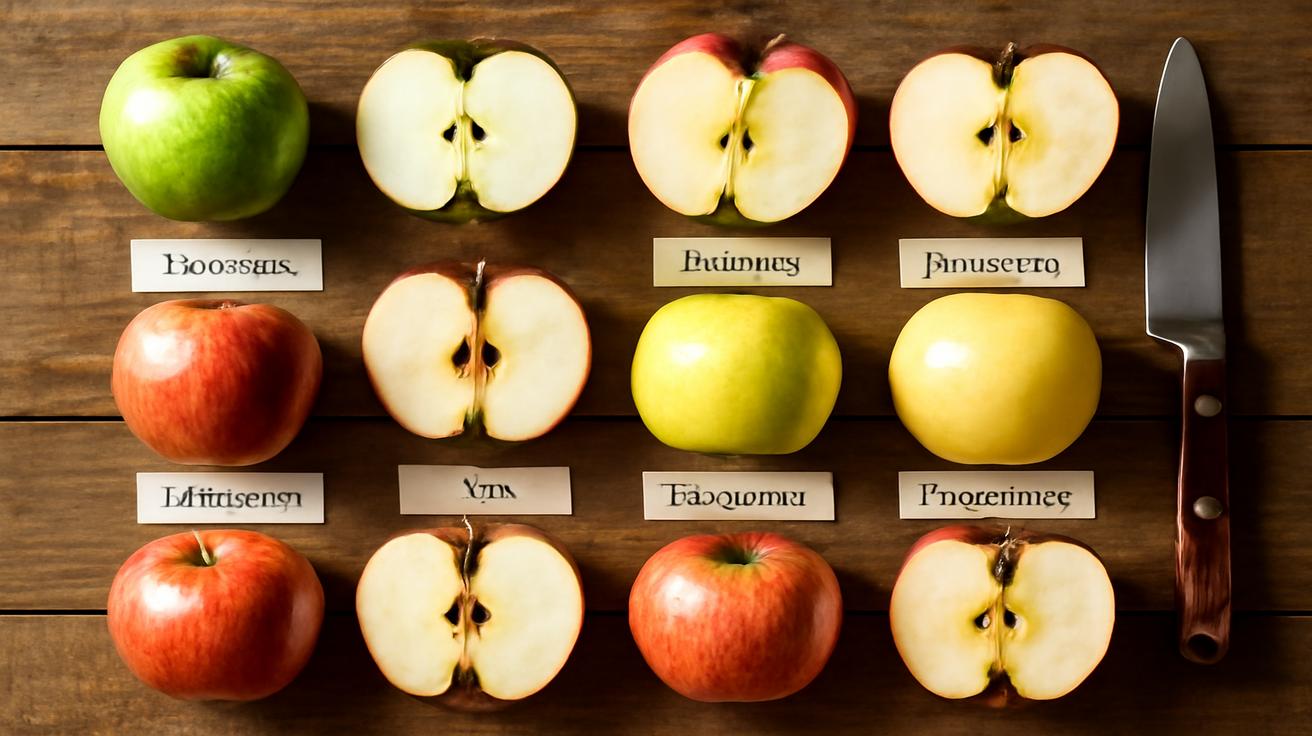
The first time you bite into a still-warm slice of apple pie, you don’t think about pH levels, starch conversion, or water content. You just taste autumn. You taste your grandmother’s kitchen, the squeak of the wooden rolling pin, the flour clouding the air like first snow. Yet behind that perfect forkful is a quiet, invisible choice that makes or breaks the magic: which apple went into the pan. Too tart, and it fights the sugar. Too soft, and it collapses into baby food. Too sweet, and you lose the bright, orchard-fresh spark that makes an apple dessert feel alive. For every dessert, there really is its apple—an ideal match whose texture, sweetness, and aroma were made for that particular bit of comfort on a plate.
The secret language of apples: sweetness, tartness, and texture
Walk into any good market in October and the apple section looks like a paintbox spilled across the produce aisle: crimson, pale yellow, green shot with gold, russeted brownish skins that look old-fashioned in the best way. But you can’t taste a color. To choose the right apple for your dessert, you have to listen to the quieter language of fruit: how it smells, how it snaps, and how quickly it goes from crisp to mush when the heat comes up.
Start with sweetness and tartness. Think of them as the bass and treble in a song. Sweet apples—like Fuji or Gala—sing with honeyed, floral notes. Their sugar content is high, so they’re satisfying to eat out of hand and need less added sugar in a recipe. Tart apples—Granny Smith, for instance—have that bright, sharp edge that wakes up your tongue. Most classic desserts want a duet: some natural sugar, balanced by enough acidity to keep the flavor vivid after baking.
Then there’s texture. Raw, an apple can be crisp and shattering, or tender and almost pear-like. Under heat, these personalities exaggerate. Some varieties hold their shape in the oven, their slices still distinct inside a pie or tart. Others surrender, collapsing into a soft, velvety sauce. Neither is “better”—it’s about the dessert you’re chasing. A rustic pie wants slices you can see. A slow-simmered applesauce or butter wants fruit that melts at the whisper of a spoon.
Finally, fragrance: that faint floral note of Honeycrisp, the almost-spicy aroma of a Russet, the green, leafy scent of Granny Smith. Sugar and acid you can lean on science to explain. Aroma is alchemy; it’s where memory lives. The right apple will not only taste good—it will smell like the season you’re trying to capture, whether that’s a crisp October afternoon or a late-summer evening when you’d swear the air glows just a little golden.
For every dessert, its apple: matching fruit to your sweet idea
Picture your dessert first, like you’re storyboarding a little film. Is it a deep, bubbling pie with thick juice and tender slices? A neat tart with glazed, burnished fans of fruit? A barely-sweet clafoutis you eat for breakfast the next day? Each of these calls for a different apple temperament, and once you start matching them, the whole orchard suddenly feels like a cast of characters instead of a wall of similar fruit.
Pie perfection: apples that hold their ground
Apple pie is where people most often go wrong with varieties. It looks so forgiving: sugar, cinnamon, butter, pastry—how bad could it be? Yet if you pick an apple that turns mushy fast, the result is a soupy, flat-tasting filling, more like applesauce in a crust. The trick is to choose firm, “baking” apples that keep their structure as they soften.
Granny Smith is the old reliable here. Bright green, unapologetically tart, sharply crisp. In a pie, it softens to tender slices that still have a bit of bite. That tartness survives the oven and the sugar, giving each forkful a distinct, lively edge. If you’ve ever had a pie that tasted almost lemony under the cinnamon—that was likely Granny at work.
Braeburn and Jonagold are the charismatic co-stars. Both strike a natural sweet-tart balance, with enough firmness to take the heat. Braeburn leans spiced and aromatic; Jonagold—born from Jonathan and Golden Delicious—brings a friendly, honeyed note while still staying upright in the pan. Use them alone for a gentle, fragrant pie, or mix them with Granny Smith for the kind of layered flavor that makes people go quiet for a second bite.
The best pies rarely rely on a single apple. Mix varieties like a painter mixing colors—two-thirds firm, slightly tart apples like Granny Smith, Braeburn, or Northern Spy, and one-third sweeter, aromatic ones like Jonagold, Honeycrisp, or Pink Lady. Each type softens at its own pace, giving you a filling with pockets of texture, ribbons of juice, and the sense that every slice of pie is slightly different from the last.
Rustic crisps and cobblers: where flavor gets to roam
If pie is all structure and ceremony, apple crisps and cobblers are their relaxed, barefoot cousins. No bottom crust to worry about, no crimped edges—just fruit tumbled into a dish, topped with something buttery that goes golden and crunchy while the apples slump into cozy softness beneath.
Because crisps don’t rely on apples to hold a perfect slice shape, you have more freedom with varieties. Here, you want a mix of textures and a bolder range of flavors. A softening apple like McIntosh or Cortland can be pure gold in a crisp; they break down a bit more, giving that jammy, spoonable middle layer that contrasts beautifully with the crunchy topping. On their own, they might be too soft. Paired with firmer apples like Honeycrisp, Pink Lady, or Braeburn, they create a filling that’s both plush and structured.
Honeycrisp shines in crisps and cobblers. Raw, it’s all snap and juice; baked, it keeps just enough shape while letting its sweet, gently tart flavor bloom. Pink Lady brings a perfumed, almost floral brightness that keeps a pan of baked fruit from tasting flat, especially if you like using brown sugar and spices in your topping.
Think of building a crisp like building a choir. You want sopranos (bright, tart apples), altos (sweet but firm), and maybe even a baritone or two (soft, deeply flavored varieties) to fill out the harmony. The oven does the conducting; your job is just to invite the right voices.
Elegant tarts and galettes: apples on display
Some desserts put apples front and center, no lattice or crumb to hide behind. A French-style apple tart or a free-form galette is essentially a stage where every slice of fruit is on camera. Here, looks matter just as much as flavor and texture.
Firm, fine-grained apples are your allies. Golden Delicious might sound humble, but in a tart it’s a quiet star: it slices cleanly, fans beautifully, softens without disintegrating, and offers a gentle, honeyed sweetness that doesn’t upstage the buttery crust. Pink Lady and Braeburn also work wonderfully, thanks to their balance of tartness, color, and structural integrity. Their rosy or burnished skins, left on in thin slices, can give your tart a subtle watercolor effect once baked.
For a classic tarte Tatin—apples caramelized in butter and sugar, then baked under a crust and inverted—you want apples that won’t vanish into the syrup. Granny Smith is a favorite here again: it holds its shape in long contact with heat and stands up to deep caramel without losing its own identity. Some bakers swear by firm heirloom varieties like Northern Spy or Roxbury Russet, whose denser flesh and complex flavor can turn a simple upside-down tart into something almost haunting.
In these more minimal desserts, sugar is often lower, and spices are subtle or absent. That means the apple’s own character is doing most of the talking. Pick the kind you’d be proud to show off in a portrait: evenly shaped, fragrant, with crisp flesh that resists the knife just a little when you slice it thin.
Soft, silky, and spoonable: sauces, butters, and cakes
Not every apple dessert needs slices. Some prefer whispers: a silky purée, a moist crumb, a sauce that clings to the back of your spoon. For these, you want apples happy to collapse, to dissolve into something smoother and more concentrated than they were on the branch.
Applesauce and apple butter: when “mushy” is a compliment
There’s a quiet, meditative pleasure in making applesauce or apple butter. The way the fruit cubes sink as they soften, the soft plop as the wooden spoon stirs, the perfume that sneaks into every corner of the house. Here, you want apples that don’t fight the transformation.
McIntosh might be too fragile for a pie, but it’s practically born for sauce. It cooks down quickly, turning fluffy, then smooth with a little mashing. Cortland, Empire, and some softer heirlooms like Gravenstein behave similarly: they trade architectural integrity for a luxuriously soft texture that purées like a dream.
Still, softness alone isn’t enough. A one-note sweet apple can leave your sauce tasting flat, no matter how much cinnamon you add. Blend tart and sweet here, too. Toss in a Granny Smith or two among the McIntosh for a lift of acidity. Mix a sweeter, aromatic apple like Fuji or Gala with something sharper to keep the flavor from sliding into bland comfort-food territory.
Apple butter, which cooks much longer until nearly all the water is gone, benefits from deeply flavored apples. Varieties with a touch of tannin or spice—like Russets, Winesap, or heirloom baking apples—bring depth that stands up to hours of slow reduction. The result is intense, almost caramelized, with a complexity that makes it just as at home on a cheese board as on toast.
Cakes, muffins, and other crumb-hugging desserts
When apples go into batter—grated into cakes, folded into muffins, diced into quick breads—the rules shift again. Texture matters, but in a different way: you’re looking for how the apple’s moisture and flavor spread through the crumb.
Firm, juicy apples like Honeycrisp, Pink Lady, or Braeburn are excellent here. Grated, they release juice into the batter, keeping cakes moist without turning them heavy. Diced, they soften to little pockets of tenderness that punctuate each bite. You want an apple that doesn’t vanish completely; otherwise the cake just tastes vaguely “fruity” instead of distinctly apple-scented.
Sweetness matters more in these desserts, too, because the apple is often competing with brown sugar, spices, and sometimes nuts. A blend of one tart apple and one sweeter one in your batter can give you both clarity and comfort. Think Granny Smith with Honeycrisp, or Braeburn with Gala. The oven turns their differences into a conversation instead of a clash.
A quick-reference cheat sheet for dessert apples
Once you’ve wandered the orchard in your mind, it can help to have a simple guide you can scan while standing in front of a grocery bin. Here’s a compact table to keep those personalities straight.
| Apple Variety | Flavor & Texture | Best For |
|---|---|---|
| Granny Smith | Very tart, very firm, holds shape | Pies, tarts, tarte Tatin, mixed crisps |
| Honeycrisp | Sweet-tart, juicy, crisp | Crisps, cobblers, cakes, snacking |
| Braeburn | Balanced, aromatic, firm | Pies, tarts, galettes, muffins |
| Pink Lady (Cripps Pink) | Tart-sweet, floral, crisp | Tarts, crisps, salads, cakes |
| McIntosh | Tart-leaning, tender, softens fast | Applesauce, apple butter, mixed crisps |
| Cortland | Mild, tender, slow to brown | Sauce, salads, mixed pies and crisps |
| Jonagold | Sweet with gentle tartness, juicy | Pies, crisps, tarts, snacking |
| Golden Delicious | Sweet, mellow, fine-grained | Tarts, galettes, cakes, sauces |
| Gala | Very sweet, mild, fairly crisp | Muffins, cakes, raw snacks, mixed crisps |
| Winesap / Russets | Complex, spiced, dense | Apple butter, old-style pies, ciders |
Choosing, storing, and blending: giving your apples their best shot
Even the right variety can disappoint if it’s past its prime or poorly stored. When you’re picking apples for dessert, think like a baker and a forager at once: you’re not just choosing fruit, you’re choosing how it will behave in your oven a day or two from now.
Look for apples that feel heavy for their size; that’s a sign of juiciness. The skin should be taut, without wrinkling or soft spots. A bruise that seems small now can turn into a full patch of mush once heat hits it. Hold an apple up to your nose: a faint, clear aroma is good; if it smells fermented or dull, move on.
At home, store apples cool and slightly humid if you can. The crisper drawer of your fridge works, but keep them away from leafy greens and delicate herbs—apples release ethylene gas that speeds ripening. For baking, a few days in the fridge can actually help firm textures concentrate. Just bring them to room temperature before you peel and slice; too-cold fruit can be harder to work with and release liquid unevenly.
And don’t be afraid to blend. The most memorable desserts often come from using two or three kinds of apples together: a tart one for backbone, a sweet one for generosity, maybe an aromatic or heirloom variety for personality. It’s the difference between a solo and a small ensemble. Each apple has its line to sing; you’re the one holding the conductor’s baton.
FAQs: your apple dessert questions, answered
Can I use any apple for baking if I adjust the sugar?
Adjusting sugar can balance sweetness, but it won’t fix texture. Soft, quick-cooking apples may still collapse into mush in pies or tarts, even if the flavor is fine. For structured desserts, prioritize firm “baking” apples first, and then tweak sugar for taste.
Why do some recipes call for “mixing apple varieties” instead of just one?
Different varieties bring different strengths: some hold shape, some add tartness, others contribute fragrance or juiciness. Mixing two or three apples creates a more complex flavor and texture, much like blending grapes in wine.
My pie filling turned watery. Was it the apples?
Often, yes—very juicy, soft apples can release a lot of liquid. Combine firmer apples with ones that break down, and be sure you’re using enough thickener (like flour, cornstarch, or tapioca). Letting the sliced apples sit with sugar for a few minutes and draining off excess juice can also help.
Are “eating apples” and “baking apples” really different?
Sometimes. Many modern varieties cross over nicely, but some apples that are wonderful raw become bland or mushy when baked. Conversely, certain classic baking apples can taste too sharp or starchy when eaten out of hand. Always consider both fresh flavor and how the apple behaves under heat.
Do I need to peel apples for desserts?
Peeling is mostly about texture and appearance. For pies, sauces, and cakes where you want a smooth bite, peeling is usually best. For rustic crisps, galettes, and some tarts, thin, tender peels can add color and a bit of character—as long as the variety’s skin isn’t too tough.
How long can I store apples before using them in desserts?
Most firm apples keep well in the fridge for several weeks, sometimes longer, if they start out fresh and unbruised. Softer varieties like McIntosh are best used within a week or two. Always check for soft spots or off smells before baking; one bad apple really can spoil the batch.
What’s the easiest “beginner” apple dessert if I’m still learning varieties?
An apple crisp or crumble is wonderfully forgiving. Choose a mix of one tart, firm apple (like Granny Smith or Pink Lady) and one sweeter one (like Honeycrisp, Gala, or Jonagold). Slice, toss with a little sugar and lemon, add a crunchy topping, and let the oven teach you how those apples behave. From there, you’ll start to feel which ones you want to invite into your next pie or tart.