The mango tree in the research station courtyard smelled faintly of resin and ripeness the morning I watched a gastroenterologist slice open its fruit. Sunlight poured through the greenhouse glass, catching in the yellow flesh as she worked. “You wouldn’t believe,” she said, lifting a translucent cube of mango on the edge of a scalpel, “how something this simple can change the way your intestines move.”
When Scientists Started Taking Fruit Seriously
For decades, the story we were told about fruit and digestion was disarmingly simple: fiber keeps things moving, water helps, and that’s that. Eat your apples, sprinkle some bran, carry on. Inside gastroenterology lecture halls, fruit often sat at the edge of the conversation, a colorful afterthought to more “serious” topics like inflammatory bowel disease or colorectal cancer.
But in labs around the world, a quiet shift has been unfolding. Researchers have started to realize that fruits are not just passive bundles of fiber and sugar. They are biochemical rainforests: buzzing with plant hormones, polyphenols, fermentable fibers, organic acids, and tiny molecular messengers that talk directly to our gut lining, our nerves, and even the trillions of microbes that live inside us.
The new consensus isn’t about one miracle berry or some exotic rainforest superfruit. Instead, it’s a far more intriguing idea: certain everyday fruits can influence gut motility—how quickly or slowly things move through your gastrointestinal tract—through biochemical pathways we long underestimated or didn’t understand at all.
That mango cube, it turns out, is less a snack and more a carefully balanced package of compounds that can nudge the gut’s rhythm. And it is not alone.
The Hidden Orchestra Inside Your Gut
To understand why this matters, you first have to imagine your intestines not as a simple tube, but as an orchestra pit. There are smooth muscle cells that contract in waves, like string sections moving in smooth legato. There are networks of nerves weaving through the gut wall—known as the enteric nervous system—that keep time and adjust the tempo. Hormones and signaling molecules float in from the blood, whispering instructions. Bacteria and other microbes send their own chemical notes into the noise.
Gut motility—the movement of food and waste—is what happens when all of that either falls into rhythm or slips into disorder. Too slow, and you feel bloated, heavy, and uncomfortable. Too fast, and food races through in a blur, leaving nutrients unabsorbed and you running to the bathroom. For a long time, scientists explained this mostly in terms of nerves, hormones, and mechanics. But as technology improved and databases of plant compounds grew, something else came into focus: fruit molecules quietly joining the orchestra.
In a cool, humming lab, a dish of human intestinal cells exposed to certain fruit extracts will change how it behaves. Electrical activity in nerve fibers alters; muscle strips contract more or less frequently; gut microbes ferment differently and send new messages up to the brain. The old advice—“an apple a day”—suddenly looks far more biologically intricate than it ever sounded.
The Biochemical Conversation Between Fruit and Gut
The key idea researchers now rally around is that fruit-derived compounds don’t simply “bulk things up.” They trigger conversations. Polyphenols, flavonoids, organic acids, soluble fibers, and even plant hormones, like abscisic acid, interact with receptors on gut cells, alter calcium signaling in smooth muscle, modulate inflammatory pathways, and adjust how our microbiome behaves.
This conversation can shift the pace of gut movement in both directions—speeding things up when you are stuck, or smoothing over excessive contractions when anxiety and irritation have the gut in a storm. It isn’t magic. It’s molecular dialogue.
Fruits That Speed Things Up (And How They Really Do It)
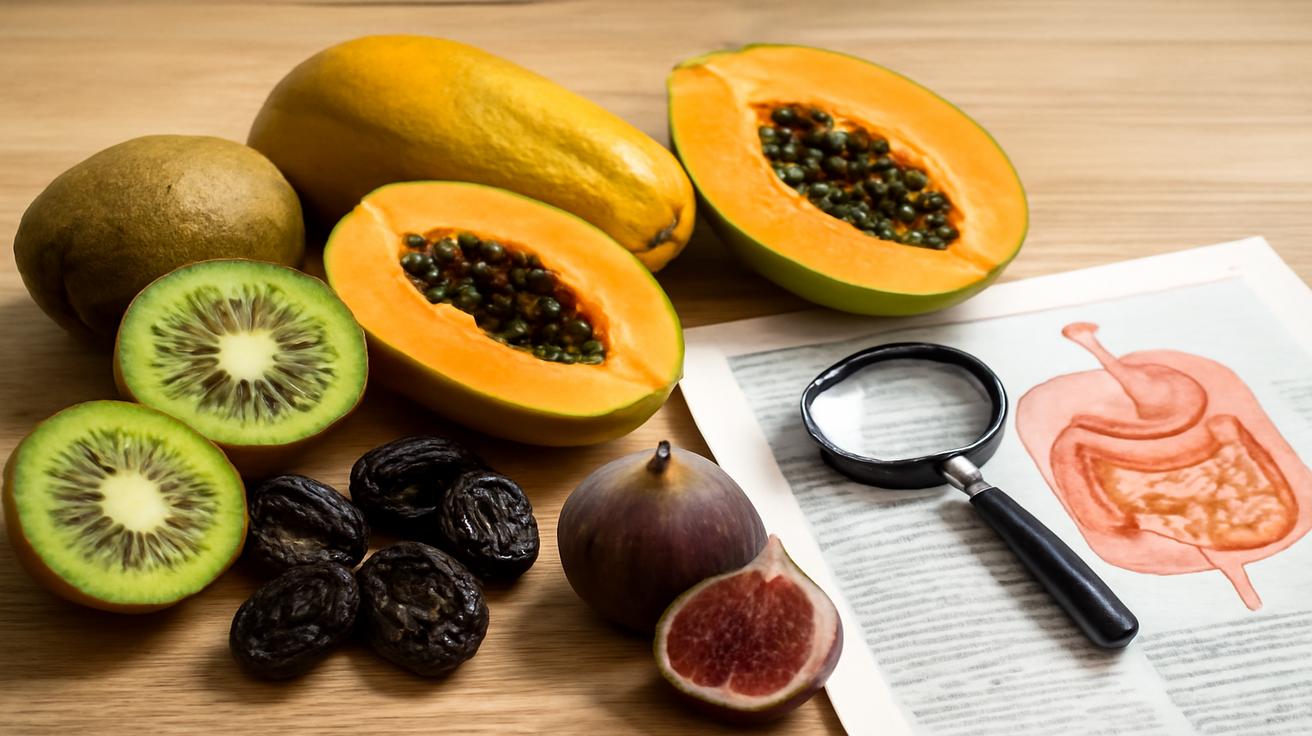
Walk down a grocery aisle and you’ll find old folklore hiding in plain sight: prunes for constipation, kiwi for regularity, papaya for “easy digestion.” The difference now is that gastrointestinal researchers can actually trace these anecdotes down to specific pathways.
Prunes, for example, aren’t just fiber bombs. They are rich in sorbitol, a sugar alcohol that pulls water into the bowel, softening stool and stimulating motility. But prunes also contain chlorogenic acids and other polyphenols that influence gut microbes and the mucus layer, nudging the system toward more efficient propulsion. In clinical trials, prunes often outperform common fiber supplements for people with chronic constipation.
Kiwi, the unassuming green oval, is becoming a quiet star in gastroenterology conferences. It brings together soluble fiber, actinidin (a proteolytic enzyme), and a suite of vitamin C and polyphenols. Together, they appear to soften stool, support beneficial bacteria, and gently enhance colonic transit. In small but growing studies, two kiwis a day have improved bowel habits in people who struggle with slow transit constipation, often with fewer side effects than traditional laxatives.
Papaya contributes its own enzyme, papain, and a distinctive blend of fibers and bioactive compounds that may calm a cramped, sluggish upper gut. Some patients with functional dyspepsia and mild constipation describe it as a “soft wake-up call” to their digestive system. The science is still emerging, but the pattern is hard to ignore.
To capture a snapshot of what scientists discuss, imagine them sketching tables on whiteboards, mapping which fruits seem to do what:
| Fruit | Key Compounds | Main Effect on Motility | Typical Use |
|---|---|---|---|
| Prunes | Sorbitol, fiber, polyphenols | Increase water in stool, stimulate colonic transit | Chronic constipation support |
| Kiwi | Soluble fiber, actinidin, vitamin C | Gentle acceleration of transit, stool softening | Functional constipation, daily regularity |
| Papaya | Papain, fiber, carotenoids | May improve upper gut motility, ease bloating | Mild dyspepsia, post-meal heaviness |
| Citrus (orange, grapefruit) | Flavanones, pectin, organic acids | Modulate motility, support microbial diversity | General gut tone and microbiome support |
| Banana (ripe) | Resistant starch (less in very ripe), potassium | Can gently slow or normalize motility | Loose stools, post-diarrhea recovery |
Seen through this lens, the fruit bowl on your kitchen counter is not a random pile; it’s a shelf of tools. Not all tools suit every job. Not every gut will respond the same way. But the old idea that “fiber is fiber” is simply dissolving.
Microbial Middlemen: How Fruit Talks Through Your Microbiome
In many of the newer studies, the main actors in this story aren’t human cells at all; they are microbes. When you eat fruits rich in polyphenols and complex fibers—think berries, pomegranate, apples with the skin on—much of that cargo arrives largely undigested in your colon. There, bacteria and other microbes get to work, breaking these molecules down into smaller metabolites.
Some of those metabolites, like short-chain fatty acids (acetate, propionate, butyrate), have surprising powers. They can bind to receptors on the cells lining your gut, influence inflammation, and directly affect how muscles contract. They can change the secretion of gut hormones like peptide YY and GLP-1, which in turn influence motility and appetite.
One gastroenterologist described it to me as “fruit re-composed.” The banana you ate for breakfast is not just potassium and sugar anymore; by the time your microbes finish with it, it’s also a suite of fermentation products that alter the mood and rhythm of your intestines.
Research teams tracking these pathways in mice and humans are finding that fruit-heavy diets, especially with a diversity of colors and types, promote microbial communities associated with more stable, predictable motility. People describe this as “my digestion feels more consistent,” but underneath that sensation lies complex microbial chemistry.
The Surprising Role of Plant Hormones and Nerve Signaling
One of the more unexpected turns in this story has been the re-discovery of plant hormones as meaningful players in human physiology. Fruits carry their own regulatory systems—molecules that tell a plant when to ripen, when to respond to drought, when to close its stomata. Some of these compounds, it turns out, survive into your gut and can interact with your cells.
Abscisic acid (ABA), for example, is a plant stress hormone abundant in many fruits. Early work suggests that in humans, ABA may affect glucose regulation and inflammatory signaling. While its direct role in motility is still being untangled, it appears to cross-talk with some of the very same pathways—ion channels, second messengers, receptor systems—that control how gut muscle contracts.
Meanwhile, other fruit compounds seem to influence the enteric nervous system more directly. Some polyphenols modulate the availability of nitric oxide, a key relaxant in smooth muscle. Others appear to tweak serotonin signaling in the gut, altering the reflex arcs that decide when a section of intestine should squeeze or relax.
In a darkened lab room, a strip of intestinal muscle bathed in a solution containing a concentrated fruit extract might subtly change its pulsing pattern. To a researcher reading the tracing on the screen, those tiny shifts are messages—proof that the fruit is participating in the conversation, not just passing through.
Slowing Down the Storm: Fruits That Calm an Overactive Gut
While constipation and sluggishness get much of the attention, many people live at the other edge of the spectrum: bowels that move too quickly, cramping under stress, responding to every anxiety spike like an alarm bell. For them, fruit has often been framed as the enemy—too much fiber, too much fermentation, too many triggers.
Here the new research offers a more nuanced view. Some fruits, in some forms, may help dial down excess motility. Ripe bananas, peeled apples, and certain low-FODMAP fruits can provide soluble fibers that form a gentle gel inside the gut, adding form to stools and smoothing out spasms. Pectin from apples and citrus may help normalize transit—neither dramatically fast nor painfully slow, but a more even middle path.
Other compounds, like the flavonoids in berries and citrus, can calm low-grade inflammation in the gut wall, which in turn reduces nerve hypersensitivity and the tendency for overactive contractions. This is not a cure, but for many people with irritable bowel patterns, it’s a subtle yet tangible relief: fewer panicked dashes to the restroom, less feeling like their intestines are running the show.
Still, personalized caution matters. Some fruits—especially those high in fermentable sugars like certain stone fruits—can worsen bloating and cramping for people with sensitive guts. The new consensus isn’t “fruit is always good,” but rather, “fruit is powerful; use it with awareness.”
From Lab Bench to Breakfast Bowl
Standing in that greenhouse, watching the mango sliced open, I asked the researcher what all of this meant for a person just trying to get through their day without a war in their abdomen.
She shrugged, smiled, and said, “It means your breakfast can be smarter than you think—but it’s still breakfast, not a prescription pad.”
The practical applications are less about chase-the-next-superfruit and more about patterns:
- If your gut tends to be sluggish, a daily ritual of prunes or kiwi might offer gentle, cumulative support instead of sporadic, harsh laxatives.
- If your digestion is wildly unpredictable, rotating a mix of fiber-rich, polyphenol-heavy fruits—berries, apples, citrus—can support microbial diversity and more stable motility over time.
- If your bowels move too fast, choosing lower-FODMAP fruits in modest portions, focusing on soothing pectin-rich varieties, may help temper the rush.
Researchers are still working out dose, timing, and individual differences. Genetics, baseline microbiome, stress levels, and other diet choices all shape how any one fruit will land in your system. Two people can eat the same handful of prunes and walk away with very different stories.
Yet the broad movement in the field is unmistakable. The new gastroenterology textbooks will not relegate fruit to a single fiber-focused paragraph. They will describe it as a living pharmacy of motility modulators, microbial sculptors, and subtle nerve influencers.
In the end, the story feels oddly comforting. The tools to coax our gut’s rhythm are not locked away in laboratories. They hang in markets, grow in orchards, and sit in bowls on kitchen tables: mangoes breathing their perfume into warm air, papayas softening on the counter, kiwis waiting in their fuzzy armor. Behind each one is a complex, long-underestimated conversation with the orchestra inside you.
Frequently Asked Questions
Can fruit really replace laxatives for constipation?
For some people with mild to moderate constipation, regular intake of fruits like prunes or kiwi can reduce or even replace the need for over-the-counter laxatives. However, severe or persistent constipation still requires medical evaluation, and fruit should be seen as a supportive strategy, not a sole treatment.
Which fruits are best if my gut is very sensitive or I have IBS?
Many people with IBS do better with lower-FODMAP fruits in small portions, such as firm bananas, oranges, grapes, and berries. Individual tolerance varies widely, so it’s wise to introduce one fruit at a time and track your response.
Do I need to eat fruit at a specific time of day to help motility?
Timing is less critical than consistency. Eating fruit daily, especially alongside other whole plant foods, seems more important than whether it appears at breakfast or dinner. Some people find that having motility-supporting fruits in the morning helps set a more regular pattern for the day.
Is fruit juice as effective as whole fruit for gut motility?
Generally, no. Whole fruits contain fiber and more intact plant structures that slow absorption and support the microbiome. Juice removes most fiber and can deliver concentrated sugars that may aggravate symptoms in sensitive individuals.
Can eating more fruit worsen diarrhea?
It can, depending on the type and amount of fruit. Very high intakes of sorbitol-rich fruits (like prunes) or high-FODMAP fruits can speed motility and draw water into the bowel. People prone to loose stools usually do better with moderate portions of lower-FODMAP, pectin-rich fruits and avoiding excess fruit juice.
How long does it take to notice changes in motility after adjusting fruit intake?
Some effects, like sorbitol-driven softening from prunes, can appear within a day or two. Microbiome-related changes tend to be slower, unfolding over several days to a few weeks of consistent fruit consumption.
Do I need exotic or expensive fruits to get these benefits?
No. Everyday fruits—apples, oranges, bananas, prunes, papaya, kiwi, berries—already offer a wide range of motility-influencing compounds. Diversity and consistency matter more than chasing rare or costly varieties.