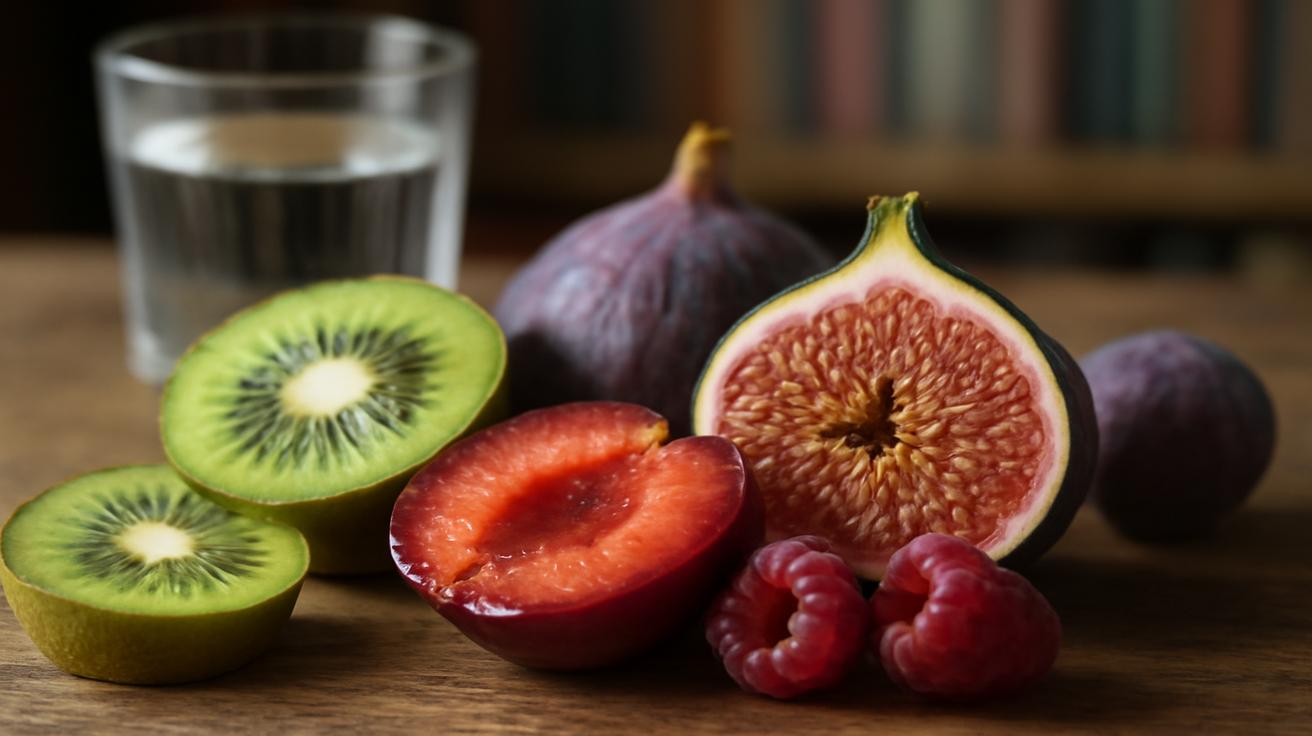
The first thing you notice is the sound. A quiet, flickering chorus of peristaltic waves, magnified on the screen like distant thunder. In the dim light of the research lab, a loop of intestine—no larger than a curled pink ribbon—ripples as a clear liquid drips through a tube. To an outsider it looks like a scene from a science fiction film. To Dr. Amrita Venkataraman, it’s a familiar drama: the gut deciding when to squeeze, when to pause, when to move things along. Only today, the “script” is different. Today, the main character is fruit.
The Secret Lives of Everyday Fruits
In the world of gastrointestinal research, a quiet shift is underway. For decades, gut motility—the speed and rhythm with which food moves through our intestines—was largely framed around fiber content, hydration, and a few well-known laxative compounds. Eat roughage, drink water, walk more: that was the gospel.
Now, in labs from Tokyo to Toronto, researchers are leaning closer to petri dishes, tissue baths, and fermentation tanks and reaching a startling, if oddly intuitive, conclusion: specific fruits can tweak the tempo of your digestive system through biochemical pathways we’ve barely appreciated.
Think of your gut like a long, muscular river. For years we focused on the rocks and twigs that float along that river—the fiber, the bulk, the physical stuff. But what if the real conductors of flow are the invisible chemical “whispers” carried in the current? Tiny molecules that speak directly to nerve endings, gut hormones, and microbial communities. Underestimated, often overshadowed by macronutrients, these fruit-derived compounds may be quietly shaping the way food travels through you.
It isn’t just about “this fruit has fiber, that one has vitamin C.” It’s about how a piece of kiwi, the anthocyanins in a handful of berries, or the bromelain in a slice of pineapple can reach into the gut’s neural circuitry and nudge it into a slightly different rhythm—faster, slower, smoother, or more coordinated.
When Fruit Talks to the Second Brain
Gastroenterologists sometimes call the gut the “second brain.” Laced through your digestive tract is an intricate network of neurons—the enteric nervous system—that senses stretching, chemical signals, and microbial activity, then orchestrates the complex waves of contractions that push food along.
For a long time, the conversation was thought to be fairly simple: stretch receptors fire when a meal arrives, hormones like motilin and serotonin pulse into action, and peristalsis follows. But as the tools for measuring tiny biochemical changes improved, a different picture began to emerge. Fruits, it turns out, are chatty.
Certain plant compounds, known broadly as phytochemicals, can act like subtle modulators of this neural symphony. They don’t just move through passively; they bind to receptors, alter neurotransmitter release, and sometimes change the behavior of gut microbes that, in turn, send their own signals back into the system.
Serotonin is a perfect example. Around 90–95% of the body’s serotonin is produced not in the brain but in the gut, by specialized cells that respond to mechanical and chemical stimuli. Some fruits seem to indirectly influence how much serotonin is released or how sensitive receptors are to it. A gentle increase in gut serotonin can speed motility; a drop can slow it, changing everything from transit time to stool consistency.
In those quiet labs, researchers are now watching how fruit extracts nudge that serotonin loop, or alter the release of other messengers: peptide YY, GLP-1, cholecystokinin—all part of a hormonal conversation that decides whether your gut moves like a lazy river or a rushing stream.
The Kiwi Conundrum and Other Fruit Mysteries
One of the clearest real-world examples of this new thinking is the humble green kiwi. For years, kiwi fruit has had a small but loyal following among people with sluggish digestion. Word-of-mouth stories—a kiwi at breakfast keeps things moving—started years before the science caught up.
When researchers finally put kiwi to the test, the results were striking. People with chronic constipation who ate a couple of kiwis daily often experienced improved stool frequency and softer, easier-to-pass stools. The first explanation was predictable: kiwi is a good source of fiber. Mystery solved, right?
Not quite. When scientists compared kiwi to other fiber-matched foods, something didn’t add up. Kiwi seemed to outperform what you’d expect from fiber alone. So they went deeper. The fruit is rich in actinidin, a proteolytic enzyme, along with a bouquet of polyphenols and unique sugars that interact with the microbiome. In lab dishes, actinidin appears to help break down certain food proteins more efficiently, potentially altering the physical “texture” of chyme—the semi-fluid mass that travels through your intestines—and thus influencing how the gut muscles respond.
At the same time, kiwi’s polyphenols are being studied for their ability to alter which microbes flourish in the colon. Some of those microbes ferment leftover carbohydrates into short-chain fatty acids like butyrate, propionate, and acetate. These compounds can, in turn, act on receptors along the gut wall, modifying motility—sometimes accelerating, sometimes fine-tuning the coordination of contractions.
It’s a multilayered effect: enzymes adjusting the breakdown of food, polyphenols tuning the microbiome, fermentation byproducts signaling to gut nerves. The result, for many people, is a gut that seems to “remember” how to move again.
And kiwi is not alone. Pineapple brings bromelain to the table, another proteolytic enzyme that may impact how quickly the stomach empties and how smoothly the small intestine handles proteins. Papaya’s papain works in a similar way, and traditional medicine systems have long used ripe papaya as a gentle aid for digestion and motility.
Berries, Bananas, and the Microbial Orchestra
Then there are fruits whose power lies in their color. Deeply pigmented berries—blueberries, blackberries, raspberries—are loaded with anthocyanins and other polyphenols. These compounds largely escape digestion in the upper gut and arrive in the colon as a kind of molecular feast for certain bacteria.
When microbes digest these polyphenols, they produce metabolites that can dampen low-grade inflammation along the gut lining and fine-tune immune activity. A calmer, less inflamed gut wall can exhibit more regular motility patterns: neither spasmodic nor sluggish, but rhythmic and predictable.
Bananas tell yet another story. Greenish, less-ripe bananas are rich in resistant starch—a form of carbohydrate that resists digestion until it meets microbes in the large intestine. There, it’s fermented into those same short-chain fatty acids that interact with motility-controlling receptors and nerve endings. For some people, this means more productive, well-formed bowel movements. For others, particularly in large amounts, it can tip into gas and urgency.
Riper bananas, with their softer texture and sweeter flavor, contain less resistant starch and more simple sugars. They can be easier to digest for sensitive stomachs, yet still deliver soluble fiber that forms a gel-like mass in the intestines, smoothing the passage of stool. Different ripeness levels, different microbial responses, different motility outcomes—all from the same fruit.
Underestimated Pathways: It’s Not Just Fiber Anymore
Ask a gastroenterologist thirty years ago how fruit influences motility and you’d likely hear about two things: fiber and sorbitol. The rough stuff that bulks and softens stool, and the natural sugar alcohol that can have a mild laxative effect in susceptible people. Important, yes—but incomplete.
The new consensus forming in research circles is that fruit affects gut motility through a web of underestimated biochemical pathways. These are subtle, often overlapping routes that go far beyond the old models.
Here are some of the key pathways now drawing attention, simplified but faithful to what’s emerging in the literature:
| Fruit Component | Biochemical Pathway | Possible Effect on Motility |
|---|---|---|
| Polyphenols (berries, grapes, cherries) | Modulate gut microbes, reduce local inflammation, influence signaling molecules | Can normalize rhythm, reducing spasms or sluggishness |
| Enzymes (kiwi actinidin, pineapple bromelain, papaya papain) | Alter protein breakdown, change chyme texture, affect hormone release | May support smoother transit and less “traffic jam” in the small intestine |
| Resistant starch & prebiotic fibers (bananas, apples, pears) | Fermented into short-chain fatty acids that act on gut receptors | Can increase regularity and improve stool form |
| Natural sugars & sugar alcohols (prunes, peaches, some berries) | Create mild osmotic effect, draw water into the gut lumen | May soften stool and speed transit in some people |
| Organic acids & aroma compounds (citrus, pineapple, mango) | Interact with chemosensors, may influence motility-related hormones | Potentially fine-tune the start and strength of contractions |
None of these pathways acts in isolation. A single bowl of mixed fruit delivers a complex cocktail of molecules that collide with the living ecosystem of your gut in ways we’re only beginning to map. It’s a bit like tossing a variety of instruments into an orchestra halfway through a performance—not all of them will be in tune, but some will anchor the rhythm in surprising ways.
Prunes, Figs, and the Old Wisdom Revisited
Some of the new science is simply catching up to old kitchen wisdom. Prunes, for instance, have a long reputation as a go-to remedy for constipation. For years, the explanation rested mostly on sorbitol and fiber. But under the microscope, prunes reveal a more intricate story: they’re also dense with phenolic compounds that seem to interact with both microbes and gut lining cells.
These compounds may modify how water is handled in the colon and how sensitive nerve endings are to distention. The result isn’t just “more water, more bulk.” It’s a shift in how the colon decides when “enough is enough” and triggers that urge to go.
Figs, too, make frequent cameos in traditional remedies. Their tiny seeds and delicate flesh pack both soluble and insoluble fibers, but also unique phytochemicals that could be shaping the microbial neighborhoods of the colon more than we realized. That, in turn, loops back to motility.
In many cultures, elders have long paired certain fruits with heavy meals, early-morning rituals, or times of illness. Modern researchers are now dissecting those practices, trying to identify the molecular signatures behind the customs. Sometimes, the old ways were not just about taste or season—they were about helping the gut find its rhythm again.
Listening to Your Own Gut’s Story
So where does this leave the person standing in front of a fruit aisle, eyes moving from mangoes to apples to pomegranates, wondering what any of this means for their own body? Here, the research is converging on an idea that’s both empowering and humbling: there is no single “magic fruit” for everyone. There are patterns, tendencies, promising candidates—but your gut writes its own story in collaboration with your microbes, your genes, your habits, your stress levels.
That said, a few practical themes are emerging from gastrointestinal clinics and nutrition studies:
- Consistency beats intensity. A couple of kiwis or a small bowl of mixed berries most days may be more effective over time than a once-a-week fruit “binge.” Motility responds to routine.
- Variety matters. Different fruits feed different microbial “guilds” and tap different biochemical pathways. Rotating kiwi, berries, bananas, citrus, and stone fruits can diversify your gut’s signaling environment.
- Ripeness and preparation count. A lightly green banana does not behave like a speckled sweet one. Blending fruit into a smoothie changes how fast it leaves the stomach compared with eating it whole.
- Personal tolerance is key. For someone with a hypersensitive gut or IBS, a large serving of high-FODMAP fruits like certain apples, pears, or watermelon can trigger bloating or urgency, even as smaller amounts might gently encourage motility.
In clinic rooms, gastroenterologists are beginning to weave these threads into their conversations. Instead of the old binary of “eat more fiber” versus “take a laxative,” they’re suggesting targeted fruit experiments: a trial of daily kiwi for a few weeks, or a small serving of prunes in the evening, or a regular morning routine of mixed berries alongside a protein-rich breakfast.
The idea is not to prescribe fruit as medicine in the rigid pharmaceutical sense, but to respect that certain fruits, through underappreciated biochemical routes, can be allies in retraining a sluggish or overactive gut.
The Future: Mapping the Fruit–Gut Conversation
The most intriguing part of this story may be what hasn’t happened yet. Wearable devices and home test kits are edging closer to being able to track motility patterns, microbial shifts, and even some metabolites in near real-time. Imagine a future where a person with chronic constipation tries a “kiwi protocol” and can see, on a simple app, how their gut transit time begins to change over days and weeks.
In research labs, multi-omics approaches—simultaneously analyzing genes, microbial compositions, metabolites, and hormonal changes—are being turned on questions that, not long ago, would have seemed trivial: What exactly happens in the eight hours after a person eats a bowl of cherries? How does a three-week regimen of daily papaya alter not just bowel frequency, but the shape of electrical activity along the colon? Which microbial strains flourish when berry polyphenols become a regular presence, and how do they talk back to the host’s nervous system?
At the crossroads of this research sits a growing consensus: fruits are not passive passengers in the digestive journey. They are active participants, capable of nudging the gut’s second brain, shaping the microbial orchestra, and rewriting the tempo of motility in ways that are far more specific, and more nuanced, than a generic “eat your fiber” slogan ever allowed.
As you bite into a slice of mango or spoon seeds from a ripe kiwi, you’re doing more than satisfying a sweet craving. You’re sending a complex message—polyphenols, fibers, acids, enzymes—down a muscular river that has its own memories, habits, and anxieties. Your gut will interpret that message through layers of biology we’re only starting to decode.
And somewhere, in a dim lab filled with the soft gurgle of tissue baths and the glow of monitors, a researcher watches a tiny loop of intestine ripple in response to a fruit extract and realizes: this story is just beginning.
Frequently Asked Questions
Can specific fruits really change how often I go to the bathroom?
For many people, yes. Fruits like kiwi, prunes, figs, and some berries have been shown in studies to influence stool frequency and consistency. They do this not only through fiber, but also via enzymes, polyphenols, and their effects on the microbiome and gut hormones. The impact varies from person to person, so it often takes some experimentation.
Is fiber still important if these other pathways matter so much?
Absolutely. Fiber is still a cornerstone of healthy motility—it adds bulk, holds water, and provides food for beneficial microbes. The new insight is that fiber is only part of the story. Many fruits bring additional compounds that fine-tune the way your gut moves, beyond what fiber alone can explain.
Which fruit is “best” for constipation?
Research frequently highlights kiwi and prunes as especially helpful for constipation. However, “best” depends on your individual response and tolerance. Some people do well with a daily serving of kiwi; others prefer prunes, figs, or a mixed-fruit approach. It’s wise to start with small portions, increase gradually, and observe how your body responds over a few weeks.
Can fruits also help if my problem is loose stools or diarrhea?
In some cases, yes. Fruits rich in soluble fiber, like bananas (especially ripe ones), apples, or pears in moderate amounts, can help form more cohesive stools. Polyphenol-rich fruits that reduce gut inflammation may also support more stable motility. If diarrhea is frequent or severe, though, medical evaluation is essential before making major dietary changes.
How long does it take to notice changes in gut motility after adjusting fruit intake?
Some people notice differences within a few days—softer stools, easier passage, or more regular timing. For others, particularly with long-standing issues, it may take several weeks of consistent fruit intake to see meaningful change. Because these effects often involve shifts in microbiome composition and signaling pathways, patience and consistency are important.