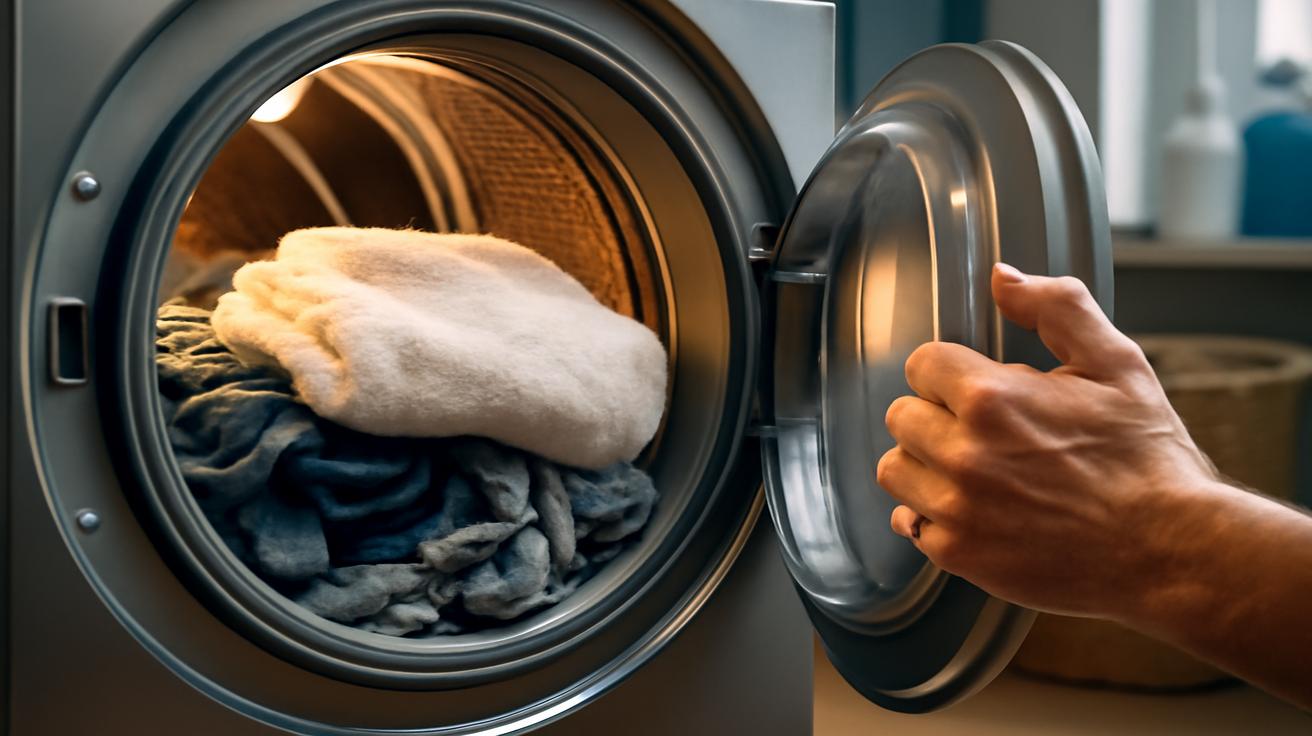
The first time I heard that you could dry your laundry faster by throwing a single dry towel into the drum, I laughed out loud. It sounded like one of those half-remembered hacks passed around family gatherings, right next to “put bread in the cookie jar to keep them soft” and “a spoon in the fridge stops onions from making you cry.” But one rainy Tuesday afternoon, with clothesline dreams drowned by a steady downpour and my laundry basket overflowing with damp towels, I decided to test it. I pulled one large, fluffy dry towel from the shelf—still warm from an earlier load—and dropped it on top of the wet clothes. The dryer hummed to life. What happened next turned that old-sounding myth into one of the most quietly satisfying, money-saving rituals of my weekly routine.
The Moment You Notice: A Dryer That Suddenly Feels Smarter
The first thing you notice is the sound. If you’re the kind of person who can tell what’s cooking by the way a kitchen smells, you might also be the kind of person who senses when the dryer sounds “different.” The usual heavy, thudding rotation of water-logged jeans and towels gives way to a lighter, swishier rhythm. That dry towel doesn’t just tumble; it glides, lifting and separating the clothes as if it’s been waiting all its life for this job.
The drum windows fogs a little, then clears faster than usual. When you crack the door halfway through—because of course you’ll peek the first few times—you feel that puff of warm, slightly humid air rush out, but it’s not the soupy, clinging steam you’re used to. The fabrics inside already look looser, less matted together. That dry towel, now halfway to damp, is doing an invisible, almost heroic thing: it’s absorbing moisture, sharing the workload with the machine.
And in that small domestic moment, with socks pinwheeling past the glass and the smell of clean cotton swirling through the hallway, you start to realize: this isn’t a gimmick. It’s physics, quietly at work in your laundry room.
Why One Dry Towel Changes Everything
It helps to imagine your dryer as less of a magical box and more of a slightly impatient weather system. Its job is to turn your wet clothes into something like a warm, indoor breeze version of a sunny clothesline day. It pushes hot air through dense, soggy fabric, coaxing water out of every fiber, then shoves that moisture out through a vent. But when your clothes are jammed in tightly, they behave like a single, heavy, reluctant mass. Air flow struggles. Heat builds, but evaporation crawls.
Now bring in the dry towel. It’s the enthusiastic guest at the party who gets everyone moving. At the start of the cycle, this towel is thirsty—bone-dry, ready to soak up moisture. As the drum spins, fabric rubs against fabric. The towel brushes against jeans, T-shirts, pillowcases, and starts drinking in some of their water. Not all of it, of course, but enough to take the edge off their soggiest state.
At the same time, the towel acts like a natural separator. Clothes that would normally clump together—bedsheets wrapping around T-shirts, towels hugging socks—get repeatedly loosened and lifted. More surface area is exposed to warm air, and heat can do its job more efficiently. Your dryer isn’t working harder; it’s just working smarter because you’ve given it a partner in crime.
Think about it like wringing out a sponge vs. a rock. The dry towel turns your load into a mix of “rocks” and “sponges,” where the new “sponges” (the towel) absorb, move, and redistribute moisture through the cycle. As weird as it sounds, a single dry towel can become a moving, soft, silent accelerator for the whole drying process.
How Much Time You Actually Save
Of course, the romantic version of this trick is that your clothes fly out of the dryer in half the time, smelling like a pine forest and costing pennies. Reality is more modest—but still impressive. Depending on your dryer, load size, fabric type, and how dry that towel really is when it goes in, you might see:
- A reduction in drying time of about 10–30% for medium loads
- Noticeably faster drying of bulky items like towels and hoodies
- Fewer times you have to restart the dryer “just a little longer”
What feels subtle in minutes saved becomes serious when you step back and look at it over a month, or a year. Those extra 10–15 minutes shaved off numerous cycles begin to stack, silently trimming your energy bill and the wear and tear on your clothes—and your dryer.
The Hidden Energy Story Spinning in the Drum
Every time you press that “Start” button, your dryer draws more electricity than almost anything else in your home. It’s a quiet energy hog, humming away in a corner, often out of sight and out of mind. If you pay the utility bill, you’re essentially renting hot air by the minute. Most of us have learned to accept that. Laundry must be done; clothes must dry; the meter must spin.
But when one small tweak can dial back that spin without asking you to hang-dry every sock on a string, it’s worth paying attention. The dry towel trick doesn’t change what your dryer does—only how efficiently it does it. If a load that used to take 60 minutes now finishes in 45 or 50, your heating element runs for a shorter time. Your motor doesn’t turn as long. Your vent doesn’t need to push out as much hot, moist air into the world.
And there’s another quiet benefit: less heat exposure for your clothes. Long, hot dryer cycles can stiffen fibers, fade colors, and exact a slow toll on everything from your favorite T-shirt to your bed linens. Shorter cycles don’t just save energy; they also save texture, shape, and even color. You’re not only cutting your electricity use; you’re adding life to the things you wear and sleep in.
A Simple Comparison in Real-Life Numbers
Every home is different, but imagine you do four loads of laundry a week—nothing unusual. If each load shrinks by even 10 minutes of drying time, that’s 40 minutes per week, around 35 hours a year where your dryer doesn’t have to run. Those are hours your electricity meter stays a little quieter, hours of heat and friction your clothes never endure.
It’s not about perfection. It’s about gentle shifts that build into real differences. A single towel, reused and reintroduced into each wet load, turns something mindless—tossing clothes in, pressing a button—into a small act of efficiency.
How to Do It Right (and When to Skip It)
Like most good household tricks, this one works best when you treat it with a little care instead of as a one-size-fits-all magic spell. The way you choose the towel, the size of the load, and the fabrics you’re drying all change how much benefit you’ll actually see.
The Basics of Using a Dry Towel in the Dryer
- Pick the right towel: Choose a clean, absorbent, medium or large cotton bath towel. Avoid microfiber if possible—it dries fast, but the dense weave isn’t as helpful in breaking up the load.
- Start the towel completely dry: This is the engine of the trick. Any lingering dampness shrinks the effect.
- Use with small to medium loads: If your dryer is stuffed full, even the most enthusiastic towel can’t move things around much. Aim for a drum that’s about half to two-thirds full.
- Keep an eye on bulky fabrics: With towels, hoodies, or jeans, the effect can be especially noticeable, but you might also want to shake items out midway through a longer cycle for even better results.
For mixed loads—shirts, underwear, light fabrics—the towel still helps, but the difference might feel less dramatic than with heavy textiles. Think of it as insurance: a small helper smoothing out the process rather than a miracle worker.
When the Towel Trick Isn’t Your Best Move
There are a few times when you might want to skip tossing in that dry towel:
- Very delicate fabrics: Silks, lace, or ultra-light synthetics that you’d normally baby? They may not need the extra tumbling and friction a towel brings along.
- Tiny loads: If you’re drying just a couple of shirts or one pair of pants, a towel might simply crowd the drum rather than help.
- Already borderline-full dryers: If your load is pressing against the door when you close it, you’re better off removing a few items than cramming in a towel.
Used in the right contexts, though, the dry towel is a surprisingly elegant companion: simple, cheap, and endlessly reusable.
The Feel of Laundry Day, Lightened
There’s something sensual—almost old-world—about laundry when you pause and let yourself experience it. The weight of a wet towel lifted from the washer. The soft thud as it falls into the dryer. The warm, rising scent of detergent as the drum heats. We rush through these things so often, barely present in the small rituals that quietly shape our days.
Bringing a dry towel into the mix doesn’t just alter time and energy use; it changes the feel of laundry day itself. You begin to notice the subtle shift in weight when you empty the dryer: clothes that used to feel slightly overcooked or still worryingly cool now emerge just right—warm, pliable, ready to fold. You might catch yourself opening the door midway, pinching the towel between your fingers, feeling how it’s gone from crisp dryness to a comforting, heavy warmth. That towel, too, has done work. It has taken on some of the dampness so everything else doesn’t have to.
Over weeks, you might notice another gentle shift: fewer instances of pulling out sheets rolled into a damp sausage, fewer stubborn cold pockets in the corners of thick hoodies, fewer last-minute re-spins. Laundry day begins to feel less like a chore that steals your time and more like a process you understand, even influence. You’re not at the mercy of the machine. You’re in a small partnership with it.
A Quick Look at the Trade-Offs
For anyone who likes their hacks laid out clearly, here’s how the towel trick balances out in the real world:
| Aspect | With Dry Towel | Without Dry Towel |
|---|---|---|
| Average Drying Time | Often 10–30% shorter | Standard programmed cycle length |
| Energy Use per Load | Reduced due to shorter cycle | Higher, especially on long cycles |
| Fabric Wear Over Time | Slightly less (shorter heat exposure) | Higher risk of fading and fiber fatigue |
| Load Evenness | Improved, fewer damp spots and clumps | More likely to have twisted items or damp corners |
| Effort Required | One extra towel to add and dry | No extra thought, but more re-runs |
Small Tweaks, Big Quiet Wins
What makes the dry towel trick so satisfying isn’t just the science. It’s the feeling that, in a world of giant solutions and expensive upgrades, something so small can still matter. You don’t need a high-end, ultra-efficient dryer. You don’t need to retrofit your home or memorize a dozen complicated settings. You just need one clean towel, dry and willing.
Over time, this little ritual can become as much a part of your laundry rhythm as sorting colors or snapping pillowcases straight before folding. It’s a domestic whisper of resistance to wasted time and energy, a reminder that your home can be a place of quiet ingenuity rather than just consumption.
Next time you stand at the threshold of laundry day—washer humming, basket full, weather outside uncooperative—pause for a moment. Reach for that one dry towel from the shelf. Toss it in with your wet clothes. Close the door, press “Start,” and listen closely as the drum turns. Inside, beyond what you can see, a simple, soft helper has begun to change the way your laundry dries, the way your home uses power, and the way a small corner of your daily life feels just a bit more under your control.
Frequently Asked Questions
Does putting a dry towel in the dryer really save energy?
Yes. By helping clothes dry faster, the dry towel reduces the time your heating element and motor run. Even modest time savings across many loads can noticeably lower overall energy use.
What kind of towel works best?
A clean, dry, medium or large cotton bath towel is ideal. It should be fully dry at the start of the cycle so it can absorb maximum moisture and help separate fabrics as they tumble.
Can I use more than one dry towel?
For most small to medium loads, one towel is enough. Adding more can crowd the drum and reduce airflow, which can actually slow drying instead of speeding it up.
Will the towel trick work with all fabrics?
It works best with heavier items like jeans, towels, sweatshirts, and cotton clothing. It’s less necessary for very light loads or delicate items, which often dry quickly on their own or are better air-dried.
Does this method damage clothes or the dryer?
Used correctly, no. In fact, shorter drying times mean less heat exposure for your clothes, which can reduce wear. Just avoid overloading the drum, and keep the lint filter clean to support good airflow.
Should I leave the towel in for the entire cycle?
Generally, yes. For very heavy or dense loads, you can remove the now-damp towel partway through and let the remaining items finish drying, which can squeeze out a bit more efficiency.
Is this trick better than using dryer balls?
They work in similar ways—both help separate fabrics and improve airflow. A dry towel also absorbs some moisture directly. Many people find a combination of dryer balls and one dry towel gives excellent results for bulky loads.