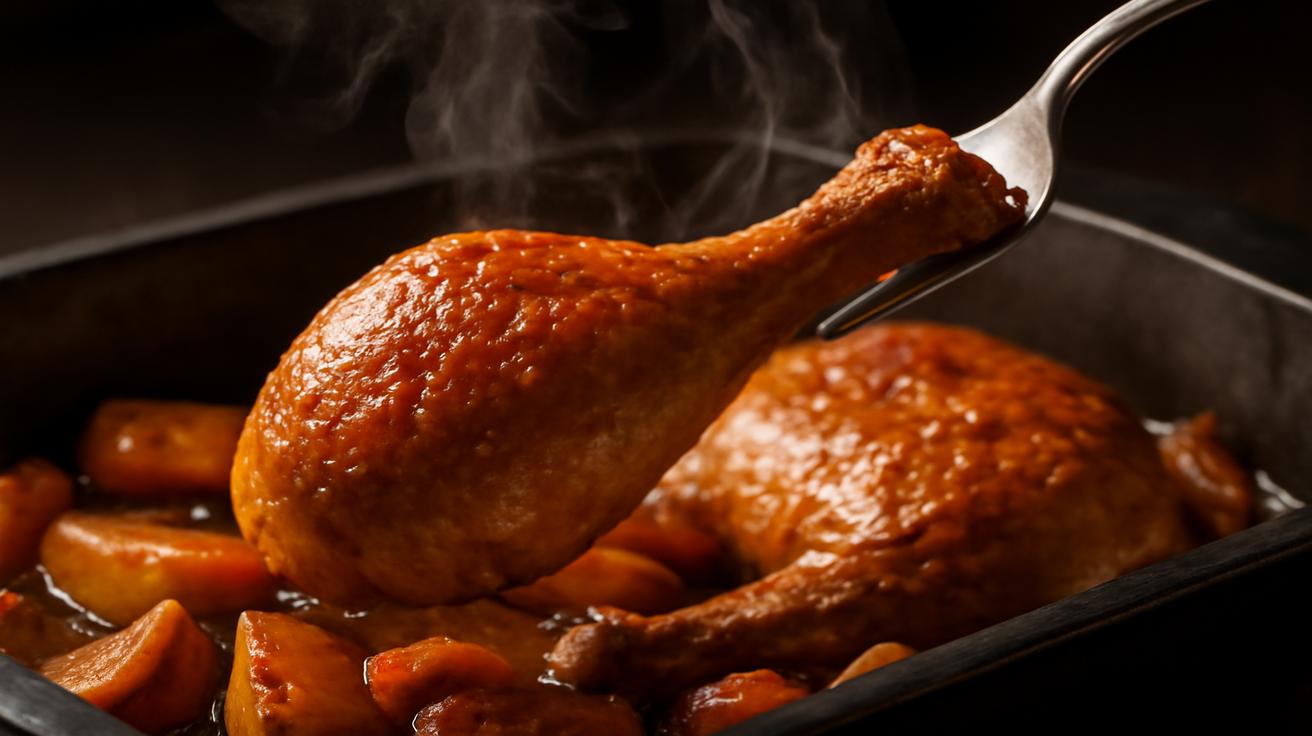
The first time it happened, the whole house went quiet. No podcast murmuring from the kitchen speaker, no clatter of pans, no dog nails clicking across the floor. It was just me, standing in the wash of oven light, listening to the quiet hiss of fat meeting hot metal and the soft, steady exhale of the oven fan. The air smelled like a Sunday afternoon in late autumn—warm, savory, edged with lemon and garlic—a smell that wrapped itself around my shoulders and told me, with suspicious confidence: this time, you finally got it right.
The Long, Slightly Embarrassing History of My Chicken Experiments
I didn’t come from one of those families where a grandmother could pull a perfect roast chicken out of the oven with her eyes closed. My childhood chicken memories were divided neatly into two categories: pale, flabby boiled pieces floating in brothy soups, and overcooked grilled breasts that squeaked between your teeth like they were trying to call for help. Somewhere along the way, I absorbed a quiet belief that chicken was the “safe protein”—not exciting, but polite and versatile and always invited to dinner.
Then the internet came for me. Or more accurately, I went looking for it. My search history could have been translated into a small, tragic novel: “how to make crispy chicken without drying it out,” “juicy baked chicken thighs recipe no marinade,” “foolproof baked chicken method,” “okay but why is my chicken always rubbery,” and so on. Every food blog had a different proclamation, a new holy grail: brine overnight, dry-brine for 48 hours, sear first, sear last, bake low and slow, blast it at volcanic heat, flip halfway, don’t flip at all, tent with foil, never use foil, let it rest, serve it hot.
For years, my kitchen was a test lab. I tried yogurt marinades that dripped and smoked on the pan until the kitchen smelled like a burned dairy farm. I experimented with spice rubs so aggressively fragrant that the cumin cloud lingered on my coat for two days. I undercooked once, overcooked often, and burnt the skin more times than I care to admit. My cutting board saw chicken that was stringy, chalky, mushy, and once—memorably—greyish.
And still, I kept searching. Because every now and then, I’d get close: a breast that was 70 percent of the way to juicy, thighs that tasted like a restaurant version if I closed my eyes and used my imagination. Close is a dangerous place; it’s right next to obsession.
The Day the Oven Finally Spoke Up
The recipe that changed everything wasn’t really a recipe. It was more like a whisper of method. A friend mentioned it casually while we were standing in a parking lot, half-zipped jackets flapping in the early evening wind.
“Oh, I just do the same thing every time now,” she said, balancing a jug of laundry detergent on one hip. “High heat, short time, start with dry chicken, don’t crowd the pan. It’s boringly reliable.”
Boringly reliable. The phrase lodged in my brain. I went home and pulled a pack of chicken thighs from the fridge. They were still cold, glossy with the faint condensation of plastic-wrapped chill. I set them on a plate, patted them dry with paper towels till they felt almost velvety instead of slippery, and left them there to lose the edge of refrigerator cold while I preheated the oven.
That’s where everything began to shift: in the empty, warming oven. I set the temperature higher than felt reasonable—hot enough that, in my earlier experimenting days, I would have been certain it would incinerate dinner. The metal racks ticked softly as they expanded. The kitchen was filled with that faint metallic heat smell that always makes me think of winter mornings and preheating a car.
On the counter, the chicken sat, bare and vulnerable. I drizzled it with olive oil, watching the thick greenish-gold liquid slide over bumps and edges. Salt, more than I wanted to use but not enough to form a crust. Freshly cracked black pepper, dotting the surface like confetti. A whisper of smoked paprika, just enough to stain the skin the color of late-day sun. I massaged the seasoning into every curve and corner, fingers growing slick, and then washed my hands with hot, soapy water until the faint ghost of garlic disappeared from my skin.
When the oven beeped, the kitchen seemed to lean in. I lined a sheet pan with parchment, spread the thighs out in a single, confident layer—so much space between them that they looked a little lonely—and slid the pan into the middle rack, hearing the faintest shhhh as metal met metal.
I set the timer and did nothing else.
What the Method Really Is (And Why It Works)
If you’re expecting a completely revolutionary, never-heard-before technique, this is where I confess: the magic isn’t in some obscure trick; it’s in the gentle stubbornness of keeping a few simple rules every single time. The method that ended my experimenting looks like this:
- Start with bone-in, skin-on chicken (thighs or drumsticks work best).
- Pat them very dry and let them lose their chill for about 15–20 minutes on the counter.
- Oil, season generously, and give everything room on the pan.
- Bake at high heat until the skin is crisp and the inside is just cooked.
- Let it rest a few minutes before you tear in.
The first time I pulled that pan from the oven, it looked like a still life: chicken skin blistered and bronzed, edges deeply caramelized where fat had kissed metal and sizzled. Tiny crisped bits of seasoning dotted the parchment like bark on a forest floor. The smell was round and complete—nothing sharp or burnt, just savory and warm, like roasted garlic and toasted spices and something quietly sweet underneath.
When I slid the first thigh onto a plate and cut in, the knife met the resistance of crisp skin, then sank through meat that was tender enough to pull away but not so soft it felt mushy. A small bead of clear juice pooled on the plate, catching the light. The first bite was everything I’d been chasing: saline, richly chicken-y, with a faint smoky warmth and the clean fat of the rendered skin shattering delicately between my teeth.
It didn’t taste like a grand performance. It tasted like something that could be invited back, again and again, without anyone at the table growing tired of it.
The Quiet Science Under the Magic
The thrill of it all is grounded in simple physics and patience. Letting the chicken sit out for a short while—just enough to lose the fridge chill—helps it cook more evenly. Patting it dry means the oven’s heat is working on crisping the skin instead of steaming away surface moisture. High heat renders the fat quickly, puffing the skin into that glassy, golden shell while the meat cooks fast enough to stay juicy.
There are plenty of more technical explanations, of protein fibers tightening and collagen melting, but at the end of the day, all I needed to know was this: if I followed these steps, I got that same incredible result every time. Not sometimes. Not “if the chicken was the right size” or “if the stars aligned” or “if I wasn’t distracted.” Every time.
The Table That Changed My Weeknights
After that first success, I began to notice the ripple effects in the rest of my life. My weeknights got calmer. The 5 p.m. dread of “what on earth am I going to make for dinner?” began to evaporate, replaced by a quiet mental checklist: do I have chicken? Do I have salt, oil, and something to scatter underneath or alongside it? That’s it. The method was forgiving enough to absorb whatever odds and ends lay in the crisper drawer—halved brussels sprouts, stubby carrots, onion wedges, quartered potatoes, hunks of fennel—tossed in oil and spread around the chicken to bask in its rendered fat and flavor.
The more I cooked this way, the more I realized it was less a recipe and more a rhythm. The oven temperature stayed the same; the sequence stayed the same. What shifted was the supporting cast. I found myself building small mental tables in my head: If it’s Tuesday and I’m tired, then chicken + potatoes + carrots. If it’s late summer and the farmer’s market is overflowing, then chicken + tomatoes + peppers + zucchini. If I needed comfort, chicken + sweet potatoes + onions + garlic.
Eventually, I wrote it down to see the pattern more clearly:
| Element | Simple Choice | What It Adds |
|---|---|---|
| Chicken Cut | Bone-in, skin-on thighs | Max flavor, hard to overcook |
| Base Fat | Olive or neutral oil | Helps crisp and carry flavors |
| Core Seasoning | Salt, pepper, garlic | Savory backbone, never boring |
| Flavor Twist | Paprika, herbs, lemon | Seasonal personality |
| Tray Vegetables | Potatoes, roots, onions | One-pan meal, juices absorbed |
Laid out like that, it felt almost too simple. But that was precisely the point: I hadn’t just found a way to make good chicken; I’d stumbled into a practice that freed up energy and attention. I wasn’t burning mental fuel on technique anymore. Instead, I could notice the tiny things I used to miss—the sound of rain hitting the kitchen window while the oven worked, the way the rising heat gently curled the edges of the parchment paper, how the garlic cloves roasted beside the chicken turned into little golden candies you could smear onto bread.
When “Good Enough” Turns Into Deeply Satisfying
Somewhere along the way, I realized I’d stopped hunting for new baked chicken recipes. I’d scroll past clever marinades and daring spice blends without that familiar tug of desperation. It wasn’t that I’d decided this was the single best chicken in the world. Maybe somewhere out there, a chef had developed a more transcendent version, involving multi-day brining and herb infusions and careful temperature zoning.
I just didn’t care anymore.
This chicken had become a kind of anchor, a dependable friend. It turned up on nights when I was tired and slightly weather-beaten, on bright weekends when friends came over unannounced and we pushed aside mail and keys to make room on the table. I made it for people I loved who were going through hard things, the pan wrapped in a clean dishtowel and still warm when it reached their doorstep. I made it for myself on quiet evenings when the only sounds were the hum of the fridge and the click of the oven turning itself off, signaling: it’s time to eat.
Each time I pulled that pan out, there was a small, deep exhale inside me. In a world obsessed with novelty, with trying the next thing and the next thing and the next, this one little corner of my kitchen life had settled into a comforting groove. The experimentation hadn’t been wasted—it led me here—but there was a relief in finally saying: this is enough. This is home.
The Sensory Ritual of Doing It Again (And Again)
Repeating the method became its own kind of pleasure. I noticed tiny sensory checkpoints along the way, like trail markers on a familiar path through the woods:
- The sound of the salt grinder rasping, heavy crystals sprinkling down like dry snow on the chicken’s surface.
- The feel of the skin under my fingers as I pat everything dry—cool, slightly bumpy, giving just a little when pressed.
- The thin thread of scent that arrives right at the halfway mark, drifting out from the oven door: not done yet, but on its way, a promise hanging in the air.
- The faint, uneven sizzling from the pan when I peek through the oven glass, little bursts of sound as fat drips and hits the hot metal.
- The way the kitchen’s light shifts—less harsh somehow—when you turn off the old overhead and let the glow from the oven door be the main illumination.
It’s all so ordinary. It’s also quietly, stubbornly beautiful.
Letting the Method Belong to You
The funny thing about a method this simple is how easily it bends to your own life. My version may not be yours. Maybe you’ll tuck lemon slices and sprigs of thyme under the skin as a non-negotiable ritual. Maybe you’ll lean heavily into smoked paprika and cumin, turning every pan into a whisper of far-off places. Perhaps you’ll always scatter sliced onions across the parchment, knowing they’ll emerge charred and sticky, perfect for dragging through pan juices.
The backbone stays the same: dry chicken, high heat, space to breathe, enough time to crisp without burning, a brief rest before carving. But within that frame, there’s astonishing room to play. Some evenings, I rub in a paste of garlic and Dijon mustard. Other nights, I keep it as bare-bones as salt, pepper, and olive oil, especially when the vegetables on the pan are already loud with their own flavors.
Over time, the method fits more neatly into the shape of your days. You’ll learn, without a thermometer, what “done” looks like in your oven—how the skin should look, how the juices should run clear, how the meat should just barely resist the fork before yielding. You’ll time it by instinct: the chicken goes in right after you finish chopping the vegetables, and by the time you’ve set the table and poured something to drink, the timer will be close to dinging.
And maybe, like me, you’ll realize one day that you haven’t searched “baked chicken recipe” in months. Maybe years.
FAQs About This Baked Chicken Method
Do I really have to use bone-in, skin-on chicken?
You don’t have to, but it helps. Bone-in, skin-on pieces are more forgiving; they stay juicier and develop better flavor and crispness. If you use boneless, skinless cuts, reduce the baking time and keep a close eye so they don’t dry out.
What oven temperature works best for this method?
A high temperature—usually around 425°F (220°C)—works well for most home ovens. It’s hot enough to crisp the skin and render fat quickly, but not so hot that the outside burns before the inside cooks through.
How long should I bake the chicken?
It depends on the size of the pieces, but bone-in thighs generally take about 30–40 minutes at high heat. Start checking around 25–30 minutes. The juices should run clear, and the internal temperature should reach about 165°F (74°C).
Why is it important to dry the chicken first?
Surface moisture turns to steam in the oven, which softens the skin instead of crisping it. Patting the chicken dry creates the conditions for golden, crisp skin and better browning.
Can I cook vegetables on the same pan?
Yes, and it’s one of the best parts of this method. Use vegetables that can handle the same cooking time—potatoes, carrots, onions, brussels sprouts, or squash. Toss them in oil and seasoning, spread them around the chicken, and let them roast together so they soak up the pan juices.