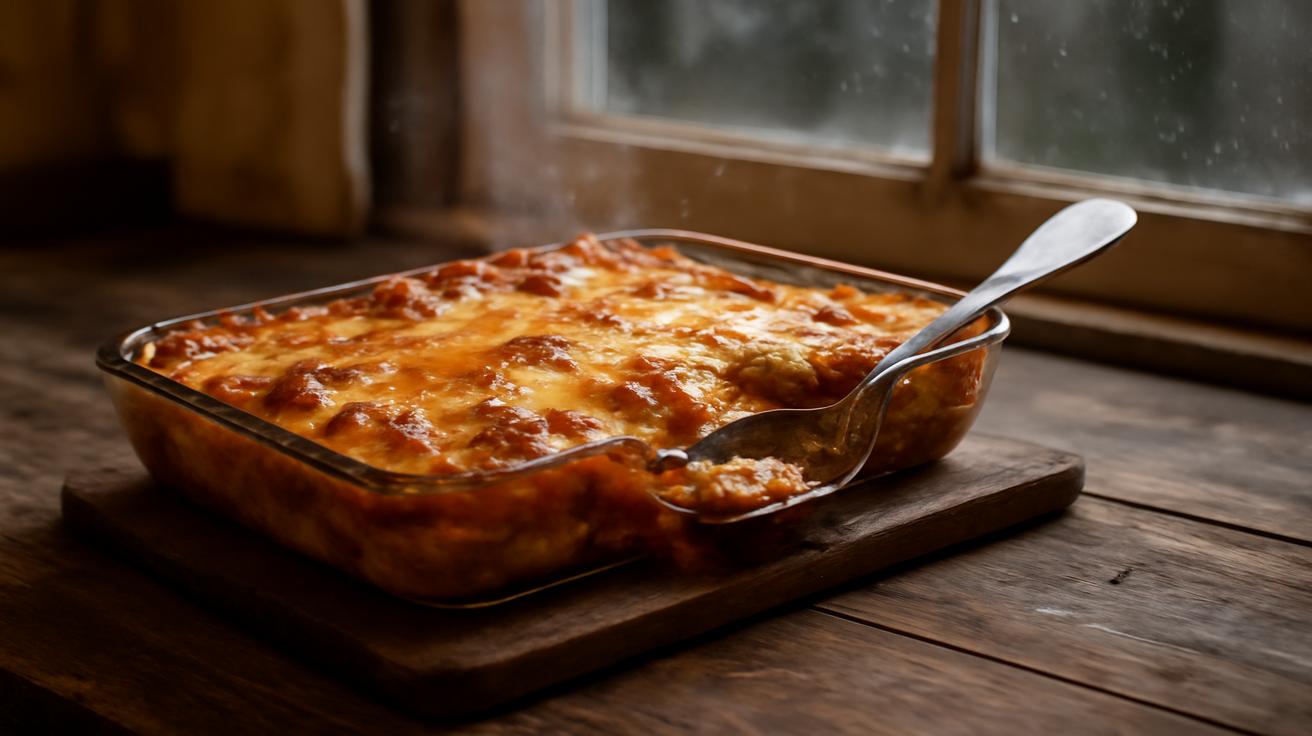
The oven door sighs when you open it, that soft exhale of heat that fogs your glasses and wraps your face in the smell of butter, vanilla, and something just beginning to caramelize. Outside, the day might be unraveling in a dozen ways—emails unanswered, headlines loud and sharp, a to‑do list that seems to grow in the dark—but right here, in this small, warm kitchen, time has slowed to the pace of rising dough and gentle bubbles in a saucepan. The light over the counter is yellow and kind. Your hands are floured. The recipe card, with its curled edges and faint smudge of something sticky in the corner, is propped up against the sugar jar like an old friend who has never once failed to show up. This, you think, is what dependability feels like: a batter you know by sound, a scent you trust with your whole, tired heart.
The Quiet Magic of a Recipe That Never Lets You Down
There are recipes that thrill you—the showstoppers, the ones with flame and flourish and unfamiliar spices. And then there are the ones that simply catch you when you’re falling. The warm, baked kind that doesn’t demand perfection, just presence. You reach for them the way you reach for your oldest sweater or the chipped mug that fits your hand in all the right places.
This particular recipe—maybe it’s your grandmother’s cinnamon loaf, your dad’s Sunday cobbler, or your own barely legible scrawl for vanilla bean bread pudding—carries a certain gravity. You don’t have to check it twice. You barely even measure anymore. Somewhere between the whisking and the folding, you slip into a rhythm your body remembers. The kitchen, for a moment, becomes a place where the world makes sense.
The ingredients are ordinary, unassuming. Flour. Butter. Sugar. Eggs. A pinch of salt that sharpens all the sweetness into something honest. Maybe there’s nutmeg, maybe there’s lemon zest, maybe just a quiet hit of cinnamon that blooms in the oven and wraps itself around every corner of the house. The point isn’t novelty; the point is knowing exactly how this will end: with warmth in your hands and calm in your chest.
When you pour the batter into the pan, it makes a soft, thick sound, like a blanket settling. You smooth the top with the back of a spoon, tracing the same slow curve you’ve traced a hundred times. The oven light clicks on and you kneel down, just for a second, to watch those first lazy air bubbles rise and burst. Nothing spectacular is happening, and yet somehow everything is.
This Is How Comfort Smells
The Way the House Changes
About ten minutes into baking, the house begins to transform. It always starts faintly, a suggestion drifting down the hallway: butter and sugar beginning their quiet alchemy. You could be anywhere in the world—city apartment with thin walls, farmhouse kitchen under low wooden beams, dorm with a temperamental old stove—and this smell pulls the room inward, makes the edges softer.
There’s something almost defiant about it. While the news pushes chaos through your phone, the oven insists on patience. Flour has its own schedule. Eggs take their time binding everything together. Heat will not be rushed and, mercifully, cannot be scrolled past. You find yourself pausing, standing in the middle of the kitchen just to breathe in deeper, letting the smell steady you in a way few things can.
Outside the window, the weather can’t make up its mind. The sky is a muddled gray, or maybe the sunset is throwing a last wild streak of orange across the street. None of it really matters. What matters are the small, certain things: the tick of the oven, the faint crackle as the top of the loaf begins to set, the way the air seems thicker, sweeter, as if it, too, is beginning to caramelize.
When you crack the oven door to check, the heat pushes against your face like a friendly shove, the way a dog leans its whole weight into your knees. You shield your hand with a worn oven mitt, patterned with faint scorch marks that read more like memories than damage. The top is just beginning to color, a pale gold deepening to amber at the edges. You know that in another ten or fifteen minutes, it’ll reach that perfect, dependable doneness: a firm crust and a center that still whispers softness.
Dependable, in All the Right Ways
Not every recipe earns this level of trust. Some betray you when you’re distracted, turning dry at the edges or collapsing in the center if you dare to open the oven door too soon. But this one—this warm baked creature of your kitchen—is forgiving. A minute more, a minute less, and it still emerges with generosity. It doesn’t punish you for glancing at your phone, for forgetting to bring the butter to room temperature, for making the sugar “roughly” level instead of precise.
We are all, in some secret corner of ourselves, starving for things that do what they say they will. That call when they promised. That hold steady when the rest of the world tilts. This baked recipe, simple as it might be, honors its part of the deal every time. Mix. Pour. Bake. Wait. It gives what it gave you last time: a tender crumb, a fragrant steam, the kind of warmth that glows from the inside out.
Hands in the Batter, Mind in the Moment
The Ritual of Making
There’s a kind of meditation in the making of it. You crack the eggs—tap, tap, pull. The shells split with a crisp music that echoes against the metal bowl. Sugar hits butter in a soft, crystalline hush. The mixer hums, or the whisk slices through with a rhythm you could almost set a heartbeat to. You watch the mixture lighten, going from yellow and grainy to pale and fluffy, like the first shift of dawn.
Then comes flour, always in stages. You know better than to rush it. A storm of white billows up in the bowl when you pour too quickly, so you learn to fold it in gently, turning the spatula along the curve of the bowl, lifting and smoothing, lifting and smoothing. You can feel when the batter is right—not too loose, not too stiff, holding its shape for half a second before it slowly gives way.
You taste, just a little. A dab from the corner of the spatula, grainy with sugar that hasn’t fully melted yet, heavy with vanilla and promise. It’s not the taste itself that matters—it’s the permission. To stop, to stand, to simply be here with this bowl and this spoon and this recipe that asks nothing from you but scraps of attention and a bit of faith.
These gestures become a language. Over time, you learn to read the batter like a mood, to feel the kitchen air like weather inside your home. A little more flour on humid days, maybe an extra splash of milk when the winter air is so dry it chaps your knuckles. You adjust without thinking, quietly matching the world outside to the one inside your oven.
A Table of Quiet Certainties
On a small scrap of paper—tucked into a cookbook, pinned to your fridge, or saved in your notes app—you keep the bones of this recipe. You might never truly need to look at it again, but it’s there, like a compass in a drawer. If you ever wanted to hand it to someone, here’s roughly how it might look laid out in the calm, simple way it lives in your head:
| Step | What You Do | How It Feels |
|---|---|---|
| 1 | Preheat the oven, butter the pan, gather your ingredients. | Like laying out paints before you start a familiar painting. |
| 2 | Cream butter and sugar, add eggs and vanilla. | The kitchen fills with a low, steady hum of purpose. |
| 3 | Fold in flour, salt, and whatever quiet spices you love. | Each turn of the spoon feels like smoothing out your own thoughts. |
| 4 | Pour into the pan, bake until the top is golden and the center just set. | Waiting becomes a gentle kind of anticipation, not anxiety. |
| 5 | Cool slightly, slice while still warm, share (or don’t). | Dependable comfort, cut into squares or wedges you can hold. |
You could swap cinnamon for cardamom, vanilla for orange zest, or milk for buttermilk. It will bend with you. That’s part of what makes it dependable: it isn’t rigid. It trusts you back.
Sharing the Warmth (or Keeping It for Yourself)
The Way People Gather Around a Pan
There’s a particular sound that happens when you set a still-warm pan of something baked in the middle of a table. Chairs scrape softly. Conversations dip, then swell again. Someone leans in with a knife; someone else reaches for small plates but gets impatient and just grabs a napkin. Steam curls up from the first slice, carrying with it that rich, sweet scent that turns adults into children again, just for a moment.
Dependable recipes become dependable memories. Friends start to associate your kitchen with that smell. “Did you make your cake?” they ask before they’ve even taken off their shoes. They know how it will taste. They know that the edges will be slightly crisp and the interior soft enough that they have to lick their fingers afterward. It’s as if you’ve promised them a small, edible piece of reassurance, and each time you pull out the pan, you’re keeping that promise.
Sometimes, you wrap thick slices in parchment and tuck them into a container for a neighbor. You leave a plate by the door for the delivery driver who has been to your address three times this week. You bring a pan to the office and watch the way the afternoon loosens around it: spreadsheets and deadlines pushed to the side, replaced for a few minutes by crumbs and shared silence and soft, appreciative noises.
Other times, though, you keep it mostly for yourself. There’s no law that says comfort must be a communal act. You stand at the counter in your oldest socks, knife in hand, carving tidy or untidy slices as you go. You eat the end piece—the one with the deepest crust and the most caramelization—over the sink, not even pretending you’re going to wait for a plate. The warmth radiates from your fingers up into your arms, across your shoulders, into the spot behind your ribs that’s been clenched for longer than you care to admit.
The Recipe as a Kind of Compass
Coming Back to Center
Life has a way of pulling you sideways. An unexpected bill, a bad piece of news, a sudden argument that leaves the air in the room sharp and metallic. In those moments, it’s easy to feel as though you’ve lost the thread, as though the story you thought you were living has veered wildly off script. And yet, in the pantry, there’s still a bag of flour. On the counter, an egg carton. In the drawer, a familiar wooden spoon with a darkened handle from years of stirring.
You can lose your sense of direction and still find your way to the oven. The act of making this recipe doesn’t fix everything—and it doesn’t need to. It just gives your hands something sure to do while your heart rearranges itself. You measure, you beat, you fold, you wait. You know what comes next. In a day that has given you nothing but question marks, here is at least one answer.
You remember other days you’ve made it: the snowstorm that canceled all your plans, the late summer afternoon thick with humidity and the smell of cut grass, the night before a big decision when sleep wouldn’t come and you found yourself in the kitchen at midnight, lit only by the under-cabinet light and the little orange glow of the preheating oven. This recipe has slipped quietly into the background of so many chapters of your life that it’s become part of the setting, like an old lamp or a favorite chair.
And every time, when you cut into it and watch the steam escape, when you feel the yielding give of the crumb beneath your knife, you come back to the same small, grounding truth: some things are allowed to be simple. Some things can be counted on to be good, even when nothing else feels certain.
Why “Dependable” Is the Highest Compliment
“Dependable” rarely makes it onto glossy magazine covers. It doesn’t have the shine of “innovative,” the drama of “decadent,” or the novelty of “unexpected.” But in the quiet, honest landscape of a real life, dependable is the word that holds you up. It means you don’t have to brace yourself. You don’t have to wonder if it will disappoint you. You can just show up, do what you’ve done before, and trust that the ending will be gentle.
This warm baked recipe—whatever form it takes in your kitchen—earns that word. It doesn’t demand a special occasion; it becomes one. It doesn’t require rare ingredients; it elevates the ordinary ones. It doesn’t punish imperfection; it enfolds it. The crust might crack differently each time, the slices might be neater or more chaotic, but the promise is always the same: you will sit down with something warm in your hands and feel, if only for a few bites, okay.
On the days when the world feels like it’s turning faster than you can follow, when your thoughts come out tangled and sharp, you can take out the pan, preheat the oven, and let this recipe do what it has always done: anchor you, feed you, remind you that you are allowed to seek softness and heat and sugar and spice. That you are allowed to return, over and over, to the things that have never once let you down.
Later, when the last crumbs have been brushed from the plate, when the pan sits soaking in the sink and the oven has cooled, the scent lingers. It threads itself into the curtains, settles into the spaces between floorboards, hides in your hair. You carry it with you as you turn out the lights and head down the hallway. The day may not have been perfect. The week might still be hard. But you had this: a warm baked recipe that feels dependable in the best way, not because it changes your life, but because it shows up whenever you ask it to—and, without fail, makes the world just a little softer at the edges.
Frequently Asked Questions
Why do some recipes feel more “dependable” than others?
Recipes feel dependable when they’re consistent and forgiving. They don’t require perfect technique or rare ingredients, and they turn out well even if your measurements or timing are a little imperfect. Over time, your body learns their rhythms, which makes them feel almost second nature.
Can a simple baked recipe really help with stress?
Yes. The sensory nature of baking—touching, smelling, mixing, listening—can be grounding. The clear steps and predictable outcome create a small pocket of control and comfort in a day that might otherwise feel chaotic.
What makes a “comfort” bake different from something fancy or elaborate?
Comfort bakes are usually familiar, warm, and made from everyday ingredients. They’re more about feeling than presentation. While elaborate desserts aim to impress, comfort recipes aim to soothe and satisfy in a deeply personal way.
How can I make my own dependable “go-to” recipe?
Start with a simple, classic base—like a loaf cake, banana bread, or cobbler—and make it several times. Adjust it slowly to match your taste and your kitchen: a bit less sugar, a different spice, a different bake time. As you repeat it, you’ll memorize its feel and timing, and it will naturally become your go-to.
Is it okay to bake the same recipe over and over without “trying something new”?
Absolutely. There’s no rule that says cooking and baking must always chase novelty. Repeating a beloved recipe can be its own quiet pleasure—and in a world obsessed with “new,” returning to the familiar can feel like an act of care, not a limitation.