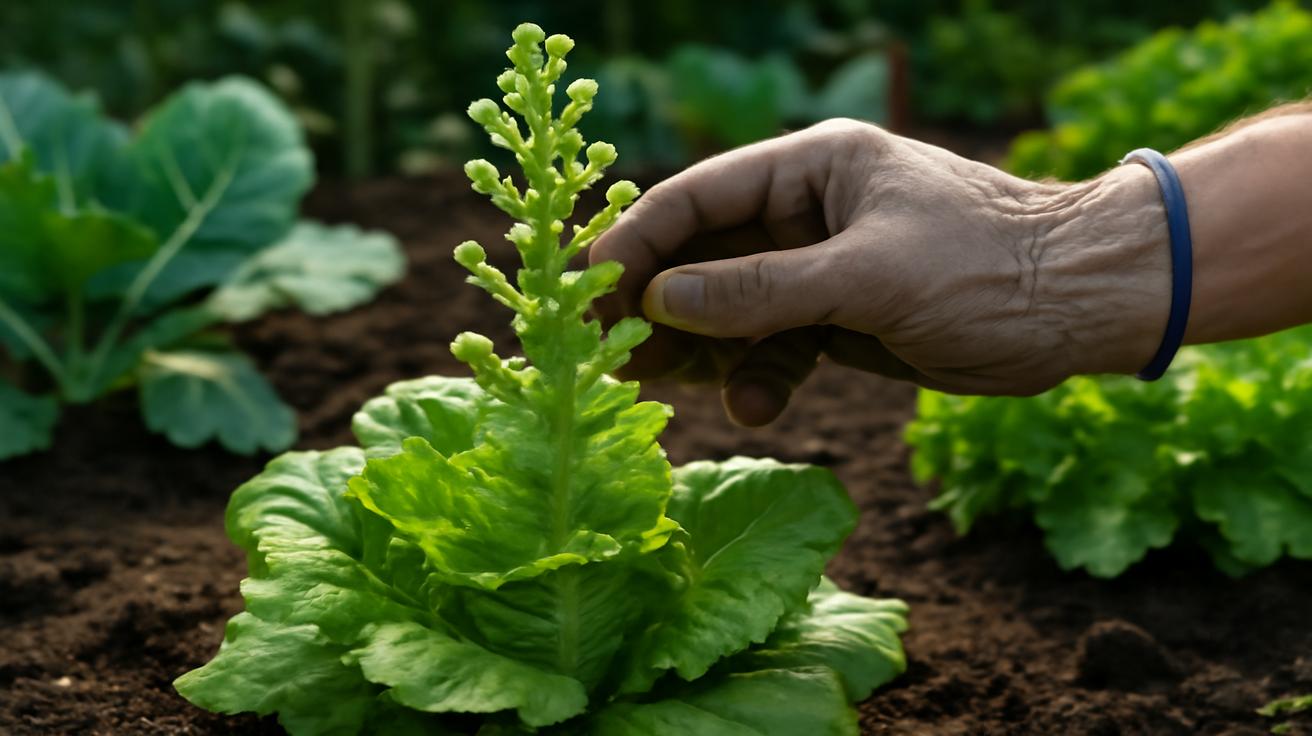
The first time you watch a spring lettuce crop suddenly stretch skyward like it’s auditioning to be a sunflower, it’s almost unsettling. One week, the leaves are soft and sweet, ruffled in tight rosettes, hugging the soil. The next, there’s a stiff little spire rising from the center—an announcement, really: “I’m done feeding you. I’m going to seed now.” You touch the stem and it feels tougher, more determined. The leaves turn bitter seemingly overnight. Your salad has decided it has better things to do than be your lunch.
When Your Garden Starts Moving Faster Than You Do
If you’ve gardened for more than one season, you’ve probably heard the verdict: “They bolted because it got too hot.” It’s tidy, reassuring even. Temperature becomes a villain you can name. The day the thermometer jumped, your cilantro shot up. The week the nights stayed warm, your spinach quit on you. Case closed.
Except, it’s not that simple. Sometimes your bok choy bolts in cool weather. Sometimes your beets send up flower stalks while the soil is still chilly. And sometimes two beds of the same variety, a few meters apart, behave completely differently—as if they live on different planets, not in the same backyard.
Standing in the garden at dusk, you can see that plants have their own timing, their own invisible calendar. Bolting, that sudden shift from leaf-making to seed-making, isn’t just about being too warm. It’s about history and stress and genetics and the quiet signals your plants have been collecting since the day you tucked the seeds into the soil. Temperature matters, yes—but it’s only one voice in the chorus.
The Quiet Clock Inside Every Plant
Every leaf, every stem in your garden is keeping time in ways you can’t quite see. Gardeners love dates: sowing dates, transplant dates, “matures in 55 days.” Plants, though, live by a different clock. They track hours of light, the length of cool spells, the number of leaves they’ve grown, the stress they’ve survived.
Think of a radish seed. You push it into the soil on a mild day. It swells, splits, sends down a root, then a sprout. All the while, it’s soaking in more than water and nutrients. It’s measuring light and dark, sensing the tug of gravity, registering the slight chill of early spring or the lingering warmth of late summer. Radishes, like many cool-season crops, evolved to grow quickly in a narrow window. Once that window closes—even if only in ways the plant feels before you do—its inner clock says, “Hurry. Make seed.”
This is what bolting really is: the moment the plant flips a switch from “build body” to “build future.” And that switch doesn’t flip only when the thermometer protests. It flips when enough signals, stacked together, say it’s time. Some of those signals are written into the plant’s genes before you ever open the seed packet.
More Than Heat: The Hidden Triggers of Bolting
Look closely at the vegetables most famous for bolting: lettuce, spinach, cilantro, arugula, mustard greens, Asian greens, radishes, turnips, beets, broccoli raab, and many others. They’re usually cool-season plants, drawn to those fleeting edges of the year—spring and fall—when the days are changing and the sky seems undecided.
Temperature does play a role, but other triggers lurk in the background:
- Day length – Many plants are wired to respond to how long the days are: spinach and lettuce are notorious for reacting to lengthening days in late spring.
- Vernalization – Some crops (like beets and certain cabbages) bolt after experiencing a period of cold, as if they believe they’ve survived a winter and it’s now safe to reproduce.
- Stress – Drought, cramped roots, sudden changes in watering, or nutrient imbalance can push plants to “panic-flower.”
- Plant maturity – Each plant has a stage at which it can respond to flowering triggers; a baby spinach seedling and a near-mature one don’t react the same way to the same weather.
- Genetics – Some varieties are inherently more bolt-resistant because plant breeders selected for patience, not haste.
When you see a vegetable bolt “too early,” what you’re really seeing is the sum of its entire experience from seed to stalk—every chilly night, every crowded root, every dry spell, every sunrise filed away like entries in a private diary.
Day Length: The Light You Don’t Think About
Stand in your garden at the edge of spring. The air is still cool on your skin. Maybe you can even see your breath in the morning. It doesn’t feel like summer. Yet the days are quietly, steadily, stretching. What you notice as, “Oh, it’s brighter when I get off work now,” is, to your leafy greens, a ringing alarm clock.
Spinach is a good example. It’s often labeled a “long-day” or “day-length–sensitive” crop. That means it’s tuned into how much daylight it receives. Once that day length crosses a certain threshold, the plant reads the season as “late spring heading into summer.” For spinach, that usually means: time to bolt, no matter how cool the air might still feel to you.
The same goes for many lettuces. You might blame an early heat wave for their abrupt change of heart, but very often, the real accomplice is the number of sunlight hours stacked into each day. A bed of lettuce sown in March in a temperate climate matures under rapidly lengthening days. By the time it’s lush and perfect, the days have tipped long enough that any extra stress can send it over the edge into flowering.
Day length can even explain those mysterious differences between two sowings of the same crop: why your early-April cilantro bolts absurdly fast, while a late-August sowing lingers, lush and generous, into the fall. The plant isn’t just reacting to temperature; it’s decoding the season through the pattern of light and dark.
Cold Memories: Vernalization and Bolting from the Roots Up
Then there’s the cold—though not the way we usually talk about it. Many gardeners imagine cold as something that kills or slows plants, a simple on/off switch. But for some vegetables, cold is more like a story they remember. And once they’ve remembered enough of it, they behave as if time has passed, even if on the calendar, it hasn’t.
This is called vernalization: the process by which exposure to chilling temperatures triggers a plant to become ready to flower. It’s nature’s way of making sure that certain plants don’t waste their reproductive energy in late autumn, only to have their seeds frozen and lost. Instead, they wait to flower until they’ve “felt” a winter and survived it.
Some crops that commonly bolt after a cold spell include:
- Beets
- Carrots
- Onions (from sets, especially)
- Cabbages and some brassicas
- Leeks
Imagine you sow beets very early, or you plant onion sets in chilly soil. The young plants emerge, get established, and spend several weeks in cool conditions. If the temperature dips low enough for long enough, their inner clock decides, “We’ve done winter.” Then the weather warms, the days lengthen, and the plants flip into flowering mode—even though, from your point of view, this was supposed to be their first season, not their last.
This is how you end up with beets and carrots that send up towering flower stalks before they’ve given you much of a root. It isn’t “too much heat too soon” so much as “too much cold too early in life,” awakening their biennial instincts ahead of schedule.
Stress: The Garden’s Invisible Negotiation
Walk through your garden during a dry spell. The soil pulls away from the edges of the beds, cracking into small mosaics. Leaves droop, then harden, then lose their sheen. Somewhere in the middle of all that, your plants are making choices. A vegetable that feels well-fed, well-watered, and stable tends to keep building leaves and roots. One that senses danger—irregular water, cramped roots, hot reflected light off a nearby wall, repeated damage from pests—starts to hedge its bets.
Bolting is one of those bets. From the plant’s point of view, a little bitter leaf and a fast seed stalk are better than being wiped out before it leaves descendants. So, stress often accelerates bolting, especially when layered on top of increasing day length or a history of cold exposure.
Common stressors that quietly nudge plants toward flowering include:
- Inconsistent watering – Letting soil swing between drought and deluge.
- Root restriction – Overcrowded transplant trays, small pots, or tightly sown beds.
- Nutrient imbalance – Especially low nitrogen when a plant is in a leafy growth phase.
- Heat spikes combined with dry air – Sudden hot, dry winds or reflective heat surfaces.
- Damage – Repeated insect chewing, hail, or rough handling.
This is why one row of lettuce under a bit of shade cloth, mulched and hydrated, stays tender weeks longer than the row in full blast sun against a pale fence. On paper, they’re the same variety, planted the same day. In reality, they’re living very different lives.
When Genes Decide: Choosing Varieties That Take Their Time
Open a seed catalog and you’ll see words like “bolt-resistant,” “slow to bolt,” or “heat tolerant” scattered among the descriptions for lettuce, cilantro, spinach, and brassicas. These aren’t magic phrases; they’re reminders that the urge to bolt early or late is deeply genetic.
Over years, plant breeders observe which plants stay in leaf-production mode longer under stress and longer days. Those are saved, crossed, and selected again. The result is a variety whose inner clock is simply less jumpy. It doesn’t ignore heat or long days, but it waits longer to respond.
Sometimes, the most important decision you make about bolting happens months before planting, with the pen in your hand and the catalog on the table. A bolt-resistant spinach or a slow-bolting cilantro won’t remove your need to shade, mulch, or time your sowings well—but it gives you a wider margin of error, more time between “perfect harvest” and “too late.”
A Practical Look: Why Two Gardeners Get Different Results
Consider this simple comparison between two gardeners growing the same leafy crops. The numbers and details may look small, but they add up to surprisingly different outcomes when it comes to bolting.
| Factor | Gardener A | Gardener B |
|---|---|---|
| Sowing Date | Early March | Late April |
| Variety | Standard lettuce mix | Slow-bolting lettuce mix |
| Light Exposure | Full sun all day | Morning sun, afternoon shade |
| Watering | Deep but infrequent soakings | Consistent, moderate moisture |
| Bolting Time | Bolts quickly once days lengthen | Holds for several extra weeks |
Same season. Similar climate. Yet for Gardener A, the lettuce seems to bolt “the moment it gets warm.” For Gardener B, bolting is delayed, almost gentle, like a guest who lingers respectfully at the end of a long meal. The difference isn’t only the thermometer; it’s timing, genetics, shade, and water—all the quiet decisions that change how a plant experiences its world.
Working With the Clock Instead of Against It
Once you see bolting as a many-layered response, not just a knee-jerk reaction to heat, you can start gardening with the plants instead of constantly feeling at odds with them.
Some simple, experience-backed strategies help:
- Time your sowings with day length in mind – For cool-season greens, early spring and late summer sowings often outcompete mid- to late-spring seedings, when days are lengthening fastest.
- Use shade strategically – A bit of afternoon shade from a taller crop, a shade cloth, or planting on the east side of a structure can keep stress down as days grow long.
- Keep moisture steady – Drip irrigation, mulch, or simply more frequent, lighter watering prevents the whiplash of drought-flood cycles that spur plants to bolt.
- Choose bolt-resistant varieties – Especially for cilantro, lettuce, spinach, and pak choi; this buys you time in the tricky shoulder seasons.
- Avoid chilling young biennials – Don’t start beets, carrots, onions, or cabbages too early in harsh outdoor cold; protect seedlings or wait until the soil has warmed.
- Harvest earlier and often – Cut-and-come-again harvesting of greens keeps plants in a younger, vegetative state a bit longer.
Some bolting is inevitable; it’s simply the way annual and biennial plants complete their cycle. But you can shift the balance, stretching those weeks of tender leaves into a longer, more generous season.
Making Peace With the Seed Stalk
There’s a quiet moment many gardeners recognize, standing in the path between beds: the moment you realize you’ve “lost” a crop to bolting. The spinach is tall and tough. The cilantro is a froth of white flowers. The radishes are hollow. At first, it feels like failure. You missed the window. You misjudged the weather. You should have harvested yesterday or the day before.
But if you stay there a little longer, watch as bees stumble around the blossoms of your gone-too-far cilantro, or notice the delicate geometry of an arugula flower, that feeling shifts. Bolting stops looking like a betrayal and starts looking like what it truly is: completion.
You can still work with it. Cilantro flowers draw pollinators. Let them set seed and you’ll have coriander for your spice jar, or self-sown volunteers that appear in the cooler days of fall. Overwintered kale or mustard gone to flower becomes an early nectar source for waking bees. A bed of bolted lettuce, left long enough, turns into a sea of fluff-topped seed heads you can save, share, and replant.
Next season, armed with a sharper understanding of why your vegetables rushed to bloom, you can tweak sowing dates, choose different varieties, add shade, or mellow the soil’s swings between wet and dry. You won’t stop bolting altogether—that would be like asking the tide not to turn—but you’ll stop being surprised by it. And, just maybe, you’ll find that the garden feels less like something you’re constantly correcting and more like a conversation you’re finally learning to follow.
FAQ
Why did my lettuce bolt even though the weather was still cool?
Lettuce is strongly influenced by day length as well as temperature. If it was growing during a period of rapidly lengthening days, even cool weather can’t fully prevent bolting. Stress from factors like inconsistent watering or overcrowding can also push it to flower earlier than you expect.
Can I still eat vegetables after they bolt?
You usually can, but flavor and texture decline quickly. Leaves often become bitter and tougher, and stems get fibrous. Try tasting lower, older leaves first; if they’re very bitter, it’s often best to compost bolted plants or let them flower for pollinators and seed saving.
How can I stop cilantro from bolting so fast?
Choose slow-bolting varieties, sow in early spring or late summer rather than mid- to late spring, and give plants some afternoon shade. Keep the soil evenly moist and harvest frequently. Even with all that, cilantro naturally has a short leafy phase—so multiple staggered sowings a few weeks apart help ensure a steady supply.
What causes carrots and beets to send up tall flower stalks too early?
They may have experienced vernalization—too much cold early in life—which tricks them into thinking they’ve already been through winter. Once it warms up and days lengthen, they shift into seed-making mode. Planting a bit later, or protecting young seedlings from prolonged cold, usually reduces this problem.
Are bolt-resistant varieties really worth it?
Yes, especially for crops like lettuce, spinach, and cilantro. They don’t prevent bolting entirely, but they delay it, giving you a longer harvest window and more flexibility with sowing dates. Combined with good watering, some shade, and smart timing, they can significantly improve your success with cool-season vegetables.