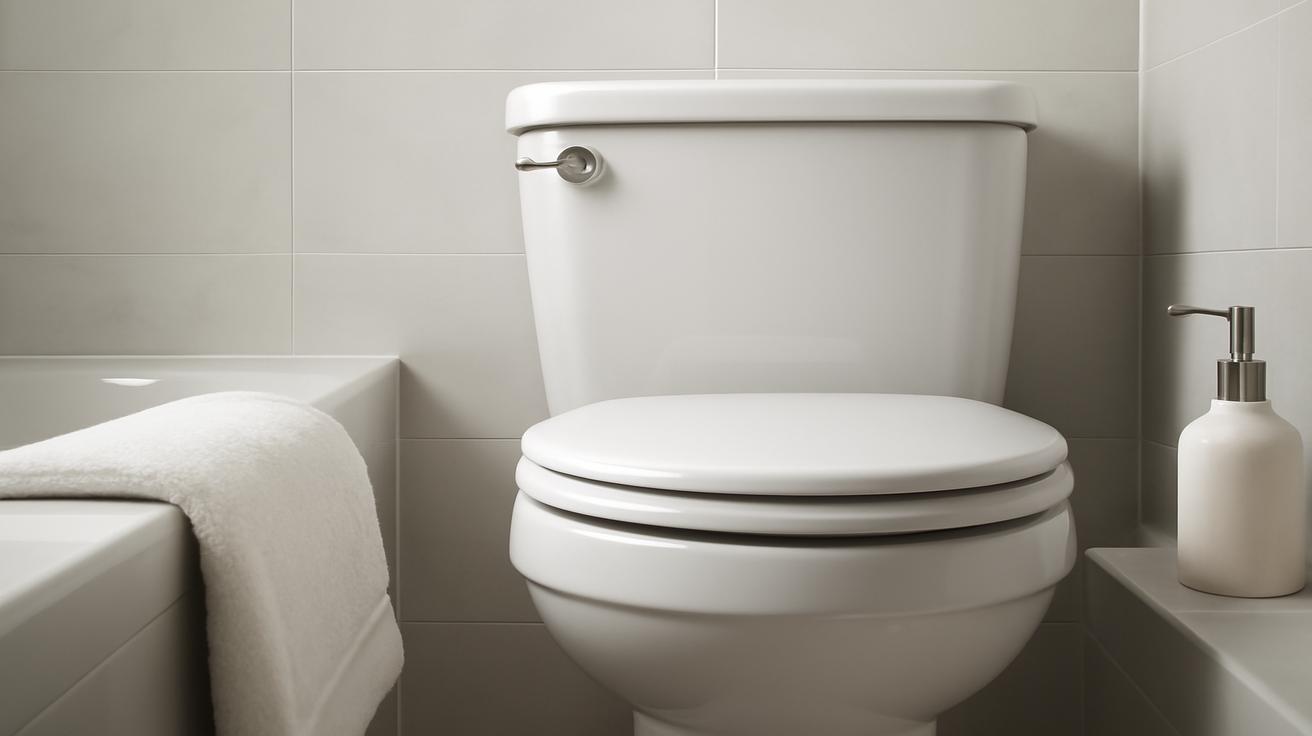
The argument started, as these things often do, in the middle of an otherwise ordinary evening. The kettle hissed in the kitchen, a sitcom murmured in the background, and from the bathroom came a very distinct, very exasperated shout: “Who left the toilet seat up again?” You could feel the familiar tension rise in the air—half domestic comedy, half low-grade warfare. Somewhere between the crash of the seat being slammed down and the indignant responses that followed, one quiet question floated above it all: Is there actually a right answer to this?
Why This Tiny Plastic Circle Causes Such Big Feelings
The toilet seat is a surprisingly emotional object. It’s a ring of plastic (or wood, if you’re fancy), hinged to a porcelain bowl, and yet households have divided into camps over it for decades. People whisper their preferences at dinner parties, complain about it in group chats, and roll their eyes about it in therapy. It’s the kind of argument that sounds silly until you’re the one who sits down in the dark and hits cold porcelain instead of smooth, welcoming plastic.
But below the jokes and memes and sitcom scenes, there’s a more serious layer to the debate: hygiene. In an age obsessed with sanitizing, disinfecting, and washing our hands to the chorus of “Happy Birthday” twice over, the toilet suddenly feels like a central character in the story of how we live with germs. Is leaving the seat up actually more disgusting? Does putting it down really make a difference? And what about the lid—does it matter what happens to that quiet, often-ignored third player in this drama?
Walk into any household and you’ll hear some version of the same script. One person—usually, but not always, a woman—insists the seat must be put down, calling it basic courtesy. Another person—often a man—argues efficiency, pointing out that it has to go up again anyway. Then someone brings up “toilet plume,” someone else mentions weird statistics they half-remember from the internet, and soon enough, the debate spirals.
To move beyond eye-rolling and door-slamming, hygiene experts suggest we zoom out and ask a bigger, calmer question: instead of “Who’s right?” ask “What keeps us healthiest?” Once you frame it that way, the bathroom becomes less a battlefield and more a small ecosystem we share. And every time we flush, we’re sending an invisible storm into that ecosystem.
What Actually Happens When You Flush
Imagine the moment you press the flush handle in slow motion. Water rushes down, a swirling vortex of noise and motion. If you could see microscopic life, the air above the bowl would look like a blizzard: countless tiny droplets, some carrying bacteria or viruses, get catapulted upward. This is what researchers call a “toilet plume.” It’s not a cute phrase, but it is an accurate one.
Studies using special lasers and high-speed cameras have shown that flushing can send particles up to several feet into the air. They rise, hang there, then settle on anything nearby—your phone on the counter, the hand towel, the sink, the toothbrushes lined up like tiny spectators along the edge. The more powerful the flush and the more turbulent the water, the more vigorous this microscopic storm can be.
This doesn’t mean your bathroom instantly turns into a germ apocalypse every time you flush. Our immune systems exist for a reason, and not every droplet carries something dangerous. Still, hygiene experts are almost unanimous on one thing: if you can reduce how far and how fast those droplets travel, you should.
And here’s where the debate often misses the real point: the battle between “seat up” and “seat down” is less important than the position of the lid. Think of the toilet lid as the storm door of your bathroom. Close it before you flush, and you dramatically cut down the reach of that invisible spray. Leave it open, and your bathroom becomes a playground for wandering droplets.
The Real Recommendation: It’s Not Just the Seat
When you start talking to infection control professionals, cleaning experts, and public health researchers, a simple picture emerges. Ask them where they stand in the seat-up or seat-down quarrel, and many of them gently redirect the question: “Forget the seat for a second. Tell me what you’re doing with the lid.”
For shared bathrooms, the evidence-backed hierarchy looks something like this:
| Bathroom Habit | Hygiene Impact | Expert View |
|---|---|---|
| Flushing with lid closed | Greatly reduces toilet plume spread | Strongly recommended |
| Flushing with lid open | More droplets in the air and on surfaces | Best avoided when possible |
| Seat up vs seat down (lid closed) | Minor hygiene difference | Courtesy and practicality matter most |
| Toothbrush near toilet | Higher chance of contamination | Store further away or covered |
| Handwashing after every use | Crucial for stopping germ spread | Absolutely essential |
In other words, if you want to be on the side of science and cleanliness, the single most important move is: close the lid before you flush. The position of the seat matters far less for hygiene than we imagine. It matters for comfort, accessibility, and relationships—but not nearly as much for germ control as the lid and your hands.
The Seat-Up or Seat-Down Question, Reframed
Once the lid enters the conversation, the classic argument starts to feel a little out of date, like we’ve been fighting over the wrong battlefield. If everyone in the house agrees that the lid should be closed before flushing, the question becomes: what should things look like after we flush and before the next person comes in?
Hygiene experts are practical people. Most of them will tell you that if you’ve flushed with the lid closed, the difference between leaving the seat up or down is modest from a cleanliness perspective. You might avoid the occasional splash landing on the seat if it’s up, but any surfaces can be cleaned. The bigger issue is psychological—how people feel when they walk into the bathroom.
For many, a down seat signals readiness. It says, “This bathroom is prepared for whoever walks in next.” It’s neutral. Anyone can use it without adjusting anything major. For others, especially in households where people regularly stand to urinate, a permanently down seat feels like extra work: an extra step, a small but constant interruption.
This is where science leaves off and communication begins. You can’t run a randomized controlled trial on courtesy (though it’s tempting to imagine). Instead, what public health and behavioral research suggest is that shared spaces work best when there are clear, simple rules that everyone can remember and live with.
A surprisingly elegant compromise many households and hygiene specialists land on is this: seat down, lid down, always, for everyone. When you’re done: seat down, lid down, flush. The bathroom resets to a single default position, and no one has to guess what’s expected. It’s kinder to cohabitants, easier to teach kids, and more consistent for guests.
What About Public Toilets?
Out in the wild world of public restrooms, the story shifts slightly. Many public toilets don’t even have lids, which makes plume control difficult. The seat-up vs seat-down debate here is less about hygiene and more about contact—what you’re willing to touch.
From a germ standpoint, toilet seats in public spaces are often less horrifying than our imagination suggests. Studies have found they’re usually not the dirtiest surface in the restroom—faucet handles, door locks, and flush levers are often worse. Still, it’s wise to:
- Flush and step slightly back to avoid the main spray zone.
- Avoid using phones while sitting to reduce cross-contamination.
- Wash your hands thoroughly and avoid touching your face before you do.
In public spaces, you often don’t get the luxury of “seat down, lid down, always.” Instead, your main tools are distance, time, and soap. Still, the core principle remains: minimize what gets flung into the air and onto your hands, and clean your hands well afterward.
Design, Gender, and the Politics of the Seat
The toilet seat debate isn’t just a practical argument; it’s also quietly political. It sits at the intersection of gender, design, and power—who is expected to adapt, who is expected to remember, who is assumed to be the “default” user of the space.
For people who sit to use the toilet every time—women, many non-binary people, and plenty of men with certain medical conditions—a raised seat can feel like a sign that the bathroom was last used in a way that didn’t consider their needs. For those who stand, being asked to always put the seat down afterward can feel like they’re the ones bearing the mental load of courtesy.
There are also accessibility considerations. Older adults, people with mobility challenges, or anyone managing balance issues may genuinely need a setup that’s predictable and easy to use. For them, reaching for a seat or lid that’s unexpectedly up—or discovering it when they’re halfway seated—is more than an annoyance; it can be a safety risk.
This is where design comes in as a quiet peacekeeper. Slow-close seats and lids reduce the sharp bang of an angry slam. Touchless flushing reduces what you have to physically contact. Wall-mounted storage keeps toothbrushes, makeup brushes, and razors away from the direct blast radius of the bowl. In an ideal world, every bathroom would be built to support the hygiene and dignity of every body that enters it.
Until that world arrives, households and shared spaces have to negotiate. And here, hygiene experts act less like referees and more like translators. They can tell you what the data says about droplets and contamination, but they’ll also be the first to admit that a peaceful bathroom is built on something numbers can’t fully capture: everyday, unglamorous respect.
Building a Truce: A Simple Bathroom Code
If you wanted to write a tiny treaty and tape it inside your bathroom cabinet, it might look something like this:
- Always close the lid before flushing. Non-negotiable for hygiene.
- When you’re done, leave the toilet as neutral as possible. Seat down, lid down works well for most homes.
- Store toothbrushes and face towels away from the toilet. A little distance goes a long way.
- Wash your hands thoroughly every time. With soap. Not just a rinse.
- Clean high-touch surfaces regularly. Flush handle, seat, lid, faucet, and door handle.
None of these rules are dramatic. But together, they do something almost magical: they shift the bathroom from a site of tiny recurring conflicts to a space of quiet, routine care—for your body, your housemates, and whoever comes after you.
So, Is the Debate Finally Settled?
If you’re hoping for a grand, absolute ruling—“The Seat Must Always Be Down, Case Closed”—you might find the expert answer frustrating at first. From a strict hygiene standpoint, the key move isn’t about the seat at all; it’s about the lid and your hands. Close the lid before flushing. Wash your hands properly. Repeat, forever.
But if you zoom out beyond bacteria and droplets, the toilet seat debate reveals itself as something more human than hygienic. It’s about how we share space. It’s about whether we assume other people’s comfort is as important as our own. It’s about whether we’re willing to make a tiny extra effort—pressing a seat down, lowering a lid—not because the germs demand it, but because somebody we live with asked us to.
In that sense, a reasonable, evidence-informed compromise looks like this:
- For hygiene: lid down before every flush, in homes and wherever possible.
- For courtesy: seat down, lid down after use, so the bathroom is neutral and ready for anyone.
- For sanity: talk about it once, agree on house rules, and then let the tiny arguments go.
The next time someone yells from the bathroom about the state of the seat, you’ll know more than you did before. You’ll know that the really important question isn’t just “up or down?” but “lid or no lid?” You’ll know that your toothbrush would very much like to live a little farther away from the bowl. And you’ll know that, underneath it all, this is less about porcelain and plastic and more about the kind of home you’re trying to build.
Because in the quiet, tiled echo of the bathroom, a small decision—seat up, seat down, lid closed, lid open—turns into a daily, physical answer to an invisible question: Do I care about the people who come after me? Hygiene experts can give you the science. The rest is up to the stories you want your household to tell about itself, one flush at a time.
Frequently Asked Questions
Does closing the lid before flushing really make a difference?
Yes. Closing the lid before flushing significantly reduces the spread of toilet plume—tiny droplets that can contain bacteria or viruses. It won’t eliminate all particles, but it reduces how far and how widely they travel, which is especially helpful in small bathrooms.
Is the toilet seat itself very dirty?
Toilet seats can carry germs, but they’re often not the dirtiest surface in a bathroom. Flush handles, faucet taps, and door handles can host more bacteria because they’re touched frequently. Regular cleaning and handwashing are more important than fearing the seat.
Which is more hygienic: seat up or seat down?
From a strictly hygienic perspective, the difference between seat up and seat down is relatively small compared to whether the lid is closed when flushing and how well you wash your hands. Seat-down is more about courtesy and practicality than major germ reduction.
Should I keep my toothbrush in the bathroom?
You can, but try to keep it as far from the toilet as possible and close the lid before every flush. Storing toothbrushes in a cabinet or covered holder offers extra protection from airborne droplets.
How often should I clean the toilet and bathroom surfaces?
For most households, a basic clean of the toilet (seat, rim, and handle) at least once a week is reasonable, with more frequent cleaning if someone is ill. High-touch surfaces like taps and door handles can benefit from more regular wipe-downs, especially in shared homes.
What’s the best bathroom rule for shared households?
A simple, effective rule is: “Seat down, lid down, flush, then wash your hands.” It reduces plume spread, keeps the bathroom neutral and ready for anyone, and builds a predictable routine that’s easy for guests and kids to follow.