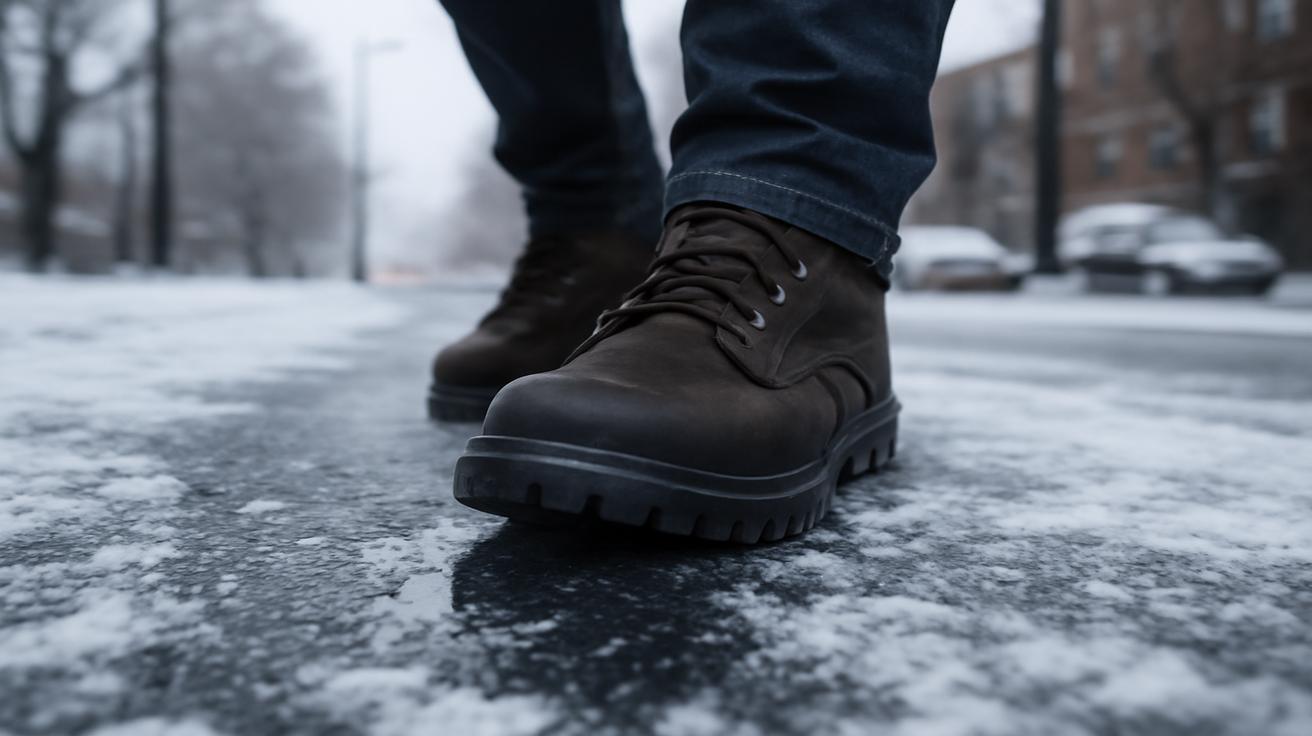
The first sound isn’t the wind, or the crunch of snow. It’s the split-second gasp your body makes when your boot slides out from under you. Your arms pinwheel, gravity sharpens, and the world briefly tilts. Then—if you’re lucky—you wobble, catch yourself on a parked car, and laugh shakily as your heart stamps out a fast drumbeat in your chest. If you’re not so lucky, a hard, cold surface rises to meet you. That’s the quiet, invisible menace of winter: black ice.
When the world looks fine—but isn’t
On certain winter mornings, streets and sidewalks wear a kind of disguise. The pavement looks dark, damp, even clean. Maybe it rained last night. Maybe it warmed up for a few hours. In the half-light, you can’t see the thin, transparent film of frozen water that has formed over the asphalt—a near-perfect match for its color and texture. This is black ice: the slick, glasslike layer that turns everyday steps into a lottery ticket with your tailbone.
What makes black ice so treacherous is its normalcy. Snow announces itself. You can see its depth, judge its risk, listen to its crunch. Ice, when it frosts white and bumpy, at least sends a visual warning. But black ice is stealth. It blends in. It waits in parking lots, driveways, crosswalks, and front steps. It forms when daytime snowmelt refreezes overnight, or when freezing drizzle coats a cold surface, or when car exhaust and foot traffic compact slush into a slick film. By the time you step outside with your coffee and your morning hurry, it’s already there.
Every winter, emergency rooms quietly fill with broken wrists, sprained ankles, and fractured hips from simple slips and falls. Many of them start the same way: “I didn’t see anything on the ground.” The good news is that with a little awareness—and some surprisingly simple tactics—you can move through this slick season with a lot more confidence, and a lot fewer bruises.
1. Walk like a penguin (seriously)
Wildlife biologists sometimes joke that penguins are the undisputed masters of ice locomotion. Watch one waddle across a frozen slope and you’re watching an evolutionary lesson in balance: short steps, low center of gravity, weight directly over the feet. It turns out, what looks funny is actually brilliant physics—and one of the smartest ways to keep yourself upright on black ice.
When you walk normally, your feet land in front of your body, and your center of gravity tilts forward. On dry ground, that’s efficient. On ice, it’s a recipe for wipeouts. To borrow a trick from the birds, slow everything down:
- Take short, shuffling steps instead of long strides.
- Slightly bend your knees and keep your torso upright, not leaning forward.
- Place your feet flat and down carefully, with your weight stacked directly over each step.
- Keep your hands out of your pockets so your arms can act as natural stabilizers.
It feels a little odd at first. You may even feel self-conscious, waddling across the parking lot like you’re rehearsing a slapstick routine. But what you’re really doing is buying yourself microseconds of reaction time and a more stable base. That tiny shift in posture can mean the difference between a scary slip and a controlled, recoverable skid.
Think of it as winter mode for your body—just like your car switches into a different gear for snow. When you hit a patch that looks suspiciously dark or shiny, switch into penguin mode. Your bones will thank you.
2. Turn your footwear into secret traction devices
Sometimes the battle is won or lost before you ever take that first step outside. Your shoes are your first line of defense. Smooth leather soles, worn-down treads, or fashionable boots designed for city sidewalks in October—not January—don’t stand a chance against ice.
Close your eyes and picture the bottom of a tire built for winter: deep grooves, channels, textures. Winter footwear should try to mimic that same philosophy. Look for boots with:
- Deep, patterned treads that can bite into snow and slush.
- Rubber soles that stay flexible in the cold rather than turning hard and slick.
- Ankle support, so a small misstep doesn’t turn into a painful twist.
But maybe you already own a dozen pairs of shoes and boots and don’t want to start from scratch. This is where clever add-ons come in. Lightweight traction cleats and microspikes can strap over your existing boots, adding metal teeth that grip into ice. They’re like snow chains, but for your feet. You can slip them on for the walk to the bus stop or the dog’s evening stroll, then peel them off at the door.
For quick fixes, even small changes help: scuffing the soles of new shoes with sandpaper, or applying stick-on traction pads to the bottom. None of these will turn flip-flops into mountaineering gear, but they nudge the odds in your favor. The goal isn’t perfection; it’s margin. Traction is margin.
Footwear and traction at a glance
| Option | Best For | Traction Level |
|---|---|---|
| Winter boots with deep tread | Daily commuting, errands | High (on snow, moderate on ice) |
| Clip-on microspikes/cleats | Very icy sidewalks and trails | Very high on ice |
| Traction stickers or pads | Occasional slick spots | Moderate |
| Smooth-soled dress shoes | Indoor or dry conditions only | Very low |
3. Make your home turf a no-slip zone
Most people imagine slipping on some distant sidewalk, but many of the worst falls happen within a few steps of home: the front stoop, the path to the mailbox, the garage apron. These are the places we’re most relaxed, least guarded, and often multitasking—balancing packages, checking our phones, shrugging into coats.
Start with the surfaces you use every day: front steps, walkways, driveways. When snow falls, clearing it quickly isn’t just about aesthetics; it’s about preventing it from compacting and refreezing into an ice rink. The longer snow sits, the more it melts during the day and freezes overnight, layering slickness upon slickness.
After shoveling, spread something gritty: sand, fine gravel, or pet-safe ice melt. Rock salt works on many surfaces, but it can be harsh on concrete, plants, and paws. Grit, on the other hand, doesn’t melt anything; it just gives your boots precious places to grip.
And then there are steps and porch landings—the notorious villains of winter. These are perfect candidates for permanent defenses:
- Apply adhesive anti-slip treads to each step.
- Use outdoor rugs or mats designed for winter, with grippy undersides.
- Ensure there’s a sturdy railing to grab, and make a habit of using it.
Inside the door, set up a landing strip: a thick mat to catch melted snow, a spot for wet boots, maybe even a chair or bench to steady yourself as you change footwear. A surprising number of slip injuries happen just inside the threshold, when melting snow creates a hidden puddle on tile or hardwood. Think of the entire path—from car door to couch—as one continuous winter route that deserves attention.
4. Read the ice like a seasoned local
Ask someone who’s spent decades in snow country and they’ll tell you: winter teaches you to see differently. You start to notice the way certain corners of the sidewalk never get sun, how the drip from a neighbor’s gutter freezes into a yearly hazard, how the sloping driveway two houses down turns glassy after every thaw. To navigate black ice safely, you don’t need superpowers—you just need to borrow a bit of that local eye.
Begin with light. Low, slanting winter sun is both friend and foe. It can bounce off ice and make it shine like glass, but at other times, it hides slick patches in deep shadow. As you walk, scan for areas that look darker and smoother than the surrounding surface. Shiny usually means slippery.
Also consider the day’s story: Did temperatures climb just above freezing and then plunge after sunset? That’s black ice weather. Did a light rain fall on subfreezing pavement? Another red flag. Is there a thin dusting of snow on the ground? Sometimes that’s not snow at all, but frost clinging to an invisible layer of ice underneath.
Pay attention to “usual suspects” in your daily routes:
- Shaded sidewalks along tall buildings or dense hedges.
- Bridge decks and overpasses, which freeze faster than regular roads.
- Driveways that slope toward the street, especially north-facing ones.
- Intersections and crosswalks where packed snow is polished by foot traffic.
Over time, this awareness becomes a quiet, running commentary in your mind: That corner stays icy. That driveway always drips. That parking lot looks wet, but it’s 20 degrees out—that’s not water. You still move through the world, but you move differently—more alert, more attuned, almost like a tracker reading fresh prints in the snow.
5. Carry yourself like a fall-ready athlete
There’s another side to avoiding winter injuries that has nothing to do with outside conditions and everything to do with your body. Balance isn’t just luck; it’s partly a skill you can train. The stronger your legs and core, the more stable you are, and the better your reflexes when a foot starts to slide.
Think of the last time you watched someone almost fall but somehow twist, catch themselves, and turn it into an awkward dance instead of a disaster. That recovery came from muscles and reflexes kicking in fast. While you don’t need to train like a skier to walk to the bus stop, a few simple habits help:
- Practice standing on one leg for 20–30 seconds at a time (near a counter or wall, just in case).
- Do gentle squats or sit-to-stands from a chair to build leg strength.
- Engage your core—those deep abdominal muscles—when you walk, as if someone is about to snap a photo of you.
Even the way you carry your bags can make a difference. A heavy shoulder bag swinging on one side throws off your center of gravity. A backpack or evenly balanced load keeps you more centered, more nimble. If one hand must hold something—groceries, a coffee, a toddler’s mittened hand—try to keep the other hand free for balance or for grabbing a railing.
Perhaps the most underrated fall skill is learning how not to stiffen up. When we slip, our instinct is to lock our knees, tense our muscles, and brace for impact. But a slightly bent knee, a soft elbow, a torso that can twist—that’s what lets your body spread out the force instead of focusing it all on a wrist or hip. It’s a strange thing to practice, but even gently rolling onto your side if you feel yourself going down can reduce the chance of a serious injury.
Everyday habits that quietly reduce winter falls
So where do the “9 smart ways” fit into your daily life? They’re not dramatic. They’re not complicated. They’re small decisions you can weave into your routine until they feel as automatic as checking the weather.
- Slow down and give yourself extra time in icy weather.
- Switch to a “penguin walk” whenever conditions look suspicious.
- Wear or add proper traction to your footwear.
- Clear and grit your home steps, paths, and driveways quickly.
- Use railings and handholds without hesitation.
- Scan for shiny, dark, or shaded patches as you walk.
- Keep one hand free whenever possible for balance.
- Strengthen your legs and balance with simple daily exercises.
- Stay present—put the phone away while navigating snow and ice.
Mostly, it comes down to respect. Respect for physics, for gravity, for the silent chemistry of water as it shifts from liquid to slick, glassy solid. Respect for your own body’s limits, and for the fact that one awkward landing can change an entire season.
Winter will always carry a little risk. The world grows harder, sharper, less forgiving. But it also grows brighter: snowfields catching the sun, the air tasting clean and metallic in your nose, your breath rising in soft clouds. The goal isn’t to tiptoe through the season in fear. It’s to move through it with awareness—grounded, steady, and just cautious enough.
Frequently Asked Questions
How can I tell if I’m looking at black ice or just wet pavement?
Black ice often looks like slightly darker, glossier pavement, especially when the air temperature is below freezing. If it’s cold and the surface appears wet, assume it’s icy and walk accordingly. Shiny patches, especially in shaded areas or places where water usually collects, are strong clues.
What is the safest way to walk on a very icy sidewalk?
Take short, shuffling steps, keep your feet under your body, and bend your knees slightly. Keep your torso upright, your arms out of your pockets, and your hands ready to balance or grab a railing. If there’s snow alongside the path, walking on the snow can sometimes give better grip than bare ice.
Are certain shoes actually dangerous on ice?
Yes. Smooth-soled shoes—like many dress shoes, high heels, or fashion boots with hard, flat bottoms—provide very little traction. Worn-out treads are also a problem. For icy conditions, choose boots or shoes with deep, rubber treads, or add traction cleats or pads.
What should I do immediately after a fall on ice?
First, pause and assess yourself. Move slowly and check for sharp pain in your wrists, hips, back, or head. If you feel dizzy, confused, or unable to move a limb normally, seek medical help right away. Even if you feel mostly fine, keep an eye on bruising, swelling, or increasing pain over the next 24–48 hours.
Is rock salt the best way to prevent ice at home?
Rock salt works in many situations, but it’s not always ideal. It can damage concrete, lawns, and plants, and can irritate pets’ paws. Sand, fine gravel, or pet-safe ice melts are good alternatives. Often, the best strategy is a combination: shovel promptly, then add a melting agent if needed, and finish with grit for traction.
How much can balance exercises really help with winter falls?
Balance and strength exercises can make a significant difference over time. Stronger legs and better balance give you more control when a foot slips and improve your ability to recover mid-fall. Even a few minutes a day—like practicing standing on one leg or doing sit-to-stands—can improve stability, especially for older adults.
Is black ice only a problem for older people?
No. While older adults are more likely to be seriously injured by falls, black ice doesn’t discriminate. People of all ages, from kids running to school to athletes sprinting to a bus, can slip and fall. Building safer habits—good footwear, slower pace, and awareness—benefits everyone, regardless of age.