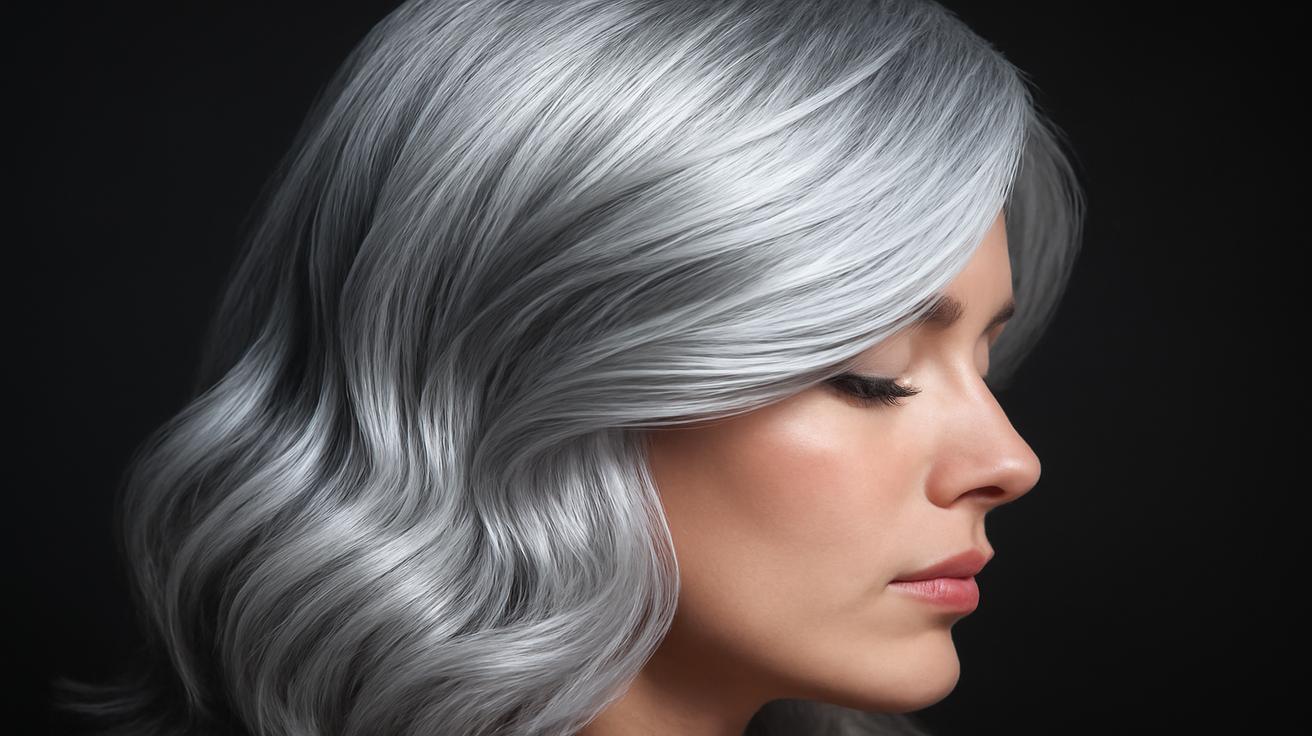
The first silver hair usually doesn’t arrive with a fanfare. It shows up quietly one morning, glinting back at you in the bathroom mirror, catching the light in a way your hair never quite has before. For a second, everything pauses: your toothbrush mid-air, the sound of the kettle hissing in the kitchen, the ongoing scroll of daily thoughts. There it is—one thread of moonlight in a sea of sun-warmed color. You lean in closer. You tug at it, twist it between your fingers. And in that tiny, illuminated moment, a question appears: Am I ready for this?
When Silver Stops Being a “Sign of Age” and Starts Being a Color Choice
Somewhere around fifty, the conversation about hair tends to change. For decades we talk in shades of chestnut, coffee, copper, caramel, ash blonde. Then suddenly the palette shifts, and there’s a new character on stage: gray. It’s often spoken about in hushed tones, with words like “cover,” “hide,” “touch-up.” As though gray hair were a leak in the ceiling instead of a new kind of skylight.
Yet in recent years, something has been quietly, steadily transforming. Instead of treating gray as a problem to be solved, more people are treating it like what it truly is: a color. A beautiful, nuanced, incredibly expressive color. And right in the middle of that shift, a particular shade has emerged as a kind of hero for hair after fifty: the soft, luminous, deliberately polished tone often called “silver gloss.”
Silver gloss is not about pretending to be younger. It’s almost the opposite. It’s about choosing how you want your gray to look, instead of letting it just happen to you. It’s the difference between accidentally drifting onto a rocky shore and consciously steering your boat toward the coastline at sunrise. The destination is the same—this is your real hair, your real age—but the experience, and how you feel in it, is entirely different.
The Texture of Time: How Hair Changes After 50
To understand why silver gloss is such an ideal color approach after fifty, you first have to feel, really feel, what’s happening to your hair. Run your fingers through it one morning. Notice how the strands don’t quite behave as they used to. Gray hair is often more porous, more fragile, sometimes drier, sometimes inexplicably wiry.
It’s as if every strand is slowly rewriting its own rulebook. The pigments that once colored your hair—from dark eumelanin to warmer pheomelanin—are produced in smaller amounts or stop altogether. Without that pigment, the hair shaft changes. It reflects light differently. It absorbs color differently. It swells with moisture and loses it more quickly. It can feel both softer at the root and rougher at the ends, like a fabric that’s been gently worn at the elbows but still holds its shape at the seams.
This is why simply “letting it go gray” can sometimes feel underwhelming—or unsettling. The color comes in unevenly: white at the temples, steel at the crown, yellowish near the tips where old dye hangs on. The texture doesn’t always match your cut. The overall effect may not feel like a conscious look, but rather a story half-told.
Silver gloss steps in here, not as a heavy-handed color overhaul, but as a way to harmonize what’s already happening. It respects the natural direction of your hair while giving it intention, shine, and unity. It’s like tuning an instrument that’s already beautifully made but slightly out of key.
What “Silver Gloss” Really Is (And Why It Flatters Almost Everyone)
“Silver gloss” could be mistaken for just another trendy name, but there’s something quietly clever about it. It’s not jet gray, not icy white, not the blue-tinged rinse that haunted so many childhood memories of elderly relatives. Silver gloss is more like a sheer veil of cool-toned light laid gently over your existing hair, correcting, blending, and illuminating rather than hiding.
Think of it as:
- A translucent silver tone that neutralizes yellow, brassy, or dull patches.
- A whisper of cool pigment that makes your natural gray look intentional, not accidental.
- A shine-boosting layer that makes each strand catch the light like spun silk.
What makes this especially powerful after fifty is balance. As skin tone shifts with age—losing some of its natural underlying pinks and warmth—very dark or very warm colors near the face can start to look harsh or heavy. Silver gloss, with its luminous, cool-leaning softness, tends to flatter a wide range of mature complexions. Instead of fighting your changing skin tone, it reflects it gently, like water mirroring the sky at dusk.
Picture a head of naturally graying hair where the top is light, the mid-lengths are a muddy brown, the ends still hold onto last year’s blonde, and the temples have gone pure white. With silver gloss, those different tones can be nudged into harmony. The lingering warmth in the mid-lengths is cooled and softened. The white is enhanced rather than dulled. The whole head takes on a quiet, pearly sheen—less “miscellaneous gray,” more “soft metallic tapestry.”
From Dyeing to Defining: The Emotional Shift
There’s a moment many people describe, often happening somewhere between fifty and sixty, that sounds almost like a quiet rebellion. They sit in a salon chair, cape fastened around their neck, while their colorist shakes a familiar tube or bowl and asks, “Same as usual?” And out of nowhere, something in them says, “No. Actually… I think I’m done with covering it.”
That “no” is rarely simple. It’s woven from fatigue (of constant root touch-ups), curiosity (what does my real hair even look like now?), defiance (why am I hiding my age as if it’s a secret?), and sometimes a new, fierce kind of self-respect. Silver gloss slots itself into that moment as a bridge instead of a cliff. You don’t have to jump straight from thirty years of color to raw, unfiltered grow-out. Instead, you can transition in a way that feels gentle, considered, and beautiful at every stage.
Imagine sitting in that same chair, only this time the conversation shifts:
“I’m thinking of embracing my gray.”
“Wonderful. Let’s enhance what you have. We’ll soften the old color, then add a silver gloss to unify everything and bring out the shine.”
The cape feels less like armor and more like a cocoon. You watch as foils give way to toners, as deep, opaque colors are replaced by transparent ones. You leave not with a brand-new, foreign version of yourself, but with a subtly refined one. The gray is there, clearly. It’s just…beautifully lit.
How Silver Gloss Works in Real Life
Technically speaking, a glossy silver finish is often created using demi-permanent or semi-permanent color, toners, or tinted glazes. These don’t fully penetrate and permanently alter the hair shaft the way traditional permanent dyes do. Instead, they sit closer to the surface, refining tone and enhancing shine. That’s important for aging hair, which can be more fragile and more easily damaged.
A colorist might:
- Gently remove or blend old dye still clinging to the ends.
- Use a cool-toned gloss with violet, blue, or silver undertones to cancel out brassiness.
- Apply a sheer, silvery glaze all over to unify and brighten your natural gray.
The end result is not a flat, one-note silver helmet. It’s layered and nuanced. The natural highs and lows of your gray still show, like clouds passing across the face of the moon. But now they’re all in the same family of cool, luminous tones.
Designing Your Own Kind of Silver: Cuts, Light, and Movement
Color is only part of the story. The cut you choose for your silver hair changes how it lives in the world. Imagine a sharp, chin-length bob with a clean edge: on silver-gloss hair, every move of your head turns into a kind of flash photography, each strand picking up light along that neat plane. Or picture a soft, shoulder-grazing shag with layers that lift slightly in the breeze, the silver catching in wisps and arcs, like mist rising from a lake.
Short, sculpted crops can make silver gloss feel tailored and modern, like a well-cut jacket. Longer hair with waves or soft bends lets the metallic sheen slide and pool, more fluid, more romantic. Even bangs change the story: a wispy fringe can pull silver like a halo around the eyes, while a fuller curtain bang frames the face in cool luminosity.
Lighting, too, becomes part of your style. Step outside on a cloudy afternoon, and your silver gloss might read as soft pewter. In the kitchen under warm bulbs, it might verge on champagne. In the morning sun, it can look almost platinum at the crown and deeper at the nape of the neck. It’s a color that responds to the world—alive instead of static.
Daily Care for Silver Gloss Hair
Silver gloss is not high-maintenance in the way monthly root touch-ups are, but it does respond well to a bit of gentle ritual:
- Use a violet or silver-boosting shampoo occasionally to keep yellow tones at bay.
- Hydrate regularly with masks or conditioners designed for mature or color-treated hair.
- Protect from heat with sprays or creams, since gray hair can scorch and dull more easily.
- Limit harsh sun exposure or use a hat; UV rays can make gray hair look dry and slightly yellowed.
This care isn’t about preserving an illusion, but about honoring a texture and color that deserve to be seen at their best—like polishing silver you actually use, not the kind that sits untouched in a cabinet “for good.”
Silver Gloss vs. Other Options: Choosing Your Path
Not everyone wants the same level of gray or the same style of silver. The beauty of treating gray as a color is that it opens up choices. Silver gloss is one particularly elegant path, but it’s helpful to see how it sits among other approaches:
| Approach | What It Looks Like | Maintenance | Best For |
|---|---|---|---|
| Full Coverage Dye | Opaque color, roots hidden | High: frequent touch-ups | Those not ready to see gray at all |
| Highlights/Lowlights | Blended, multi-tonal effect | Moderate | Soft transition from dyed to gray |
| Natural Grow-Out | Untouched, authentic gray | Low, but visually uneven at first | Those who enjoy a raw, organic look |
| Silver Gloss | Luminous, cool-toned, unified gray | Low to moderate (gloss refresh every few weeks/months) | Anyone embracing gray but wanting polish and shine |
Silver gloss stands out because it works with the gray you have, not against it. It doesn’t lock you into a rigid cycle of concealment. Instead, it offers a way to keep your color evolving with you, like a wardrobe you keep refining over time instead of a costume you’re stuck wearing.
Silver as Identity: The Stories We Tell With Our Hair
Some of the most powerful images of gray hair after fifty are not on red carpets or magazine covers, but in everyday places: the woman at the farmer’s market with a halo of silver curls and a canvas bag of herbs; the man walking his dog at dawn, his short, silvered hair bright against a navy jacket; the teacher standing at a whiteboard, silver bun pinned loosely at the nape of her neck, explaining something complicated in a calm, steady voice.
In each of those scenes, the gray hair doesn’t whisper “age” so much as it speaks “presence.” It says: I have been here a while. I have seen some seasons. I am still very much in this one.
When those strands are enhanced with a soft, deliberate gloss, the effect isn’t vanity; it’s clarity. The silver looks like a choice, not a leftover. It becomes part of how you introduce yourself to the world, visually, before you ever say a word.
There’s a certain relief, too, in stepping out of the constant battle with regrowth. Silver gloss doesn’t require perfection at the roots. It embraces the idea that hair is always in motion—growing, shifting, catching new light every few weeks. It lets you be a person with hair, not a person managing a permanent emergency on top of their head.
Making the Decision: A Quiet, Personal Revolution
The choice to embrace silver, especially with an intentional color like silver gloss, often happens in small, private rooms: a salon chair, a bathroom mirror, the quiet space in your mind right before sleep. It can feel like reclaiming time and energy. It can feel like stepping into who you actually are, instead of who you were trying to stay.
You might start by allowing a few centimeters of natural gray to grow in, then meeting with a colorist who understands toning and glosses for mature hair. You might collect photos of silver you love—not extreme platinum or neon metallic, but those soft, atmospheric grays that seem to glow from within. You might simply decide, one night before bed, “Next appointment, I’m asking for silver gloss. I want to see what my hair can be, not just what it used to be.”
And then one day, you’ll walk past a shop window and catch your reflection. The person looking back at you has hair that shimmers softly, like the inside of an oyster shell. There’s no hard line of roots, no sense of a secret being concealed. Just silver, gentle and lucid, framing your face. You may not think, “I look younger.” You may think something better: “I look like myself.”
Frequently Asked Questions About Silver Gloss and Gray Hair After 50
Does silver gloss damage gray hair?
Most silver gloss treatments use demi-permanent or semi-permanent formulas, which are generally gentler than permanent dyes. When applied by a professional and paired with good at-home care, they can actually make gray hair feel smoother and look shinier. However, any chemical process can be drying, so conditioning and heat protection are still important.
How often do I need to refresh a silver gloss?
Depending on your hair type, porosity, and how often you wash it, a silver gloss can last anywhere from four to eight weeks, sometimes longer. Because it fades softly rather than showing obvious roots, many people find the maintenance feels lighter and more flexible than traditional root touch-ups.
Will silver gloss make all my hair look one flat color?
No, not if it’s done well. A good silver gloss respects the natural highs and lows in your gray, enhancing them instead of erasing them. You’ll still see dimension—some areas may look slightly lighter or deeper—but the overall tone will be more harmonious and luminous.
Can I use silver gloss if I still have a lot of my natural color left?
Yes. Silver gloss can be used to gently cool and blend natural dark or light tones with emerging gray. It can soften warm or brassy areas and create a more unified, cool-leaning palette that makes the gray threads look deliberate and chic rather than random.
Is silver gloss only for women?
Not at all. Anyone with gray or graying hair—regardless of gender—can benefit from a silver gloss. It can make short cuts look crisper, longer styles more fluid, and naturally salt-and-pepper hair more elegant and intentional.
Will silver hair make me look older?
The impact of silver hair on your appearance has more to do with condition, tone, and cut than with the simple presence of gray. A well-cared-for, glossy, thoughtfully cut head of silver hair often looks fresher and more modern than heavily dyed hair with harsh lines or fading color. It’s less about age and more about vitality and coherence.
Can I go back to darker color if I don’t like my silver gloss?
Yes, but it’s wise to move carefully. A colorist can gradually deepen your tone or add lowlights if you decide silver isn’t for you. However, many people who try silver gloss are surprised by how quickly they grow attached to the softness, shine, and authenticity it brings.
What should I tell my stylist if I want to try silver gloss?
Bring a few reference photos that show the kind of soft, luminous gray you love. Use words like “cool,” “pearly,” “soft metallic,” or “natural but polished.” Let them know you want to enhance your gray, not completely erase or overwrite it. Ask specifically about a demi-permanent or glaze-style silver toner rather than a full permanent color.
In the end, gray hair after fifty doesn’t have to be a quiet surrender. With silver gloss, it can be a quiet, shining declaration: that this is your time, in your true colors, lit from within.