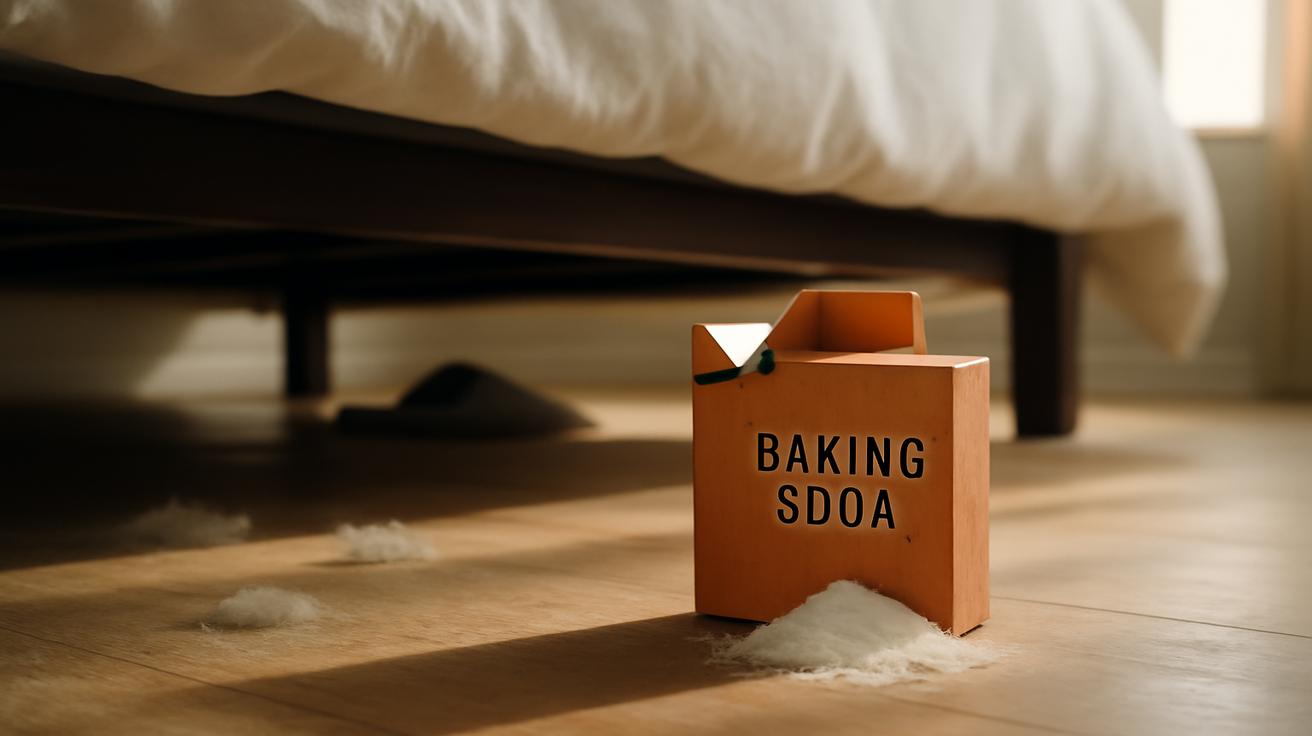
The first time I heard someone say, “Just put a bowl of baking soda under your bed – it cleans the air while you sleep,” I laughed. It sounded like one of those friendly, half-remembered tips passed around in text threads and family group chats. But then I heard it again. And again. A neighbor swore by it. A coworker said it changed her sleep. A relative tried it, posting a picture of a little white bowl beneath the bed frame with the caption: “My new air purifier – costs less than coffee.”
Within weeks, it felt as if baking soda had quietly migrated from the kitchen cupboard to the bedroom floor of half the country. The humble box that once lived near vinegar and dish soap was suddenly being treated like a silent, invisible night-shift janitor for the air we breathe. Yet, on the other side of this trend, sleep specialists watched, not with delight, but with growing unease.
The Night Our Bedrooms Became Experiments
There’s something tender about the way we try to care for ourselves at night. Think of the small rituals: the glass of water on the nightstand, the book with a folded page, the lamp with its soft, amber glow, the diffuser with lavender oil that may or may not be doing anything but smells like calm. Sleep has become a battleground of tiny hacks and hopeful habits.
Now imagine a bedroom in the late evening. The blinds are lowered, the outside world muted to a distant hum. The mattress dips as you sit down. Beneath the bed, a shallow dish of powder peeks out from the shadows – a moon-pale circle of baking soda, almost ceremonial. You slide under the covers, telling yourself the air will be fresher tonight, that your lungs will pull in cleaner, purer breaths.
This image has traveled far. Clips on social media show hands pouring baking soda into bowls, sliding them under crates, cots, cramped apartment bunks. Captions promise “detoxed air,” “odors gone overnight,” and – the holy grail – “better sleep.” It sounds simple enough: baking soda absorbs odors in the fridge, so why not in the bedroom?
But somewhere between “my fridge smells less like leftover onions” and “my lungs are safer while I sleep,” a leap has been made. A big one. And it’s this leap that has sleep specialists waking up worried.
What Baking Soda Really Does in the Dark
Baking soda has a comforting reputation. It feels like something your grandmother trusted – scrubbed into sinks, baked into bread, sprinkled on carpet before vacuuming. Chemically, it’s sodium bicarbonate, and it’s genuinely useful. It can help neutralize acids, tame some odors, and act as a mild abrasive. In certain cases, it can make surfaces, fabrics, and thin layers of air around them smell a little fresher.
But the air in a bedroom at night is not a refrigerator, and the ceiling above your bed is not the lid of a plastic container. Real indoor air is a tango of microscopic players: dust, pet dander, pollen, volatile organic compounds (VOCs) from paints and cleaning products, carbon dioxide from our own exhaled breath, tiny skin flakes, humidity, traffic pollution drifting in through cracks in windows, and more subtle chemicals we can’t see, smell, or name.
Baking soda sitting in a bowl on the floor does not actively pull all those particles and gases out of the air. It doesn’t hum, filter, suction, or circulate. It just… sits there. At most, it may capture a few odor-causing molecules that land on or near it, especially some acidic ones. That might mean a slightly less musty, less “old sock” smell in some rooms over time. But cleaning the air in the way people imagine – making it purer, safer for the lungs, detoxified – is a different story.
“If baking soda could meaningfully purify a whole bedroom of air just by sitting there, air quality science would look very different,” one sleep specialist remarked in a recent seminar. “We’d be stocking hospitals and schools with open boxes of pantry goods.”
Why Sleep Doctors Are Uneasy
Sleep specialists, pulmonologists, and environmental health experts are not upset because people like baking soda. They’re alarmed because this quiet craze reveals something more fragile: how easily we trade real, evidence-based solutions for comforting myths – especially when we are exhausted, anxious, and desperate for better sleep.
In clinics and research centers, doctors watch patients struggle with insomnia, sleep apnea, asthma, nighttime allergies, and chronic fatigue. They also see what actually moves the needle: reducing bedroom dust and pet dander, maintaining healthy humidity levels, improving ventilation, using medically sound air purifiers when needed, addressing snoring or sleep apnea with proper testing, cutting down on late-night screens and overstimulation, and sometimes, carefully prescribed medications or behavioral therapy.
Against that backdrop, a bowl of baking soda under the bed isn’t simply harmless quirkiness. It can become a comforting decoy.
“My concern,” a sleep researcher explained to a colleague, “is not the baking soda itself. It’s what people don’t do because they think the baking soda is enough. The patient with worsening asthma who doesn’t see a doctor because ‘I’m already cleaning my air naturally.’ The bed partner of someone who stops breathing in their sleep but says, ‘We put baking soda under the bed, the air is better now, right?’”
In other words, belief in the power of that white powder can delay more critical action. And in sleep medicine, delayed action sometimes means years of poorly oxygenated nights, unseen strain on the heart, and quietly building health risks.
How This Myth Took Root
Myths usually grow from a seed of truth. Baking soda does have odor-absorbing properties. You can sprinkle it on a musty rug, leave it out in a smelly fridge, or use it in shoes that have lived through too many summer hikes. In small, contained spaces where the primary problem is smell, not complex pollution, sodium bicarbonate can be surprisingly effective.
Combine that with a collective fear of chemicals and a surge of “natural hacks” content, and it’s easy to see how the leap happens. A voiceover whispers on a video clip: “Stop wasting money on chemical air cleaners – this natural trick purifies your room.” The visuals are calming, the lighting soft, the cost almost zero. The story is irresistible.
The human brain loves stories more than statistics. The idea that a household staple can silently fix what we can’t see – air itself – is seductive. It gives a sense of control in a world filled with invisible particles and late-night health headlines. You don’t need an expensive purifier. You don’t need confusing charts about HEPA filters or VOCs. Just a bowl, a scoop of powder, and trust.
Yet anything that seems to solve everything at no cost – financial or effort – deserves a slower, more curious look.
The Air in Your Bedroom Is More Than a Smell
Think about how you breathe at night. Over the course of eight hours, an adult pulls in thousands of liters of air. That air is not just background. It’s an ingredient in your biology, feeding every part of you even as you lie motionless, unaware. If it’s rich with irritants, your body notices, even if your mind never wakes to witness it.
For people with allergies, dust mites living in bedding, pillows, and carpets can inflame nasal passages. For those in polluted cities, tiny particles called PM2.5 drift indoors and lodge deep in the lungs. For others, stale, poorly ventilated air can mean a slow rise in carbon dioxide overnight, leaving them dull and foggy in the morning.
Baking soda under the bed, by itself, does not address these realities. It doesn’t reach into your mattress to evict dust mites. It doesn’t filter fumes from nearby traffic. It doesn’t open a window, run a fan, seal cracks in an old building, or change the humidity level that helps mold stay at bay.
Sometimes, when people remove the dish in the morning and notice dust on its surface, they take that as proof. “See? It’s catching all the dust from the air.” In truth, any flat surface left in a room will accumulate dust naturally due to gravity and air currents. Your bowl of powder is catching dust in the same way your nightstand, windowsill, and bookshelf already do – it’s not an active net, just one more landing pad.
What Helps More Than a Bowl of Powder
None of this is to say you must be perfect, or that only complex solutions matter. The real tools for healthier air and better sleep are often surprisingly simple – but they are active, not symbolic.
Here’s a comparison many sleep specialists wish they could show every patient who mentions baking soda as an “air cleaner”:
| Approach | What People Expect | What Actually Happens |
|---|---|---|
| Baking soda under the bed | Cleans the air, reduces pollutants, improves sleep quality | May slightly reduce some odors nearby; minimal effect on overall air quality |
| Regular bedroom cleaning (vacuuming, dusting, washing bedding) | Just makes the room look tidy | Reduces dust, dander, and allergen load – directly helpful for sensitive airways |
| Ventilation (opening windows when outdoor air is reasonable, or using fans) | Might not change much | Refreshes indoor air, lowers built-up CO2, can decrease stuffiness and improve alertness on waking |
| A well-chosen air purifier with a proper filter | Feels like a luxury gadget | Actively reduces airborne particles (and some models reduce certain gases), especially useful in polluted or allergen-heavy areas |
| Medical evaluation for sleep problems (snoring, apnea, chronic insomnia) | Only for “serious” cases | Can uncover issues silently harming sleep and health, and offer treatments that change lives, not just smells |
From the perspective of a sleep specialist, the danger is not that baking soda is toxic. In most cases, it isn’t, as long as you’re not inhaling large amounts of the powder or letting children or pets ingest it. The danger is that it simply doesn’t do what people hope – and that belief in it might crowd out other, more meaningful steps.
The Seduction of Easy Fixes
There’s another layer to this story – an emotional one. Many people who slide a dish of baking soda under the bed are tired in more ways than one. They’re tired of struggling to fall asleep, tired of headlines about pollution and toxins, tired of feeling overwhelmed by advice. In that state, an easy, inexpensive ritual feels merciful.
We are wired to prefer the simple explanation, the single object that promises to fix what feels out of control. It’s no accident that these tips spread fastest in short-form videos and bite-size posts. They fit neatly into our scrolling, restless minds: “One thing that will change your sleep,” “One product that cleans your air,” “One hack doctors don’t tell you.”
But your sleep is not a one-hack problem. It’s a living system, influenced by light and noise, routine and stress, diet and movement, the shape of your nose and throat, the way your mind loops through worries after dark, the architecture of the building you live in, even the trees or highways outside your window.
Expecting a bowl of baking soda to clean that entire picture is like placing a single sponge in the middle of a river and hoping it will purify the water downstream. It’s not malicious, just mismatched to the scale of reality.
A Different Kind of Night Ritual
Imagine a shift in the bedtime scene. You still have your small rituals – the book, the lamp, the quiet stretch. But instead of relying on a silent bowl of powder to guard your air, you choose a handful of actions that actually change your environment.
You crack a window earlier in the evening, or run a small fan to circulate the air. You wash your pillowcases more regularly, noticing how the fabric feels cooler and cleaner against your face. You vacuum under the bed once a week, disturbing the colony of dust that has been quietly building there. You pay attention to humidity – maybe using a simple hygrometer – adjusting with a humidifier or dehumidifier as needed.
If your partner mentions that you stop breathing in your sleep, or you wake gasping or with a desert-dry mouth, you don’t assume your air is now “clean” because of the baking soda. You make an appointment. You describe the symptoms. You allow the possibility that the issue isn’t in the air at all, but in your airway, and that there might be a mask, device, or positioning trick that could change your nights and your future heart health more than any white powder ever could.
This is the kind of care sleep specialists dream about when they watch the baking soda trend spread: not shame, not scolding, but a small recalibration. A willingness to let the simple ritual be what it is – maybe a minor odor helper, a psychological comfort – without turning it into a fantasy cure.
Listening to the Quiet Warnings
Many trends fade as quickly as they arrive. In a few months or a few years, the baking soda craze might settle back into what it always was: a solid, practical kitchen staple with a loyal fan base in laundry rooms and fridges. But the pattern it shows – our hunger for gentle, easy, “natural” solutions to complex, invisible problems – will remain.
Sleep specialists see this pattern with blue-light glasses, miracle teas, magnetic bracelets, smart rings that promise perfect rest through numbers alone. Some of these tools have modest benefits. Some are harmless placebos. Some distract from deeper issues that need attention.
In the end, what alarms the experts is not that we want shortcuts, but that we sometimes accept them in place of care we truly deserve. Clean air is not a luxury. Neither is decent, restorative sleep. You are allowed to demand more than a pantry solution for a problem that touches every system in your body.
So if you like the look of that little bowl under the bed, if it soothes you to believe something is at work while you dream, you don’t have to throw it out. Just don’t let it be the only thing you do. Ask harder questions of the space you sleep in. Ask fuller questions of your body. Ask, if needed, for help from someone who has spent years studying what really happens in the quiet hours, behind your closed eyes, beneath the soft rise and fall of your chest.
Because the real story of your sleep deserves more than a myth – and your lungs, your brain, and your future mornings deserve more than a thin dusting of hope under the bed.
Frequently Asked Questions
Does baking soda under the bed actually clean the air?
No, not in any meaningful or comprehensive way. Baking soda can absorb some odors from nearby air and surfaces, especially acidic smells, but it does not filter out most pollutants, allergens, or fine particles floating in a typical bedroom.
Is it harmful to put baking soda under the bed?
In most cases, simply placing a bowl of baking soda under the bed is not harmful, as long as the powder is not disturbed and inhaled, and pets or children cannot ingest it. The bigger concern is relying on it instead of taking effective steps to improve air quality or address medical sleep issues.
What’s the best way to really improve bedroom air quality?
Helpful strategies include regular cleaning (vacuuming, dusting, washing bedding), good ventilation (opening windows when possible, using fans), managing humidity, and using a well-chosen air purifier if needed. Keeping pets off the bed and reducing indoor smoke or strong chemicals also make a difference.
Can baking soda help with allergies while I sleep?
Not significantly. Allergies at night are usually triggered by dust mites, pet dander, pollen, or mold. Baking soda in a bowl does not remove these from mattresses, pillows, or the broader air. Washing bedding in hot water, encasing pillows and mattresses, and reducing dust and humidity are more effective approaches.
When should I see a doctor about my sleep instead of trying home hacks?
You should seek medical advice if you have loud or frequent snoring, pauses in breathing during sleep, gasping or choking at night, persistent insomnia, morning headaches, severe daytime sleepiness, or high blood pressure combined with poor sleep. These can signal conditions like sleep apnea or other disorders that require professional evaluation.