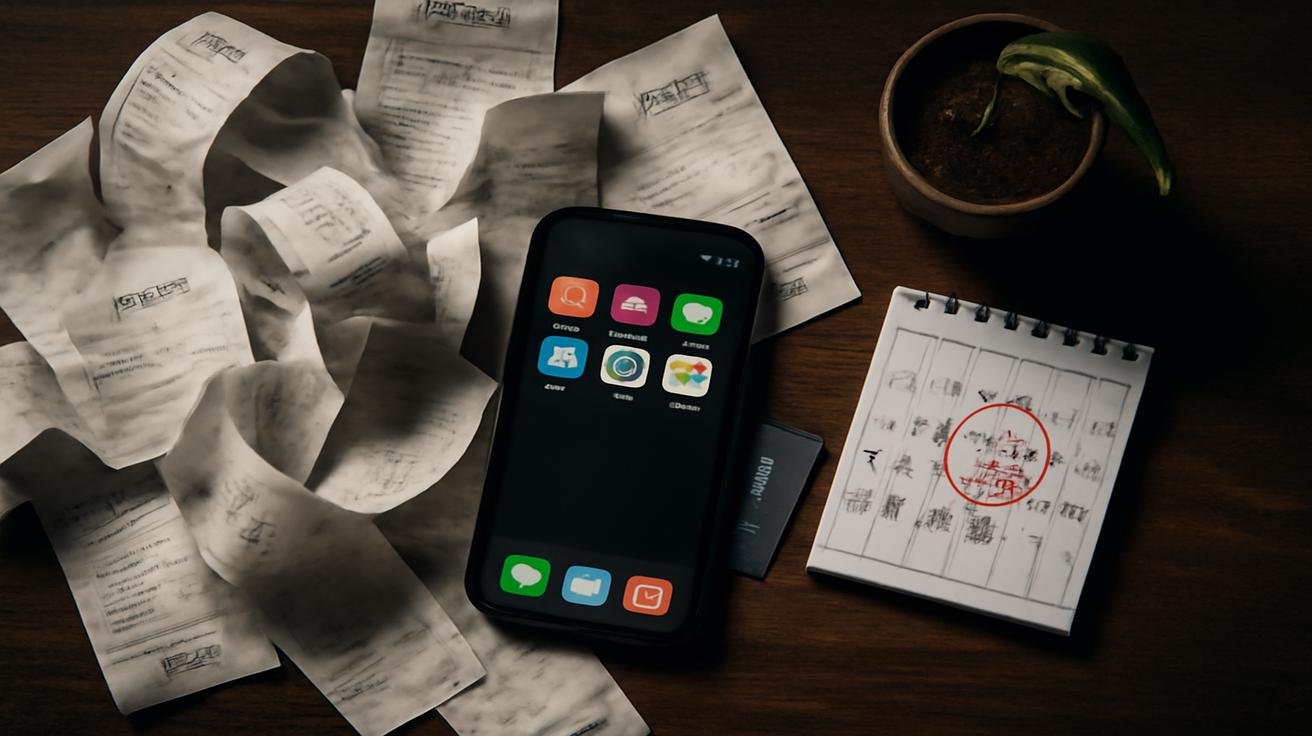
The morning starts like a soft apology. Pale light slips through the curtains, the kettle shivers toward a boil, and your phone screen blooms to life with its usual quiet demand: a handful of notifications, a nudge from your banking app, an offer from the coffee shop down the street. You tell yourself you’re just going to check the weather, maybe skim the headlines. But by the time you’ve taken your first sip of coffee, three tiny financial decisions have already drifted into your day like leaves on a current—small, almost weightless, and yet somehow, they never stop coming.
This is the thing about daily spending: it rarely feels like spending. It feels like comfort, like convenience, like “just this once.” But “just this once” has a way of showing up again tomorrow, and the day after that, and the day after that, until one day you look back and realize it didn’t arrive as a storm, it arrived as a quiet, steady rain. This daily spending pattern, gentle and reasonable and almost invisible, slowly creates a pressure you can’t quite name. Not a crisis, not a disaster—just a constant background hum of financial unease, like a low note you can’t turn off.
The Quiet Weight of Tiny Decisions
Walk with me through an ordinary weekday. No emergencies, no big splurges, just the soft choreography of habits you’ve repeated so often you barely notice them.
You step outside, and the air smells faintly of exhaust and morning pastries. The coffee shop door swings open with its comforting chime, and the warmth inside wraps around you. The display case is glowing with croissants that shine with a buttery sheen. You weren’t planning on breakfast here, but your stomach tightens a little in interest. You tap your card. Coffee. Pastry. Tip—because you’re a good person, because they know your name, because it feels wrong not to.
On the ride to work, you flick through social media. Someone’s wearing a jacket that looks exactly like the person you wish you were: put-together, adventurous, somehow both casual and impeccable. You click. It’s on sale. Two taps later, it’s yours. Future-you will “figure the money out.” Present-you gets a hit of something that feels suspiciously like relief.
By midmorning, you’re tired. You grab a drink from the vending machine. At lunch, the line at the grocery store looks unbearable, so you order delivery instead. Delivery fee. Service fee. Tip again. That evening, streaming platforms ask if you’re still watching, food apps ask if you’re still hungry, and your brain, exhausted from decision after decision, just says yes.
None of it feels reckless. None of it feels wild. It’s not buying a luxury car or booking a last-minute international vacation. It’s small, necessary, and often social. And yet, the bank account never seems to quite catch up with your plans. There’s always that stretchy feeling at the end of the month, like your money is a piece of fabric pulled just a little too tight.
The River Beneath the Surface
Modern life is built around frictionless spending. You don’t see cash leaving your hands; you see numbers shifting in a small glowing rectangle. The act of paying has been smoothed, polished, and softened until it barely registers as an action at all.
There’s a reason it feels like this. Every app, every checkout page, every glowing “Pay Now” button is designed to make the process of parting with money softer and quieter. Your card details are saved. Your favorite orders are one tap away. Subscriptions renew with the calm inevitability of the sunrise.
If you could watch your daily spending pattern as a time-lapse, it might look like a river. Not a roaring, dramatic one, but a narrow stream that never, ever stops flowing. Each day, a few dollars here, a few more there, drifting past in a current of routine and habit:
- A coffee on your way to work.
- A snack when the afternoon slump hits.
- A ride-share when you’re running late.
- Streaming services, cloud storage, apps.
- Small “treat yourself” moments that feel deserved, even necessary.
What’s insidious is not the size of any one decision, but the way they gently synchronize. The pattern is the problem, not the pieces. The river doesn’t flood your financial landscape in one go; it just keeps eroding the banks, grain by grain, until the ground beneath your long-term goals starts to give way.
The Slow Build of Invisible Pressure
You might not call it stress—not at first. It’s more like a low-level static at the edge of your mind. You notice it when you’re about to fall asleep: a quick check of your balance that leaves you scrolling a little too long. You feel it when a friend invites you on a weekend trip and your first instinct isn’t excitement, but calculation. You sense it when your car makes a strange sound and your heart drops—not because of the inconvenience, but because you’re silently wondering, “Can I afford this if it’s serious?”
This is what long-term financial pressure feels like for many people: not a single dramatic moment, but a running tension between who you want to be and what you’re quietly spending to get through your days.
The pattern of daily spending pulls from the same well your big dreams depend on. The down payment you wanted to save, the buffer that would let you leave a job you hate, the trip you’ve promised yourself for years—these things don’t vanish in a blaze of reckless decisions. They’re slowly suffocated by a thousand reasonable ones.
Where the Money Actually Goes
To see the pattern, you often have to drag it into the light. The human brain, marvelous and messy, is notoriously bad at tracking small, frequent expenses. We remember the big purchases—the laptop, the flight, the new furniture—but our memory blurs the smaller ones into a vague impression of “not that much.”
Imagine sitting down with a month’s worth of actual numbers, not feelings. You collect bank statements, app receipts, card charges. You sort them, not by category in the traditional, clinical sense, but by how they felt in the moment—what they were trying to soothe, solve, or spark.
Here’s how that might look, simplified into a single month:
| Spending Pattern | Average Per Day | Monthly Total (30 days) |
|---|---|---|
| Morning coffee & snack | $6 | $180 |
| Lunch out / delivery | $12 | $360 |
| Transport upgrades (rideshare, extra trips) | $5 | $150 |
| Small “treat yourself” buys | $4 | $120 |
| Apps & subscriptions (streaming, storage, etc.) | $3 | $90 |
| Estimated Total | $30/day | $900/month |
There’s nothing lavish here. But $30 each day, mostly forgettable and often genuinely helpful, quietly becomes $900 in a single month. Over a year, that’s $10,800. Over five years, it’s the cost of a reliable car, a major loan payment, or a life-changing safety net.
The pressure doesn’t come only from what you are spending, but from what those dollars are no longer allowed to become.
The Emotional Echo of Everyday Purchases
Money isn’t just numbers, it’s narration. Each purchase tells a small story about what you believe you need, what you think you deserve, and what you’re afraid you might not get any other way.
Consider how daily spending often clusters around certain feelings:
- Fatigue: “I’m too tired to cook; I’ll just order something.”
- Stress: “I’ve had a long day; I deserve a treat.”
- Insecurity: “If I had that outfit or that gadget, I’d feel more like myself.”
- Loneliness: “I’ll join them for drinks; I don’t want to be the one who says no.”
Each time you respond with your card, you train a tiny loop in your brain: discomfort → purchase → momentary relief. The problem is not the relief itself; humans have always needed small comforts. The problem is that money becomes your default emotional toolkit.
Over time, this creates a subtle but persistent strain. You are not just spending to live; you are spending to cope. And each coping purchase, though small, chips at the resources that future-you might need to cope with something bigger—job loss, illness, an unexpected move, or even just the desire for a different life than the one you’re in now.
Rewriting the Pattern Without Losing the Joy
Conversations about money often sound like scolding: cut back, tighten up, say no. But the point is not to banish pleasure or to grind yourself down in the name of “responsibility.” The point is to become aware of the pattern—to see it clearly enough that you can shape it, instead of letting it quietly shape you.
Imagine your daily spending as a kind of ecosystem. Right now, it might be overrun with fast-growing plants—quick, easy expenses that crowd out slower, deeper-rooted things like savings and long-term plans. You don’t need to clear-cut the whole forest to restore balance. You just need to start planting intentionally.
That might look like:
- Keeping one comfort ritual—your favorite coffee, for example—but pairing it with a deliberate limit, like making it a three-times-a-week treat instead of a daily default.
- Swapping one delivery meal each week with a simple, repeatable dinner you can make even when you’re tired—something that doesn’t require heroics, just habit.
- Setting a specific “spontaneous joy” budget for small treats or social plans, and letting yourself fully enjoy those moments because you’ve already protected your long-term needs.
- Choosing one subscription to cancel—not because you never use it, but because you want that $10 or $20 to start working for your future instead of just your present.
The goal isn’t austerity. It’s alignment. Each small change subtly alters the arc of your financial story. Instead of money flowing entirely toward today’s fatigue and stress, a portion begins to flow toward tomorrow’s freedom and stability.
Checking In With Future-You
One quiet question can change the contour of a decision: “What would future-me thank me for?” Not in a grand, dramatic way, but in a small, grounded one.
Would future-you be grateful that you bought coffee every single day? Maybe—if the ritual kept you sane during a hard chapter of life. But would they also be grateful if you had taken half of those coffee days and turned them into savings for a move, or a degree, or a vacation where you finally felt your nervous system exhale? Almost certainly.
You don’t have to be perfect. You just have to be a bit more on your own side than you were yesterday. The long-term pressure that comes from daily spending is built a few dollars at a time; the relief can be, too.
The Moment You Notice
Somewhere along the way, there’s a quiet turning point. Not the dramatic kind where you cut up your cards under fluorescent kitchen light. Something subtler.
Maybe it happens in a grocery store, when you catch yourself reaching for pre-made meals and, just this once, you stop and check your banking app before you put them in the cart. Maybe it happens on a Sunday night when you scroll through your subscription list and feel a flicker of anger at how many little withdrawals are scheduled to slip out of your account next month. Maybe it happens in a moment of envy, when you see someone else doing the thing you secretly want—starting a business, traveling slowly, taking a long break between jobs—and you realize their life isn’t necessarily more glamorous. It’s just differently prioritized.
The pattern doesn’t dissolve overnight. Tomorrow will still offer you the same little temptations, the same frictionless paths to spending. But now you’ve named it. This daily spending pattern that once felt like air—constant and invisible— starts to look more like a set of choices, each carrying its own weight.
And once you can see it, you can start to choose which parts of it you want to keep, which you want to shrink, and which you want to grow into something sturdier and kinder for the person you’re steadily becoming.
Frequently Asked Questions
Why don’t I notice how much I’m spending each day?
Most daily expenses are small, fast, and routine. Because they don’t feel significant on their own, your brain treats them like background noise. Digital payments make this even easier to ignore since you’re not physically handing over cash. Only when you zoom out over weeks or months do the real totals become clear.
Is buying coffee or small treats really that bad for my finances?
On their own, no. Small comforts can be valuable and even necessary. The issue is not a single coffee but the pattern it belongs to. If many small, automatic expenses are crowding out your ability to save, pay off debt, or handle emergencies, then those “harmless” habits can create long-term financial pressure.
How can I start changing my daily spending without feeling deprived?
Begin by choosing one or two areas to adjust, not everything at once. Keep a few meaningful rituals, but put simple limits on frequency or cost. Replace “all-or-nothing” thinking with “a little less, a little more intentional.” When you redirect even a small amount of money toward savings or important goals, you build a sense of progress instead of deprivation.
What’s the most effective first step to reduce this long-term pressure?
Track your spending for one month—without judgment. Use a notebook, app, or spreadsheet, and write down each purchase the day it happens. At the end of the month, look for patterns: what do you buy when you’re stressed, tired, or rushed? Then choose one high-frequency category to gently scale back and redirect that money to a specific goal.
How do I balance enjoying the present with planning for the future?
Think in terms of percentages rather than perfection. Decide what portion of your money is for “today” (comforts, convenience, joy) and what portion is for “tomorrow” (savings, debt reduction, future plans). When you choose those proportions intentionally—even if they’re modest—you protect your future without draining your present of pleasure. The balance will look different at different stages of life, and that’s okay.