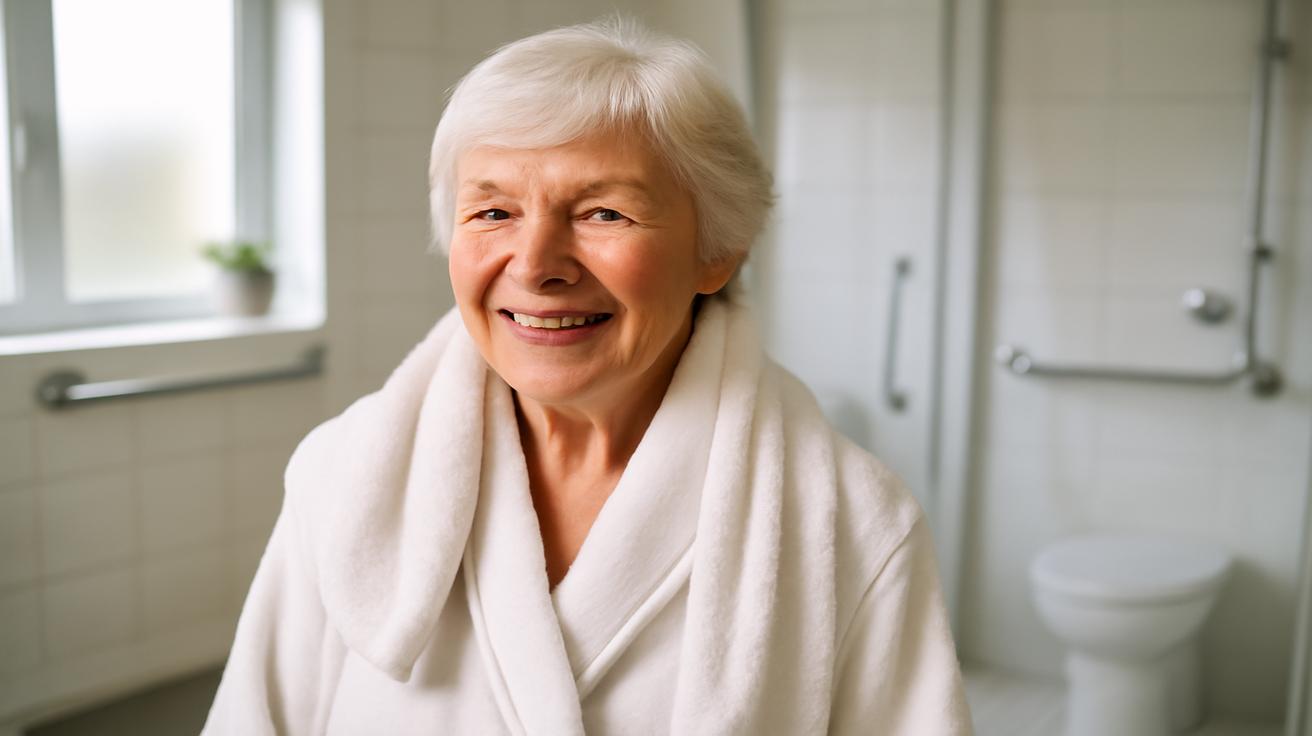
The steam curls up from the bathroom like a quiet ritual. The mirror fogs over, the faucet hisses, and somewhere beyond the door an older woman pauses, hand on the light switch, weighing a decision that used to be automatic: shower today… or maybe tomorrow. Her knees ache, the tiles look a little too slippery, and honestly, she thinks, “I didn’t do much yesterday anyway.” Once, bathing was just another part of the day. After 65, it can start to feel like a negotiation—with energy, with safety, with comfort, and with a very old idea of what “clean” is supposed to mean.
The Myth of the Daily Shower
For decades, we’ve been sold the idea that a “proper” person showers every day—sometimes twice, with a lineup of scented soaps and scrubs. But step back for a moment and consider this: for most of human history, daily full-body bathing wasn’t the norm. People washed with basins, cloths, and small amounts of water, focusing on the areas that actually needed attention.
Modern advertising changed that. A fresh bar of soap became a lifestyle, not a tool. The scent of “mountain rain” or “ocean breeze” stood in for being a decent, presentable person. Yet your skin—especially after 65—was never designed for constant scrubbing. It’s a living organ, more like a tender garden than a tiled floor. Overwash it, and the garden dries out, cracks, and becomes vulnerable.
As we get older, the balance our skin keeps so gracefully in youth begins to shift. Oil production slows. The outer barrier thins. Tiny breaks in the skin start to matter more. A rough towel here, a hot shower there, and suddenly the arms are red, itchy, and tight by evening. The good bacteria, those microscopic living shields that protect us, can be stripped off with one too many long, soapy showers.
This is where the myth meets biology. Daily long, hot showers might feel mentally refreshing, but for many people over 65, they can actually do more harm than good—drying the skin, aggravating conditions like eczema, increasing the risk of cracks and infections, and making the bathroom a frequent stage for slips and falls.
So if not once daily, and not once a week, then what? Somewhere between old habits and new understanding lies a gentler rhythm that respects both health and comfort.
So, How Often “Should” You Shower After 65?
There isn’t a single magic number, but most dermatologists and geriatric specialists circle around a clear, practical guideline:
For most adults over 65, a full-body shower or bath about 2–3 times per week is usually enough for physical health.
Not once a day. Not just once a week. Somewhere in that middle space.
On the days in between, a simple, focused routine—often called a “top-and-tail” wash—keeps you fresh, clean, and comfortable without stressing your skin or body.
Here’s what that middle ground might look like in real life, adapted to your habits, your climate, and your health:
- 2–3 full showers per week: Short, lukewarm, gentle soap on key areas only.
- Daily targeted washing: Face, underarms, groin, and any skin folds with a washcloth or wipes.
- Extra cleansing: After sweating, gardening, exercise, or if you feel sticky or uncomfortable.
Think of it less as a rule and more as a rhythm. Your body will tell you what feels right if you learn to listen—subtle smells, stickiness in certain areas, tight or itchy skin, or just the delight of feeling freshly rinsed.
The Weekly Rhythm: A Practical Example
Imagine a week for someone named Daniel, 72, who walks daily but doesn’t sweat heavily and lives in a mild climate:
- Monday: Full shower, gentle soap underarms, groin, feet, and hands. Rinse the rest with water. Moisturizer afterward.
- Tuesday: “Top-and-tail” at the sink—face, underarms, groin, skin folds, feet. Fresh clothes.
- Wednesday: No full shower. Quick underarm and groin wash. Moisturize dry spots.
- Thursday: Full shower again, quick and lukewarm.
- Friday: Sink wash, a little longer if he’s been out walking in warm weather.
- Saturday: Full shower, shampoo if needed.
- Sunday: Light wash-up only. Rest day.
He stays clean. His skin stays calmer. The bathroom is not a daily obstacle course.
Why Your Skin Changes After 65 (and Why It Matters for Showers)
Run your fingers along your forearm. Feel the texture: a little thinner, maybe, more fragile than it once was. The natural oils that used to give your skin a slight sheen are often quieter now. These aren’t just signs of age; they are signs of shifting needs.
After 65, your skin:
- Produces less oil (sebum), so it dries out more quickly.
- Has a weaker barrier, so water and natural moisture escape more easily.
- Heals more slowly, so cracks and irritation last longer and invite infection.
- May have more folds and creases, especially around the belly, groin, breasts, or neck, where moisture can collect.
Now picture a long daily shower: hot water, strong soap, maybe a loofah or rough cloth. To younger skin, this might be a minor insult. To older skin, it can be a full-on assault—stripping oils, roughing up the surface, leaving tiny tears invisible to the naked eye. The result? Itchiness that keeps you up at night, flaky patches on legs and arms, red irritated shins, or that constant feeling of tightness after you towel off.
Paradoxically, trying to be “extra clean” can make older skin less healthy and more vulnerable. Clean enough is the goal—not scrubbed, not scoured, not perfumed into submission.
The Story Your Skin Is Trying to Tell You
If you’re wondering whether you might be showering too often for your skin’s liking, pay attention to these quiet signals:
- You feel itchy, especially after showering.
- Your lower legs, arms, or back are flaky or rough.
- You see shallow cracks on heels or hands.
- Your skin stings when you use lotion.
- You feel you need more and more body cream to get comfortable.
These are not just annoyances; they’re invitations to rethink frequency—and method. Many people find that when they cut down to 2–3 showers a week and focus on gentle washing the rest of the time, their skin stops “complaining.”
Shower Frequency at a Glance (Especially After 65)
It can help to see the options laid out plainly. Think of this as a gentle guide, not a strict schedule:
| Shower Frequency | Best For | Possible Downsides |
|---|---|---|
| Daily long showers (10–20 min) | Very sweaty lifestyles, hot climates, short-term use | Dry, itchy skin; higher fall risk; worsened eczema |
| Daily short showers (3–5 min) | Some older adults who love the ritual and tolerate it well | Still may dry skin; needs lukewarm water and gentle soap |
| 2–3 showers per week + daily targeted washing | Most people over 65 in moderate climates | Requires forming new habits and routines |
| 1 shower per week + daily “sponge bath” | Those with limited mobility or high fall risk | Needs careful attention to underarms, groin, and folds to avoid odor or infection |
Your body, your climate, and your medical conditions will tilt you toward one of these patterns. What matters is that you stay clean where it counts, protect your skin, and feel at ease in your own body.
Staying Fresh Between Showers
Imagine your bathroom on a non-shower day in a way that still feels like care, not neglect. The light is softer. There’s no rush. A small basin fills with warm—not hot—water. A clean washcloth is folded at the edge. You’re not gearing up for a full production, just a simple, focused ritual that takes five or ten minutes.
This in-between routine can become a quiet anchor, especially if showers feel tiring or intimidating. The goal is simple: freshness, comfort, and prevention.
The “Top-and-Tail” Routine
On days without a full shower, focus on these areas:
- Face and neck: Gentle cleanser or just warm water, pat dry, then moisturize if skin feels tight.
- Underarms: Warm water and mild soap, then dry thoroughly. Apply deodorant if you use it.
- Groin and genitals: Soft cloth, warm water, sometimes a bit of gentle, fragrance-free soap. Always rinse and dry carefully.
- Skin folds: Under breasts, belly folds, groin, neck folds. Keep them clean and very dry to prevent rashes.
- Feet: Quick wipe or wash, especially between toes. Dry well.
For many people, this daily focused cleansing keeps odor away, protects against infection, and feels far less exhausting than daily full showers—while still feeling fresh and dignified.
Small Tweaks That Make a Big Difference
- Use soft washcloths, not scratchy sponges or loofahs.
- Choose fragrance-free, gentle soap labeled for sensitive skin.
- Pat skin dry—never scrub.
- Moisturize right after washing while the skin is still slightly damp.
- Change underwear and socks daily, even on non-shower days.
Hygiene is as much about fabric as it is about water. Fresh clothing, clean pajamas, and frequently changed towels all quietly extend the feeling of cleanliness between showers.
Safety in the Shower: When Cleanliness Meets Courage
For many people after 65, the question isn’t just how often to shower—it’s how safe a shower actually feels. The tile floor is hard. The tub edge is high. Balance is maybe not what it once was. The fear of falling can turn bathing into a quiet dread you don’t always talk about.
This is another reason full-body showers two or three times a week often strike a better balance than daily showers: fewer risky moments on slippery surfaces. But you can make those shower days much safer with a few thoughtful changes.
Making Showers Safer and Kinder
- Install grab bars: Next to the toilet and inside the shower or tub—solid, properly mounted, not just suction cups.
- Use a non-slip mat: Both inside the tub and on the bathroom floor.
- Add a shower chair: Sitting to bathe reduces fatigue and the chance of falls.
- Keep water warm, not hot: Hot water can cause dizziness and dry your skin more.
- Use a hand-held shower head: Easier to rinse while seated and safer than turning or twisting.
- Prepare before you start: Place towels, clothes, and toiletries within arm’s reach.
These aren’t luxuries; they are acts of self-respect. They allow you—or someone you love—to bathe on a reasonable schedule without every shower feeling like an extreme sport.
If you’re a caregiver, know this: reluctance to bathe is often not stubbornness but fear, fatigue, or embarrassment. Shorter, less frequent full showers combined with gentle daily washing can ease tension on both sides and preserve dignity.
Choosing What Touches Your Skin
Every bottle in the shower tells a story—citrus bursts, ocean winds, tropical flowers. But after 65, the story your skin wants is simpler: comfort, neutrality, protection. The less your products irritate your skin, the more freedom you have to choose when—and how often—you bathe.
What you use matters almost as much as how often you use it.
Gentle Choices for Older Skin
- Soap: Mild, fragrance-free, no strong antibacterial chemicals unless medically advised. Use on underarms, groin, feet, hands; just water is often enough for arms, legs, and torso.
- Water temperature: Lukewarm, not steaming. If your bathroom mirror fogs quickly, it may be too hot.
- Shampoo: Often only needed 1–2 times per week, unless your scalp gets very oily or you’ve been sweating.
- Moisturizer: Thicker creams or ointments instead of thin lotions, especially for legs and arms.
- Fragrance: Nice in theory, irritating in practice for many older skins. Unscented is your quiet ally.
A well-chosen routine means a short shower twice a week and spot cleaning on other days keeps you both clean and physically comfortable. You don’t have to choose between being “properly washed” and having calm, healthy skin.
Listening to Your Own Rhythm
Some mornings, the body asks for water before coffee—just to feel awake, to let the day slip in under the skin with steam and the gentle drumming of droplets on shoulders. Other mornings, the thought of stepping into the shower feels like scaling a small mountain. Bodies are not machines. At 70, 80, 90, they are complex, storied landscapes with their own weather systems.
This is where rigid rules lose their power. The goal is not to obey an old standard—“I must shower every day to be clean”—but to find a rhythm of washing that respects your energy, your health, and your emotional comfort.
Ask yourself, gently:
- Do I feel physically uncomfortable—sticky, itchy, or unclean?
- Is my skin happier with fewer showers—or more frequent, shorter ones?
- Do I dread showers? If so, is it the time, the effort, or the fear of falling?
- Would I feel better with help—a chair, grab bar, or a loved one nearby?
For most people after 65, the sweet spot rests here: 2–3 showers per week, daily targeted washing, and a willingness to adjust based on how you actually feel. Not rigid. Not careless. Something in between: attentive, thoughtful, and kind.
Cleanliness is not a competition. It’s a quiet relationship between you and your body. If you find yourself stepping into the shower a bit less often—but stepping out feeling safer, more comfortable, and more at ease in your own skin—you’re not “letting yourself go.” You’re finally listening.
FAQ: Hygiene After 65
How often should someone over 65 shower?
Most older adults do well with 2–3 full-body showers or baths per week, plus daily washing of the face, underarms, groin, skin folds, and feet. Adjust up or down based on climate, activity level, and how your skin feels.
Is it unhealthy to shower every day after 65?
Not always—but for many, daily showers can dry and irritate the skin, especially if they’re long or very hot, or use harsh soaps. If you shower daily, keep it short, lukewarm, use gentle soap only where needed, and moisturize right after.
What if I can only manage one shower a week?
One full shower per week can still be healthy if you wash key areas (underarms, groin, folds, feet, face) every day with a cloth or wipes, keep clothes and underwear fresh, and watch for any skin irritation, rashes, or odors.
How can I prevent dry skin if I enjoy frequent showers?
Use lukewarm water, mild fragrance-free soap, limit soap to sweaty areas, keep showers under 5–7 minutes, and apply a rich moisturizer within a few minutes after stepping out. Avoid scrubbing tools like loofahs that irritate older skin.
What are signs that I’m not bathing often enough?
Watch for strong body odor, greasy or itchy skin folds, redness or rash in warm areas (groin, under breasts, belly folds), or itching in the groin or feet. If you notice these, increase targeted washing and check with a healthcare provider if they persist.
How can I make showering safer as I get older?
Add grab bars, non-slip mats, and a shower chair, use a hand-held shower head, keep items within easy reach, and avoid very hot water. If balance is a concern, consider having someone nearby in case you need help.
Do I need antibacterial soap at my age?
Usually, no. Ordinary gentle soap and water are enough for everyday hygiene. Antibacterial soaps can be harsh and may disturb the skin’s natural protective barrier. Use them only if a healthcare provider specifically recommends it.