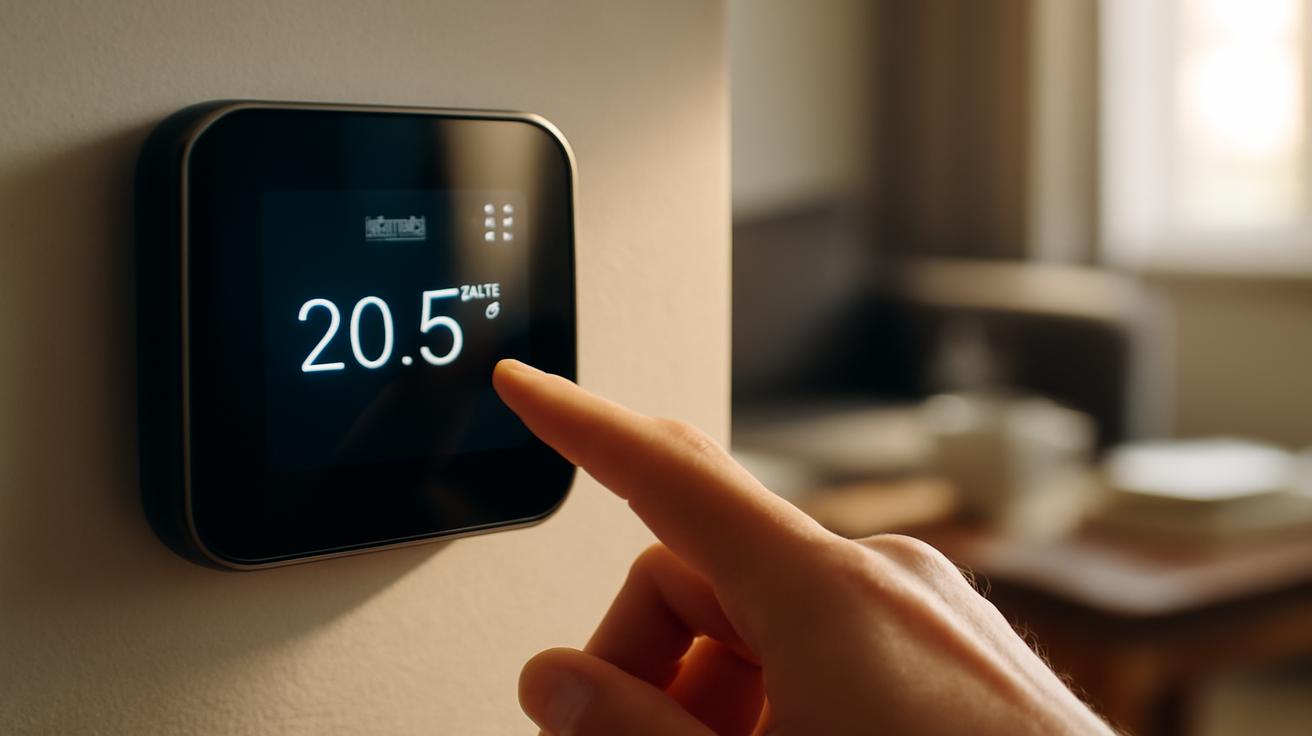
The sound you notice first is the quiet tick of the radiator. It’s late afternoon, the color of weak tea outside the window, and you’re standing in the hallway of your home trying to decide whether to twist the thermostat a little higher. You feel that familiar shiver along your arms—are you actually cold, or just a little tired? For decades, the answer has been simple, printed in advice columns and official guidelines: 19 °C. Set it, forget it, save money, save the planet. But lately, the air in houses, offices, and even public debates has started to feel different. The old rule is wobbling, and a new, more nuanced number is quietly taking its place.
The quiet unraveling of the 19 °C rule
For years, 19 °C had an almost moral glow to it—a badge of virtue. If you kept your living room at 19, you were sensible. Frugal. Environmentally aware. Your dad might have told you to “put on a jumper” rather than nudge it up. Governments, energy agencies, and well-meaning leaflets agreed: 19 °C was the golden standard for winter heating.
Yet walk into any real home in midwinter, and you’ll find the story is much messier. One partner sneaks the thermostat up to 21 °C when the other isn’t looking. Kids complain their fingers are numb during homework. Grandparents stuff hot water bottles under their blankets and say nothing, not wanting to seem fussy.
What health professionals and building scientists have been seeing, quietly and steadily, is that 19 °C simply doesn’t work for everyone. In fact, for many people, it’s too low. The body isn’t a machine that performs optimally at a single, universal “green” number. It’s a living system, shaped by age, health, humidity, and even the kind of chair you sit in all evening.
So experts have been revisiting a deceptively simple question: What temperature actually keeps most people safe, comfortable, and reasonably energy‑efficient? Their answers, backed by newer research and sharpened by recent winters of soaring energy prices, are starting to converge on a new range—and a new recommendation.
The new comfort line: why 20–22 °C is the real sweet spot
When indoor temperatures dip much below 18 °C, the risks begin quietly—especially for older adults, young children, and anyone with cardiovascular or respiratory problems. Blood pressure climbs. The body works harder to stay warm. The immune system becomes a little less sharp. Below that threshold, we slip from “a bit chilly” into “potentially unsafe,” even if we don’t feel it right away.
This is why many health‑focused guidelines now frame 18 °C as an absolute minimum for occupied rooms in winter, not a target. That’s the line you don’t want to cross for long periods. But minimum safe is not the same as genuinely comfortable—or sustainable in a real, lived‑in home where you sit still for hours at a time.
Most thermal comfort research, including studies on office workers and home environments, points toward a slightly warmer range: around 20–22 °C for living spaces where people are inactive or lightly active. Within that band, we get a workable balance between comfort, health, and energy use.
Increasingly, experts suggest something like this:
- 20 °C as a realistic baseline for most healthy adults in living spaces.
- 21 °C as a comfort set‑point for households with children or people who feel the cold more easily.
- 21–22 °C for older adults, people with chronic health conditions, or very sedentary work like desk jobs.
None of this means that 19 °C is suddenly “wrong.” It means the old one‑size‑fits‑all rule is being replaced by a more human one: warm enough for your body to thrive, cool enough to respect your bills and the planet. And that balance point is slightly higher—and more flexible—than the old doctrine allowed.
The body in winter: why one degree feels so different
Stand at your window on a January morning and watch your breath fog the glass. The air inside may technically be “room temperature,” but your body is having a more intimate conversation with the room than the thermostat display will ever tell you.
A lot of that conversation happens at your skin. When the air is cool, blood vessels near the surface constrict, shunting warmth toward your core. Your fingers and toes become the negotiation zone, where your body decides how generous it can afford to be with heat. This is why you might feel “fine” at 19 °C if you’re bustling about, but frozen if you sit down with a book for an hour.
Clothing is one part of the story, yes, but only part. The air itself carries heat away from you; moving air does it faster. Floors and walls radiate their own signature: a cold external wall at 16 °C can make a room feel noticeably cooler to your body than the same air temperature in a well‑insulated home where surfaces sit closer to 20–21 °C.
Then there’s humidity. Dry indoor air—common in heated homes—makes you lose moisture more quickly from your skin and lungs. The same 20 °C room can feel starkly different at 30% versus 50% humidity. Our bodies read all of this at once and translate it into a simple verdict: “I’m comfortable,” or “I’m not.”
That’s why experts now think in ranges, not rules. A well‑insulated, draught‑free home might be perfectly comfortable at 20 °C for most people. A leaky, older house with cold floors might need 21–22 °C for the same level of comfort and safety. The old 19 °C rule ignored these subtleties. The new recommendations lean into them.
How do our temperatures really compare?
If you could peek inside a thousand homes on a winter evening and look only at the thermostats, you’d see that most people quietly left the 19 °C rule behind a long time ago. What we actually heat to, and what we say we should, are often two very different stories.
| Indoor temperature | How it typically feels | Who it may suit |
|---|---|---|
| 16–17 °C | Cool to cold for sitting still; fine if you’re moving and well dressed. | Short periods only; not recommended as a long‑term background temperature. |
| 18–19 °C | Borderline comfortable for many; may feel chilly when resting. | Some healthy adults who are active indoors and wear warm layers. |
| 20–21 °C | Comfortable for most people at light activity, with normal clothing. | Typical living spaces, families, home offices, evening relaxation. |
| 22–23 °C | Warm to cosy; can feel stuffy in small or poorly ventilated rooms. | Older adults, very sedentary people, or homes with lots of heat loss. |
Those numbers aren’t commandments—they’re footholds. They give you a place to start experimenting. And that’s really what the new heating wisdom is about: not obedience to a fixed number, but paying attention to how your body, your home, and your energy meter talk to one another.
Beyond the dial: how homes shape the “right” temperature
Imagine two identical thermometers in two very different rooms. One sits in a sun‑warmed, well‑insulated living space where the windows seal tight and the floor is a smooth, warm timber. The other hangs in a draughty stone house with thin windows and a bare, uninsulated floor. Both read 20 °C. But your body will swear they do not.
Building scientists talk about operative temperature—a blend of air temperature and the radiant temperature of surfaces around you. If the walls, windows, and floor are cold, your body loses more heat to them, making the room feel cooler than the air alone would suggest. In contrast, a room where surfaces are closer to your skin temperature can feel pleasantly warm even when the thermostat number is modest.
That’s why two households in the same city can argue over completely different comfort points. The one in a modern, airtight flat may happily set 20 °C. The one in a century‑old terrace house might push for 22 °C just to feel the same level of ease. The air is only half the story; the fabric of the building tells the rest.
Simple changes can shift that story without endlessly cranking the boiler. Thick curtains create a softer “wall” between you and the cold glass. A rug over bare floorboards turns a heat‑sapping surface into something that radiates a little less chill into your feet and legs. Sealing the thin whistle of air under doors or around window frames means the warmth you pay for actually stays in the same room as you.
In this sense, the new expert recommendations—centering around 20–22 °C—aren’t just about where to set the thermostat. They’re also an invitation to think about your home as a living climate system. Not just how hot it gets, but how it holds that heat, how evenly it spreads, how gently it wraps itself around you when the nights draw in.
The new golden rule: match your heat to your life, not your guilt
There is a kind of quiet shame that’s grown up around heating. It hums under conversations about bills and climate, turning every twist of the thermostat into a moral decision. If 19 °C was the old badge of virtue, anything above it can feel like failure.
But most experts now are moving away from guilt‑based advice toward something more honest and humane: you should be warm enough to live well. That means warm enough to sleep without shivering, to sit and read without your fingers going numb, to let older relatives visit without silently worrying whether they’re cold.
Instead of one austere target, think in three layers:
- Your minimum: Don’t let occupied rooms sit below about 18 °C for long stretches, especially at night or for vulnerable people.
- Your comfort band: Experiment within 20–22 °C to find the lowest temperature that still feels genuinely comfortable for your household.
- Your smart savings: Use setbacks (slightly lower temperatures) when you’re out or asleep, but not so extreme that your house has to work hard to heat from icy to cosy every morning.
This is the heart of the new rule: not “19 °C or you’re wasteful,” but “find the lowest temperature that still lets you feel fully human.” For one person that might be 20 °C with wool socks and a blanket. For another, it might be 21.5 °C and a light jumper. The aim is not to suffer neatly at a prescribed number. It’s to nudge your comfort zone downward just enough that your energy use and your wellbeing are on speaking terms.
The future of warmth: smarter, not colder
As energy systems change and winters grow more unpredictable, heating is shifting from a blunt, on‑off ritual to something more responsive and nuanced. The thermostat itself is becoming less of a rigid commander and more of a conversation partner.
Smart controls that learn your habits can ease temperatures back while you’re out and gently lift them again before you return, without the yo‑yo effect of manual fiddling. Zonal heating lets you keep bedrooms a little cooler than living rooms. Heat pumps and better insulation change the energy equation entirely, making 21 °C feel less like luxury and more like standard comfort achieved efficiently.
Through all of this, that old 19 °C figure looks increasingly like what it always was: a rough guideline from a different era, whispered into a very different housing stock and climate reality. The new expert line—20–22 °C for most living spaces, with 18 °C as a minimum floor—is less romantic, less slogan‑friendly, but far more anchored in how bodies and buildings actually behave.
On a practical level, the most meaningful change might be inside your own head. To grant yourself permission to adjust the dial when your shoulders inch toward your ears from tension. To accept that keeping a frail parent at 22 °C is not a failure of environmental responsibility, but an act of care. To recognize that lowering the thermostat one degree from your usual comfort point can be as powerful as following any abstract national rule—if it’s a degree you can live with.
So the next time you stand in that hallway, fingers hovering over the thermostat, remember: there is no sacred number. There is only your home, your body, and the quiet balance between comfort, cost, and care for the wider world. 19 °C had its moment. Now it’s time for something better—warmer in spirit, if not always in degrees.
Frequently Asked Questions
Is 19 °C still an acceptable temperature for my home?
It can be, for some healthy adults who are active indoors and wearing warm clothing. But for many people, 19 °C feels too cool when sitting still, and experts increasingly view it as the lower edge of comfort rather than an ideal target.
What temperature do experts now recommend for most homes?
Many health and building professionals now suggest a comfort range of around 20–22 °C for main living spaces, with 18 °C as a minimum background temperature for occupied rooms, especially where vulnerable people live.
Do bedrooms need to be as warm as living rooms?
Not necessarily. Most people sleep well in slightly cooler rooms, around 17–19 °C, as long as bedding is warm and there is no persistent damp or draught on the bed. The key is avoiding very cold air for long periods, especially for babies, older adults, or people with health conditions.
How much energy can I save by lowering the thermostat by 1 °C?
While exact figures vary by home and heating system, a drop of 1 °C from your usual set‑point often saves somewhere in the region of 5–10% of heating energy over a season. The biggest gains come from finding the lowest setting that still feels comfortable for your household.
What if someone in my home feels the cold much more than others?
In that case, follow their needs rather than a fixed rule. Set the general temperature high enough—often around 21–22 °C—for them to be comfortable, then use layers, throws, and zoning (cooler in unused rooms) to avoid overheating the whole home unnecessarily.
Is it better to keep the heating on low all the time or turn it up and down?
For most well‑insulated homes, it’s efficient to let the temperature fall a little when you’re out or asleep, then warm it back up—especially with modern programmers or smart thermostats. Extremely deep setbacks, however, can cost more if your home then has to work very hard to heat from cold each day.
How do I know if my home is too cold for health?
If occupied rooms are consistently below about 18 °C, especially in the presence of damp, condensation, or visible breath indoors, the space is likely too cold for long‑term health, particularly for children, older adults, or people with respiratory or heart conditions. In that case, it’s wise to raise the temperature and, where possible, improve insulation or reduce draughts.