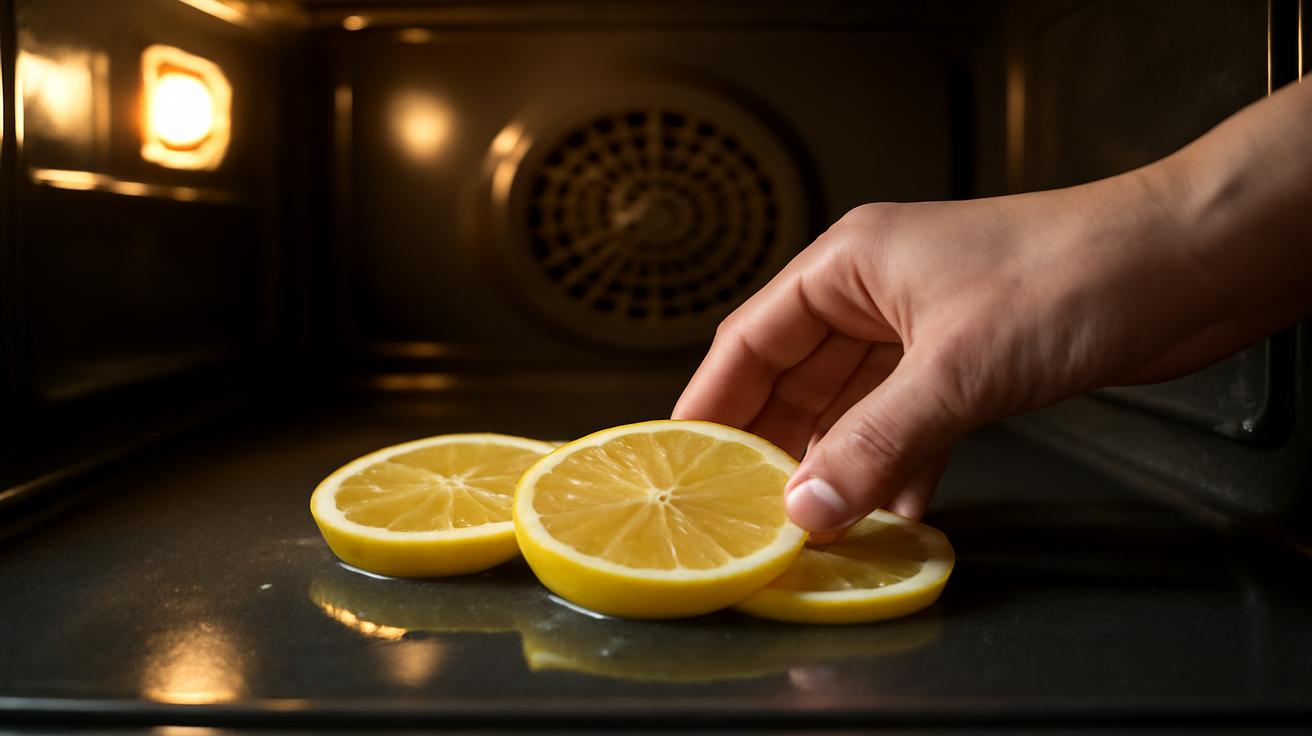
The lemon is barely the size of your palm, but when you slice into it, the whole kitchen changes. A fine mist of citrus oils escapes into the air, bright and sharp. You slide the slice, pips and all, onto the oven rack of a cold, quiet appliance. No lights. No heat. Just metal, glass, and that one yellow crescent sitting there as if it’s waiting for something. Then you shut the oven door and… walk away.
It sounds like the beginning of a folk remedy, the kind of tip you’d hear from a grandmother or stumble across in the depths of social media: “Put a slice of lemon in your cold oven overnight.” Yet this tiny ritual is slowly becoming a modern household habit. People swear by it. Some say it purifies the air. Others claim it deep-cleans the oven without scrubbing. A few mutter something about bad energy. But what is actually going on when a slice of lemon is left in a cold oven—and when, if ever, does it truly work?
The Quiet Rise of the Lemon-in-the-Oven Ritual
Walk into enough kitchens and you’ll start noticing patterns: the houseplants by the sink, the bowl of onions in a cool corner, the lone banana browning slowly on the counter. Recently, another quiet pattern has appeared in this domestic landscape: a lemon wedge forgotten—or so it seems—inside an oven that isn’t turned on.
This habit didn’t come from appliance manuals or official cleaning guides. It seeped into our routines through whispered hacks and scrollable reels. Someone somewhere posted a video: “Put a slice of lemon in your oven overnight and thank me later.” No measurements. No caution. Just the promising glow of an easy fix—less elbow grease, more magic.
Curiosity did the rest. People tried it once and noticed the oven smelled fresher. Or they swore that certain lingering cooking odors were tamed by morning. Some declared it a cleansing ceremony for a new home, the oven acting as a vault, the lemon as a quiet filter absorbing stale smells left by previous tenants.
From there, the practice took off. It was simple. It was cheap. It felt almost ritualistic—a small act that turned the oven from a greasy workhorse into the center of a subtle, citrus-scented transformation. But as more people copied the trick, the questions grew louder than the scent of lemon itself: what exactly is that little slice doing in there?
What People Think the Lemon Slice Actually Does
The Myth of the “Cold Steam Clean”
A popular belief is that the lemon slice somehow “steam cleans” the oven—even when cold. The story usually goes like this: the lemon releases natural cleaning agents into the air, which break down grease without needing heat. It sounds wonderful. It’s also not quite how chemistry works.
Steam cleaning normally relies on water turning into vapor under heat, loosening baked-on residues so they can be wiped away. Lemons do contain citric acid, which is genuinely useful for cleaning. But in a cold, closed oven, that acid mostly stays locked in the fruit. Without heat, moisture, or contact, there’s no miracle degreasing happening just because the slice is nearby.
The Air-Freshener Theory
Another crowd insists the lemon acts as a natural diffuser: the oven becomes a little aromatherapy capsule. This idea is closer to reality. Lemon peels hold aromatic oils—limonene, for one—that evaporate slowly into the surrounding air, even at room temperature. In a closed space like an oven, those oils can lightly scent the interior overnight.
So, while the lemon slice won’t magically melt away greasy splatters, it can soften certain smells: last night’s fish, the lingering ghost of roasted garlic, that vaguely burnt note from the pizza that bubbled over. Think of it less like a scrub brush and more like a tiny, slow-release citrus sachet.
The “Energy Cleanse” and Symbolic Uses
Beyond cleaning and deodorizing, some people use the lemon-in-the-oven ritual as a symbolic reset. In many traditions, citrus—especially lemon—is linked with freshness, clarity, and the clearing out of old energies. The oven, a modern hearth, becomes a symbolic heart of the home, and placing a lemon inside feels like tucking a small sun into that heart, asking it to burn away what’s stale or heavy.
Whether or not you believe in energy cleansing, the ritual itself can be grounding. You slice a lemon with intention. You place it in the oven as a signal: today, this space begins again. Often, it’s what follows that matters most—the deep clean, the rearranging of cupboards, the first meal baked in a space that now feels a little more yours.
The Science Under the Citrus: What It’s Really For
How Lemon Actually Works in a Kitchen
To understand what that slice in the oven can and cannot do, it helps to know what’s hiding in the fruit. Lemons bring three key tools to the cleaning table:
- Citric acid, which helps dissolve mineral deposits and some sticky residues, especially when combined with water and heat.
- Natural oils in the peel, especially limonene, which carry the bright scent and have mild solvent properties.
- Mild antibacterial action, useful for freshening but not a substitute for thorough cleaning with proper products.
When you place a lemon slice in a cold oven and close the door, you’re mainly inviting the aromatic oils to slowly volatilize into that confined space. Over a few hours, those molecules disperse, gently masking—or in some cases slightly neutralizing—unpleasant odors. It’s not exactly purification, and it isn’t sterilization, but it can create a noticeable “lighter” scent when you open the door the next day.
Where the Lemon Slice Shines—and Where It Doesn’t
The lemon trick works best for:
- Light odor refreshing: After cooking something pungent (like fish or heavily spiced meats) in an already reasonably clean oven.
- Psychological reset: Before moving into a new place or after a deep clean, as a final sensory “seal” on your work.
- Short-term masking: When you’re between proper cleanings and want the oven to smell less stale.
It does not work for:
- Thick baked-on grease: You’ll need heat, moisture, and scrubbing (or a proper cleaning cycle or product).
- Mold or serious grime: This calls for real sanitation methods, not fruit slices.
- Long-term odor sources: If spills are burned into the metal, masking scent won’t fix the underlying issue.
In other words, the lemon-in-the-oven habit is like lighting a scented candle after you’ve tidied up—helpful, pleasant, but never a replacement for the tidying itself.
How to Actually Use a Lemon Slice in a Cold Oven
A Simple, Sensible Routine
If you like the idea of this ritual and want to try it without falling for exaggerated claims, here’s a practical way to do it:
- Start with a mostly clean oven. Wipe up any obvious spills and crumbs. If there’s visible residue, tackle that first with warm soapy water or your usual oven cleaner.
- Slice a fresh lemon. A single round or wedge is enough. You don’t need half a fruit for this.
- Place it on a small, oven-safe dish or piece of baking paper. This protects the rack from sticky juice and prevents seeds from falling into corners.
- Set the dish on the middle rack of a cold oven. No preheating, no temperature. Just close the door.
- Leave it for several hours or overnight. During this time, the aroma will gently spread inside the closed space.
- Remove and discard in the morning. Don’t let the lemon linger for days; as it dries and decays, it can turn from fresh to musty.
That’s it. No incantations. No secret temperatures. Just a small, citrus-scented pause between yesterday’s meals and tomorrow’s baking.
If You Want Real Cleaning Power
To tap into the lemon’s actual cleaning ability, you do need heat and water. A more effective routine looks like this:
- Fill an oven-safe dish with water and lemon slices or squeezed halves.
- Place it in the oven and heat to a low temperature (around 120–150°C / 250–300°F) for 20–30 minutes.
- Turn off the oven and let it cool slightly with the door closed, allowing steam to soften grease.
- Once it’s warm, not hot, open the door and wipe the interior with a cloth or sponge.
This is closer to a true “lemon steam clean.” But it’s very different from simply placing a cold slice in a cold oven and expecting miracles. The two habits feel similar but serve different roles—one is for fragrance and mood, the other for actual grime.
Why We Love Little Rituals Like This
More Than Just a Cleaning Hack
Underneath the science and skepticism, there’s a softer reason the lemon-in-the-oven habit has spread: it feels good. It’s oddly comforting. You’re taking a small, deliberate action that tells your brain, “I’m caring for this space.” In a world that often feels too big and fast, there’s quiet power in a simple, sensory ritual you can control.
The smell of lemon is tied in many minds to cleanliness and lightness. It’s the scent of freshly mopped floors, laundered curtains, summer kitchens with open windows. When that aroma greets you from the oven door in the morning, it changes how you see the entire appliance—not as a greasy chore waiting to happen, but as a place where something warm and good might be made today.
There’s also the element of secrecy. Guests might never know your oven once hosted a lone lemon wedge overnight. The ritual is small, private, almost intimate—like a note you leave only for yourself.
The Line Between Magic and Maintenance
Still, it’s helpful to draw a line between ritual and reality. Lemon in a cold oven can lift your mood, soften mild odors, and mark a transition—a move-in day, a new season, a fresh commitment to home cooking. What it won’t do is replace scrubbing, degreasing, or proper hygiene.
Maybe that’s the real charm of this habit: it lives in the in-between. It’s neither useless nor miraculous. It’s a gentle, aromatic nudge toward the larger work of taking care of your space. And sometimes, a nudge is exactly what we need.
When It Works, When It Doesn’t: A Quick Comparison
For anyone standing in the kitchen, lemon in hand, wondering whether to commit that slice to the quiet darkness of the oven, this side‑by‑side view helps set expectations:
| Scenario | Lemon Slice in Cold Oven | Better Alternative |
|---|---|---|
| Light lingering smell after baking | Helps gently freshen the air; mild improvement. | Wipe interior + optional warm lemon water steam for deeper effect. |
| Heavy grease buildup and burnt-on spills | Almost no help; smell may be slightly masked. | Proper oven cleaner, scrubbing, or self-clean cycle. |
| Moving into a new home, wanting a “fresh start” feel | Nice finishing ritual and light citrus scent. | Full clean first, then the lemon slice as a symbolic final step. |
| Masking strong fish or onion odors | Moderately helpful overnight, especially in a clean oven. | Ventilation, wiping spills, or short heated lemon-water session. |
| Daily maintenance without much mess | Pleasant, low-effort scent booster now and then. | Regular quick wipe-downs to prevent buildup in the first place. |
Bringing the Lemon Habit into Your Own Kitchen
So, should you put a slice of lemon in your cold oven? That depends on what you’re hoping it will do.
If what you want is an effortless deep clean, you’ll be disappointed. If, however, you’re after a gentle fragrance, a symbol of a fresh start, or a small nightly ritual that quietly resets your kitchen, that little slice may be perfect for you.
You can make it your own. Maybe you do it after a Sunday batch of roasting, as a closing act before the workweek. Maybe it becomes your move-in tradition, the first thing you do with a strange oven before trusting it with your recipes. Maybe it’s something you save for the days you need the house to feel especially calm and cared for.
There is a particular satisfaction in opening the oven the next morning. The metal feels less like a machine and more like a space you’re in relationship with. A faint citrus note drifts out. It’s nothing dramatic—no gleaming, spotless transformation. Just a small signal that you showed up for this corner of your life, and it quietly responded.
In the end, that may be why this habit keeps spreading. It’s not really about lemons or ovens. It’s about the soft, almost invisible ways we turn houses into homes: one slice, one scent, one tiny ritual at a time.
FAQ
Does putting a slice of lemon in a cold oven actually clean it?
No, not in any meaningful, physical way. A lemon slice in a cold oven can lightly freshen the air and add a citrus scent, but it will not remove grease, baked-on food, or serious grime. For that, you need proper cleaning methods, usually involving heat, moisture, and scrubbing.
Is it safe to leave lemon in the oven overnight?
Yes, as long as the oven is turned off and cool, it’s generally safe to leave a lemon slice inside overnight. Just remember to remove and discard it the next day, before turning the oven on, to avoid baking a shriveled, burnt slice into the racks.
Can the lemon damage my oven?
A single lemon slice left for a short time in a cold oven is very unlikely to cause any damage. Problems might arise only if juice is left sitting in crevices or on certain finishes for a long period, or if you repeatedly bake lemon directly on metal surfaces. Using a small dish or baking paper under the slice avoids this.
Will this get rid of strong smells like burnt food or fish?
It can help soften and partially mask lighter odors, especially in an already fairly clean oven. However, if the smell comes from burnt spills or heavy buildup, you’ll need to clean those areas. The lemon slice works best as a finishing touch after spills have been wiped away.
Is there a better way to use lemon for cleaning the oven?
Yes. For actual cleaning, put lemon slices or squeezed halves in a dish of water and heat it in the oven at a low temperature. The resulting steam can help loosen grime, making it easier to wipe away once the oven cools. This uses both the citric acid and the moisture, which are far more effective together than a cold slice alone.
Can I use other citrus fruits instead of lemon?
Absolutely. Oranges, limes, and even grapefruits contain similar aromatic oils. They’ll offer different scent notes but the same basic effect—a gentle fragrance in a closed space. Lemon is simply the most traditional and widely available choice.
How often should I put a lemon in my oven?
There’s no strict rule. Some people do it occasionally after smelly meals, others only after a full clean, and some treat it as a once-in-a-while ritual. It’s best used as an occasional freshener, not a daily crutch in place of regular cleaning.