The first time I noticed it was on the bus, of all places. I was wedged between a man with headphones too loud for 8 a.m. and a woman scrolling through her phone, when a faint scent rose from the collar of my sweater. Not the sharp, artificial blast of detergent. Something softer. Clean, yes—but also like walking into a room where the windows have been open all day. A little citrus. A hint of herbs after rain. I leaned down, pretended to adjust my scarf, and inhaled. And that was the moment I thought, with absolute certainty: My clothes have never smelled better.
The Jar on the Windowsill
It started, as many quiet revolutions do, with a jar on the kitchen windowsill.
On a gray Sunday afternoon, she stood at the sink, peeling oranges for her kids. The radio murmured in the background, the dog snored under the table, and rain threaded softly down the glass. Instead of tossing the curled orange peels into the compost, she paused.
They glowed—small, bright moons in her hand. A thin spray of zest misted the air, and the kitchen suddenly smelled like a sunlit grove. She thought of the grocery aisle, of detergent bottles lined up like fat soldiers, their labels shouting: “MOUNTAIN FRESH!” and “TROPICAL BREEZE!” And yet, somehow, their scents always ended up smelling the same—vaguely floral, vaguely sharp, vaguely like… a headache.
The peels felt too alive to throw away. She rinsed an empty glass jar, dropped them inside, and covered them with plain white vinegar. As she twisted the lid on, a tiny fizz rose to the top. She held it up to the window. Orange against gray. Color against dull. A small, secret experiment.
She didn’t know it yet, but this was the beginning of the natural booster that would transform her laundry—and her relationship with the everyday ritual of washing clothes.
The Quiet Question in the Laundry Room
Weeks earlier, another moment had nudged her toward change. She’d stood in the laundry room—bare lightbulb, humming machines, a scatter of mismatched socks—and watched her daughter tug on a freshly washed T-shirt and wrinkle her nose.
“It smells… fake,” her daughter had said, with the blunt honesty of a ten-year-old. She rubbed at the collar like she could erase the scent. “Do I have to wear this?”
Her mother had laughed it off, but that night, alone in the laundry room, she lifted a still-warm towel to her face. Under the “Spring Meadow” fragrance, there was an edge she couldn’t quite describe. A chemical sharpness, clinging to the fibers like static.
She looked at the shelf above the washer: detergent in a plastic jug, fabric softener in a neon-colored bottle, dryer sheets in a glossy box that promised “Luxury Freshness.” She turned each one around and tried to read the ingredients. Long strings of letters. Words she couldn’t pronounce. “Fragrance” listed as a single, mysterious catch-all.
She imagined all of that sinking into the clothes that held her family’s skin, their sweat, their sleep. The shirts that wrapped around her kids as they ran through the yard. The pillowcases that caught their dreams. Suddenly, the idea of “clean” felt less certain.
So when those orange peels met vinegar in that jar, something inside her had already decided: there had to be another way to make laundry feel like fresh air, not a chemical storm.
The Scent of Patience
The jar lived on the windowsill for two weeks. Each time she walked past, she gave it a small, thoughtful shake. The clear vinegar slowly deepened into a sunset amber, pulling the oils from the peels, softening its own sharp edges.
On day fourteen, she unscrewed the lid. Vinegar vapor rose first, but behind it—soft and unmistakable—came orange. Real orange. The kind that bursts on your fingers as you peel it. The kind that clings to your sweater after you’ve eaten fruit on the sofa.
She strained the infusion through a cloth, catching the peels. What remained in the bowl was simple: citrus-infused vinegar. Sharp. Bright. Alive.
She poured the liquid into a glass bottle and added a few drops of lavender essential oil from a small, dark vial she kept for sleepless nights. Lavender for calm. Orange for joy. Vinegar for clean. It felt almost too simple.
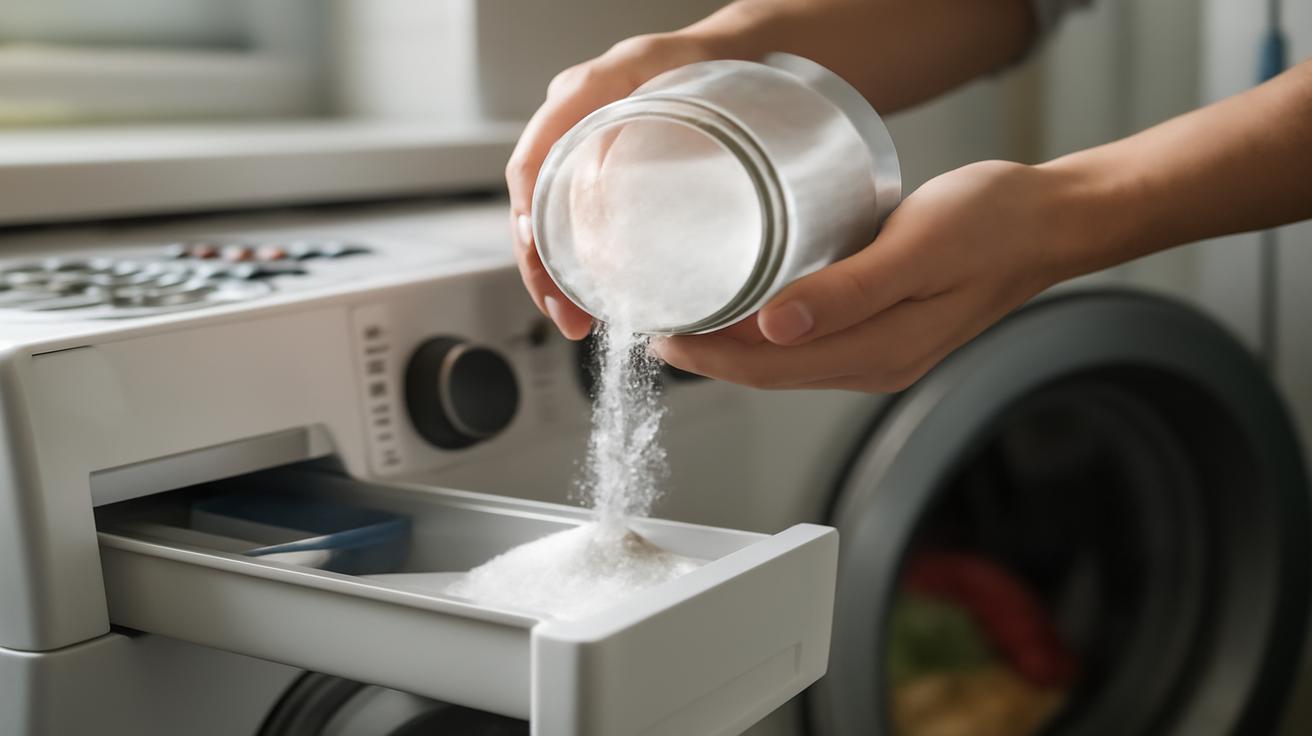
Down in the laundry room, the machines waited with their familiar hum. She measured her usual unscented detergent into the drawer—it was the closest she’d managed to “simple,” until now. Then, heart knocking with the peculiar giddiness of trying something new in a place so ordinary, she added half a cup of her citrus–lavender potion to the fabric softener compartment.
The washer lid shut with a soft click. Water rushed in. The drum began to turn, pulling clothes into its orbit. She stood there longer than necessary, listening like someone had just told her a secret.
Opening the Door
When the cycle finished, she opened the washer and leaned into the cool, damp air. At first, there was nothing but the scent of wet cotton and metal. The kind of plain, unremarkable clean you get when there’s no synthetic fragrance to wrap everything in a blanket of illusion.
She lifted a T-shirt. Pressed it to her nose.
It hit her slowly, like waking up in a room where the windows are cracked open and the breeze carries in something green and distant. The vinegar smell had vanished, transmuted by the wash and rinse. In its place was a subtle whisper of orange, threaded with lavender. Not perfume. Not a punch to the senses. More like the memory of walking through a citrus grove after rain, with a lavender hedge somewhere nearby, just out of sight.
She found herself smiling in the middle of the laundry room, alone with a basket of wet clothes. It wasn’t the dramatic, “laundry commercial” moment where sheets billowed in slow motion and birds sang in chorus. It was better than that. It was quiet, believable, human.
Later, when the clothes dried on the line in the backyard—because that day, the sun honored her efforts with a warm, steady light—the effect deepened. The natural outdoor air folded itself around the newly washed fabric. And when she later pulled a sun-warmed shirt over her head, that was when the thought rose up, clear and sure: My clothes have never smelled better.
A Tiny Ritual in a Big, Loud World
As days folded into weeks, the ritual settled into her life.
Orange peels went into the jar with a splash of vinegar. Some weeks, she added lemon rinds too, their sharper brightness joining the mix. Once, late in summer, she tossed in a handful of rosemary needles from the herb pot outside the door. The jar became a quiet record of the season—citrus in winter, rosemary and thyme in August, a stray curl of grapefruit peel in spring.
What had once been a chore she rushed through between emails and school pickups slowly became a pause in the day. A place where her hands knew what to do. Measure, pour, start, breathe.
The laundry room changed, too. The neon bottles disappeared one by one, not replaced when they ran out. In their place: one sturdy container of simple detergent and a glass bottle of golden, scented vinegar booster. The shelf looked calmer. Less like a noisy advertisement, more like a quiet promise.
She noticed something else, almost by accident. The towels stayed fluffier, not weighed down by the residue that commercial fabric softeners can leave behind. Colors stayed bright. Dark jeans lost that stiff, soapy feel they sometimes had when they came out of the wash. The clothes smelled… like themselves. Cotton smelled like cotton. Wool smelled like wool. The booster didn’t cover their nature; it walked alongside it.
It wasn’t just her imagination. Vinegar, in its humble way, breaks down the minerals and soap buildup that can make fabrics dull and stiff. The citrus oils offered a gentle, natural fragrance lift. The washer itself seemed happier—cleaner, less musty, as if it, too, appreciated the change.
The Simple Ratio She Swears By
In a notebook by the washing machine—half grocery list, half scribbled thoughts—she wrote down the proportions that worked best for her. Not a strict recipe, more like a favorite soup she could make without thinking:
| Item | Amount | Notes |
|---|---|---|
| White vinegar | 2 cups | Base for one batch of booster |
| Citrus peels (orange, lemon, etc.) | Peels from 2–3 fruits | Enough to fully cover with vinegar |
| Lavender essential oil (optional) | 10–15 drops | Add after straining the infusion |
| Usage per wash | 1/4–1/2 cup | Pour into fabric softener compartment or rinse cycle |
In the margins, she added little notes to herself like secret footnotes to a daily life: “Try grapefruit + rosemary in summer,” “Less lavender for kids’ clothes,” “Perfect for musty towels.”
The Day the Compliments Began
The first compliment came from her sister, visiting for the weekend.
They were standing in the hallway, shoes kicked off, the smell of dinner drifting from the kitchen. Her sister grabbed a cardigan from the coat rack and pulled it around her shoulders.
“Okay, what is this?” her sister asked suddenly, burying her nose in the sleeve. “Your laundry. It smells… I don’t even know how to explain it. Not like detergent. Just… really clean. And kind of like a garden after it rains.”
She felt a quiet satisfaction bloom. “It’s a natural booster,” she said, trying to sound casual. “Vinegar and citrus peels. A bit of lavender oil. That’s it.”
Her sister stared at her. “You’re telling me you poured salad dressing into your washing machine and got this?”
They laughed, but the question planted itself. Soon, other small moments followed. A friend hugged her and asked, “What perfume are you wearing? It’s so light.” It wasn’t perfume. It was her shirt. Her daughter came home from school and said, offhandedly, “My friend said my hoodie smells like our backyard.”
There was something profoundly satisfying about it. Not because anyone was praising her ingenuity, but because the compliments were about something real. The scent they noticed wasn’t a brand name or a synthetic “signature fragrance.” It was the smell of things that had grown on trees. Herbs that had touched soil. A simple liquid that had sat quietly in a jar on a windowsill.
From Chore to Conversation
Slowly, she started sharing the idea, the way people swap recipes for soup or bread.
Over tea with a neighbor who was battling eczema. In a group chat where someone complained about overpowering fabric softeners. On a rainy afternoon with her mother, who remembered the sharp, nose-stinging smell of bleach from her own childhood laundry days.
“Will my clothes smell like a salad?” one friend joked.
“Only for about five minutes,” she answered. “Once the wash is done and everything’s dry, the vinegar scent is gone. What’s left is just… fresh. Like you hung them outside near a citrus tree.”
People tried it. Some added lemon and sage. Some skipped the essential oils altogether, happy with a faint citrus echo. One person used the booster in a rinse cycle for musty gym gear and later announced, with the triumphant joy of small victories, that their sports bag no longer smelled like a forgotten locker room.
There was no brand behind it. No trademarked name. Just jars, peels, vinegar, and a shared desire to make something as ordinary as clean laundry feel less like a chemical performance and more like an honest breath of air.
The Subtle Ways Clothes Hold a Life
Weeks turned into months. The laundry room became, strangely, one of her favorite places in the house.
Here, stories were written into fabric: the grass stains on her son’s jeans from the time he finally nailed a sliding catch in the outfield; the faint trace of tomato sauce on the cuff of her partner’s shirt from a dinner they laughed all the way through; the paint flecks on her own T-shirt from a late-night attempt to change the color of the living room walls.
The booster didn’t erase those stories. It didn’t pretend dirt and sweat and daily mess didn’t exist. It just met them with a quiet effectiveness and stepped back, letting the clothes feel like themselves again.
There were other changes, too. The headaches she used to get on heavy laundry days faded. Her daughter stopped complaining that her clothes “smelled fake.” The dog’s blanket, once a lost cause of lingering dog-ness, now came out of the wash smelling neutral and softly bright, like maybe this, finally, was the clean it had been hoping for.
On some mornings, she would pull a warm shirt from the drying rack and press it to her face, just for a moment, before the day began. It became a private way to ground herself. This is clean, her senses told her. Not commercially spotless, not plasticky-perfumed. Just clean. Like river water. Like a breeze through an open window.
In a world that shouted constantly—about what to buy, how to smell, how to live—there was something radical in this small, quiet choice. A jar on the windowsill. A liquid poured into a humming machine. Clothes that smelled like the idea of fresh air, rather than the idea of a commercial for it.
For Anyone Standing in Front of a Washing Machine
If you were to stand next to her now, in that modest laundry room with the scuffed linoleum floor and the eternally lopsided basket, she would probably smile and show you the bottle.
“Smell,” she’d say, unscrewing the cap and holding it out.
You’d catch the vinegar first—sharp, honest—and then the gentler notes curling in underneath it: the sun-bright lift of orange, the soft herbaceous sigh of lavender. You might think, as many do, “There’s no way this will beat my favorite softener.”
She wouldn’t argue. She’d just pour a measure into the machine, start the cycle, and go about her day. The washer would do its work in the background, filling, turning, rinsing. Outside, the seasons would keep shifting. Trees budding, blooming, shedding. Citrus fruits swelling slowly with stored sunlight.
Later, when the clothes were dry and folded, she’d hand you a towel or a T-shirt, still warm from the rack. “Now smell,” she’d say again.
And you’d breathe in something that’s hard to put into words because we rarely get to smell it in our clothes anymore: the almost-nothingness of true clean, laced with a whisper of earth-grown scent.
You might not even realize, at first, how much your nose had gotten used to the drama of synthetic fragrance. How quiet, real cleanliness feels. But your body would know. Your skin would know.
And maybe, as you walked home or sat on a bus hours later, you’d catch a stray breath of that citrus–lavender note from your sleeve and think, with a small, astonished pleasure: My clothes have never smelled better.
Frequently Asked Questions
Does using vinegar in the wash make my clothes smell like vinegar?
No. The vinegar scent is strong in the bottle, but it rinses away during the cycle. Once clothes are dry, you’re left with a light, fresh scent from the citrus and any herbs or essential oils you used—not a salad dressing smell.
Is it safe to use a vinegar-based booster in any washing machine?
In general, yes. Most standard and high-efficiency machines tolerate vinegar well, especially in small amounts like 1/4–1/2 cup per load. If you’re concerned, check your machine’s manual or start with a smaller amount to be cautious.
Will this booster work as a fabric softener?
Vinegar helps break down mineral buildup and detergent residue, which naturally softens fabrics over time. While it doesn’t create the heavily coated, slippery feel of commercial softeners, many people find their towels, T-shirts, and bedding feel softer and breathe better.
Can I use this natural booster on all fabrics and colors?
It’s generally safe for most everyday fabrics and colors. Avoid using it on delicate fibers that specifically say “dry clean only,” and if you’re worried about a special garment, test it on a small, hidden area first.
What if I’m sensitive to scents or essential oils?
You can skip essential oils entirely and just use citrus-infused vinegar, or even plain vinegar. The result is very minimal scent once clothes are dry—just a clean, neutral freshness without the heavy perfume of conventional products.