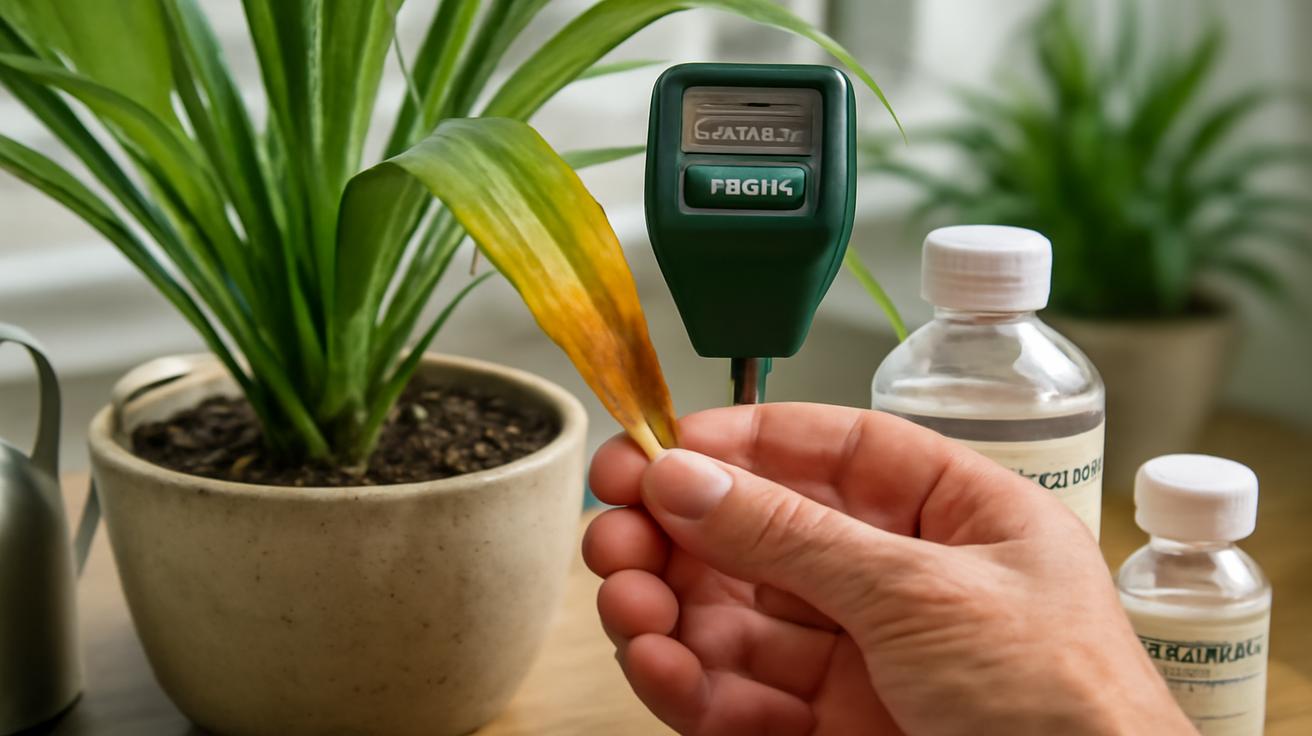
It always starts with a tiny bruise of color. You’re brushing your fingers over a glossy green leaf, admiring how well your plant has been doing, when you notice it: the very tip is turning brown. Just a millimeter, maybe two. You tell yourself it’s nothing. A week later, another leaf joins in. Then another. Suddenly your once-lush plant looks like it’s been gently toasted around the edges, and you’re wondering if you’re a terrible plant parent after all.
When Leaves Whisper: What Brown Tips Are Really Telling You
Brown tips are your plant’s version of a quiet, polite complaint. Not a full meltdown like dramatic yellow leaves dropping overnight, but a subtle, persistent whisper: “Something isn’t quite right.” The tricky part is that those crisp, burnt-looking edges can come from many different issues, often overlapping in confusing ways.
Walk up close to your plant. Look at the brown bits. Are they crisp and papery? Soft and mushy? Just the very edge of the leaf, or broader patches spreading inward? Those tiny visual clues are the difference between a plant that’s thirsty, one that’s drowning, or one that’s being slowly salted by your tap water.
Most people jump instantly to overwatering or underwatering, and yes, moisture is a key suspect. But the real story behind brown tips is a bit more layered. Imagine your plant as a quiet roommate who can’t talk, only signal through its body: a little curl here, a slight discoloration there. Brown tips are often the moment when that roommate raises an eyebrow and says, “We need to talk.”
So let’s have that conversation: with your lighting, watering habits, air, soil, and even the invisible stuff dissolved in your tap. Once you learn to read these signs, those scorched-looking tips stop being a mystery—and start becoming one of the clearest messages your plant gives you.
The Moisture Myth: It’s Not Always “More Water” or “Less Water”
How Brown Tips Reveal Water Stress
Most plant owners respond to brown tips by immediately grabbing the watering can—or hiding it. “It must be too dry.” “No wait, I overwatered.” In reality, brown tips are less about a single watering mistake and more about a pattern: inconsistent moisture, poor drainage, or roots that simply can’t keep up with what the leaves are losing.
Run your fingers along the potting mix. Is it bone dry and pulling away from the edges of the pot? Your plant may be going through cycles of extreme drought followed by heavy soaking. That feast-and-famine rhythm can cause the fine root hairs to die back, making it harder to move water to the tips of the leaves. And who suffers first? Those delicate, farthest-out leaf tips.
On the flip side, poke a finger a few centimeters down and feel soggy, cold soil that never seems to dry? Overwatering doesn’t always show up as yellow mushy leaves right away. Sometimes it quietly rots the tiniest roots first, limiting your plant’s ability to absorb water, even while it sits in a swamp. The leaves experience stress as if they’re thirsty, even though the pot is soaked. Result: more brown tips.
The goal isn’t more water or less water—it’s consistency. A rhythm your plant can trust. That often means:
- Letting the top part of the soil dry out before watering again, according to your plant’s needs.
- Watering thoroughly until excess runs out the drainage holes, then discarding any water that collects in the saucer.
- Avoiding frequent “sips” of water that only moisten the top layer but leave deeper roots dry.
Quick Moisture Fixes That Actually Work
Switch your mindset from a watering schedule to a checking routine. Instead of deciding “I water every Sunday,” decide “I check my plants every Sunday.” For some types, that might mean watering once a week; for others, every ten days, or every three.
Use your finger as a low-tech moisture meter. For most tropical houseplants, water when the top 2–5 cm of soil feels dry. For succulents and cacti, wait until most of the pot feels dry. Over time, you’ll notice patterns: the peace lily that always droops by mid-week, the rubber plant that sips water slowly in winter.
If the soil has become so dry it repels water and the liquid just runs down the sides, try bottom-watering. Place the pot in a bowl or sink with a few centimeters of water for 20–30 minutes to let it soak from below, then drain well. This rehydrates the soil more evenly and can reduce stress that leads to brown tips.
The Invisible Enemy: Salts, Chemicals, and What’s Hiding in Your Tap
Why Edges Burn Even When You “Water Correctly”
Sometimes the soil feels right, your watering seems on point, and yet the tips still turn brown, especially on sensitive plants like dracaenas, spider plants, calatheas, and peace lilies. Here, the problem often isn’t the amount of water—it’s what’s in it.
Many municipal water supplies contain dissolved salts, chlorine, fluoride, and other chemicals that can gradually build up in the potting mix. Over time, these substances concentrate around the roots, making it harder for the plant to take up water and nutrients. The leaf tips and edges, farthest from the main veins, are the first to show the damage: brown, dry, and sometimes with a faint yellow halo before the browning.
If you see crusty white residue on the soil surface or around the rim of the pot, that’s a big clue that mineral salts are building up. Even fertilizer, when used too often or too strong, can contribute to this. It’s not dramatic enough to kill your plant overnight—but it does quietly scorch those tender leaf tips.
Simple Water Upgrades Your Plants Will Feel
You don’t have to install a fancy home filtration system to make a difference. You can:
- Let tap water sit out in an open container for 24 hours to allow some chlorine to dissipate.
- Use filtered water, rainwater, or distilled water for the most sensitive species (like calatheas, marantas, or some ferns).
- Flush the soil every few months: place the pot in the sink and slowly run water through it for a few minutes, letting the excess drain away to wash out built-up salts.
- Fertilize lightly and less often than the label suggests; most houseplants do fine with half-strength fertilizer during the growing season only.
If you suspect fertilizer burn specifically—brown tips appearing soon after feeding—skip feeding for a while and flush the soil. Think of it as a reset button for your plant’s root zone.
Dry Air, Drafts, and Heat: The Climate Your Plant Didn’t Ask For
Humidity and the Art of Not Crispening Your Leaves
Imagine you’re a tropical plant, born in the understory of a rainforest where the air is heavy with moisture. Now picture yourself parked on a shelf above a radiator in a heated apartment in winter. The air is dry enough to chap human lips—what do you think it’s doing to a thin, delicate leaf edge?
Low humidity is a major, often underestimated cause of brown tips, especially on humidity-loving varieties: calatheas, ferns, peace lilies, fittonia, marantas, and many aroids. The leaf tips dry out faster than the plant can move water to them. Over time, they crisp, darken, and die back.
Your plant’s location also matters. A drafty window that’s chilly at night, a hot blast from an AC vent, or the steady heat of a nearby radiator can all speed up moisture loss and stress the leaf tissue. Sometimes the rest of the leaf looks fine, but the tips and edges tell the full story.
Creating a Gentler Microclimate
Knowing your entire home doesn’t have to become a jungle sauna, focus on creating tiny pockets of better humidity where it counts. Some easy options:
- Cluster plants together so they share the moisture they release, raising the local humidity slightly.
- Place pots on trays filled with pebbles and water, keeping the pot above the waterline; as the water evaporates, it creates a humid bubble around the leaves.
- Use a small humidifier in the room for your most humidity-demanding plants, especially in winter.
- Keep plants away from direct drafts, radiators, fireplaces, and the path of air conditioner vents.
Misting can feel satisfying, but its effect on long-term humidity is limited. It’s fine as a ritual, especially if you enjoy the moment of connection, but for real results, humidifiers and pebble trays do far more heavy lifting.
Roots, Pots, and Soil: When the Problem Starts Below the Surface
How Root Stress Shows Up as Brown Tips
You can do everything “right” above the soil line and still get brown tips if the roots are unhappy. Roots are quieter than leaves, but when they’re cramped, strangled, or rotting, the leaves begin to show stress in delicate areas first.
Signs the root zone might be to blame:
- The plant dries out extremely fast because the pot is packed tight with roots and very little soil.
- The plant stays wet for far too long because the soil is dense, heavy, or compacted.
- There’s a sour, swampy smell from the pot, or water pools on the surface before slowly sinking in.
- You see roots circling the inside of the pot or poking out the drainage holes.
In all these situations, the fine roots struggle. They either can’t access enough oxygen, can’t absorb water evenly, or simply don’t have room. The leaf tips then quietly dry and die back, like distant outposts cut off from supply lines.
Repotting and Soil Refresh: A Gentle Reset
Check whether your plant is rootbound by sliding it carefully out of the pot. If you see a tight spiral of roots with barely any soil left, it’s time to size up. Choose a pot just one or two sizes larger, with proper drainage holes.
Use a fresh, airy potting mix suitable for the plant type—chunky and well-draining for aroids, grittier for succulents and cacti, moisture-retentive but light for ferns and tropicals. Loosen the outer roots gently so they can grow outward instead of continuing to circle.
If the soil is heavy and clingy, repot even if the plant isn’t rootbound. Overly dense mixes hold too much water and not enough air. A healthier root environment often leads to fewer brown tips over the following weeks and months as the plant regains its balance.
When Light, Age, and Expectations Get Involved
Is It You, the Environment, or Just the Leaf’s Time?
Sometimes, the plant isn’t in crisis at all. It’s simply doing what plants do: shedding old leaves, especially those on the bottom or the oldest growth. As leaves age, their tips and edges can show wear—small scars from past droughts, humidity dips, or minor stress moments you didn’t even notice at the time.
Lighting plays a supporting role here too. A plant kept in a dim corner stretches and struggles; the energy balance is off. The plant has to decide where to invest and where to cut its losses. Often, it starts withdrawing resources from less efficient leaves, and the breakdown can start at the tips and edges.
Not all brown tips are preventable, either. Some plants, like certain calatheas, are notorious for developing small brown tips even in good conditions. That doesn’t always mean you’re failing them—it may simply mean you’re growing a plant that’s evolved for cloud forests and riverbanks and you’re doing it in a living room. There will be compromises.
Learning to Trim, Tolerate, and Observe
If the brown areas bother you visually, you can trim them. Use clean, sharp scissors and follow the natural shape of the leaf, cutting just into the healthy green area so there’s no remaining dead tissue. The cut edge may brown slightly over time, but the leaf will look tidier.
Rather than obsessing over each brown tip, look for patterns:
- Are new leaves coming in healthier than the old ones?
- Is the browning slowing down after you’ve adjusted watering, light, or humidity?
- Is it mainly older leaves affected, while the plant continues to grow well overall?
These answers matter more than chasing a perfectly flawless leaf. Real, living plants carry their history in their foliage. A few brown tips often tell a story of adaptation, not failure.
A Quick Reference: Matching Symptoms to Likely Causes
Use this simple table as a pocket guide when you’re standing over your plant, trying to decode what those brown tips are trying to say.
| What You See | Most Likely Cause | What to Try |
|---|---|---|
| Crisp brown tips on many leaves, soil often very dry | Underwatering or inconsistent watering | Water deeply when top layer is dry; avoid long droughts |
| Brown tips + yellowing leaves, soil stays wet for days | Overwatering / poor drainage | Improve drainage, let soil dry more between waterings |
| Brown tips/edges with white crust on soil or pot | Salt or mineral buildup, fertilizer burn, tap water sensitivity | Flush soil, use gentler water, reduce fertilizer strength |
| Fine, papery brown edges on humidity-loving plants | Low humidity, drafts, heater or AC nearby | Increase humidity, move away from vents and radiators |
| Plant rootbound or in heavy, compact soil | Root stress limiting water/nutrient uptake | Repot into slightly larger pot with fresh, airy mix |
| Mostly older leaves affected, plant still growing well | Natural aging, old stress history | Trim if desired, focus on health of new growth |
Listening Differently to Your Plants
Those brown tips you’re fretting over? They’re less a verdict and more an invitation. An invitation to look closer, feel the soil, notice where the radiators blow and how long the water sits in the saucer. To touch the leaves not just for their beauty, but for the stories they’re telling about your shared environment.
As you tune in, something subtle shifts. You stop asking, “What’s wrong with my plant?” and start asking, “What is this plant telling me about the way I’m keeping it?” That’s the turning point—from guessing and reacting to observing and responding.
Over time, you may still see a few brown tips; that’s part of living with real plants in real homes, with seasons, heaters, cold snaps, busy weeks, and overlooked watering days. But now you’ll know how to trace those little burnt edges back to their roots—literally and figuratively—and gently adjust what your plant has been quietly asking you to change all along.
FAQ: Brown Tips on Houseplants
Should I cut off brown tips on leaves?
You don’t have to, but you can for appearance. Use clean, sharp scissors and trim following the natural shape of the leaf, cutting slightly into the green area. It won’t “heal,” but it will look neater, and the damage won’t spread from that cut edge itself.
Can brown leaf tips turn green again?
No. Once leaf tissue turns brown and dry, it is dead and cannot revert to green. Your goal is to prevent new browning by fixing the underlying cause, not to cure the damaged part.
Is it okay if only a few leaves have brown tips?
Yes. A few browned tips, especially on older leaves, are normal and not a crisis. Look for trends: if new growth is healthy and the browning isn’t rapidly increasing, your plant is likely doing fine overall.
Does misting actually help with brown tips?
Misting can provide a brief boost in humidity, but it doesn’t significantly change the overall environment for long. It may help a little for delicate plants, but consistent humidity from a humidifier, pebble trays, and good placement makes a much bigger difference.
Which plants are most sensitive to brown tips?
Humidity-loving and water-sensitive plants tend to show brown tips more easily, including calatheas, marantas, ferns, spider plants, dracaenas, and peace lilies. These often react to dry air, tap water minerals, or inconsistent moisture sooner than tougher species like pothos or snake plants.
How long will it take to see improvement after I change my care routine?
You may not see existing brown tips improve, but new growth should look healthier within a few weeks to a couple of months, depending on the plant’s growth speed. Patience is key; houseplants respond slowly but steadily when conditions improve.
Is brown tipping a sign my plant is dying?
Not usually. Brown tips are often an early, mild stress signal rather than a death sentence. As long as your plant is still producing new leaves and you address the underlying issues—watering, humidity, salts, roots—it can continue to live and grow for years, brown history and all.