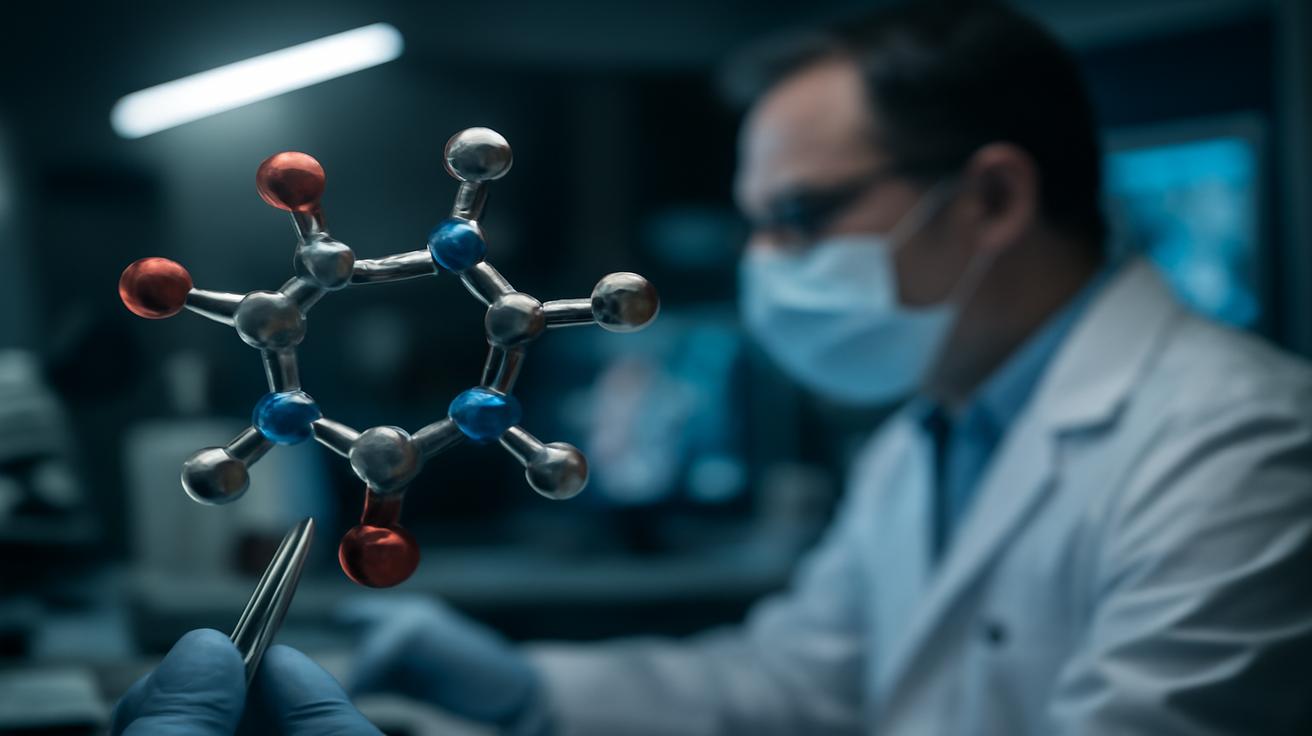
The first time I understood that caffeine was more than a morning habit, I was standing in a humming neuroscience lab that smelled faintly of burnt dust and hot plastic. Between the click of pipettes and the soft whirr of incubators, a researcher held up a tiny glass vial of clear liquid and said, “This is coffee as a switch.” Not a metaphor. A literal molecular switch—caffeine re‑imagined, engineered to turn cells on and off like a light.
Outside, people were lining up at a street‑corner café, curling their hands around cardboard cups, believing they were just waking up their minds. Inside, these scientists were trying to wake up something stranger: dormant genes, quiet immune cells, stalled metabolic pathways. The same compound that drips into our mornings in the form of espresso and tea was being reshaped into a precision tool—tamed, targeted, transformed.
Most of us meet caffeine as a feeling: the slow sharpening of the world on a gray Monday, the jittery edge after one cup too many, the 3 p.m. rescue. But at the scale of molecules, caffeine is far from vague. It is angular and decisive, a compact ringed structure that slips into microscopic locks called receptors, nudging nerves and hormones to change their pace. The new idea—still young, still being tested—is stunningly simple: if caffeine already fits into so many biological keyholes, what if we redesign a few locks? What if we build therapies whose entire on‑switch is a cup of coffee?
From Morning Ritual to Molecular Remote Control
To understand why scientists are so captivated by caffeine as a switch, it helps to shrink yourself down in imagination, to the scale where a single cell feels as big as a city.
Inside this city, there are gates and checkpoints, signals and whispers. Proteins dock together. Ions drift in waves. Signals race along membranes like fireworks along a fuse. Caffeine, on this micro‑scale, is a small but assertive visitor. Traditionally, it works by blocking adenosine receptors—the quiet‑down, slow‑down signals, the biological equivalent of a “closing time” song. When caffeine slips into those spots, neurons don’t hear the call to rest. They keep firing, and you feel awake.
Now imagine that researchers take that simple idea—the way caffeine binds—and graft it onto something new. They engineer a protein, say one that powers a cancer‑fighting T cell or a gene therapy tool, so that it only becomes active when caffeine is present. No caffeine, and the system idles in the background. Add caffeine, and it snaps on.
It’s like installing a secret keypad on the door of a cell, and the passcode, improbably, is the same chemical laced through your latte. The ordinary becomes a remote control.
Chemical Conversation: How Caffeine “Talks” to Cells
When you sip coffee, caffeine doesn’t politely knock—it flows into your bloodstream and begins a rapid‑fire conversation with your body. Within an hour, it’s everywhere: pulsing through organs, bathing tissues, drifting easily into the brain. It’s small enough and neutral enough to cross some of biology’s most guarded borders, including the blood–brain barrier, a filter so strict that many drugs never make it across.
This is one reason scientists are intrigued: caffeine is already good at getting where medicines often struggle to go. It’s also chemically predictable. It doesn’t fall apart instantly, but it doesn’t linger for days either. In most adults, its half‑life—how long it takes your body to clear half of it—is just a few hours.
Those features—fast entry, reliable clearance, brain access—make it a candidate for something much bolder: a drug trigger. Think of caffeine not as the medicine itself but as the button you press to unleash medicine that’s already in your body, waiting for permission to act.
Using a few clever tricks of protein engineering, scientists can create biological components that only function when caffeine connects to them. Two engineered pieces may come together only in the presence of caffeine, turning on a gene. Or a receptor on the surface of an immune cell may change its shape only when caffeine nestles into a tiny pocket, unlocking a powerful attack on a tumor.
Under a microscope, this looks almost poetic: a single, familiar molecule becoming the difference between silence and action.
Why Caffeine Makes a Surprisingly Good Switch
Caffeine isn’t the only molecule that can do this trick, but it holds a peculiar advantage: it’s already part of our cultural and physiological landscape. Our bodies understand it. Our routines orbit around it. That familiarity can be turned into a tool.
Imagine a future clinical trial where the dosing instructions are not, “Take this pill at 8 a.m.,” but instead, “Drink one cup of low‑dose caffeine beverage to activate your therapy for four hours.” The patient becomes an active participant in timing their own treatment, with something as gentle and everyday as a mug of warm coffee or tea—except, this time, the cup holds the key to cellular machinery.
That idea may sound like speculative fiction, but in research labs, the pieces are already taking shape. Synthetic biologists have designed special protein pairs that clasp together only when caffeine is around; others have built engineered receptors on immune cells that listen for caffeine as if it were a distress flare. Turn on the caffeine signal, and the cells wake into a specialized mode; remove caffeine, and they sink back into rest.
It’s a subtle kind of control—more like a dimmer dial than an on/off switch—offering ways to adjust intensity and timing by something as simple as how strong your cup is, and how many you choose to drink.
When a Coffee Break Becomes Therapy
Picture a patient named Lena, years from now, walking into a café with a quiet sense of purpose. Her immune cells have been engineered and returned to her bloodstream weeks ago, customized to recognize a certain signal linked to her cancer. But they don’t run at full power all the time. That would be dangerous, exhausting, like a city where every siren blares nonstop.
Instead, her cells are listening for a specific cue: caffeine. Not in its wild, everyday form, but at a carefully calibrated dose, delivered through a drink her doctors have approved. On days when she feels ready for a treatment “pulse,” she orders her special cup. Within an hour, caffeine levels in her blood rise to a precise window. In that span, her engineered T cells wake up, sharpen their attack, and sweep through her body searching for tumor cells. As the caffeine fades, they ease back down, avoiding the collateral damage of constant hyper‑activation.
This kind of therapy doesn’t exist in clinics yet, but early prototypes of caffeine‑control systems are already being tested in cells and animal models. The aim isn’t to make medicine feel cute or gimmicky; it’s to solve real, hard problems: how to turn powerful treatments on and off quickly, how to keep them from overshooting, how to let patients decide when to “lean in” to their therapy and when to rest.
In chronic illnesses—autoimmune conditions, certain metabolic disorders—there may be days when you crave more relief and others when you want your body to coast. A caffeine‑based switch imagines that flexibility built directly into the molecular code of treatment.
Not all uses would be so dramatic. Some might be quiet and local: a gene therapy in the liver that only kicks into higher gear after your morning cup; a neurological treatment that heightens brain repair circuits for a few hours during sleep, triggered by a timed, slow‑release caffeine dose taken at dusk.
Balancing Promise with Peril
The idea is intoxicating—almost literally—but the challenges are real, and they start with the fact that caffeine is already everywhere. Soda, chocolate, energy drinks, hidden in supplements and “alertness” tablets: our world hums with it. That ubiquity is exactly what makes researchers cautious.
If you anchor treatment to caffeine, how do you guard against accidental activation? What if someone doubles their coffee intake one stressful week? What if cultural habits vary wildly—three daily espressos in one country, barely any caffeine in another? The solution may be to design receptors that respond only to modified, medical‑grade analogs of caffeine, or to doses far outside dietary norms. Even then, our enzymes, our genetics, our ages differ: some of us clear caffeine in hours; others feel a single cup echoing into the night.
Then there are safety questions beyond caffeine itself. Engineered switches need to be precise and robust; misfires in cellular control systems are not like software bugs; they can mean tissue damage, runaway inflammation, or stalled treatment. Any caffeine‑controlled therapy would go through the same gauntlet of preclinical testing and staged trials as other advanced medicines, if not more.
Yet the fact that caffeine is so well‑studied—over decades, across cultures—gives scientists a head start. We know how it behaves in the bloodstream, how it interacts with common drugs, what doses are usually safe or risky. That knowledge becomes part of the scaffolding for designing these future systems.
The Body’s Landscape Seen Through a Coffee Lens
There’s something oddly grounding about thinking of your body as a landscape shaped, in part, by caffeine’s passage. You pour it into your mouth; it slips across your gut lining like a quiet stowaway, enters the bloodstream, and is whisked along arteries and capillaries to every corner. In the liver, enzymes carve it up, reform it, eventually ushering its fragments out in urine. Along the way, it jogs nerve cells, shifts hormone levels, tweaks inflammation, alters blood flow.
Scientists who talk about caffeine as a switch are really talking about learning to read and write messages into that flow. To sketch timing into it. To set up molecular structures in our cells that “listen” to the rise and fall of caffeine like a tide chart.
Our mornings would still feel like mornings; your senses might still lift as you open your laptop or walk into the fog. But beneath that familiar hum, new stories could be unfolding: a damaged tissue entering a carefully timed repair mode, an overactive immune process stepping back only when you want it to, a gene therapy turning itself off at night so your body can rest.
To imagine this is to look at your cup not just as comfort or chemistry, but as a potential line of dialogue with the deepest layers of your own biology.
Comparing Caffeine to Other Molecular Switches
Caffeine is stepping into a line of other molecules that have been tested as control levers for living systems. Some are synthetic drugs that never occur in nature; others are hormones or dietary compounds adapted for new roles. Each has trade‑offs: some are too potent, others penetrate the brain poorly, some linger too long, or come with heavy side effects.
To see how caffeine stacks up conceptually, it helps to lay these qualities side by side.
| Molecule | Key Advantage | Main Challenge | Everyday Presence |
|---|---|---|---|
| Caffeine | Crosses blood–brain barrier, well‑studied, rapid on/off | Already widely consumed; risk of accidental activation | Coffee, tea, chocolate, soft drinks |
| Synthetic control drugs | Very specific, no background exposure | May be expensive, less long‑term safety data | None; used only in clinical settings |
| Hormones (e.g., steroids) | Strong effects, well‑known biology | Broad side effects, slow to clear | Naturally produced in the body |
| Nutrient‑based switches | Integrated with diet, gentle changes | Difficult to control precisely with food alone | Vitamins, certain amino acids |
Caffeine sits in a sweet spot: familiar but powerful, controllable yet far‑reaching. It will never be perfect; no single molecule is. But it adds a new flavor to the palette of control chemistries scientists can paint with.
A Future You Can Taste
It’s easy to think of medicine as something that happens to us—bags on IV poles, tablets in blister packs, protocols laid out in dense print. The idea of caffeine as a molecular switch nudges that perception in a gentler direction. It hints at a future where some therapies are woven through things we can taste and time, where the act of healing includes small, daily rituals we already know how to perform.
In that humming lab where I first heard the phrase “coffee as a switch,” the researchers weren’t daydreaming about artisanal treatment cafés or designer lattes that cure disease. They were focused on the fine print: binding affinities, dose–response curves, cellular toxicity. Yet when they stepped away from the screens, mugs in hand, they were inhabiting two worlds at once—the ordinary comfort of caffeine, and its emerging role in high‑precision biology.
Some of their experiments failed, of course. Proteins didn’t fold quite right; cells ignored the cues; animal models responded in ways no one predicted. But in the occasional clean result, where a caffeine pulse neatly toggled a gene or immune pathway on and off, you could see just how thin the line can be between habit and technology, between a beverage and a switch.
Tomorrow morning, when you take your first sip, nothing so elaborate will be happening in your bloodstream—at least, not yet. Your heart rate might quicken slightly; your neurons may buzz a bit brighter; your sense of the day may tilt toward possibility. But behind that simple act, a quiet revolution is underway in labs around the world, asking a disarming question:
What if the key to some of our most sophisticated treatments has been sitting in our cups all along?
FAQ
Is caffeine already being used as a medical treatment switch in humans?
Not yet. Current work with caffeine as a molecular switch is largely in early‑stage research, often in cells or animal models. It will take extensive testing and clinical trials before any caffeine‑controlled therapies could be approved for human use.
Would drinking regular coffee accidentally trigger these future treatments?
Researchers are very aware of this risk. Any real‑world therapy would likely use modified receptors, altered caffeine analogs, or carefully controlled dosing ranges so that everyday consumption wouldn’t be enough to activate or disrupt treatment.
Could caffeine‑based switches be dangerous for people sensitive to caffeine?
Yes, individual sensitivity is an important concern. People metabolize caffeine at different rates, and some experience strong side effects even at low doses. Future approaches might rely on caffeine‑like molecules tailored for safety, or delivery systems that don’t affect the whole body.
What kinds of diseases might benefit most from caffeine‑controlled therapies?
Conceptually, conditions that require precise, time‑limited activation of powerful treatments could benefit: certain cancers, autoimmune diseases, or gene therapies that need careful dosing. Chronic conditions where patients need flexibility in timing might also be candidates.
Does this mean caffeine itself is a cure for these diseases?
No. Caffeine is not the cure; it is the potential switch. The actual therapeutic effect would come from engineered cells, genes, or drugs that respond to caffeine. Think of caffeine as the light switch on the wall, not the electricity powering the building.
Will this change how much caffeine people are advised to drink?
If caffeine‑switch therapies ever become common, there would likely be personalized guidelines. Some patients might need to limit other caffeine sources to avoid interference; others might receive specialized, measured doses separate from their diet.
How far away is this from everyday clinical use?
Timelines are uncertain. Translating synthetic biology concepts into safe, approved therapies often takes a decade or more. The field is moving quickly, but caffeine‑as‑switch treatments should be viewed as an emerging possibility, not an imminent standard of care.