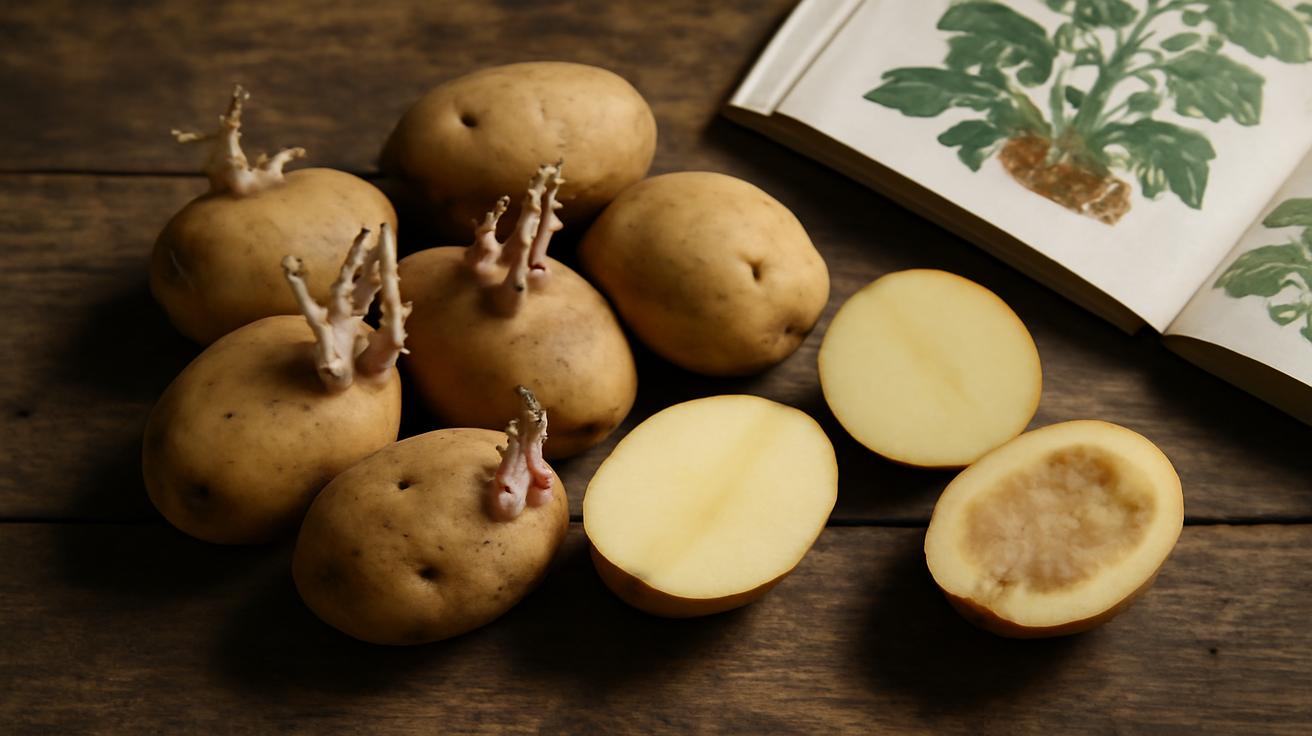
The potato on your counter is changing. Where there was once a smooth, earthy surface, tiny nubs have appeared, pushing out pale shoots like little alien fingers reaching for the light. Maybe it’s been there a week too long, forgotten behind the fruit bowl. Now you’re holding it in your hand, turning it under the kitchen light, wondering: is this thing still food… or has it quietly crossed the line into something you shouldn’t eat?
When Your Potatoes Start to Wake Up
Sprouting is, in one sense, a small miracle. That lumpy brown tuber is trying to become a whole new plant. Given soil, water, and time, those fragile shoots would green, spread, and eventually flower, offering up a nest of fresh potatoes beneath the surface. In your hand, though, it feels less like a miracle and more like a dilemma. Throw it away? Trim it? Cook it? Smell it once more, just to be sure?
In kitchens around the world, this question plays out quietly. The sprouted potato is so ordinary that it almost slips past our attention—until someone gets curious… or sick. Somewhere between thrift and safety, between “waste not” and “better safe than sorry,” lives a small, important story about how plants protect themselves, and how our bodies respond when we ignore those defenses.
To understand whether you can eat a sprouted potato, you have to think a bit like a plant—and a bit like a cautious cook.
The Hidden Chemistry Inside a Sprouted Potato
Potatoes are not passive lumps of starch. They are underground storage organs designed to fuel the next generation of the plant. And like many plants, they come equipped with chemical armor. Their primary natural defense system is a group of compounds called glycoalkaloids, the most famous of which in potatoes are solanine and chaconine.
These compounds help protect the plant against insects, fungi, and animals that might eat the tuber. In small amounts, they’re a normal part of the potato’s biology. But as the potato ages, sprouts, or turns green, the concentrations of these glycoalkaloids can rise. That shift is what turns an innocuous kitchen staple into a potential hazard.
When a potato sprouts, it is waking up. The stored starches begin to convert into sugars to fuel growth, and the plant ramps up its defenses. The highest levels of glycoalkaloids accumulate in the parts that are most vulnerable to attack: the sprouts, the eyes, and the skin—especially any green patches exposed to light.
Cooked or raw, those compounds don’t simply vanish. Unlike many foodborne toxins destroyed by heat, glycoalkaloids are relatively heat stable. Boiling, baking, or frying will not reliably make an unsafe potato safe. That’s why the question isn’t just, “Can I cook it enough?” but “Should I be eating this at all?”
What Glycoalkaloids Do in Your Body
In people, solanine and chaconine can irritate the gut and affect the nervous system. Symptoms of glycoalkaloid poisoning usually begin with the digestive tract: nausea, stomach cramps, vomiting, diarrhea. In more severe cases, they can lead to dizziness, confusion, headache, rapid breathing, and in rare instances, serious neurological symptoms.
Documented poisoning cases often involve potatoes that were noticeably bitter, heavily sprouted, or very green—and often eaten in generous portions. It doesn’t happen every day, but it happens enough that food safety experts treat sprouted and green potatoes cautiously. Especially when you consider that children, pregnant people, and those with existing health issues can be more sensitive.
So… Can You Eat a Sprouted Potato or Not?
The honest answer is: sometimes, but not always—and you need to look closely, literally and figuratively.
Imagine three different potatoes on your kitchen counter:
- Potato A: Firm, no green, a couple of tiny white buds just beginning to show.
- Potato B: Still mostly firm, with longer sprouts—maybe two or three centimeters—emerging from several eyes. A slight bitter scent when you cut it.
- Potato C: Wrinkled, soft in places, sprouts long and twisted, some green skin near the top, maybe a slightly musty or sharp smell.
All three are technically “sprouted,” but they’re not equal in risk.
General Guidance from Food Safety Experts
Food scientists and public health agencies around the world tend to converge on a set of practical rules for sprouted potatoes:
| Potato Condition | Can You Eat It? | What To Do |
|---|---|---|
| Firm, no green, very short sprouts just emerging | Usually acceptable with care | Cut off sprouts and eyes generously; peel deeply; discard if bitter or off-smelling |
| Firm but multiple long sprouts; slight shriveling | Borderline; caution advised | If you keep it, remove all sprouts and surrounding flesh, peel thickly, and taste a tiny bit after cooking; if bitter, discard |
| Soft, wrinkled, long sprouts; any green skin or flesh | Do not eat | Discard entire potato (preferably in compost if available) |
| Green patches on skin, sprouted or not | Generally unsafe if greening is extensive | Cut away all green areas generously; if greening is widespread, discard the whole potato |
That first potato—the one with barely-there nubs, still firm and unblemished—is the only one that might earn a cautious “yes.” Even then, the safest approach is to treat it as potentially concentrated in glycoalkaloids at the eyes and sprouts, and remove those parts very liberally.
The second potato sits in a gray zone. Many thrifty cooks will still try to salvage it, trimming aggressively. But food safety professionals often suggest that once sprouts are long, numerous, and the potato is shrinking or wrinkling, it’s no longer worth the gamble—especially if anyone in the household is vulnerable.
The third potato? That one belongs in the bin or the compost heap. The plant has clearly moved well into its own survival mode, and your kitchen is no longer its intended destination.
Reading the Potato: Smell, Taste, Color, and Texture
There’s an old-world skill to “reading” ingredients. Before we had printed expiration dates, people relied on their senses and a kind of quiet, domestic wisdom. That wisdom still works, up to a point, with sprouted potatoes—if you know what you’re looking for and where its limits are.
The Role of Bitterness
Glycoalkaloids are intensely bitter. In fact, that bitterness is one of your body’s first warnings that something is wrong. But here’s the catch: you can’t rely solely on taste to judge safety. By the time bitterness is obvious, levels may already be high. And not everyone detects bitterness equally well; some people are more sensitive to it than others.
That said, if a cooked potato tastes noticeably bitter, it should not be eaten, sprouted or not. Spices, fat, or salt should never be used to “hide” that taste.
Color and Light Exposure
Green skin on a potato is chlorophyll—harmless in itself, but a clear signal that the tuber has been exposed to light and is likely producing more glycoalkaloids. Green and sprouted together are a red flag. If the green is localized to a small patch, cutting generously around it may be enough. If the green is extensive or deep, the safest choice is to part ways with that potato.
Texture Tells a Story
A potato that still feels heavy, cool, and firm in your hand is usually younger and safer than one that feels light, rubbery, or hollow near the center. Wrinkling and softness suggest not only age but also internal changes in chemistry and moisture. Combined with sprouting, softness is your cue that this potato has done its duty and is ready for the compost, not the stew.
How to Safely Salvage Mildly Sprouted Potatoes
Assume you have a batch of potatoes with just the first signs of sprouting. They’re firm, no deep green, no strange smells. You’re determined not to waste them, but you want to do it right. There is a careful, step-by-step way to handle them.
- Examine Each Potato Individually
Lay them out on the counter and inspect for:- Green spots or streaks on the skin
- Soft or darkened areas
- Long, numerous sprouts
Set aside any that look questionable. When in doubt, err on the side of caution.
- Remove Sprouts Generously
Do more than just flick the sprouts off. Use a small, sharp paring knife to carve out each eye and sprout with a cone-shaped cut, removing a margin of surrounding flesh. Imagine that the toxic concentration radiates out from each sprout point—and give it space. - Peel Thickly
Most glycoalkaloids are concentrated in or just under the skin. A thin decorative peel won’t cut it here. Remove a thicker layer than you might normally do, especially in areas that showed any hint of green or sprouting. - Cook Plain First, Taste a Tiny Piece
If you’re still unsure, boil or steam a small piece of the prepared potato without heavy seasoning. Let it cool slightly, then taste a small bite. If it tastes even faintly bitter or “off,” discard the batch. Your tongue is not infallible, but it is a useful last checkpoint. - Avoid Feeding Sprouted Potatoes to Children or Pets
Dogs, for example, can also be affected by solanine. Young children are more sensitive due to lower body weight. If you’re on the fence about a potato, it’s not the one to serve in a toddler’s mash or the dog’s leftover bowl.
And always remember: no cooking method—no matter how hot the oven or how furious the boil—can be trusted to neutralize a truly unsafe potato. Heat may reduce some surface compounds, but it won’t make a dangerously high glycoalkaloid level safe.
Keeping Potatoes from Sprouting in the First Place
Of course, the best way to solve the sprouted potato problem is to avoid having sprouted potatoes at all, or at least to slow that transformation down.
Picture where your potatoes live right now. Are they piled near the window in a bright bowl, basking in stray sunlight? Stuffed in a plastic bag in a warm pantry corner? Hidden in the fridge next to the apples? Each of those choices nudges the potato in a different chemical direction—and not always the one you want.
Simple Storage Principles
- Cool, but not cold: Potatoes prefer around 7–10°C (45–50°F). Too warm, and they sprout faster. Too cold (like in most refrigerators), and they convert starches to sugars, which can alter flavor and affect how they cook and brown.
- Darkness matters: Light stimulates chlorophyll and glycoalkaloid production. Store potatoes in a dark cupboard, a pantry drawer, or a breathable bag that blocks light.
- Let them breathe: Avoid sealing potatoes in airtight plastic. Paper bags, burlap, or perforated containers allow moisture to escape and reduce rot.
- Separate from fruits: Many fruits, especially apples and bananas, release ethylene gas, which can encourage sprouting and spoilage. Give potatoes their own space.
- Rotate and inspect: Use the oldest potatoes first. Check your stash every week, removing any that show early signs of sprouting or soft spots so they don’t influence the rest.
Handled this way, a bag of potatoes can stay usable for weeks, sometimes longer—buying you time before those determined little sprouts appear.
Waste, Caution, and the Quiet Ethics of the Kitchen
There’s another layer to the question, “Can you eat sprouted potatoes?”—the quiet, emotional tug of not wanting to waste food. Potatoes have fed families through famine and hardship. To toss one in the bin can feel a bit like turning your back on that history, especially if you grew up in a home where nothing edible was thrown away lightly.
But honoring food doesn’t only mean using every last scrap; it also means respecting its boundaries. A potato that has passed a certain threshold is not really food anymore—it has become a vessel for the plant’s next life or a repository for chemicals your body doesn’t need. Letting it go can be its own small act of respect.
There’s also a generous middle path: sprouted, wrinkled, not-to-be-eaten potatoes can still have a purpose. If you have a bit of garden or even a deep container, you can plant some of those sprouted tubers, eye-side up, cover them with soil, and watch what happens. In a few months, the same kitchen castoff might return as a cluster of new, smooth, unequivocally edible potatoes.
So the next time you find yourself holding a sprouted potato under the kitchen light, remember: you are not just weighing thrift against waste. You are standing at a crossroads between the plant’s intentions and your body’s needs. Look closely. Cut generously if it’s still safe, compost it if it’s not, and store the rest with a little more care. The potatoes—and your stomach—will thank you, in their own quiet ways.
FAQ: Sprouted Potatoes
Is it ever completely safe to eat a sprouted potato?
If the potato is still very firm, not green, and the sprouts are tiny, many experts consider it reasonably safe once all sprouts and eyes are removed generously and the potato is peeled thickly. But any signs of greening, softness, or bitterness should shift you from “maybe” to “no.”
Can cooking destroy the toxins in sprouted potatoes?
No. The main toxins (glycoalkaloids like solanine) are relatively heat stable. Boiling, baking, or frying will not reliably make a high-glycoalkaloid potato safe to eat.
Are green potatoes always unsafe, even if they haven’t sprouted?
Green color indicates light exposure and often elevated glycoalkaloids. Small, localized green areas can sometimes be cut away with a generous margin. If a significant portion of the potato is green, it is safest to discard it.
Can I give sprouted potatoes to my dog or other pets?
It’s not recommended. Dogs and other animals can also be affected by solanine and related compounds. If a potato is questionable for you, it’s not suitable for pets either.
Why do some people say they’ve eaten sprouted potatoes for years without problems?
Individual sensitivity varies, and not all sprouted potatoes contain dangerous levels of glycoalkaloids. Many people simply get lucky or encounter only mildly affected tubers. Food safety guidelines are designed to protect everyone—including children and sensitive individuals—from the worst-case sprouted potatoes, not just the mild ones.
How can I tell if a sprouted potato is too old to use?
Key warning signs include: long and numerous sprouts, significant wrinkling or softness, any musty or bitter smell, and visible green skin. When a potato looks tired, feels light, or has clearly entered full growth mode, it’s past its useful life as food.
Is it okay to store potatoes in the fridge to prevent sprouting?
Refrigeration slows sprouting but speeds up conversion of starch to sugar. This can affect taste and cause excessive browning when frying or roasting. A cool, dark pantry is usually better. If you do refrigerate, use potatoes mainly for boiling or mashing, and avoid using very cold-stored potatoes for high-temperature frying.