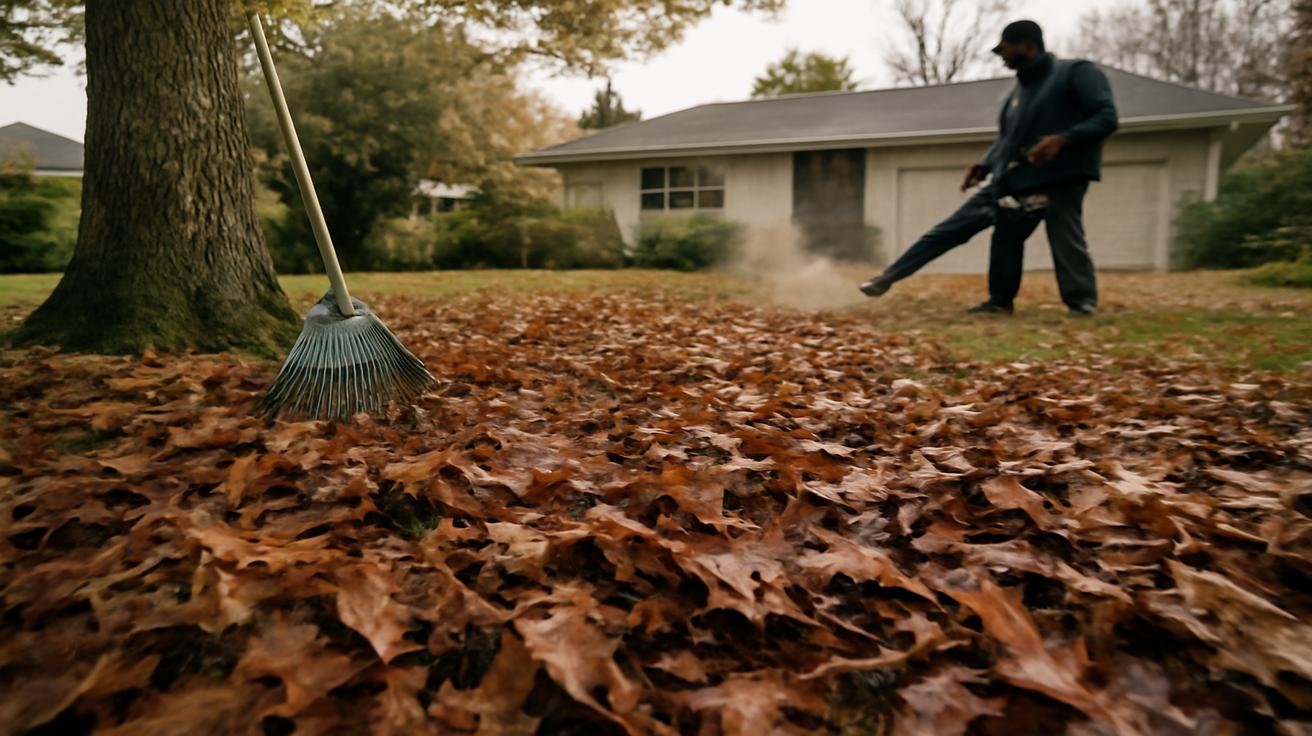
The first cold night arrives quietly, on a moon that looks thinner than you remember. By morning, the world has changed clothes. Maple leaves that were still green last week now lie scattered like small bonfires across the lawn—gold, umber, russet, colors that seem almost too bright for the gray sky. You step outside with your coffee and breathe in that particular smell: damp soil, faint smoke from some distant chimney, and the sharp, almost sweet scent of leaves already beginning to soften back into the ground. And then, like every year, a familiar thought lands heavier than a wet oak leaf: “I really need to clean all this up.”
The Annual Raking Ritual We Rarely Question
For many of us, autumn has a script that never changes. You fetch the rake or fire up the leaf blower. You pull on old gloves and drag out a stack of brown paper yard bags or the big plastic ones. The goal is simple: make the lawn look “clean.” Every leaf removed, every scrap of color banished to the curb or the compost site, as if a natural mess were something to be ashamed of.
We learned this ritual from our parents, who likely learned it from theirs: the tidy lawn as a badge of honor. We measure success by how quickly we can erase the signs of the season. The crunch and whisper of leaves underfoot are replaced by the high whine of blowers, the scrape of rakes, the thud of bags hitting the curb.
Yet, somewhere between the coffee mug and the trash bin, a quiet question has started to stir in more and more gardeners: what if this chore we repeat every year, almost without thinking, is not just unnecessary—but wrong for our gardens and the creatures who share them?
The Big Mistake: Treating Leaves as Garbage
Every autumn, gardeners make the same mistake with their leaves: we treat them as waste instead of as the resource they truly are. We bag them, burn them, or send them away, forgetting that in forests—the healthiest, most self-sustaining ecosystems we know—nobody rakes.
Walk into a forest in late October. Your boots sink slightly into a soft, rustling layer of last year’s leaves mixed with this year’s fresh fall. Kneel down and brush that layer aside with your hand. Beneath the crisp surface, you’ll find a delicate in-between zone where the leaves are part leaf, part soil, spongy and cool. Go a little deeper and it turns to rich, dark humus, the fragrance rising in a quiet, earthy exhale. That smell? It’s fertility. It’s life. It’s everything your garden store is trying to sell back to you in bags and bottles.
But at home, we strip that natural layer away like peeling off the skin of the earth and then wonder why our gardens need constant feeding, watering, and fussing. We’ve removed nature’s blanket and handed our yards a cold, bare bed just before winter.
Leaves Are Not Litter—They’re Infrastructure
In nature, leaves are part of the infrastructure that keeps an ecosystem running. They:
- Insulate the soil against temperature swings.
- Feed the underground world of fungi, microbes, and invertebrates.
- Protect plant roots and nourish them as they decompose.
- Reduce erosion by cushioning raindrops and slowing runoff.
When we send leaves away in plastic bags, we’re not cleaning up—we’re exporting fertility, habitat, and resilience out of our gardens and into landfills or distant composting centers. Then we buy mulch, fertilizer, and soil amendments to fill the hole we just created. It’s as if, every autumn, we gift-wrap and ship out our savings account, then take out a loan to get through the next year.
What Really Lives in Your Autumn Leaves
Pause for a moment before you rake. That leaf pile isn’t just colorful debris; it’s a crowded, bustling apartment complex. Life is tucked into every fold and layer—a whole hidden neighborhood that most of us never see.
Ground beetles, roly-polies, spiders, millipedes—the tiny recyclers of the soil—slip between the leaves, turning them piece by piece into nutrients. Solitary bees may spend the winter in hollow stems and beneath the leaf cover. Many butterflies and moths depend on those leaves to survive the cold months. Some overwinter as adults, some as pupae wrapped in fragile cocoons, some as eggs glued to the underside of a fallen leaf.
When we rake aggressively, blow with powerful machines, shred everything fine, and cart it away, we’re not just moving plant matter—we’re displacing or destroying entire life cycles. That “clean” yard often comes at the cost of the fireflies you hope to see next summer, the songbirds who need caterpillars to feed their young, the bees you want pollinating your tomatoes.
The Lawn Versus the Living World
The modern lawn, with its trimmed uniformity, was never designed for biodiversity. It’s a stage, not a habitat. But most of our yards don’t have to be pure lawn. The edges, the beds, the corners under the shrubs—these can become refuges if we allow leaves to stay where they naturally fall or gently guide them into protective drifts.
You don’t have to choose between living in a leaf-buried jungle and having a place where the kids can play or the dog can sprint. The trick is knowing where leaves are helpful, where they might cause problems, and how to work with them instead of against them.
| Leaf Location | What To Do | Why It Helps |
|---|---|---|
| Open lawn (heavy leaf cover) | Rake or blow gently into beds, under trees, or into a leaf pile | Prevents smothering grass while keeping leaves on-site as habitat and mulch |
| Flower beds & borders | Leave in place, fluff lightly if dense, add more from lawn if needed | Provides winter protection, moisture retention, and slow-release nutrients |
| Under shrubs & trees | Let leaves accumulate; remove only from walkways or foundations | Mimics forest floor, feeds roots, and shelters overwintering wildlife |
| Paths, driveways, gutters | Clear for safety, then relocate leaves to beds or a compost area | Reduces slipping and drainage issues while keeping leaves in your system |
| Near house foundation | Keep a small clear buffer; move leaves slightly outward into beds | Prevents moisture problems while still retaining most leaf benefits |
How to “Leaf” Smarter, Not Harder
You don’t have to abandon your rake forever. The shift is subtler than that. It’s about redefining the goal: from “remove all leaves” to “keep leaves working for my garden, my soil, and the creatures that depend on them.”
1. Rake with Intention, Not Obsession
Instead of raking every square foot bare, think of yourself as a leaf shepherd. Your job is to guide leaves to where they’ll be most useful. Move thick layers off the main lawn—especially if you live where winters are long and wet—and tuck them gently around perennials, shrubs, and trees.
On the lawn, a light layer of leaves can often stay where it falls, especially if you occasionally mow at a higher setting to break them up a bit. Thinly scattered leaves will sift down between grass blades, feeding the soil without smothering it.
2. Use Mulch Mowing Selectively
Many gardeners now use mulching mowers to shred leaves and leave them on the grass. Done lightly, this can be a good compromise for the lawn itself, returning nutrients right where the roots can reach them. But if we mulch every leaf in sight, we again forget the overwintering creatures who needed those whole leaves as shelter.
Try a blended approach: leave some areas un-mulched under trees and in beds, where whole leaves can remain intact. Use the mulching mower only on the open lawn and only when the leaf layer is thin enough that small fragments will fall between the grass and not form a mat.
3. Grow Places That Welcome Leaves
One way to free yourself from the tyranny of the rake is to grow gardens that invite leaves instead of fighting them. Shrub borders, native plant beds, woodland corners, and wildflower patches all thrive with a leaf blanket. As plants mature, they help trap leaves naturally, so wind and gravity do some of your “raking” for you.
Imagine a corner of your yard where a small understory tree stands above a loose ring of ferns, hostas, or native woodland plants. In autumn, leaves flutter down and catch in their foliage, then settle to the soil. Come spring, you simply step in, part the leaves with your hands where necessary, and notice new shoots pushing easily through. The work shifts from heavy hauling to light editing.
4. Start a Quiet Leaf Pile—Your Future Goldmine
If you really must collect leaves, give them a home on your property. Start a simple leaf pile in an out-of-the-way corner. No bin required, though you can corral them with stakes and wire if you like. Over time, that pile will shrink and darken, turning into leaf mold—one of the softest, most beautiful soil amendments you can possibly add to your beds.
Leaf mold holds moisture like a sponge, loosens heavy soil, and adds rich organic material without being “hot” or overly strong. It’s like giving your garden forest soil in slow motion. And all it asks from you is patience and a willingness to let the pile sit largely undisturbed, becoming a quiet refuge for insects and small creatures through the seasons.
The Psychological Pull of a “Clean” Yard
If part of you is resisting this idea, that’s understandable. Many of us inherited the belief that a good neighbor keeps a spotless yard, as if nature should stop politely at the fence line. There’s a subtle social pressure woven into the sound of all those blowers in October—the feeling that if you don’t tidy every leaf, you’re falling behind.
But more and more gardeners are rewriting that script. They’re beginning to see a slightly leafier yard not as neglect, but as care of a different kind. A yard where autumn is allowed to look like autumn. Where the eye sees not just visual neatness, but ecological richness. The standard of beauty shifts—from “perfectly bare” to “thoughtfully alive.”
There is a special kind of joy in walking out on a cold morning and knowing that under those curling leaves, life is resting, waiting. That the chickadees flitting through your shrubs will find more to eat next spring because you chose not to rake everything flat. That the soil beneath your feet is a little darker, a little softer, because you let the trees feed it the way they have for millennia.
A Different Kind of Pride
This doesn’t mean letting your yard become unsafe or unwelcoming. Clear the steps, paths, and driveways. Keep drainage areas open. But in the spaces where you have a choice, consider choosing life over sterile control.
The pride you feel won’t come from curb appeal alone, but from knowing that your small patch of earth is participating in the ancient cycles that sustain so much more than grass. You’ll begin to see your leaves not as a seasonal burden, but as a message: your garden is part of a bigger story than a tidy lawn.
Letting Autumn Do Its Job
Stand on your back steps again. Look at the leaves with fresh eyes. They are not a mess your trees made for you to clean up. They are the trees’ final generous act of the season, a gift to the soil and to everything that depends on it.
Close your eyes and listen. Beneath the soft rustle of leaves shifting in the breeze, there is a quieter work happening. Fungi already reaching out filaments. Microbes waking to the feast. Insects tucking themselves into safe crevices. Future flowers, vegetables, and fruits quietly accepting the nutrients they’ll need when the world tilts back toward the sun.
When we interfere too harshly with that work, we make more trouble for ourselves later—more watering, more fertilizers, more pest problems. When we allow autumn to do what it was always meant to do, we find that our gardens become more forgiving, more resilient, and frankly, more interesting.
Every autumn, gardeners make the same mistake with their leaves because for so long, we’ve been taught that nature’s rhythms must be tidied away. But you can choose differently this year. You can still rake—but with respect, with intention, with an understanding that you’re not removing a problem; you’re rearranging a resource.
Maybe this is the year you start small. Leave the leaves in one bed. Start one modest leaf pile. Mow a little less, watch a little more. Notice what changes: in your soil, in your plants, in the number of birds and insects that pass through. Notice, too, how it feels in you when you let go of the urge to erase the season and instead become a partner in it.
Autumn doesn’t ask us to purify the landscape. It invites us to participate in a transformation. The trees have done their part. The leaves are here. The only real question is: will you treat them as trash—or as the beginning of next year’s abundance?
FAQ: Rethinking Autumn Leaves in the Garden
Will leaving leaves on my lawn kill the grass?
Thick, wet layers left all winter can smother grass, especially in cold, damp climates. Light, scattered leaves usually do no harm and can even help feed the soil. A good approach is to move heavy accumulations off the lawn into beds or a leaf pile, and leave or lightly mulch only a thin layer where grass is still visible.
Are there any leaves I shouldn’t leave in place?
Some leaves, like those from black walnut, can inhibit sensitive plants if used heavily in beds. Very tough, slow-decomposing leaves (such as some oak species) can form mats if not mixed with other materials. You can still use them—just shred lightly or mix with other leaves and organic matter. Also remove leaves heavily infested with disease or pests and dispose of them separately.
What about pests and rodents in leaf piles?
Leaf piles can provide shelter to small animals, but that’s part of a functioning ecosystem. To reduce issues near the house, keep large piles away from foundations and routinely used structures. A loose, airy pile is less attractive to problem rodents than a dense, enclosed heap. Most of the life you’ll be supporting in leaf cover are beneficial insects and invertebrates.
How long does it take for leaves to break down into leaf mold?
In a simple pile, leaves typically take 1–2 years to become dark, crumbly leaf mold, depending on climate and moisture. You can speed things up by lightly shredding them first, keeping the pile moist, and turning it once or twice a year. Even partially decomposed leaves are excellent mulch.
Is it okay to use a leaf blower instead of a rake?
Leaf blowers are convenient but can be harsh on soil life and overwintering insects, especially at high power and on bare soil. If you use one, keep the setting as low as possible, avoid blasting directly into garden beds, and use it mainly to move leaves gently from hard surfaces into areas where they can stay and do their work.