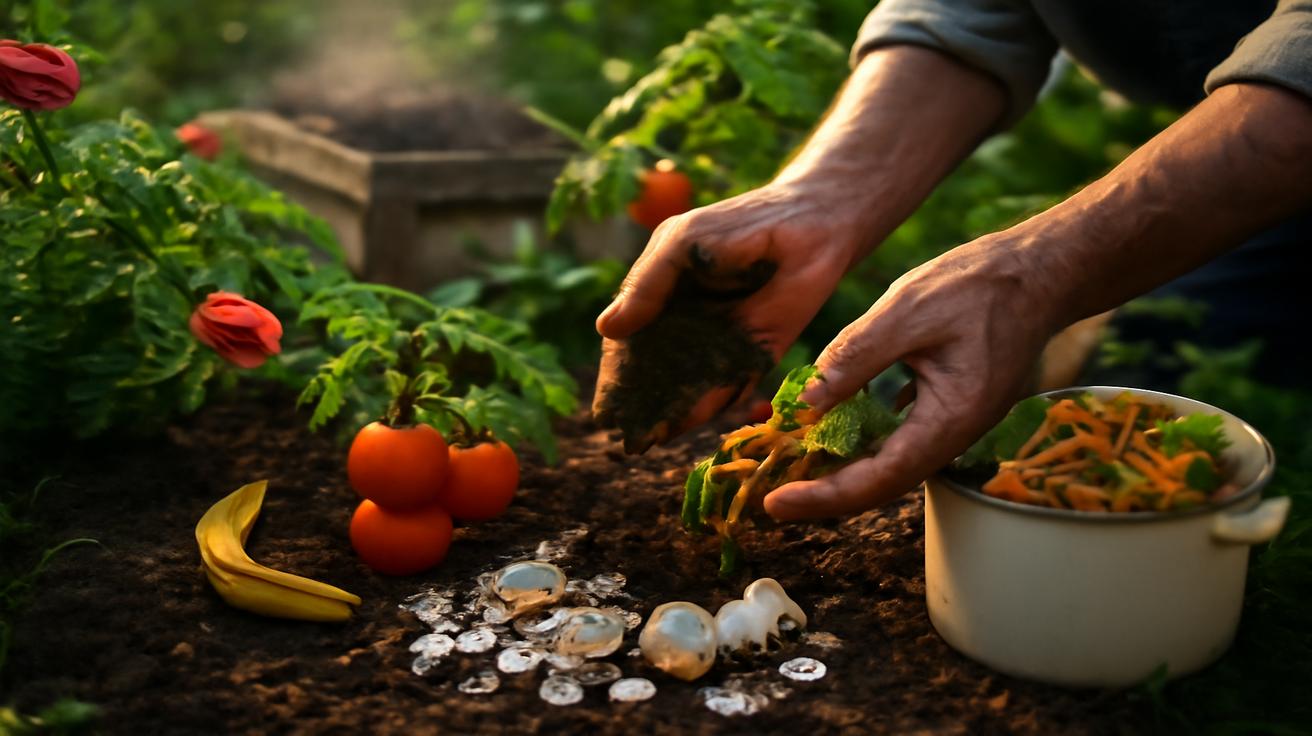
The banana peel sat on the edge of the kitchen counter, waiting for the inevitable. You know the scene: a quick snack, a sweet yellow fruit, a moment of satisfaction—and then that limp, spotted skin goes straight into the trash without a second thought. Out of sight, out of mind. But if your houseplants could talk, they’d probably be screaming at you: “Wait! That’s my dinner!” Because that thing you toss away every day, that pile of peels, grounds, and scraps you wrinkle your nose at, is pure gold for your plants—and almost nobody cares.
The Quiet Treasure in Your Trash Bowl
Think about your kitchen on a normal evening. The soft thud of vegetable ends hitting the cutting board. Onion skins curling into dry rings. Coffee grounds clumping together like damp earth. Eggshells cracked open and abandoned. There’s a little graveyard of leftovers forming in a bowl or bin by the sink, all destined for a black plastic bag and a trip to the curb.
It doesn’t look like much. It looks like a mess. But beneath the fading colors and wilting edges, something is still alive: minerals, nutrients, energy from the sun stored in plant cells, waiting to return to the soil it came from. That’s the quiet miracle we forget. Nature doesn’t do “waste” the way we do. In forests, nothing is thrown away; it just becomes something else. Fallen leaves become mulch. Rotting fruit becomes food. A decomposing log becomes a nursery for seedlings.
Your trash bowl is the beginning of that same story—if you let it be.
The Stuff You Toss Without Thinking (And What Your Plants Hear)
Let’s walk through your kitchen like your plants would, if they could shuffle around in pots and peek over the counter. They’d probably set up camp right next to three things you throw out almost daily:
1. Banana Peels: The Golden Jackets of Potassium
Banana peels are the headline act in the world of “trash that plants adore.” Soft, slightly sticky, and browning at the edges, they look like something that belongs nowhere but the bin. Yet inside that slumped peel is a treasure chest of potassium, a nutrient your plants crave for strong stems, disease resistance, and vibrant blooms.
To your eyes, it’s waste. To a tomato plant or a rose bush, it’s a care package. Chop a banana peel into small pieces and gently bury it around the base of a plant, just under the soil. As it breaks down, it slowly feeds the roots, like a long, quiet conversation between fruit and flower. Some people even soak banana peels in water for a couple of days, creating a simple plant “tea” that works like a gentle liquid fertilizer.
Next time your hand moves automatically toward the trash, pause. That peel doesn’t want to sit in a plastic bag. It wants to go back to the earth.
2. Coffee Grounds: The Morning Leftover That Wakes Up the Soil
You finish your coffee, rinse your mug, and scoop the damp grounds into the garbage. The smell is rich and earthy, and oddly enough, the soil outside your window would love it as much as you do. Used coffee grounds are gently acidic and full of tiny organic particles that help improve soil structure, water retention, and drainage.
To plants, coffee grounds are like a mild, slow-release snack. Sprinkle a thin layer around acid-loving plants—think blueberries, azaleas, hydrangeas—or mix them into your compost. Even houseplants can benefit when a small amount is blended into their potting soil. The key word there is small; a thick mat of grounds can become compact and water-resistant. But used sparingly, they transform from daily trash to quiet soil medicine.
In a way, the ritual of making coffee already sets you up to be a good plant keeper: patience, repetition, paying attention to how things feel and smell. The grounds you toss are part of that ritual. You just didn’t know your plants were waiting for them.
3. Eggshells: Fragile Armor Turned to Calcium
The sound of an eggshell cracking is so final. Once it breaks, it’s done. But even scattered in shards, those shells haven’t finished their work. They’re about 95% calcium carbonate—a slow, gentle way to give your soil the calcium it needs for strong cell walls, especially for fruiting plants like tomatoes and peppers.
If you rinse, dry, and crush your eggshells into a fine powder (use your hands, a rolling pin, or even a spice grinder), you can sprinkle them into the soil or mix them into potting mixes. Over time, they break down, quietly strengthening your plants from the inside out. It’s slow magic, but magic all the same.
Picture that next time you crack an egg for breakfast: you’re holding a tiny, fragile vault of nutrients that your soil can patiently turn into strength.
The Table of “Trash” Your Plants Are Dreaming About
To make it easier to see the hidden treasure in your everyday leftovers, here’s a simple overview you can glance at while you cook:
| Kitchen Scrap | Key Benefit for Plants | Simple Way to Use |
|---|---|---|
| Banana peels | Potassium, small amounts of phosphorus, micronutrients | Chop and bury in soil or soak in water to make a mild fertilizer tea |
| Coffee grounds (used) | Improves soil texture, provides nitrogen in compost | Add thinly to soil surface or mix into compost pile |
| Eggshells | Calcium source for strong cell walls | Crush finely and mix into soil or compost |
| Vegetable peels & scraps | General organic matter and micronutrients | Compost before adding to garden soil |
| Tea leaves & paper tea bags | Organic matter, mild acidity | Tear open and add to compost or mix lightly into soil |
From Trash Can to Treasure Habit
The biggest shift isn’t in your garden. It’s in your mind. We’ve been trained to see “cleaning up” as putting things into a bag and getting them away from us as fast as possible. But what if cleaning up also meant putting things back where they belong?
It starts with a small bowl on your counter. Instead of reaching for the trash, you start dropping banana peels, used coffee grounds, tea bags, eggshells, and vegetable scraps into that bowl. The sound becomes familiar—the soft thump of peels, the hiss of grounds, the brittle crackle of shells. At the end of the day, you carry it outside like an offering.
If you have a yard, that offering can go into a simple compost pile or bin. It doesn’t have to be fancy: a corner of soil, a crate, a tumbler if you like gadgets, or just a neat heap where you alternate food scraps with dry material like leaves, shredded paper, or cardboard. Over weeks and months, the pile warms, shrinks, and darkens. The sharp shapes soften. The smells change from “kitchen” to “forest floor.”
If you don’t have outdoor space, you still have options. You can:
- Use a small worm bin (vermicomposting) under your sink or on a balcony.
- Make banana peel or vegetable scrap “teas” by soaking scraps briefly in water, then straining and using that water to feed plants.
- Dry and crush things like eggshells to store in jars and sprinkle into potting soil when repotting.
The key is breaking that old reflex: peel, crack, toss, forget. Instead, you pause and ask, “Where can this go to become something again?” That question alone is compost for the mind.
The Sensory Side of Letting Things Rot (In a Good Way)
There’s a secret pleasure in learning to look closely at things you once found disgusting. The first time you turn a compost pile, you might wrinkle your nose. The top layer looks like an untidy salad: wilted lettuce, onion skins, coffee filters stained like sepia artwork. But as you dig in, you notice something: the inside is warm. Steam curls into the cool air. The scraps are half-transformed, coated in dark crumbs that smell like the forest after rain.
This is where the magic happens. Microbes, fungi, and tiny creatures you might never see are quietly disassembling yesterday’s dinner into tomorrow’s soil. In your hands, what used to be “gross” becomes satisfying. You feel textures change from slimy to crumbly, from slick to velvety. Your nose adjusts: beneath any sharp notes is a deep, living, earthy scent that somehow feels like a promise.
When you spread finished compost around your plants, it’s like tucking them in with a warm blanket. The soil looks richer, darker. Water sinks in more slowly, held in place by all that organic matter. Worms appear and disappear in the shadows. You might not see your banana peel or eggshell anymore, but they’re still there—in a language the plants can understand.
Why Nobody Cares—And Why You Suddenly Might
Perhaps the strangest part of this story is how invisible it still is. We scroll through photos of perfect gardens, rare houseplants, and “must-have” fertilizers in glossy packaging. We chase miracle sprays, secret formulas, special mixes. Meanwhile, the best, simplest, most sustainable plant food is quietly filling landfills by the ton every single day.
We don’t care, mostly, because we’ve been taught not to look. Trash is something to ignore, to hide, to move away from our homes and our minds. But when you’re a gardener—or even just a person with one potted plant on a windowsill—you’re part of a different story. You watch life closely. You understand that today’s leaf falls so that tomorrow’s leaf can grow.
So you begin to notice your own habits. The sound of the trash bag rustling starts to bother you a little. You picture all those nutrients being sealed in plastic, taken to a place where nothing can use them. It feels wrong, like throwing books into a locked box where nobody can read them.
Caring doesn’t have to be dramatic. It might look like:
- Saving just your banana peels and coffee grounds at first, and seeing how your plants respond.
- Teaching a child that the “garbage” from making breakfast can become the soil that grows their favorite flower.
- Smiling quietly to yourself when you empty that little countertop bowl into a compost bin instead of the trash can.
You may notice something else, too: a subtle sense of relief. There’s something deeply human about closing a loop, about knowing that not everything ending has to be a waste. The peel had a life, and now it has another one.
Beginning Your Own Loop: Simple Steps to Turn Scraps into Gold
You don’t need acres of land, special tools, or a background in gardening to start. You just need a willingness to see your trash differently and to give it time. Here’s a simple way to begin, even in a small home:
Step 1: Choose Your “Gold Jar” or Bowl
Place a small container on your countertop. Call it whatever you like—scrap bowl, gold jar, plant buffet. This is where banana peels, coffee grounds, tea bags (without staples), eggshells, and vegetable scraps will go instead of the trash.
Step 2: Pick One or Two Scraps to Focus On
Start simple so it doesn’t feel overwhelming. For example:
- Save only banana peels and coffee grounds for the first month.
- Chop the banana peels and bury them in the soil of outdoor plants or a large balcony container.
- Dry the coffee grounds slightly and sprinkle a small amount into your compost or around outdoor plants.
This way, you’re forming a habit without having to manage a full compost system right away.
Step 3: Observe Your Plants
Over the next few weeks, watch. Does the soil look richer? Do the leaves seem a bit more vibrant? Is growth more steady? The changes might be subtle at first, but paying attention turns this into a conversation rather than just a routine.
Step 4: Grow Your Practice
Once you feel comfortable, you can add:
- Eggshell powder to potting soil when repotting plants.
- A simple backyard compost pile or worm bin.
- Scrap “teas” made by soaking peels or vegetable bits for 24–48 hours, then straining and using the liquid on outdoor plants.
With time, the trash can will feel strangely emptier. Not because you’re missing anything, but because more of what you use is staying in the circle of life around you.
Frequently Asked Questions
Can I put kitchen scraps directly into my houseplant pots?
In small amounts, yes—but with care. Soft scraps like chopped banana peels can be lightly buried in large pots, where they break down slowly. Avoid piling fresh scraps on the surface; they can attract fungus gnats and create odors. For most indoor plants, it’s safer to use composted material or weak scrap “teas” rather than lots of fresh leftovers.
Do coffee grounds make the soil too acidic?
Used coffee grounds are only mildly acidic, and their effect on soil pH is usually small when used in moderation. Sprinkle them thinly or mix them into compost instead of dumping large amounts in one spot. Plants that like slightly acidic conditions benefit the most, but almost any garden can handle a light dusting of grounds.
How long do eggshells take to break down in soil?
Whole or large pieces of eggshell can take a long time—sometimes years—to fully break down. Crushing them into tiny fragments or a fine powder speeds things up significantly. While they’re slowly decomposing, they still help improve soil structure, and over time they release calcium.
Can I compost citrus peels, onion skins, and garlic?
Yes, in a compost pile they’re fine, though they may take longer to break down. In small home worm bins, too much citrus or spicy scraps like onion and garlic can bother the worms, so add them in moderation. For direct use in pots or around sensitive plants, it’s best to compost these first rather than burying them fresh.
Will using kitchen scraps attract pests?
They can, if handled carelessly. Burying scraps under a layer of soil or compost, chopping them small, and avoiding meat, dairy, and oily foods greatly reduce pest problems. In outdoor gardens, a well-managed compost pile and proper burial of scraps keep rodents and insects away. Indoors, stick to small amounts, scrap teas, or fully composted material to keep pests at bay.
In the end, the story is simple: every day, your kitchen quietly produces a stream of plant food, and nearly everyone throws it away. You don’t have to. With a bowl, a bit of patience, and a shift in how you see “waste,” you can turn those forgotten scraps into the richest thing your plants will ever taste. And once you start, you may find it hard to look at a banana peel the same way again.