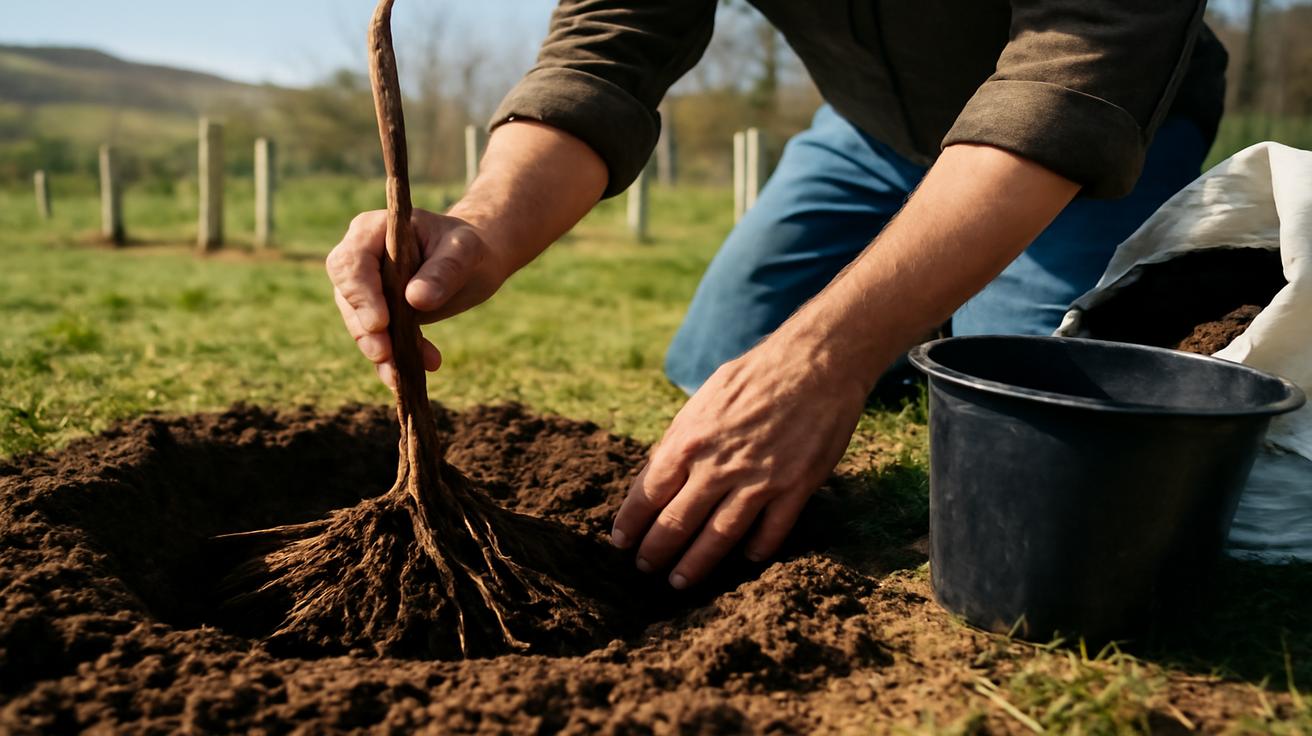
The first warm day arrives like a rumor. The frost loosens its grip on the soil, birds test a few experimental notes in the hedgerow, and you find yourself wandering the bare rows of your orchard-to-be, mug of something hot in hand, wondering: What does it take to make this place truly come alive in spring? Gardeners who’ve been at this for decades will tell you it isn’t luck. It isn’t even perfect weather. The secret, they’ll say with muddy boots and knowing smiles, is hidden in a handful of essential plantings—quiet, often-overlooked allies that all but guarantee a flourishing spring orchard.
The Orchard’s Secret Choreographers: Early Blooming Allies
Walk into a thriving spring orchard and everything feels slightly choreographed. Bees drift in deliberate loops, branches hum with pollinators, and the wind carries that faint, honeyed perfume of blossom after blossom. None of that is accidental. Many orchard keepers start not with the fruit trees themselves, but with early-blooming “signal plants” that wake up the ecosystem before the main show begins.
Years ago, an old grower told me, standing under a half-pruned pear tree, “If you want apples, start with flowers that aren’t apples.” He was talking about early bloomers like crocus, hellebore, and flowering currant. These are the plants that feed the first wave of pollinators, long before your orchard trees open their buds.
Imagine late winter that’s just beginning to tip into spring. The soil still holds a chill. It’s too soon, really, for much of anything. But beneath your orchard trees, patches of purple and gold crocuses spear through last year’s leaves. A few hellebores—those dusky, downward-facing flowers—offer open bowls of pollen and nectar. Flowering currant shrubs, planted along the orchard edges, drip with pink blossoms like tiny lanterns. Bumble queens, newly awake and ravenous, crawl right into them.
Those early meals matter. Well-fed pollinators are more likely to stick around, establish nests nearby, and be ready in full force when the apples, pears, plums, and cherries unfurl their blossoms. Gardeners who swear by these early bloomers notice the difference: better pollination, heavier fruit set, and a spring that feels thick with life rather than tentative and sparse.
It doesn’t have to be complicated. A few thoughtfully placed clumps of bulbs and shrubs can transform the timing of your whole orchard. And timing, in a spring orchard, is everything.
Understory Magic: The Groundcover Guild that Never Clocks Out
Look down for a moment. A flourishing spring orchard is as much about what’s beneath your feet as what’s overhead. Bare soil might seem tidy, but seasoned orchard gardeners tend to wince at the sight of it. To them, exposed ground is a missed opportunity: for moisture retention, nutrient cycling, and a quieter kind of beauty that works day and night.
The real magic, they’ll tell you, happens when you plant a “guild” of humble understory companions—living mulch that cradles the roots of your trees and quietly keeps the system running. White clover, creeping thyme, comfrey, yarrow, and self-heal are favorites, each bringing something particular to the party.
Take white clover. Its low, soft foliage knits the soil together and fixes nitrogen from the atmosphere, slowly seeding fertility around your trees. Creeping thyme spills over paths and tree circles, releasing a sharp, herbal fragrance when brushed and drawing in beneficial insects with tiny pink or purple flowers. Comfrey, with its deep taproots, mines minerals from lower soil layers and hauls them up into its leaves—leaves you can chop and drop as a supercharged mulch. Yarrow’s feathery foliage and flat-topped flowers invite lacewings and hoverflies, the quiet predators of orchard pests.
Plant these, and you’ll find the ground under your trees becomes soft with life: bees nosing in tiny blossoms, beetles working the leaf litter, soil rich and crumbly under your fingertips. The microclimate shifts, too. Moisture lingers longer. Summer heat bites less fiercely. Even weeds have a harder time getting a foothold.
The old habit of keeping orchard floors bare, sprayed, or scythed to stubble is giving way to this layered, living approach. Gardeners who’ve watched the shift talk about fewer disease issues, better drought resilience, and an orchard that looks—there’s really no other word for it—content. Understory companions don’t steal the stage from your trees; they make the stage possible.
Pollinator Highways: Blooms That Bridge the Gaps
A spring orchard may bloom spectacularly—but only for a brief window. The days when apple and pear blossoms peak are a kind of fever dream: branches white and pink, bees stitching sunlight into a constant buzzing hum. And then, suddenly, it’s over. For pollinators, those booms and busts in food supply can be rough.
That’s where the “bridge plants” come in—flowering herbs and perennials that knit the orchard calendar together with a near-continuous succession of nectar and pollen. Veteran orchard keepers seed these like bright stepping stones through time, making sure that as one wave of bloom fades, another is ready to open.
In early spring, it might be lungwort and violets, scattered beneath the trees. As the fruit blossoms rise toward their crescendo, dandelions appear—maligned by some, treasured by others as a critical early nectar source. Just as the last petals drift from your apple trees, the next crew is ready: phacelia with its curling, purple-blue blooms, calendula glowing orange in the low light, borage throwing up sky-blue star flowers that bees visit again and again.
Mid- and late-season, herbs take over: mint along a damp ditch, oregano and marjoram forming low, fragrant mounds, chive flowers standing like lilac lollipops for visiting insects. Interspersed among them, you might find salvias, echinacea, and rudbeckia, humming with life even as the orchard canopy thickens and the fruit begins to swell.
When gardeners say these plantings “guarantee” a flourishing orchard, they don’t mean a contract with nature. They mean this: if you make sure the table is set all season, the guests keep coming back. Pollinators linger. Predatory insects establish territories. Birds learn the orchard as a dependable feeding ground. That continuity is what turns a one-off good year into a pattern.
| Plant | Season of Bloom | Key Benefit in Orchard |
|---|---|---|
| Crocus | Late winter–early spring | Feeds first pollinators, signals start of season |
| Flowering currant | Early spring | Draws bees before fruit trees bloom |
| White clover | Late spring–summer | Nitrogen fixer, living mulch, bee forage |
| Comfrey | Spring–early summer | Deep mineral mining, chop-and-drop mulch |
| Borage | Late spring–fall | Continuous nectar source, attracts bees |
| Yarrow | Summer | Attracts beneficial predatory insects |
Wild Borders, Safe Havens: Hedgerows that Guard the Orchard
Stand at the very edge of a well-designed orchard and you might notice something subtle: it often doesn’t end abruptly. Instead, it blurs into a tangle of shrubs, native trees, brambles, and perennial flowers—a hedgerow that looks a bit wild, a bit unruly, and entirely intentional.
These borders are more than pretty backdrops. Gardeners who lean into this approach swear that a good hedgerow is like an insurance policy for the whole orchard. Hawthorn, blackthorn, elder, hazel, wild rose, and native viburnums weave together into a living fence. In spring, they bloom in overlapping waves of white and cream and soft pink, offering early and mid-season nectar. In fall, they bear berries and nuts that feed birds and small mammals. All year long, they provide shelter.
And that shelter matters. Beneficial insects overwinter in the rough bark of shrubs and trees, in hollow stems, in leaf litter undisturbed at the hedgerow’s feet. Birds nest in the thicket, later swooping into the orchard to clean up caterpillars and beetle larvae. Bats find roosts nearby and emerge at dusk to skim above your trees, picking moths from the air.
This protective ring also acts as a windbreak, slowing harsh gusts that can desiccate blossoms or snap tender shoots. On cool spring mornings, the air within a hedged orchard can be a degree or two warmer than the open field beyond—just enough, sometimes, to spare blossoms from a late frost.
Some growers like to tuck in extra allies along these borders: patches of nettles (left in a contained area), which host beneficial insects; clumps of native grasses; a scatter of wildflowers. It isn’t manicured. That’s the point. The hedgerow holds a version of the wild close by, and the orchard benefits from the constant exchange: predators, pollinators, nutrients, shelter.
There’s a psychological effect, too. When you stand inside an orchard wrapped in living borders, it feels like a room, a sheltered, held space. Spring arrives there not as an isolated event, but as part of a larger breathing landscape.
The Quiet Alchemists: Dynamic Accumulators and Soil Healers
If you were to follow a seasoned orchard gardener around in late spring, you might see something that looks oddly destructive at first: an armful of comfrey leaves dropped around tree bases, dandelions left unpulled, nettles quietly encouraged in one shady corner. These, they’ll explain, are the “quiet alchemists”—plants that accumulate nutrients, break up soil, and quietly heal what’s been exhausted.
Comfrey is the poster child here. With roots that plunge several feet down, it taps into mineral layers your fruit trees can’t reach easily. Calcium, potassium, and trace elements migrate into its broad, slightly hairy leaves. When those leaves are cut and laid as mulch around tree trunks, the nutrients begin to cycle upward into the orchard soil, right where feeder roots are active.
Dandelions—once you stop seeing them purely as lawn invaders—play a similar role. Their taproots reach deep, fracturing compacted layers and ferrying up calcium and other minerals. Chopped and left in place, they contribute to a slow, steady enrichment of the topsoil.
Nettles, favorite plant of butterflies and many beneficial insects, are also nutrient dense. Though you might not want them in the central paths, a managed patch beyond regular foot traffic can be harvested for a potent compost tea or chopped and added to the mulch mix. Over time, soils that were thin, tired, or overworked begin to darken, crumb, and come alive again.
Gardeners who lean on these dynamic accumulators often find they need fewer external inputs. Less bagged fertilizer, fewer emergency interventions. The orchard begins to tilt toward self-sufficiency. Spring growth emerges not in a frantic, hungry rush, but with a kind of quiet confidence—trees pushing out strong, glossy leaves, blossoms that hold, fruit that sets and swells without the nervous question of whether the soil can keep up.
It’s not glamorous work, this slow tending of the underground. But if spring is the visible celebration of an orchard, soil health is the long, patient planning that makes the party possible. These plants are the backstage crew, and they are essential.
Designing Your Own Flourishing Spring Orchard
So how do you bring all of this together in a space that might be no more than a handful of trees, or perhaps just one beloved apple near the back fence? The beauty of these essential plantings is that they scale. You don’t need a formal orchard; you need the intention of one.
Start with time. Walk your space through the seasons in your mind and on foot. In late winter, where could crocuses and hellebores slip in under bare branches? Is there room along a fence line for flowering currant or a compact hedge of native shrubs? Imagine, month by month, what could bloom when—and which gaps might leave pollinators stranded.
Then, think in layers. At the canopy: your fruit trees themselves. Beneath them: understory shrubs, perhaps a currant or gooseberry if your climate allows, then a ring or patch of clover, thyme, or self-heal. At the outer edges of the tree’s reach, pockets of comfrey planted where you can comfortably chop and drop several times a season.
Along paths or in sunny openings, sow your bridge plants: borage, phacelia, calendula, chives, herbs you actually like to use in the kitchen. Let them spill a little; an orchard with edges too sharply defined can feel brittle. Tuck in yarrow where it won’t be disturbed. If you have the space, commit a boundary to becoming a hedgerow over time. Start with what you can source easily and locally.
Most important, leave some room for experimentation. Gardeners who swear by these essential plantings didn’t arrive at a perfect recipe on the first try. They watched. They noticed which patches of herbs turned into buzzing carpets and which quietly fizzled out. They paid attention to where the soil stayed damp, where frost settled, where birds liked to perch.
Across the years, patterns emerge. You’ll notice that the trees nearest the thickest swaths of clover seem to hold their fruit better through dry spells. That the apple whose base you’ve ringed with comfrey and wood chips barely seems to know what drought means. That the side of the orchard sheltered by even a young hedgerow wakes earlier in spring and shrugs off wind that rattles the far side.
Piece by piece, your orchard shifts from a handful of trees in a field or yard to a living community. Spring stops being a tentative, “Will it work this year?” question and becomes, instead, a season you trust.
Frequently Asked Questions
How early should I plant these companion species for my orchard?
If you’re starting from scratch, get perennials and shrubs into the ground in fall or very early spring so root systems establish before heat arrives. Bulbs like crocus and daffodil should go in during fall. Annuals such as borage and calendula can be direct-sown in spring once the soil can be worked.
Will groundcovers and companions compete with my fruit trees?
They can, if planted too densely right up against young trunks. Leave a small, clear circle around the base for the first year or two, then gradually allow low-growing companions in. Choose shallow-rooted species near trunks and reserve deeper-rooted plants like comfrey for the outer drip line of the tree.
Which plants are best if I only have space for one or two fruit trees?
Prioritize multipurpose allies: white or crimson clover as living mulch, one or two comfrey plants at the drip line, a handful of spring bulbs, and a small clump of borage or phacelia. Even this modest set can noticeably increase pollinator traffic and soil health around a single tree.
Are hedgerows necessary for a small backyard orchard?
Not strictly, but even a mini-hedgerow helps. A mix of two or three shrubs—such as a native viburnum, a rugosa rose, and a currant—can offer blossoms, berries, shelter, and wind protection on a surprisingly small footprint. If you can’t fit shrubs, a dense strip of perennials and tall grasses along a fence can play a similar role.
How long does it take to see results from these plantings?
Some benefits, like increased pollinator activity, often appear in the first season. Soil improvements and stronger, more resilient trees typically become truly noticeable after two to three years of consistent companion planting and mulching. Over five years, many gardeners report a dramatic shift in the health and stability of their orchard.