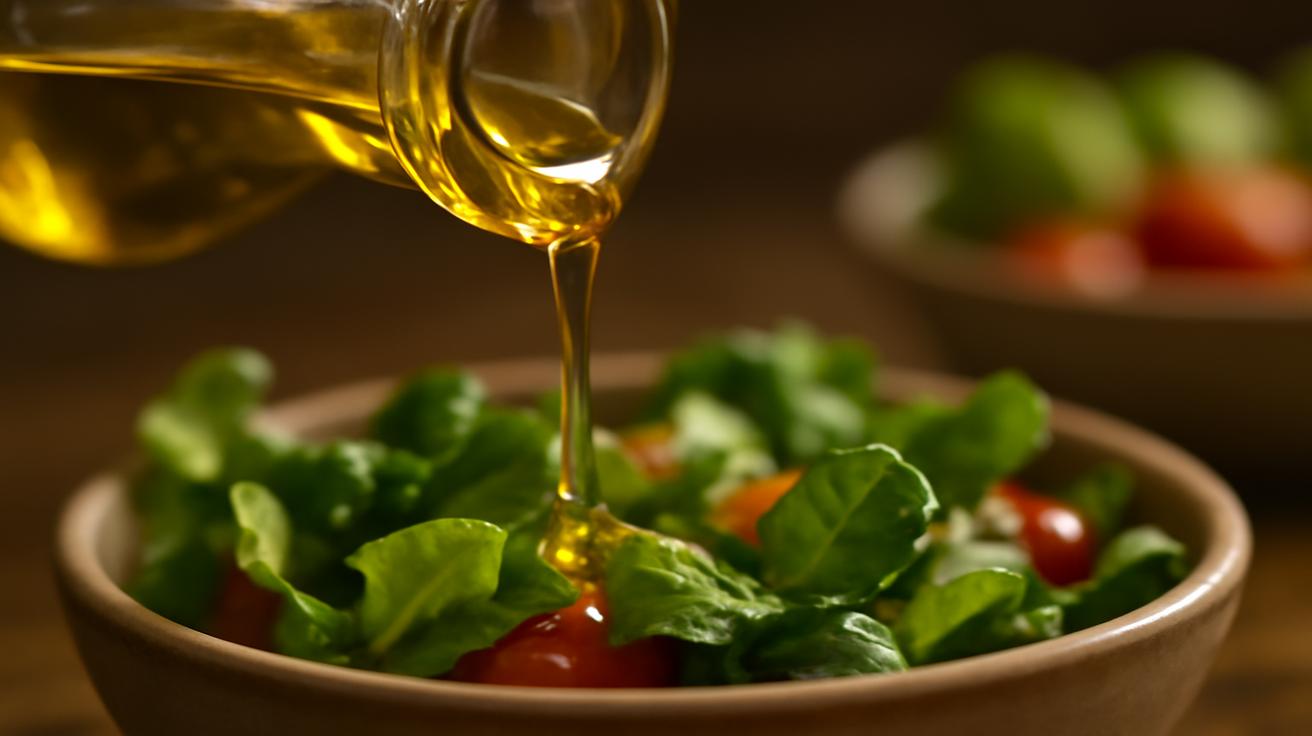
The last time I bought a bottle of olive oil, I winced a little at the checkout counter. It was one of those quiet, private winces—half at the price on the screen, half at the realization that this liquid gold had somehow become a luxury item in a kitchen that just wanted to get dinner on the table. I cradled the bottle home like a fragile treasure, suddenly aware of every drop I poured into the pan. But the more I cooked, the more a question kept nudging me: What if this didn’t have to be the default? What if there was something just as healthy, far more affordable, and maybe even better suited to the way most of us actually eat?
The Day Olive Oil Stopped Making Sense
For years, olive oil has been the quiet hero of “healthy eating” stories. It slides into recipes with a kind of smug familiarity—drizzled over salads, glistening on roasted vegetables, sizzled beneath onions in a pan. It’s in cookbooks and wellness blogs and social media reels, all humming the same refrain: “Use good olive oil.”
But here’s the part the marketing doesn’t quite mention: olive oil is expensive, increasingly so. Prices creep up as harvests are hit by drought, disease, and global demand. And for many of us, that price tag isn’t just annoying—it’s a real barrier. The supposed “healthy choice” may not even be the most realistic or the most effective one for our bodies or our budgets.
At the same time, the science around fats has grown more nuanced. We’ve learned that smoke points matter when we fry and roast. We’ve learned that balance of fats—monounsaturated, polyunsaturated, omega-6, omega-3—matters more than worshipping a single bottle. And we’ve learned that great health can be built on ordinary, accessible foods, not imported miracles.
So this is the story of breaking up with olive oil—not because it’s “bad,” but because it’s no longer the only or the best answer. And of discovering a quiet, golden alternative that has been waiting in the background, humbly stacked on supermarket shelves, ready to take its place on the front of the stove.
The Surprising Hero: Canola Oil Steps Out of the Shadows
If this were a movie, olive oil would be the glamorous star—and canola oil would be the hardworking supporting actor who knows all the lines and never gets their name on the poster.
Canola oil doesn’t have the romance of sunlit groves in the Mediterranean. It doesn’t come in heavy green glass bottles with hand-drawn labels. It usually comes in a plastic jug, on the middle or bottom shelf, almost apologetic in its plainness. For years, many of us have walked right past it, vaguely suspicious. Isn’t that one of those “industrial” oils? Isn’t it bad for you? Doesn’t everyone say to avoid it?
Yet when you strip away the noise and look at the facts, canola oil quietly checks almost every box that olive oil does—and sometimes a few more:
- It’s rich in heart-healthy monounsaturated fats, like olive oil.
- It’s naturally low in saturated fat—lower than olive oil.
- It contains omega-3 fats (the same family that makes fatty fish so good for us).
- It has a higher smoke point than extra virgin olive oil, meaning it stays stable at higher cooking temperatures.
- And perhaps most striking of all: it is usually far cheaper.
Imagine the same pan of sizzling vegetables, the same golden fried egg, the same quick weeknight stir-fry—but the oil you’re using costs a fraction of the price, and you’re no longer rationing it like perfume. You can actually use enough to cook properly, to coat, to crisp, to coax flavor and texture out of simple ingredients.
Olive oil had the spotlight. Canola oil quietly did the work. Maybe it’s time to let it step forward.
The Science in the Bottle
Let’s bring this down from the clouds of reputation to the ground of reality. Here’s how canola oil and olive oil stack up nutritionally, in simple kitchen terms. Values below are approximate for 1 tablespoon (about 14 g):
| Property | Canola Oil | Extra Virgin Olive Oil |
|---|---|---|
| Calories | ~120 | ~120 |
| Total Fat | 14 g | 14 g |
| Saturated Fat | ~1 g | ~2 g |
| Monounsaturated Fat | ~8–9 g | ~10 g |
| Omega-3 (ALA) | ~1.2 g | Trace |
| Typical Smoke Point | ~220°C / 428°F | ~190°C / 374°F |
| Average Price (per liter)* | Low | Moderate–High |
*Relative cost: exact prices vary by country and brand.
Sitting at the table, looking at numbers like these, the spell of the fancy glass bottle starts to fade. Canola oil is not the villain of the story. In many kitchens, it might be the unsung hero we’ve been ignoring.
From Salad Bowls to Sizzling Pans: How Canola Fits Into Real Life
Step into an ordinary kitchen at dinnertime. There’s a cutting board dusted with onion skins. A bag of carrots half-peeled. Maybe a child doing homework at the table, or a cat winding around chair legs, impatient for its own meal. The last thing this scene needs is anxiety about which oil you drizzle into the pan.
Canola oil, in this world, feels like a relief. It’s neutral in flavor, so it doesn’t argue with your ingredients. It doesn’t insist on turning every dish into a Mediterranean fantasy. It lets garlic be garlic, ginger be ginger, cumin be cumin. It simply carries the flavors, quietly.
Where it really shines:
- High-heat cooking: Roasting potatoes until they shatter at the edges. Stir-frying broccoli until it’s blistered and green. Pan-searing tofu or fish until the surface goes deeply golden. The higher smoke point of canola oil means less worry about burning, smoking, and forming unwanted compounds.
- Everyday frying: Not just special-occasion deep frying, but those small, ordinary fries: a crispy egg, a quick batch of falafel, onion bhajis on a rainy day. You can actually pour enough oil into the pan without doing the mental math of how many dollars are in that pool.
- Baking: Muffins, quick breads, pancakes, even simple cakes—canola’s neutral taste and light texture integrate beautifully into batters and doughs. Many recipes that call for “vegetable oil” are tailor-made for canola.
- Homemade mayonnaise and dressings: Where a strong olive flavor might overpower delicate herbs or citrus, canola lets them sing. If you crave the aroma of olive oil, you can even blend a small spoonful of extra virgin olive oil into a base of canola—flavor without the price.
Once you start using it, there’s a distinct sense of permission: permission to cook generously, to coat vegetables thoroughly, to stop skimping in the name of cost or guilt. Food, after all, isn’t meant to be rationed in whispers of oil; sometimes it deserves a good, full, gleaming roast.
Health, Without the Halo Effect
Olive oil has benefited from what psychologists call the “halo effect.” Because it’s central to the famous Mediterranean diet—which, in reality, is a tapestry of vegetables, legumes, whole grains, and an entire lifestyle—olive oil has inherited a saintly glow. But no single oil, standing alone, makes a diet healthy.
Canola oil may not have inherited the halo, but it has the credentials. Its low saturated fat content supports healthy cholesterol levels. Its combination of monounsaturated fats and plant-based omega-3 supports heart and brain function. Used in place of saturated fats like butter or tropical oils, it can be part of a powerful, quiet shift toward better health.
And this is where it gets interesting: by costing less, canola oil makes it easier to use oil the way traditional healthy cuisines do—generously, but wisely, alongside fiber-rich plants, beans, and grains. You no longer have to choose between skimping and overspending. You can simply cook.
Price, Access, and the Politics of the Pantry
It’s easy to say “just buy good olive oil” if the grocery bill doesn’t scare you. For many people, though, food is a monthly puzzle. Olive oil turns that puzzle into a test. Do you buy the expensive bottle and cut costs somewhere else? Or do you reach for cheaper fats that may not support long-term health?
Canola oil quietly changes that equation. In most stores, it’s one of the most affordable liquid oils on the shelf, especially when bought in larger bottles. That difference isn’t abstract; it’s deeply practical. It means:
- More room in the budget for fresh produce instead of ultra-processed snacks.
- The ability to cook more meals at home instead of relying on fast food.
- Access to a heart-healthy fat source for families on tight incomes.
In that sense, the “healthiest” oil isn’t just what wins on a nutrient chart; it’s what real people can actually afford, use regularly, and build habits around. An oil you must hoard in the back of the cupboard, saved for “special dishes,” is less powerful than a bottle you reach for every night without thinking, pouring enough to stir-fry a head of cabbage into something cozy and nourishing.
What About All Those Scary Headlines?
If you’ve spent any time online, you’ve probably seen canola oil lumped together with “seed oils” and painted in alarmist colors. Often, those warnings leave people feeling scared, but not actually informed.
Here’s what helps to remember:
- Refining does strip some delicate compounds and flavor, but it also removes impurities and raises the smoke point, making the oil more stable for everyday home cooking.
- Omega-6 fats, which are present in many seed oils, are not inherently harmful. Problems arise when they dramatically outweigh omega-3s in the diet. Canola, unlike some other oils, actually brings omega-3s to the table.
- Overall dietary pattern matters more than demonizing one ingredient. A menu built around whole foods, vegetables, pulses, and grains, cooked in moderate amounts of canola oil, is light-years ahead of a processed, sugar-heavy, fast-food diet—regardless of the oil used.
Are there reasons someone might still choose cold-pressed or extra virgin oils sometimes? Absolutely. But fear alone is a poor guide in the kitchen. Evidence, context, and lived reality make better companions.
Keeping a Place for Olive Oil—But Changing Its Role
Saying “goodbye” to olive oil doesn’t mean banishing it forever. It might simply mean changing the guest list in your kitchen: olive oil moves from the role of everyday workhorse to that of occasional special guest.
You might keep a small, very good bottle of extra virgin olive oil on hand—not for frying, but for moments when its bold, peppery, green flavor really shines:
- Drizzled over a simple tomato salad in late summer.
- Swirled onto a bowl of lentil soup right before serving.
- Brushed lightly over warm bread, with a pinch of salt.
Everything else—the roasting, the sautéing, the baking, the unglamorous but vital Tuesday-night cooking—can belong to canola oil. This not only stretches your budget; it also plays to each oil’s strengths. Canola for stability and neutrality. Olive oil for aroma and drama.
In a way, this is a small act of culinary realism. Instead of treating one oil as a magical cure-all, we let each find its rightful place. The spotlight softens. The kitchen becomes more about flavor, affordability, and routine than about worshipping a single imported ingredient.
A Simple Plan to Make the Switch
Transitions in the kitchen work best when they’re gentle. If you’ve been devoted to olive oil for years, you don’t have to stage a dramatic breakup. Try this instead:
- Start with one bottle: Buy a mid-sized bottle of canola oil—nothing fancy. Put it right next to your stove.
- Assign it to high-heat jobs: The next time you roast vegetables, fry eggs, or sear anything, reach for canola first. Notice that nothing terrible happens. In fact, your food may brown more evenly.
- Reserve olive oil for finishing touches: Keep using whatever olive oil you have left, but only as a final drizzle over cooked dishes or salads where you truly taste it.
- Pay attention to your receipts: After a few weeks, look at your grocery spending. Has the oil budget shrunk? Has anything about your energy, digestion, or satisfaction with meals changed?
Most people find that, after a short while, canola oil simply becomes the new normal. The old bottle of olive oil, used sparingly for its best qualities, starts lasting longer. The quiet savings accumulate. The kitchen feels a little more grounded, a little less precious, and a lot more sustainable.
Goodbye, Olive Oil—Hello, Everyday Abundance
Stand in your kitchen for a moment and listen. Not to the hum of the refrigerator or the ticking of the clock, but to the subtler story your pantry is telling. Foods are more than nutrients; they’re choices, tradeoffs, small declarations of what matters in your life.
For a long time, many of us chose olive oil as if it were the only respectable answer. It came with a glow of sophistication and a promise of health that felt reassuring. But that glow also hid some truths: the price tag, the mismatch with high-heat cooking, the fact that great health is built on whole diets and daily habits, not on a single oil.
Choosing canola oil as your main kitchen fat is not an act of settling—it can be an act of liberation. You free yourself from the pressure to use an expensive ingredient in every dish. You align your cooking more closely with your reality, your budget, your actual needs. You lean into an oil that quietly supports heart health, stands up to your oven’s highest temperatures, and lets the other ingredients do the talking.
After that last bottle of olive oil ran dry on my counter, I didn’t rush to replace it with the same old habit. I bought a simple bottle of canola oil instead. The first time I poured it generously over a tray of root vegetables and slid them into a very hot oven, there was no wince, no guilt, no sense of using something “less.” Just the clean, simple sizzle of food becoming dinner.
Maybe that’s the real goodbye we need. Not a dramatic farewell to olive oil, but a gentle letting go of the idea that goodness must be expensive, imported, or glamorous. Health can be humble. It can come in a plain bottle. It can sit quietly by your stove, ready to turn everyday ingredients into enough.
FAQ
Is canola oil really healthier than olive oil?
Both oils are healthy choices compared to saturated fats like butter or lard. Canola oil is lower in saturated fat and contains more plant-based omega-3s, while olive oil is slightly higher in monounsaturated fat and naturally rich in antioxidant compounds. In everyday use, especially at higher cooking temperatures and for people on a budget, canola oil can be the more practical “healthiest” choice overall.
Isn’t canola oil highly processed and therefore bad for you?
Most supermarket canola oil is refined, which means it’s filtered, cleaned, and treated to remove impurities. This process does reduce some natural flavor and micronutrients, but it also raises the smoke point and makes the oil more stable for cooking. When used in the context of a balanced, mostly whole-food diet, refined canola oil is widely considered safe and compatible with heart-healthy eating patterns.
What about all the talk that seed oils cause inflammation?
Concerns about seed oils often focus on diets very high in omega-6 fats and very low in omega-3s. Canola oil is somewhat different from many other seed oils because it includes a meaningful amount of omega-3 (ALA) and has a favorable ratio of fats. The best way to support low inflammation is to eat plenty of vegetables, fruits, whole grains, legumes, nuts, and seeds, while using moderate amounts of healthy oils like canola.
Can I still use olive oil sometimes?
Absolutely. You don’t have to give it up completely. Many people choose canola oil for most cooking and keep a small bottle of extra virgin olive oil for dressings, dips, and finishing dishes where its flavor really stands out. This approach maximizes both taste and value.
Is there a taste difference when cooking with canola oil?
Canola oil has a very mild, neutral flavor. In many cooked dishes—especially roasted, fried, or baked foods—you’re unlikely to notice any difference compared to olive oil, because most of the flavor comes from the other ingredients. In cold preparations like salad dressings, you can blend canola with a small amount of olive oil if you miss that characteristic olive aroma.
Is canola oil suitable for all cooking methods?
Yes, it’s versatile enough for sautéing, roasting, baking, stir-frying, and even deep-frying. Its relatively high smoke point and neutral taste make it one of the most flexible oils you can keep in your pantry.
How should I store canola oil?
Keep it in a cool, dark place with the cap tightly closed—ideally in a cupboard away from the stove. Heat, light, and air can cause any oil to deteriorate faster. Used this way, a bottle of canola oil will typically stay fresh for several months, often longer, without any noticeable change in flavor or performance.